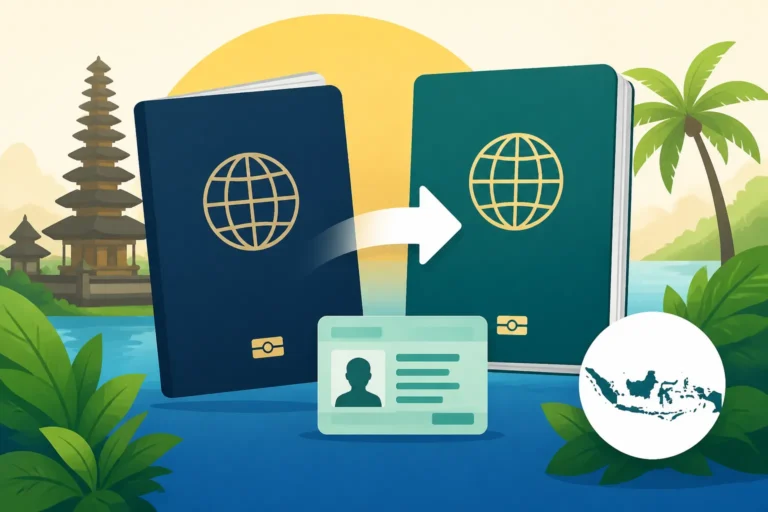
KITAS vs KITAP: A Direct Comparison of Benefits, Renewals, and Rights
Navigating the maze of Indonesian immigration often feels like you are trapped in a loop of renewals, paperwork, and frequent trips to the local KanIm. I remember the sheer anxiety of my first KITAS renewal in Jakarta, sweating over whether my sponsor’s documents were sufficient. This guide serves to clarify the differences between KITAS and KITAP, helping you decide which path secures your future here.
The Fundamental Nature of Indonesian Residency Permits
When you first arrive in Indonesia with the intention of staying longer than a few months, you enter a world of acronyms that can make your head spin. The most critical distinction you need to grasp early on is the difference between a limited stay and a permanent stay. In Indonesia, these are governed by the ITAS (Izin Tinggal Terbatas) and the ITAP (Izin Tinggal Tetap). The "K" you often see prepended—KITAS and KITAP—simply refers to the "Kartu" or card that proves your status, though the system has moved largely to a digital e-ITAS/e-ITAP format in recent years.
What is a KITAS?
A KITAS is the bread and butter of the expat community. It is a Limited Stay Permit that typically lasts for six months, one year, or occasionally two years. Most people reading this will start their journey here. Whether you are a digital nomad, a corporate executive, or someone who has fallen in love with a local, the KITAS is your initial gateway to legal residency. It allows you to live in Indonesia, open a local bank account, and come and go from the country using a Multiple Exit Re-entry Permit (MERP), which is now usually bundled into the permit itself.
The catch with a KITAS is its ephemeral nature. It is tied strictly to a sponsor. If you are here for work, your employer is your sponsor. If you are here on a marriage visa, your Indonesian spouse is your sponsor. The moment that relationship ends—be it through resignation or personal changes—your KITAS typically needs to be cancelled via an Exit Permit Only (EPO) process. For many of us, the KITAS feels like a long-term lease; you have the right to be in the building, but you are always aware that the lease expires soon. To get started with the initial entry process, many expats use services like iVisa to navigate the complexities of the initial e-visa before it is converted to a KITAS onshore.
What is a KITAP?
The KITAP is the "Holy Grail" of Indonesian immigration. It stands for Permanent Stay Permit, and as the name suggests, it offers a level of stability that the KITAS simply cannot match. A KITAP is valid for five years and, under current regulations, is technically valid for life, although you must "check in" or renew the administrative card every five years. It represents a shift from being a "guest" to being a "resident."
Possessing a KITAP changes how the Indonesian bureaucracy views you. You are no longer seen as a transient worker who might leave next month. Instead, you are treated more like a local in several administrative respects. For those who have lived through five or six consecutive years of KITAS renewals, the transition to a KITAP is a monumental relief. It removes the annual "immigration fever" where you have to gather dozens of documents and undergo biometric scans every twelve months. However, the requirements for a KITAP are significantly more stringent, usually requiring a long-term commitment to the country through work or family.
Eligibility and the Path to Permanent Residency
You cannot simply "buy" a KITAP upon arrival, regardless of how much you love the sunsets in Uluwatu. The Indonesian government views permanent residency as a status to be earned through time, investment, or family ties. Understanding the eligibility criteria is essential because it dictates your long-term strategy for living in the archipelago.
Who Qualifies for a KITAS?
Most foreigners qualify for a KITAS under several specific categories. The most common is the Work KITAS, which requires a company to sponsor you and justify your employment through a document called the RPTKA. For more on this specific hurdle, you can read about Employer Sponsorship: Navigating the RPTKA and Work Permit Process. Other categories include the Investor KITAS for those putting significant capital into a PT PMA, the Retirement KITAS for those over 60, and the Spouse KITAS for those married to Indonesian citizens.
Each of these categories has its own nuances. For instance, an Investor KITAS might offer a two-year validity right away, whereas a first-time Work KITAS is often restricted to twelve months. Regardless of the category, you will need to provide a mountain of paperwork, including bank statements, a valid passport with at least 18 months of validity, and often, legalized documents from your home country. Because Indonesian authorities require specific translations, using a service like RushTranslate is often necessary to ensure your birth or marriage certificates meet the strict "Penerjemah Tersumpah" (certified translator) standards required by the Ministry of Law and Human Rights.
The Upgrade Path: Moving from KITAS to KITAP
The transition from a KITAS to a KITAP is not automatic; it is an "upgrade" that you must proactively apply for. Generally, if you are a foreign worker or investor, you must have held your KITAS for three consecutive years and held the same position within the same company before you are eligible to apply for a KITAP. For those married to Indonesians, the rule is slightly more lenient: you can apply for a KITAP after two years of marriage, provided you have held a KITAS during that time.
This upgrade process is rigorous. Immigration officials will often conduct a "field check" (sidak), where they visit your home or office to ensure that your life matches what is written on your application. They want to see that you are truly a part of the community. During this transition, it is also vital to ensure your personal affairs are in order, such as Registering for an NPWP (Tax ID): How Expats Link NIK to Tax Records in 2027, as tax compliance is increasingly linked to immigration status. Once approved, the KITAP effectively "locks in" your residency, making you much less vulnerable to minor changes in immigration policy.
Comparing Benefits and Rights
The choice between a KITAS and a KITAP isn’t just about the length of the visa; it’s about the "rights" you carry as a resident. While both permits allow you to live in Indonesia, the KITAP opens doors that remain firmly shut for KITAS holders.
| Feature | KITAS (Limited Stay) | KITAP (Permanent Stay) |
|---|---|---|
| Validity | 6 months to 2 years | 5 years (Renewable for life) |
| ID Card | KITAS Card | KTP WNA (Foreigner ID Card) |
| Sponsor Needed | Yes (Must be active) | Yes (But more stable) |
| Driver's License | 1-year validity | 5-year validity |
| Banking | Basic accounts; difficult credit | Access to better rates; easier credit |
| Property | Limited (Hak Pakai) | Expanded (Hak Pakai / Easier admin) |
| MERP | Often separate or bundled (1-2 years) | 2 years or 5 years validity |
Banking, Loans, and Financial Freedom
For a KITAS holder, the financial system in Indonesia can feel restrictive. Most banks will allow you to open a basic IDR account, but they often hesitate to issue credit cards or provide personal loans. You are seen as a high-risk client because your permit to stay in the country could expire in a few months. I remember trying to get a simple car loan on a KITAS and being asked for a down payment that was nearly 50% of the car's value. For more details on these hurdles, see Opening a Bank Account in Indonesia: Document Checklists (KITAS, NPWP, Passport).
When you move to a KITAP, your financial profile changes. Banks see the five-year validity and the KTP WNA (Kartu Tanda Penduduk WNA) as signs of stability. This often makes it significantly easier to access higher-tier banking services. While getting a mortgage (KPR) as a foreigner is still complicated due to land ownership laws, having a KITAP makes the administrative process for Converting a Foreign Driving License to an Indonesian SIM A or SIM C much smoother, as your license will often match the five-year validity of your residency. To facilitate these transitions, using iVisa for your initial entry documents ensures that your paperwork trail is clean from day one.
Employment and Business Ownership
From an employment perspective, the KITAS is very rigid. If you have a Work KITAS for "Marketing Manager" at Company A, you cannot legally work as a "Consultant" for Company B. You are tied to a specific job description and a specific employer. Any deviation can lead to fines or deportation. This is why understanding KITAS Explained: Working, Dependent, and Investor Temporary Stay Permits is so crucial for those who want to remain compliant.
The KITAP offers slightly more breathing room, particularly for those on a spouse-sponsored permit. While a spouse-sponsored KITAP does not automatically give you the right to work for a company (you still need a Work Permit or IMTA), it does allow you to engage in "informal" work or small-scale business to provide for your family without needing a separate corporate sponsor for your visa. This is a massive advantage for entrepreneurs and freelancers who are married to locals, as it decouples their right to stay from their employer's whims.
Family and Social Life
Living on a KITAS often means your family’s legal status is precarious. If the primary earner loses their job, the entire family’s dependent KITAS permits are cancelled. This creates a high-stress environment for expat families. Moving to a KITAP provides a safety net. It allows for a more permanent "home base" feeling. You can even apply for a Surat Domisili (Domicile Letter): How to Get it from the Village Head with a greater sense of permanence, knowing you won't be moving due to visa issues any time soon.
Health insurance is another area where stability matters. Most KITAS holders rely on private international cover like Cigna Global to ensure they have access to top-tier hospitals without worrying about the local BPJS system's limitations. When you have a KITAP, you are still required to have insurance, but your long-term residency makes it even more important to have a policy from a provider like Cigna Global that can follow you for years, rather than a short-term travel policy.
Renewal Cycles and Administrative Maintenance
The "maintenance" of your visa is where the real work happens. It’s not just about getting the stamp; it’s about keeping it valid through a series of reporting requirements that many expats overlook until it’s too late.
The KITAS Renewal Treadmill
The KITAS renewal process usually begins three months before your current permit expires. If you miss this window, you risk entering "overstay" territory, which currently carries a fine of 1,000,000 IDR per day. The renewal requires a new sponsorship letter, updated bank statements, and another trip to immigration for photos and fingerprints. If you have changed addresses, you must also report this change to the local office, or you could face significant issues during the renewal.
This annual cycle is why many expats choose to work with a "Biro Jasa" (visa agent). While you can do it yourself, the time spent navigating the queues and the subtle nuances of Indonesian bureaucracy can be overwhelming. During these renewals, ensure that any supporting documents—like an updated marriage certificate or a new degree—are processed by Certified Translators (Penerjemah Tersumpah) for Immigration Documents to avoid rejection. Services like RushTranslate provide the exact level of certification that Indonesian officials expect, which can save you weeks of back-and-forth.
KITAP Longevity and the 5-Year Check-In
With a KITAP, the "treadmill" slows down significantly. You no longer have to visit the immigration office every year. However, you are not entirely free from bureaucracy. Every five years, you must renew your KITAP card. This is largely an administrative formality to update your photo and ensure your sponsor is still valid, but it is much less invasive than a KITAS renewal.
One of the greatest benefits of the KITAP is that after the first five-year period, the next renewal can often be for an "Unlimited" period (ITAP Seumur Hidup), although you still need to update the card every five years. This effectively ends your immigration worries for the rest of your life in Indonesia. Throughout this long journey, maintaining consistent health coverage through Cigna Global ensures that your physical well-being is as secure as your legal status.
Costs and Logistical Realities
Let's talk about the money. Indonesia is not a "cheap" place to live when it comes to visa fees. The government has structured the fees to favor those who stay longer, but the upfront costs for a KITAP can be a shock to the system.
Initial Investment vs. Long-Term Savings
A KITAS typically costs between 10 million and 15 million IDR per year when you factor in the government fees and agent commissions. Over five years, you will likely spend 75 million IDR or more, not including the time lost to paperwork. A KITAP, on the other hand, has a much higher initial cost—often ranging from 30 million to 50 million IDR depending on your category and the agent you use.
However, when you amortize that cost over five or ten years, the KITAP becomes significantly cheaper. You are paying for the convenience of not having to renew every year. For many, the "peace of mind" value of a KITAP is worth the higher upfront price tag. For more on the specifics of the permanent residency permit, see KITAP (Permanent Stay): Eligibility, 5-Year Validity, and How to Upgrade. During the application phase, using iVisa can help you manage the initial entry costs efficiently, so you have more capital available for the KITAP conversion.
Document Legalization and Professional Assistance
Regardless of which permit you choose, you will face the "legalization" hurdle. Indonesia recently joined the Apostille Convention, which has simplified things slightly, but many documents still require a complex chain of stamps from your home country’s embassy and the Indonesian Ministry of Foreign Affairs.
This is where things get "I've-been-there" frustrating. I once had a KITAS application rejected because a single word in my translated birth certificate didn't match my passport. That is why I always emphasize using a professional service like RushTranslate for your legal documents. They understand the "Penerjemah Tersumpah" requirements that are unique to Indonesia. Additionally, keeping your health records and insurance documents from Cigna Global organized is vital, as immigration may occasionally ask for proof of financial means and health coverage to ensure you won't become a burden on the state.
Making the Decision: Which One is Right for You?
Choosing between staying on a KITAS or pushing for a KITAP depends entirely on your "Why" for being in Indonesia. Are you here for a "good time" or a "long time"?
Scenarios for Digital Nomads and Professionals
If you are a professional on a two-year contract or a digital nomad exploring the co-working spaces of Canggu, the KITAS is likely your best bet. It offers the flexibility to leave the country without the massive upfront financial commitment of a KITAP. Many remote workers are now opting for the Remote Worker Visa (E33G): Digital Nomad Requirements and Limitations rather than a traditional work permit, as it fits the modern lifestyle better.
For these groups, the priority is ease of entry and exit. Using iVisa to handle the initial e-visa and ensuring you have a robust, portable health insurance plan like Cigna Global allows you to maintain a high level of mobility. If your job situation changes, exiting on a KITAS is a straightforward process of "closing" the visa and moving on to your next destination.
Considerations for Retirees and Spouses
If you are married to an Indonesian or looking to retire in Bali, the KITAP is almost always the superior choice. The stability it provides to a marriage is immeasurable. It allows the foreign spouse to feel like a true member of the household rather than a temporary guest. For retirees, the KITAP removes the stress of annual renewals during your golden years, allowing you to focus on enjoying the culture and climate.
Ultimately, the transition from KITAS to KITAP marks a turning point in your expat journey. It is the moment you stop saying "I'm living in Indonesia for a while" and start saying "Indonesia is my home." Whether you are just starting with your first visa via iVisa or preparing for your KITAP field check, stay patient. The bureaucracy is a test of your commitment to this beautiful, complex country.
Disclaimer Regarding Immigration Advice
This guide is intended for informational purposes only and is based on the personal experiences of expats and the current 2026 immigration regulations in Indonesia. Immigration laws are subject to frequent change without notice. We strongly recommend consulting with a licensed immigration professional or the Indonesian Directorate General of Immigration before making any financial or legal commitments. No content in this article should be construed as legal advice.