Medical Privacy in Indonesia: What Expats Should Know About Confidentiality
Navigating the Indonesian medical system often feels like walking into a crowded living room where everyone knows your business before you’ve even sat down. I remember sitting in a specialist's waiting room in South Jakarta and watching a nurse walk out and announce a patient's full diagnosis to the entire lobby just to find out where they were sitting. This guide breaks down exactly how medical privacy works in Indonesia, what the law says, and how you can protect your sensitive health data in a culture that defaults to openness.
The Cultural Landscape of Privacy in Indonesia
When you first arrive, the concept of "privasi" (privacy) in Indonesia might seem significantly different from what you are used to in Europe, North America, or Australia. In many Western cultures, medical confidentiality is an ironclad, legalistic barrier. In Indonesia, however, healthcare is often viewed through a communal lens. It is not uncommon for a doctor to assume that your spouse, your parents, or even the friend who drove you to the clinic should be part of the medical conversation.
The Communal Approach to Care
In many local facilities, the family is considered an integral part of the healing process. While this provides a wonderful support system, it can be jarring for an expat who expects a one-on-one consultation. I have seen cases where extended family members are invited into the consulting room by the doctor without the patient being asked for consent. If you are someone who prefers total confidentiality, you must be proactive and polite. Using a phrase like "Saya ingin bicara dengan dokter secara pribadi" (I want to speak with the doctor privately) is often necessary to clear the room.
This communal mindset extends to hospital wards. Unless you are in a VIP or VVIP room, you may find that the curtains between beds are rarely closed, and nurses might discuss your treatment within earshot of other patients. Understanding this cultural default helps you set expectations and decide which facilities are right for you. If privacy is your top priority, you should look into the Healthcare in Indonesia for Foreign Residents: Complete System Overview (2027) to understand how to navigate different facility tiers.
Why Openness is the Default
There is a deep-seated cultural value in Indonesia known as "sopan santun" (etiquette and politeness), which often translates to a lack of confrontation. Nurses and administrative staff may feel that withholding information from a concerned family member is impolite. Furthermore, the administrative side of healthcare is still transitioning from paper-based systems to digital ones. In the past, folders containing sensitive medical histories were often left on desks or carried openly through hallways. While this is changing, the legacy of a "relaxed" approach to data security still lingers in many provincial hospitals.
The Legal Framework: The 2023 Health Law (UU Kesehatan)
For a long time, medical privacy in Indonesia was governed by a patchwork of outdated regulations. However, the Omnibus Health Law (Undang-Undang Nomor 17 Tahun 2023 tentang Kesehatan) has significantly modernized the landscape. This law finally provides a clearer legal basis for patient rights and data protection, though the implementation on the ground is still a work in progress.
Patient Rights and Data Protection
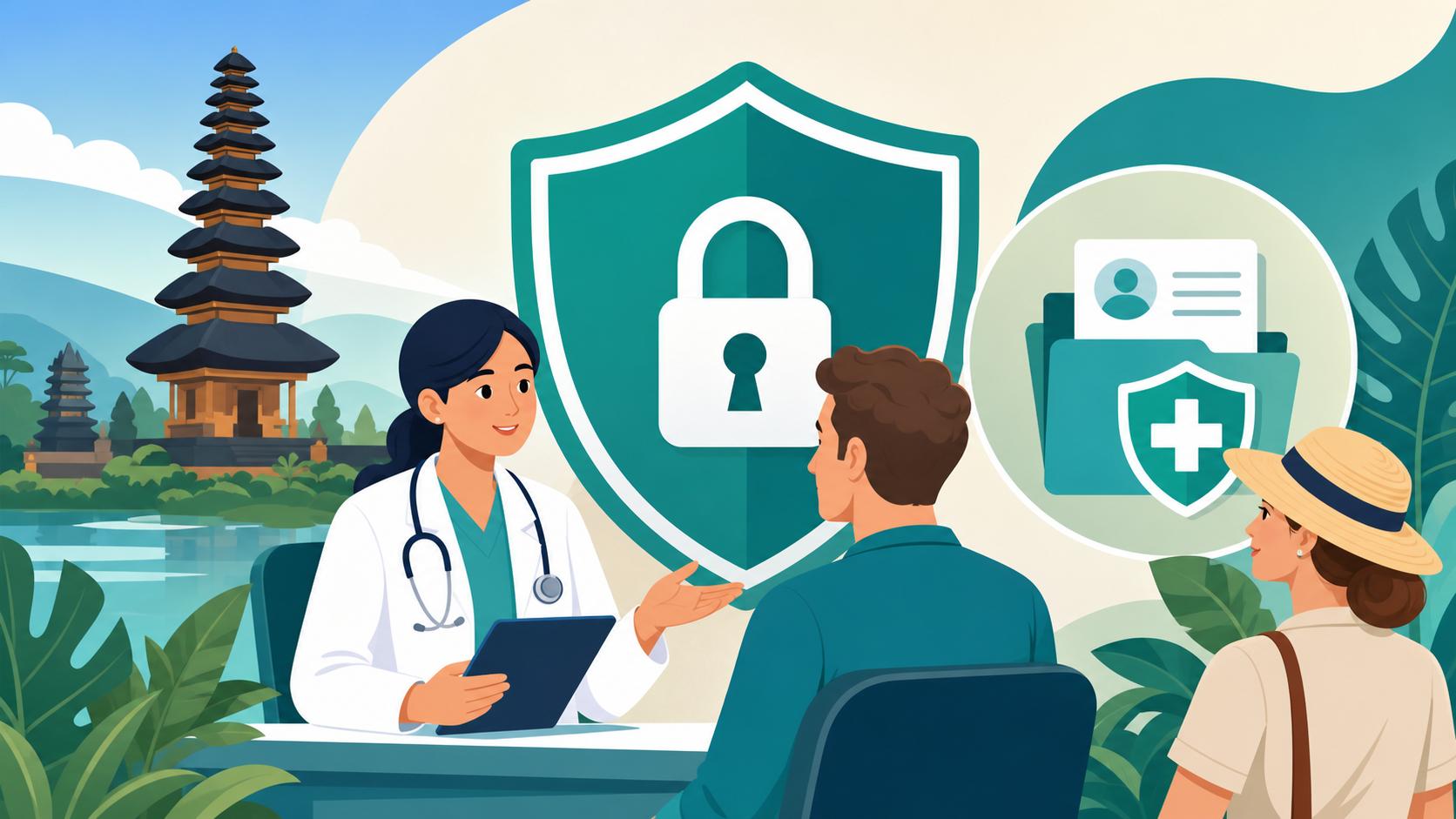
Under the new law, every patient has a right to the confidentiality of their health information. This includes your clinical history, diagnosis, and any treatment plans. Doctors and healthcare workers are legally bound by "rahasia kedokteran" (medical secrecy). They are prohibited from disclosing your data to third parties without your explicit consent, except in specific cases like public health emergencies or court orders.
This is a major win for expats. If you are Finding Medical Care in Indonesia: Clinics, Hospitals, and International Facilities, you now have the legal standing to demand that your records be kept private. The law also covers digital data, which is crucial as Indonesia moves toward a centralized electronic medical record system. However, the burden of enforcement often still falls on the patient. You should always ask your clinic how they store your data and who has access to it.
Penalties for Data Breaches
The 2023 Health Law, combined with the Personal Data Protection (PDP) Law, introduces stricter penalties for healthcare providers who fail to secure patient data. This includes administrative sanctions, fines, and even the revocation of medical licenses. While we haven't seen many high-profile "privacy lawsuits" yet, the mere existence of these penalties is forcing hospitals to upgrade their IT systems and train their staff on confidentiality.
When you are Managing Chronic Conditions: Diabetes, Hypertension, and Long-Term Medication, you want to know that your long-term health history isn't being leaked. Many expats choose to use international providers like Cigna Global because their internal data handling standards often exceed local requirements, providing an extra layer of psychological security regarding their medical history.
Digital Privacy and the SatuSehat Platform
Indonesia is currently undergoing a massive digital transformation in healthcare. The Ministry of Health has launched "SatuSehat," an integrated health platform that aims to consolidate all your medical records—from vaccinations to lab results—into one digital ID. While this is incredibly convenient for continuity of care, it raises significant privacy questions for foreigners.
How the Ministry of Health Handles Your Data
SatuSehat links your medical records to your NIK (National ID number) or your passport number if you are a KITAS holder. This means that if you visit a clinic in Bali and then a hospital in Jakarta, both doctors can theoretically access your previous results. The government maintains that the data is encrypted and that access is restricted to authorized medical personnel.
However, the reality of cybersecurity in a developing digital economy is always a concern. For expats, the main worry is often how this data might be used for immigration or tax purposes. While there is no current evidence that health data is being used to screen visas, the integration of systems is something to watch closely. If you are concerned about your digital footprint, you might consider ordering non-prescription health needs through private platforms like iHerb to keep those specific purchases out of the local pharmacy databases.
Opt-Out and Security Realities
Currently, opting out of the national digital health ecosystem is difficult if you want to use the public health system or large private hospital chains. Most reputable facilities are now mandated to upload data to the national system. If you are highly sensitive about a specific condition, you may need to seek out smaller, boutique international clinics that handle their records more discretely, though even they are increasingly being brought under the SatuSehat umbrella.
Practical Scenarios: Where Privacy Often Fails
Despite the laws, there are specific "real-world" scenarios where your privacy might be compromised. Being aware of these can help you navigate them with more control.
The Pharmacy Shout-Out
This is perhaps the most common privacy breach. You hand over a prescription for something sensitive—perhaps mental health medication or a treatment for a reproductive issue—and five minutes later, a pharmacy assistant yells your name and the name of the drug across a crowded room. To avoid this, stay close to the counter and, when you hand over the prescription, ask them to call you to the side when it is ready. If you are uncomfortable, you can always check our Finding English-Speaking Doctors in Indonesia: Reliable Directories and Vetting to find providers who use more discreet, in-house pharmacies.
Employer Access to Medical Records
If you are working for a local company or a PT PMA, your employer is often the one paying for your insurance or managing your KITAS. This creates a gray area. Many companies require a "Surat Keterangan Dokter" (Doctor’s Certificate) for sick leave. While this note should technically only state that you are unfit for work, some HR departments will push for a diagnosis.
You are not legally required to disclose your specific diagnosis to your HR manager. You only need to provide proof that a licensed physician has excused you. For more on this, see our guide on Medical Certificates for Work: What Employers Legally Require. If you are undergoing Standard Medical Checkups (MCU): What to Expect and How to Read Lab Results as part of a pre-employment screen, be sure to sign a waiver that specifies exactly which information can be shared with your employer.
Comparing Public and Private Facilities
The level of privacy you can expect varies wildly depending on the type of facility you visit. Generally, the more you pay, the more "Western-style" privacy protocols are followed.
| Feature | Public Hospitals (RSUD/Puskesmas) | Large Private Networks (Siloam/Mayapada) | International Clinics (SOS/BIMC) |
|---|---|---|---|
| Consultation Privacy | Low; others may be in the room | High; private rooms are standard | Very High; strict 1-on-1 protocols |
| Data Handling | Mixed; moving to digital | High; integrated digital systems | High; often following international ISO |
| Family Involvement | Expected and encouraged | Optional; usually asks patient | Patient-led; strictly confidential |
| Pharmacy Discretion | Very Low; public announcements | Moderate; numbered ticket systems | High; private counters |
| Record Access | Can be difficult to get copies | Transparent via hospital apps | High; provided upon request |
How to Protect Your Privacy as an Expat
You don't have to leave your privacy to chance. By taking a few deliberate steps, you can ensure that your medical journey in Indonesia remains your own.
Choosing the Right Insurance
Your insurance provider is the gatekeeper of your medical data. If you use the local BPJS system, your data is part of the state's massive database. While this is necessary for many, those with the budget often prefer private international insurance. Providers like Cigna Global act as a buffer. When you use private insurance, the hospital bills the insurer, and the details of your treatment stay between the doctor, the hospital, and the insurance company, rather than being routed through a government-mandated employer scheme.
Vetting Doctors and Clinics
Don't be afraid to "interview" a clinic before committing to a major procedure. If you are in the capital, you might start by looking for an English-Speaking Clinic in South Jakarta (Kemang and SCBD) where the staff is more accustomed to expat expectations of confidentiality. Ask questions like: "Who has access to my file?" and "Can I ensure my family is not updated on my status without my permission?"
The Power of "Personalized" Care
In Indonesia, building a relationship (silaturahmi) with a specific doctor can actually increase your privacy. When a doctor knows you and understands your "Western" preference for confidentiality, they are much more likely to protect your space. They will learn not to discuss your case in front of your driver or your nosy neighbor who happened to see you in the waiting room.
If you are dealing with sensitive issues like Sick Leave (Cuti Sakit) in Indonesia: How to Get a Surat Keterangan Dokter, having a "family doctor" who understands your need for discretion is invaluable. They can provide the necessary paperwork for your employer while keeping the sensitive details of your health out of the office gossip mill.
Summary Checklist for Medical Privacy
- Ask for a private room: Even in emergencies, insist that consultations happen behind closed doors or curtains.
- Clarify consent: Explicitly tell your doctor who is (and isn't) allowed to receive updates on your health.
- Check your records: Periodically ask to see your electronic medical record in the hospital's app to ensure no unauthorized notes are being added.
- Manage your employer: Only provide the legally required "fit for work" notes, not full diagnostic reports.
- Use discreet pharmacies: If you are worried about the "shout-out," use clinics that have private pharmacy windows or order maintenance items like vitamins and supplements from iHerb to keep them off your local record.
Living in Indonesia is an exercise in balancing community and individuality. While the medical system is leaning more toward international privacy standards every year, your own vigilance remains your best defense. By understanding the law and navigating the cultural nuances, you can get the world-class care you need without feeling like your health history is public property.
Disclaimer
The information provided in this article is for informational purposes only and does not constitute legal or medical advice. Regulations regarding health data and privacy in Indonesia are subject to change. Always consult with a qualified legal professional or healthcare provider regarding your specific situation and rights.