Opening a Bank Account in Indonesia: Document Checklists (KITAS, NPWP, Passport)
Walking into an Indonesian bank and being told "No KITAS, no account" after sitting in the humidity for an hour is a rite of passage for many expats. I remember the distinct frustration of standing in a BCA branch in South Jakarta, clutching my passport, only to realize I was missing a specific domicile letter. This guide untangles the bureaucracy so you can secure your financial footing.
Understanding the Local Banking Environment
Navigating the financial waters of Indonesia requires more than just a stack of cash; it requires a deep understanding of how the local "perbankan" system views foreign residents. Unlike some Western nations where you can open an account online in minutes, Indonesia remains a heavily document-centric environment. The banking sector is strictly regulated by Otoritas Jasa Keuangan (OJK), and they take "Know Your Customer" (KYC) protocols very seriously, especially when it involves "Warga Negara Asing" (WNA) or foreign citizens.
Why a Local Account is Non-Negotiable
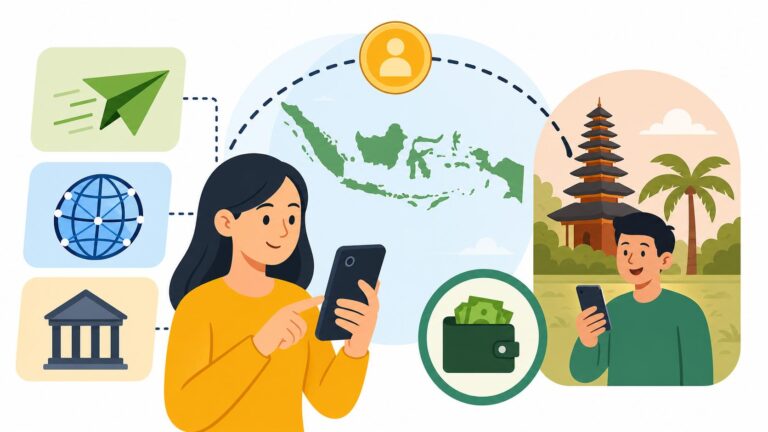
While you might think you can survive on your home country’s cards, the reality of living here is tied to the QRIS system. QRIS is a universal barcode payment system used by everyone from high-end malls to the smallest satay vendor on the street. To use it, you generally need a local bank account or an e-wallet linked to one. Without it, you are perpetually hunting for ATMs that haven't been skimmed or carrying bulky stacks of Rupiah. Furthermore, paying for your monthly utilities, internet, or the Money in Indonesia for Foreign Residents: Banking, Tax, and Financial Setup (2027) fees becomes an arduous task involving physical trips to a minimarket without a local mobile banking app.
The Big Players: Choosing Your Institution
There are four "megabanks" in Indonesia that most expats gravitate toward: BCA (Bank Central Asia), Bank Mandiri, BNI (Bank Negara Indonesia), and BRI (Bank Rakyat Indonesia). BCA is often the top choice for expats because their mobile app is incredibly stable and their ATM network is ubiquitous. However, they are also the strictest regarding documentation. Mandiri is excellent for those working in the public sector or large PT PMAs, while BNI often has a more streamlined process for students or those on specific social visas. Each has its own personality, but for the average resident, the Top Banks for Expats: Comparing BCA, Mandiri, BNI, and Digital Banks (Jenius) guide can help you narrow down which logo you want to see on your debit card.
Digital Banking vs. Traditional Branches
In recent years, digital-first banks like Jenius (by BTPN) or Bank Jago have gained massive popularity. These are fantastic because they allow for more flexible sub-accounts in different currencies. For an expat, having a "Dream Saver" account or a separate "e-Card" for online subscriptions is a lifesaver. However, keep in mind that even these digital banks usually require a physical meeting for the initial KYC verification if you are a foreign national. You cannot simply skip the "face-to-face" requirement that Indonesian law mandates for non-citizens.
The Foundation: Core Document Requirements
The "holy trinity" of documents you need are your Passport, your KITAS (Limited Stay Permit), and your NPWP (Tax ID). If you are missing any of these, your journey will be significantly more difficult, though not always impossible. Banks are under immense pressure to prevent money laundering, so they look for a "trail of legitimacy" that proves you are a legal resident with a valid reason to hold local currency.
The Passport and KITAS/KITAP
Your passport must have at least six months of validity, but the real star of the show is the KITAS. This is your "Izin Tinggal Terbatas." The bank will look specifically at the expiration date of your stay permit. If your KITAS is set to expire in less than three months, many branch managers will hesitate to open a new account because the system might auto-block the account once the permit expires. If you have already upgraded to a KITAS Explained: Working, Dependent, and Investor Temporary Stay Permits status, ensure you have the electronic version (e-ITAS) printed out and ready, as many banks still prefer a physical paper trail.
The Role of the NPWP (Tax ID)
This is where many expats get tripped up. While some banks might allow you to open an account without an NPWP by signing a "declaration letter," most major branches now mandate it to comply with tax regulations. Having your NPWP not only makes the bank happy but also ensures you aren't hit with a higher withholding tax on the interest your account earns. If you are still in the process of Registering for an NPWP (Tax ID): How Expats Link NIK to Tax Records in 2027, you might be able to use a letter from your company stating that the tax ID is being processed, but this is at the manager's discretion.
Reference Letters and Employer Sponsorship
If you are in Indonesia on a work permit, the bank will almost certainly ask for a "Surat Referensi" from your employer. This letter should state your position, your salary, and confirm that the company "guarantees" your presence in the country. It sounds archaic, but the bank wants someone to point the finger at if you disappear with an overdraft. For those on a Dependent KITAS: Bringing Your Family to Indonesia on a Work Permit, you will likely need your spouse’s work documents and a copy of their bank statements to act as a sponsor for your sub-account.
The Domicile and Address Verification Puzzle
In Indonesia, where you live is just as important as who you are. The bank needs to know your "alamat tinggal" (residential address) to send physical mail, though they rarely do. The problem is that a utility bill in your name is almost impossible to get as a renter, as the bills usually stay in the landlord's name.
Obtaining the Surat Keterangan Domisili
This is the document that caused me so much grief in the beginning. A Surat Domisili (Domicile Letter): How to Get it from the Village Head is an official piece of paper issued by the "Kelurahan" (local administrative office). To get this, you usually need to start with your building management (if in an apartment) or the RT/RW (neighborhood heads) if you live in a house. The bank uses this to verify that you aren't just a tourist staying in a hotel. Without this letter, many branches will refuse to issue a debit card that has a "Platinum" or "Gold" status, limiting your daily withdrawal limits significantly.
The RT/RW and Village Head Involvement
For those living in traditional neighborhoods (kampungs) or villas in Bali, getting to know your RT (Rukun Tetangga) is essential. They are the gatekeepers of your local residency. You will need to provide them with a copy of your KITAS and your lease agreement. They then provide a signed note that you take to the "Kantor Lurah" to get the official domicile stamp. It feels like a lot of "running around," but it is a fundamental part of the Taxes in Indonesia for Expats: NPWP, PPh 21, and the 183-Day Rule and residency ecosystem.
Address Consistency Across Documents
A common reason for application rejection is a mismatch between the address on your KITAS and the address you provide to the bank. If you moved from a temporary Airbnb to a long-term villa, make sure your immigration records are updated before you head to the bank. If the CS (Customer Service) officer sees a discrepancy, their system might flag it as a fraudulent application. Always carry a copy of your lease agreement just in case you need to prove why your current address differs from your initial registration.
The Step-by-Step Branch Experience
When you finally have your folder of documents ready, do not just walk into any branch. I highly recommend going to a "Kantor Cabang Utama" (KCU) or a major branch in an expat-heavy area like Kemang in Jakarta or Sunset Road in Bali. These branches are far more accustomed to dealing with foreigners and will have staff who speak fluent English.
The Queue and Interaction with Customer Service
Upon entering, you will be greeted by a security guard. Tell them you want to "Buka Rekening" (open an account). They will give you a queue number for "Customer Service," not the "Teller." Tellers handle cash, while CS handles the paperwork. Be prepared to wait. This is a good time to ensure you have a local phone number active, as you will receive several OTP (One-Time Password) codes via SMS during the process. If you don't have a local SIM, the process will stop dead in its tracks.
Signing the Forms and Meterai Requirements
Indonesian legal documents require a "Meterai"—a tax stamp that makes the document legally binding. As of 2026, the standard is the Meterai 10,000. The bank will provide these, but they might charge you for them. When you sign, you usually sign over the stamp so that your signature touches both the stamp and the paper. It’s a small detail, but doing it correctly shows you know how things work here. You will also be asked for your mother’s maiden name—this is a universal security question in Indonesia, so make sure you have it ready.
| Document Type | Necessity | Purpose |
|---|---|---|
| Passport | Mandatory | Primary ID verification |
| KITAS / KITAP | Mandatory | Proof of legal residency and stay duration |
| NPWP (Tax ID) | High | Compliance with OJK and tax regulations |
| Reference Letter | Recommended | Employer or sponsor guarantee |
| Domicile Letter | Recommended | Verification of physical residential address |
| Local SIM Card | Mandatory | Receiving OTPs and mobile banking activation |
| Initial Deposit | Mandatory | Usually IDR 500,000 to IDR 1,000,000 |
Digital Tools and Cross-Border Management
Once your account is open, the real magic happens on your smartphone. The mobile banking culture in Indonesia is surprisingly advanced. From your app, you can pay for your "GoFood" orders, top up your "e-money" cards for the toll roads, and even buy plane tickets.
Mobile Banking Apps and Tokens
Most banks will give you a physical "Token" (a small device that generates codes) or use a "Mobile Token" built into the app. This is for authorizing large transfers. If you are using your banking app on public Wi-Fi in cafes in Canggu or Jakarta, I strongly suggest using NordVPN to encrypt your connection. Banking apps here are secure, but the public networks they often run on are notoriously vulnerable to man-in-the-middle attacks.
International Remittances and Third-Party Services
While your Indonesian bank can receive international SWIFT transfers, the fees and the exchange rates offered by local banks are often predatory. For moving money between your home country and Indonesia, Wise is the gold standard. You can send your foreign currency to Wise, and they will deposit it as Rupiah into your local account within minutes, often at a fraction of the cost of a bank-to-bank transfer. This is especially helpful for the International Money Transfers: Using Wise, SWIFT, and Local Bank Remittances process when you first arrive and need to pay a year's rent upfront.
Security and Privacy for Online Banking
Be wary of "WhatsApp Banking" scams. No Indonesian bank will ever ask for your PIN or OTP over a chat app. If you receive a message from a "bank representative" claiming your account is blocked, ignore it and go to the branch. For those who are into more advanced financial management, like using Binance for P2P transfers or Interactive Brokers for international stocks, having a clean, verified local bank account is the only way to move funds into these platforms without triggering an AML (Anti-Money Laundering) investigation.
Common Hurdles and Special Cases
Even with a perfect folder, things can go sideways. I once spent three hours in a branch because my signature on my passport (from ten years ago) didn't perfectly match the signature I made on the bank's digital pad.
The Name Matching and Signature Trap
Indonesian systems often struggle with long Western names. If your passport has a middle name but your KITAS doesn't, or vice versa, the bank's system might reject the application. Ensure that every document you present has as much name consistency as possible. If the CS officer seems stuck, suggest they use your name exactly as it appears in the "Machine Readable Zone" (the lines at the bottom of your passport photo page). As for the signature, practice your "official" signature a few times before you go; they are very pedantic about the curves and loops.
Accounts for Limited Stay Visas and B211A
If you are on a Visa on Arrival (VoA) and B211A Tourist Visas: What You Can and Cannot Do status, opening a full-featured bank account is nearly impossible at the major banks. However, some "Tourist Accounts" exist, but they often have very low balance caps and no mobile banking access. If you are a digital nomad on the Remote Worker Visa (E33G): Digital Nomad Requirements and Limitations path, you will have a much easier time once your ITAS is issued. Until then, you might have to rely on international borderless accounts.
Handling US Personhood (FATCA)
If you are a US citizen, be prepared for extra paperwork. Due to the Foreign Account Tax Compliance Act (FATCA), Indonesian banks must report the accounts of US persons to the IRS. Some smaller branches might actually refuse to open an account for Americans simply because they don't want to deal with the reporting burden. If this happens, don't take it personally; just head to a larger branch of Mandiri or BNI. Our guide on US Citizens in Indonesia: FATCA Reporting and Banking Frustrations covers the specific forms you'll need to sign to stay compliant.
Final Steps for a Successful Setup
Once the CS officer hands you your "Buku Tabungan" (passbook) and your debit card, don't leave the branch immediately. You need to go to the ATM right outside and change your PIN from the default one they gave you. Then, ask the CS officer to help you activate the mobile banking app on your phone. This often requires a specific SMS handshake that is hard to do once you've left the building.
If you are lucky, you might even be able to get your card immediately. Some branches have a "CS Digital" machine that prints the card on the spot. If so, follow the steps in How to Get a BCA Debit Card on the Same Day You Apply to ensure you aren't waiting two weeks for a card to arrive in the mail. Once you are set up, you can finally start Using QRIS: The Cashless Payment System Revolutionizing Indonesian Commerce like a local, making your life in Indonesia significantly smoother and more "sopan" (polite) when it comes to settling bills.
Disclaimer
This guide is intended for informational purposes only and does not constitute legal, financial, or tax advice. Indonesian banking regulations and immigration laws are subject to frequent changes. While we strive to provide the most up-to-date information for 2026, always verify specific requirements with your chosen banking institution or a qualified legal professional before making financial commitments. The author and publisher are not responsible for any losses or inconveniences resulting from the use of this information.