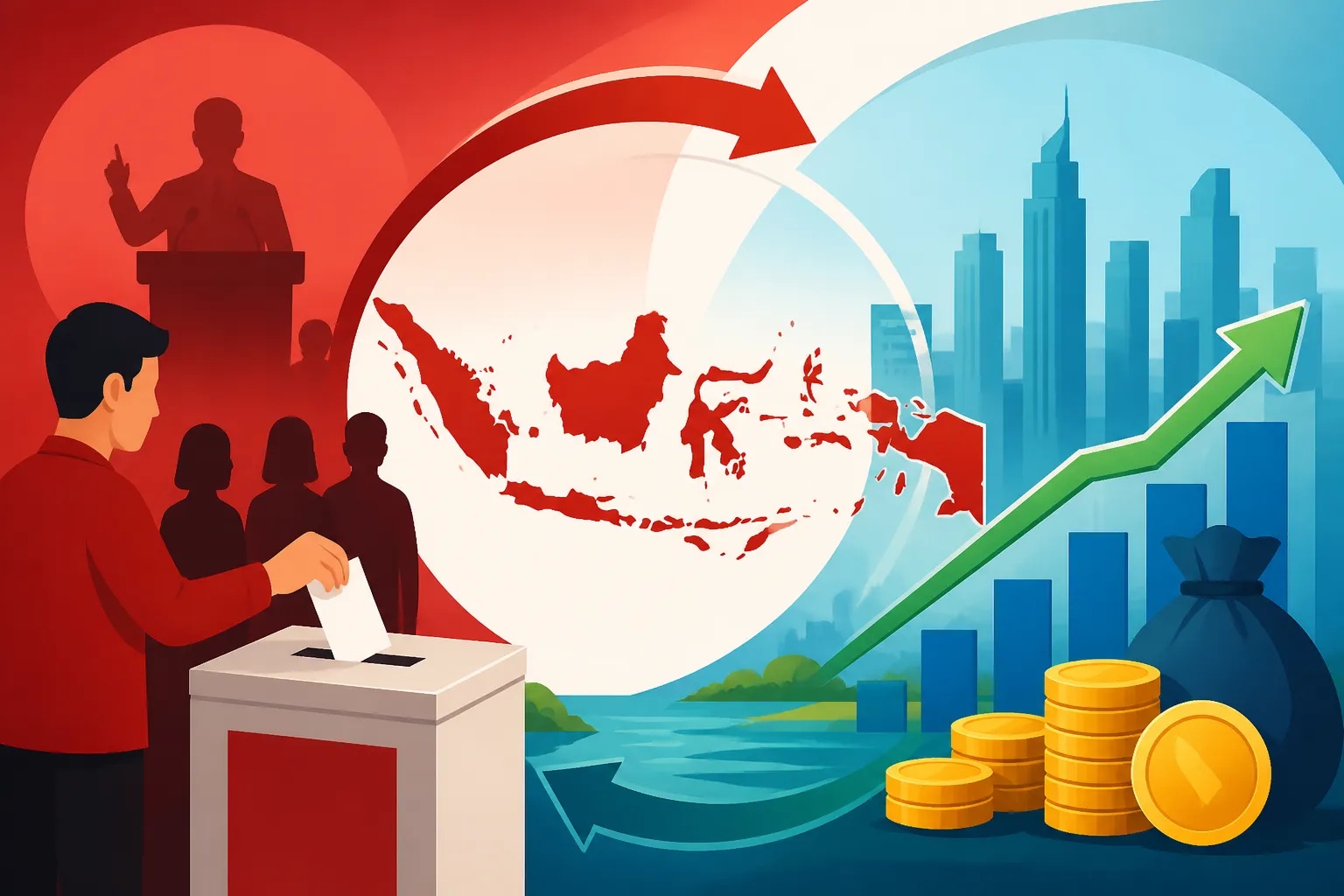
The Impact of Indonesian Election Cycles on Currency Stability and Investments
The "Wait and See" season is a phenomenon every long-term expat in Indonesia knows all too well. I remember sitting in a coffee shop in South Jakarta during the last election cycle, watching the Rupiah charts dance nervously while my local business partners hit the "pause" button on every major decision. This guide demystifies how election cycles impact your wallet, currency stability, and investment strategy in Nusantara.
The Psychological Weight of the Pesta Demokrasi
In Indonesia, elections are often referred to as Pesta Demokrasi, or the party of democracy. While the atmosphere is vibrant, the financial markets tend to treat it more like a high-stakes poker game. For those of us living here on a KITAS or KITAP, the primary concern isn't just who wins, but how much the Rupiah (IDR) will swing during the process. Historically, the period leading up to an election is marked by capital flight as both local and foreign investors move their liquid assets into "safe haven" currencies like the USD or SGD. This collective hesitation often leads to a temporary dip in the IDR’s value.
The frustration for us is palpable. You might be trying to calculate your Cost of Living in Jakarta 2026: Rent, Schooling, and Lifestyle Benchmarks only to find that your home-country currency doesn't stretch as far as it did three months ago—or conversely, your IDR-denominated salary is suddenly losing its international purchasing power. I’ve lived through cycles where the uncertainty felt like a thick fog, making even simple tasks like Opening a Bank Account in Indonesia: Document Checklists (KITAS, NPWP, Passport) feel like you're committing to a sinking ship. But the reality is often more nuanced than the headlines suggest.
Historical Currency Behavior and the Rupiah
The Indonesian Rupiah is notoriously sensitive to political sentiment. During election years, Bank Indonesia (the central bank) usually steps in aggressively to maintain "triple intervention" in the DNDF, spot, and bond markets. They hate volatility as much as we do because it scares off the big fish. However, despite their best efforts, the IDR often undergoes a period of "managed depreciation." This is why many expats choose to use International Money Transfers: Using Wise, SWIFT, and Local Bank Remittances to move their excess Rupiah into more stable holdings until the dust settles.
Pre-Election Speculation and Capital Outflow
In the six to nine months before the vote, the market enters a speculative phase. Foreign Portfolio Investment (FPI) often slows down as institutional investors wait for the presidential candidates to announce their economic platforms. If there is a "populist" candidate promising heavy spending, the bond market might react poorly, driving yields up and the currency down. This is the time when I usually keep a close eye on Managing IDR Volatility: Strategies for Expats Paid in Local Currency to ensure I'm not caught off guard by a sudden 5% drop in the exchange rate.
Post-Election Stability and the Victory Rally
Once the results are confirmed and—crucially—accepted by all parties without significant civil unrest, the IDR often experiences a "victory rally." Markets love certainty. If the winner is perceived as "market-friendly," we often see a massive influx of foreign capital returning to the Jakarta Stock Exchange (IDX). This can lead to a rapid appreciation of the Rupiah. If you've been waiting for the Best Ways to Send IDR to USD/EUR: Avoiding Hidden Conversion Fees to remit money home, the three-month window following a peaceful inauguration is historically one of the most favorable times to do so.
| Election Phase | Typical IDR Movement | Investor Sentiment | Actionable Strategy for Expats |
|---|---|---|---|
| 1 Year Pre-Election | Slow Depreciation | Cautious / Wait and See | Diversify into USD/EUR early |
| 3 Months Pre-Election | High Volatility | Speculative / Nervous | Use Wise for real-time rate alerts |
| Election Month | Peak Volatility | High Anxiety | Maintain high liquidity in IDR |
| 3 Months Post-Election | Potential Appreciation | Relieved / Bullish | Remit savings or invest in IDX |
Impact on Local and Foreign Investments
If you are an expat entrepreneur or someone with a PT PMA Structure: Why Employers Must Be Foreign-Owned, election cycles can be a double-edged sword. On one hand, government spending usually skyrockets during election years as the incumbent administration tries to boost the economy through infrastructure projects and social subsidies. This "election money" circulating in the economy can actually be great for local consumer-facing businesses.
Real Estate and the Pause Button
The property market is perhaps the most sensitive to the election cycle. If you are looking at Buying Property as a Foreigner: Hak Pakai, Hak Milik Nominees, and Risks, you will notice that developers often offer significant "early bird" discounts or flexible payment plans during election years because the secondary market goes completely quiet. Sellers are afraid to list, and buyers are afraid to commit. As an expat with cash on hand, this can actually be an incredible time to negotiate a long-term lease or a Hak Pakai agreement, provided you are willing to stomach the political risk.
The Stock Market (IDX) and Foreign Direct Investment
The IDX usually follows a "U-shaped" pattern during election years. There is a dip in the middle of the campaign, followed by a surge. For those of us using platforms like Interactive Brokers to manage global portfolios, including Indonesian tickers, the volatility provides an entry point. However, Foreign Direct Investment (FDI) often stalls. New factories, mines, and tech hubs wait for the new cabinet appointments. Everyone wants to know who the new Finance Minister and Investment Minister will be before they sink millions of dollars into the ground.
Protecting Your Finances During the Cycle
Living through an Indonesian election requires a bit of financial "prepping." You don't need to build a bunker, but you do need to ensure your digital and physical access to funds remains uninterrupted. I have seen instances where social media or certain communication apps were temporarily throttled during periods of political tension to curb the spread of hoaxes. This is where having a reliable tool like NordVPN becomes essential for an expat. It ensures that even if local networks are acting up, you can still access your offshore banking, check your Digital Banking and E-Wallets: How to Register for GoPay, OVO, and Dana, and stay connected to international news.
Diversification and Digital Assets
For the more tech-savvy residents, the election cycle often drives a spike in local crypto adoption. When the Rupiah feels shaky, some look toward stablecoins. While the regulatory environment is always evolving, using a platform like Binance to hold a portion of your liquid wealth in USDT or USDC can provide a bridge during the most volatile weeks of the election. Just make sure you are staying compliant with Taxes in Indonesia for Expats: NPWP, PPh 21, and the 183-Day Rule so you don't run into issues during the next reporting season.
Hedging with International Accounts
The smartest move I ever made was stop keeping 100% of my savings in a local IDR account. By using Wise, I can hold multiple currencies and only convert to Rupiah what I need for my monthly expenses, like Filing the Annual Tax Return (Formulir 1770): Deadlines and Required Documents or paying the rent. This protects the bulk of my wealth from the 5-10% swings that can happen when a political debate goes sideways or a protest shuts down the SCBD.
Navigating Policy Shifts and Regulatory Changes
The biggest "hidden" impact of an election isn't the currency—it's the paperwork. New administrations often mean new rules for the Ministry of Manpower and the Directorate General of Immigration. If you are in the middle of Money in Indonesia for Foreign Residents: Banking, Tax, and Financial Setup (2027), be prepared for "administrative slowdowns." Government officials are often reshuffled, and the person who approved your last permit might be in a different department by the time your renewal comes around.
I always advise my friends to finish any major banking or tax applications at least four months before the election or wait until six months after. The "lame duck" period is notorious for files getting lost in the shuffle as the bureaucracy waits for new marching orders. If you are managing assets through Interactive Brokers and need to provide proof of tax residency or other Indonesian documents, get them notarized and settled well in advance of the campaign season.
Managing the Social and Cultural Aspect of Money
One thing they don't tell you in the financial textbooks is the "social tax" of an election year. If you employ domestic staff or have a local team, the cost of living often spikes temporarily due to logistics disruptions or increased demand for certain goods. Being empathetic to your team’s financial stress during these times is part of being a veteran expat. Sometimes, the "stability" you need isn't just in your bank account, but in your local relationships.
While the headlines might make it seem like the sky is falling, Indonesia has proven remarkably resilient over the last few cycles. The institutions are stronger than they were twenty years ago, and the central bank is much more sophisticated. By using tools like Wise for your transfers and NordVPN for your digital security, you can navigate the Pesta Demokrasi with your finances intact.
Disclaimer
This article is for informational purposes only and does not constitute professional financial, investment, or legal advice. Currency markets and political environments are inherently unpredictable. Always consult with a qualified financial advisor or tax professional familiar with Indonesian regulations before making significant investment decisions. Additionally, ensure all digital financial activities comply with current Indonesian laws and regulations.