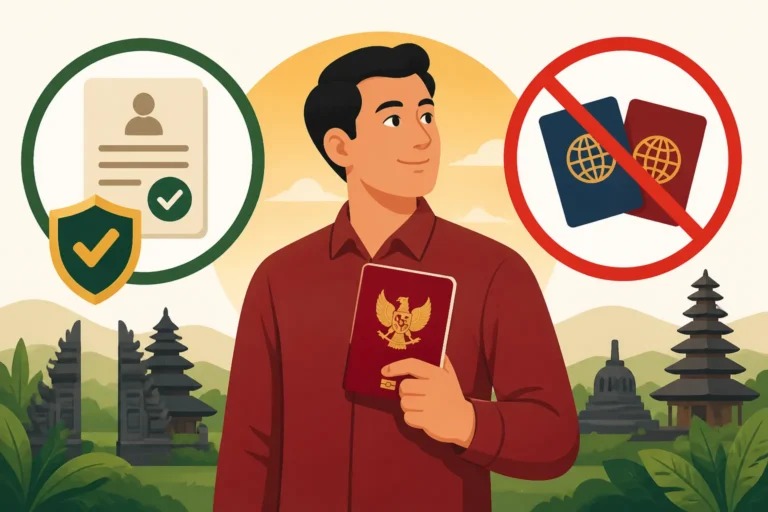
How to Transfer a KITAS to a New Employer Without Leaving the Country
The nightmare of losing your residency status just because you found a better career opportunity is a stress unique to the Indonesian expat experience. I remember sitting in a coffee shop in South Jakarta, clutching a resignation letter and wondering if I’d have to pack my entire life into suitcases for a forced "visa run" to Singapore the following week. This guide explains how to avoid that chaos by legally transferring your KITAS to a new employer while remaining right here in Indonesia.
The Reality of Switching Jobs in Indonesia
Switching employers in Indonesia is not as simple as handing in a two-week notice and showing up at a new office on Monday. Because your KITAS (Limited Stay Permit) is legally tied to a specific sponsor—usually your employer—the moment that professional relationship ends, your legal right to stay in the country technically comes under review. For years, the standard procedure was the dreaded EPO (Exit Permit Only), which required you to leave the country and start the entire visa process from scratch with your new company.
However, the Indonesian immigration system has become significantly more sophisticated. It is now entirely possible to perform what is known as a "transfer of sponsorship" or "mutation" (Mutasi) without booking a flight to Changi Airport. This process allows you to bridge the gap between your old role and your new one, provided both employers are willing to cooperate. Validating your frustration here is important: the paperwork is dense, and the timelines are tight. You are essentially asking two different HR departments to coordinate with the Ministry of Manpower and the Directorate General of Immigration simultaneously.
Before diving into the paperwork, you must understand the foundation of your stay. If you need a refresher on the different types of permits, you should review KITAS Explained: Working, Dependent, and Investor Temporary Stay Permits. Knowing exactly which sub-category of work permit you hold will determine how the transfer is handled at the regional immigration office.
Understanding the Onshore Transfer Mechanism
The onshore transfer is a "hand-off" between your current sponsor (Company A) and your future sponsor (Company B). The goal is to move your existing stay permit to the new sponsor before your old one is officially cancelled. This is a delicate dance because if Company A cancels your KITAS too early, you enter the EPO phase and must leave. If Company B doesn't have their paperwork ready, you might find yourself in a state of overstay, which carries a fine of IDR 1,000,000 per day.
Requirements for the Old Sponsor
Your current employer holds the keys to a smooth transition. To transfer your KITAS, they must provide a "Surat Rekomendasi" (Recommendation Letter) or a "Surat Pernyataan Tidak Keberatan" (No Objection Letter). This document explicitly states that they are releasing you to work for the new company and have no objection to the transfer of sponsorship. Without this letter, an onshore transfer is virtually impossible, and you will be forced to take the EPO route.
In addition to the release letter, the old sponsor must finalize your tax and social security obligations. You should ensure they provide you with your tax payment receipts and a clear statement regarding your final month of work. If you are worried about your health coverage during this transition, many expats use Private Health Insurance in Indonesia: Bridging the Gap When BPJS Isn't Enough to ensure they aren't left vulnerable while the new employer sets up their corporate plan. Brands like Cigna Global are often preferred by expats during these transition periods for their portability.
Requirements for the New Sponsor
The new employer must be a legally recognized entity, typically a PT PMA (Foreign Owned Company), and they must have a valid RPTKA (Expatriate Placement Plan). The RPTKA is the most critical document in the early stages; it is the government's permission for that specific company to hire a foreigner for a specific role. You can learn more about this in our guide on The RPTKA Document: Why Your Employer Must Justify Hiring a Foreigner.
The new sponsor will also need to prepare a formal application for the transfer of sponsorship directed to the local immigration office (Kantor Imigrasi). They will need to prove they have the financial standing to sponsor you and that your job title matches the qualifications you hold. If your degrees or professional certificates are in a language other than Indonesian or English, you may need to use a service like RushTranslate to provide certified versions for the Ministry of Manpower.
The Step-by-Step Procedure for a KITAS Transfer
Navigating the bureaucracy requires a strict timeline. You cannot start the transfer after you have already finished your last day at the old job. Ideally, the process should begin 30 to 45 days before your official resignation date.
Negotiating the Mutasi
The first step is a conversation with your current HR department. You need to ensure they are willing to support a transfer rather than just issuing an EPO. Some companies have a policy of only issuing EPOs to "clean" their records, but a friendly relationship can often change their mind. Explain that an onshore transfer is less of an administrative burden for them as well, as it avoids some of the final exit reporting required when a foreigner leaves the country permanently.
Once they agree, your new employer’s HR or their chosen visa agency will take the lead. They will submit the request for a change of sponsor through the online immigration portal. This is where you might need to provide an updated e-visa if the system requires a fresh digital record. Using a reliable platform like iVisa can help you understand the latest digital requirements for entry permits if the rules shift mid-process.
Navigating the RPTKA and Ministry of Manpower
While immigration handles your stay permit, the Ministry of Manpower (Kemnaker) handles your work permit (the TKA Online system). The new employer must "take over" your record in the TKA Online database. This is the stage where most delays occur. The Ministry will verify that you haven't been blacklisted and that your new salary meets the minimum requirements for foreign workers.
During this time, you must remain mindful of your employment rights. It is worth checking the rules on Resigning in Indonesia: One-Month Notice Periods and Exit Clearances to ensure you aren't breaching your contract while waiting for the transfer to clear. If the transfer takes longer than expected, you might also need to discuss Severance Pay (Pesangon): What Foreign Workers Are Entitled To Upon Termination with your old boss to ensure your financial transition is as smooth as your legal one.
Finalizing at the Immigration Office
Once the Ministry of Manpower approves the new work permit, the file is sent electronically to the local Immigration Office (KanIm) where you reside. You will be called in for "biometrics"—which is just a fancy way of saying they need to take your photo and fingerprints again. Even though you aren't leaving the country, immigration needs to refresh your record under the new sponsor's name.
After the biometrics session, it usually takes 3 to 5 business days for your new E-KITAS to be emailed to you. At this point, your old KITAS is officially void, and your new residency under the new employer begins. It is a moment of massive relief.
Potential Pitfalls and Pro-Tips for a Smooth Transition
Even with the best intentions, things can go wrong. The most common issue is a breakdown in communication between the two companies. If Company A thinks you are leaving on the 1st, but Company B doesn't start the paperwork until the 5th, you are technically without a sponsor for four days.
Dealing with Difficult Employers
If your current employer refuses to provide the "No Objection Letter," you are unfortunately stuck. In the eyes of Indonesian law, the sponsor has significant control over the permit they paid for. In this scenario, you will have to undergo the EPO process, leave Indonesia, and have Company B apply for a brand-new e-Visa and Molina System: How to Apply Online Without Visiting an Embassy while you wait abroad. This is expensive and frustrating, but sometimes it's the only way if the previous relationship ended on bad terms.
Managing the Gap in Benefits
One thing many expats forget is their social security. When you switch jobs, your BPJS Kesehatan (health) and BPJS Ketenagakerjaan (pension/life) accounts must also be transferred. You should read up on What Happens to Your BPJS Coverage if You Switch Employers in Indonesia? to ensure your healthcare isn't interrupted. Your new employer is legally required to take over these payments, but it often requires a manual "deactivation" from the old company and a "reactivation" by the new one.
For your old age savings, you have a choice. You can keep the balance in your account to continue growing, or if you were planning to leave, you might look into Deactivating BPJS Kesehatan When Leaving Indonesia Permanently. However, for a simple job switch, it is usually better to just merge the accounts.
| Feature | Onshore KITAS Transfer | Exit Permit Only (EPO) + New Visa |
|---|---|---|
| Travel Required | None (Stay in Indonesia) | Must fly out of Indonesia |
| Cost | Administrative fees only | Flights + Hotels + New Visa Fees |
| Timeframe | 30-45 days | 2-4 weeks (while abroad) |
| Key Document | No Objection Letter from old boss | None (Clean break) |
| Risk | High coordination required | Potential for visa denial while abroad |
Closing Advice for the Expat on the Move
The ability to transfer a KITAS onshore is a testament to how far Indonesia’s immigration system has come in terms of efficiency. To make this work, treat your current HR department with the utmost respect—they hold the power to make your life very easy or very difficult. Keep digital copies of everything, including your Certified Translators (Penerjemah Tersumpah) for Immigration Documents and your previous tax records.
While the process is moving, keep your health insurance active. Companies like Cigna Global provide that necessary safety net so you can focus on your new job rather than worrying about an unexpected medical bill during the "blackout" period between corporate plans. Finally, once you have that new E-KITAS in your inbox, double-check all the details. Ensure your name, passport number, and job title are 100% correct. If there is a typo, it is much easier to fix it immediately after the biometrics session than six months down the line.
Success in Indonesia often comes down to patience and "Social Capital." Build a bridge with your new HR team, be transparent with your old one, and you’ll find that the transition is just another manageable hurdle in your tropical career.
Disclaimer
The information provided in this guide is for general informational purposes only and does not constitute legal or immigration advice. Immigration regulations in Indonesia are subject to frequent change without notice. Always consult with a qualified legal professional or a registered immigration agent (Biro Jasa) before making decisions regarding your residency or work permits. The author and publisher are not responsible for any issues arising from the use of this information.