Receiving Foreign Salary into an Indonesian Bank: Proof of Funds Requests
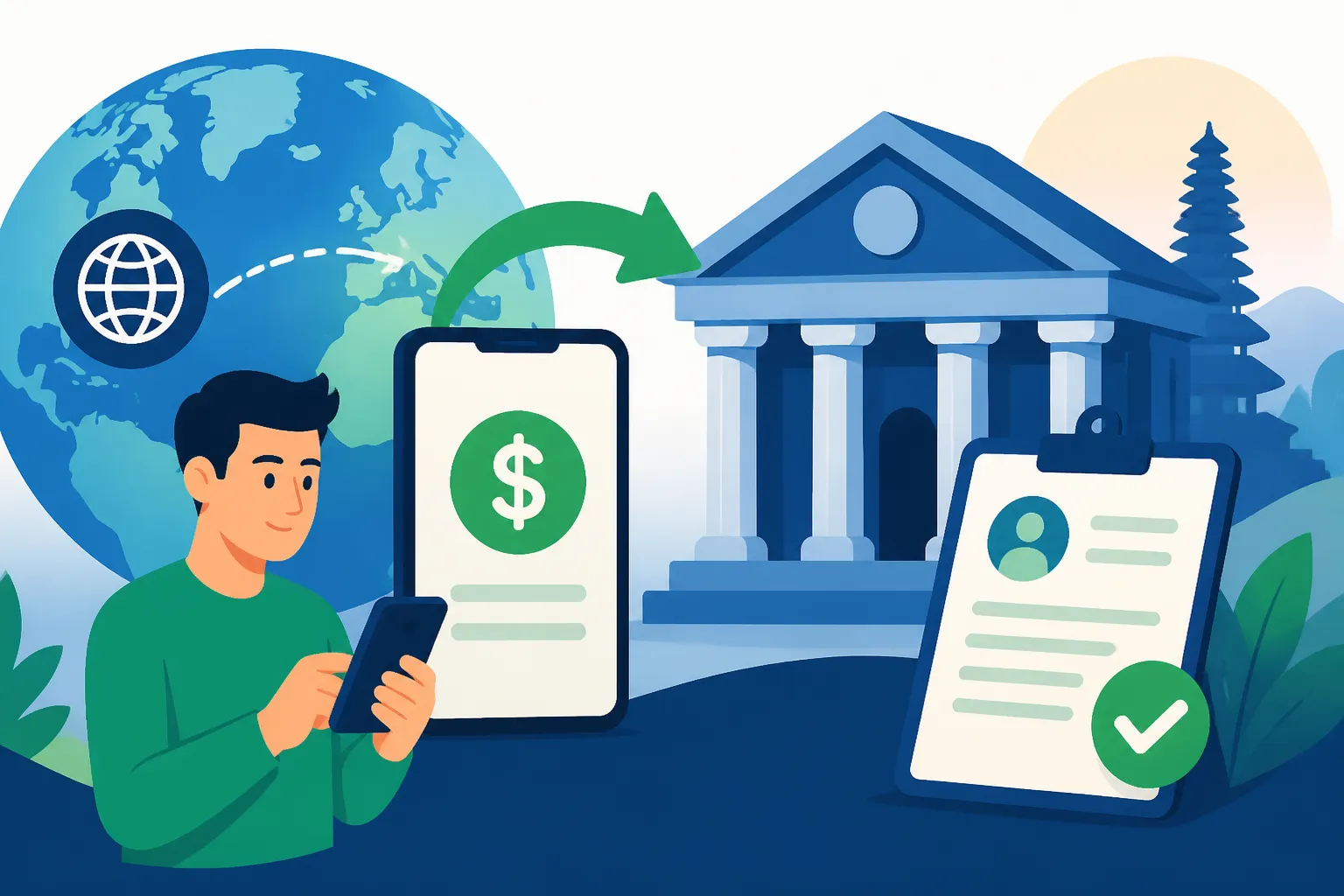
Waiting for a foreign wire transfer to hit your Indonesian bank account can feel like staring into a black hole, especially when the funds simply don't show up on your mobile app. I remember the cold sweat I broke into when my first large project payment from London went missing for ten days, only to find it was being held by a compliance officer in a windowless office in Central Jakarta. This guide solves the mystery of the "missing" transfer and explains exactly how to handle Proof of Funds requests to ensure your foreign salary arrives without a hitch.
Understanding the Indonesian Banking Gatekeepers
Indonesian banks operate under some of the strictest reporting regulations in Southeast Asia, governed largely by Bank Indonesia (BI) and the Financial Services Authority (OJK). When money crosses the border into a local account at BCA, Mandiri, or BNI, it isn't just a digital tally; it is a regulated event. The bank is legally required to know the purpose of every incoming transaction that exceeds certain internal and external thresholds.
The IDR 100 Million Threshold and LLD Reporting
While many smaller transfers under $2,000 might slide through automatically, once you hit the IDR 100,000,000 mark (roughly $6,300 depending on the exchange rate), the bank must report the transaction through the Lalu Lintas Devisa (LLD) system. This is a monitoring mechanism for foreign exchange flow. If you are receiving a salary that exceeds this amount, or if your cumulative transfers for the month are high, the bank’s "Incoming Transfer" department will pause the funds.
They are looking for a specific code to categorize the money. If the sender didn't specify that the payment is a "Salary" or "Consultancy Fee" in the SWIFT message, the bank will wait for you to provide the justification. This is often where the delay happens, as local banks aren't always proactive in calling you; sometimes, you have to be the one to chase them.
Anti-Money Laundering AML and KYC Compliance
Indonesia is currently under significant international pressure to tighten its Anti-Money Laundering (AML) protocols. This means "Know Your Customer" (KYC) is not just a one-time event when Opening a Bank Account in Indonesia: Document Checklists (KITAS, NPWP, Passport) happens. It is an ongoing process. If your account profile says you are a "Language Teacher" but you suddenly receive a $15,000 transfer from a tech firm in Delaware, the system flags a "profile mismatch."
To prevent your account from being frozen, you must ensure your bank profile stays updated. When I moved from a salaried position to a freelance consultancy, I had to physically go to my branch in South Jakarta to update my profession in their system. Failing to do this is the number one reason for Proof of Funds (PoF) requests that lead to long-term delays.
Essential Documentation for Proof of Funds
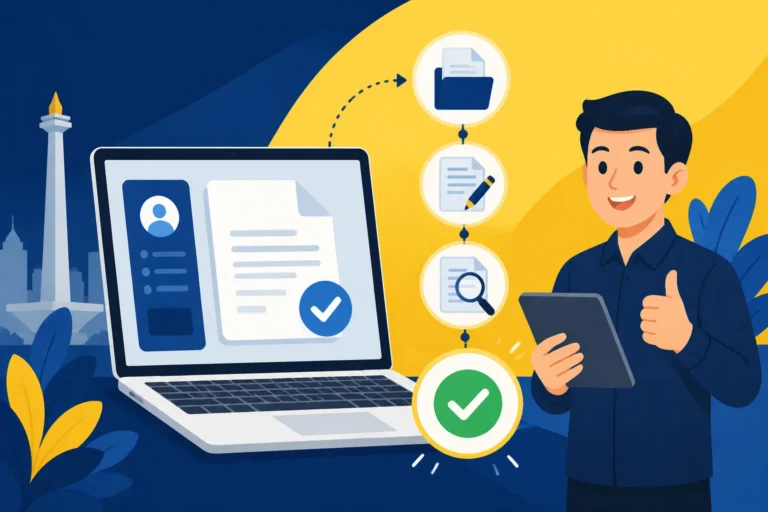
When the bank finally reaches out—or when you corner them in the branch—they will ask for "dokumen pendukung" (supporting documents). Having these ready on your phone or in a neat folder can save you days of administrative back-and-forth. The goal is to prove that the money is "clean" and that you have a legal right to receive it.
The Employment Contract and Appointment Letter
Your primary weapon is your employment contract. If you are working remotely for a company abroad while living here, the bank needs to see the validity of that relationship. The contract should clearly state your name, the employer’s name, your monthly salary, and the duration of the agreement.
Sometimes, a simple PDF isn't enough. I have seen cases where the bank requested a "wet signature" or a stamped letter from HR. If your contract is in a language other than English or Indonesian, you may need to use Certified Translators (Penerjemah Tersumpah) for Immigration Documents to provide a localized version. Always ensure the salary mentioned in the contract matches the amount hitting your bank account to avoid further "discrepancy" questions.
Tax Identification and the NPWP
Your tax ID (NPWP) is more integrated with your banking life than ever before. Since the government linked the NIK (National ID) to the tax system, banks are very sensitive about large inflows of cash that aren't being reported to the tax office. If you don't have an NPWP on file with your bank, they are significantly more likely to hold your funds.
Registering for an NPWP (Tax ID): How Expats Link NIK to Tax Records in 2027 is a mandatory step for anyone staying more than 183 days. When providing proof of funds, the bank will often check if the incoming amount aligns with your reported income bracket. If you are using platforms like Interactive Brokers to move investment dividends back into the country, having your tax paperwork in order is the only way to avoid the "Source of Wealth" interrogation.
Payslips and Source of Wealth Declarations
For recurring monthly salaries, the bank might ask for your last three months of payslips. This is to establish a pattern of income. If this is a one-time large payment—perhaps a bonus or a severance—you will likely be asked to sign a "Surat Pernyataan Sumber Dana" (Source of Funds Declaration). This is a formal document where you legally swear the money did not come from criminal activity.
While filling this out, be extremely precise. Using vague terms like "Business" is a red flag. Instead, use "Monthly Salary for Software Engineering Services." If you are also managing digital assets, be aware that transfers from exchanges like Binance to a local bank are scrutinized even more heavily, often requiring a full trade history to prove the funds weren't just "shuffled" between accounts.
Strategic Ways to Receive Money More Efficiently
Navigating the traditional SWIFT network is often the most painful way to get paid. The fees are high, the exchange rates are usually poor, and the documentation requests are frequent. Veteran expats often look for alternatives that provide better transparency and fewer "held" transfers.
Using Specialized Remittance Tools
Services like Wise have become the gold standard for many of us in Indonesia. Because Wise often uses local banking rails (sending your money from an Indonesian-based account rather than a foreign SWIFT transfer), it can sometimes bypass the heavy manual "Incoming Foreign Transfer" checks that a direct wire from a London bank would trigger.
However, don't assume this makes you invisible. You still have a legal obligation under Money in Indonesia for Foreign Residents: Banking, Tax, and Financial Setup (2027) to ensure your total income is documented. If you use Wise to send large amounts, you may still receive a request from the receiving bank to explain the "Transfer dari pihak ketiga" (Third-party transfer). In this case, you simply provide your Wise statement showing the original source of the funds from your foreign employer.
The Role of VPNs and Secure Access
When managing these transfers, many expats use a NordVPN to access their home country’s banking apps. This is crucial for security, as it prevents your home bank from flagging your login as "suspicious activity" from an Indonesian IP address. I’ve had my UK bank account locked because I forgot to turn on my VPN before checking a balance while on 4G in Bali.
Using a NordVPN also ensures that when you are downloading the payslips or contracts needed for your Indonesian bank's PoF request, you are doing so over a secure, encrypted connection. This protects your sensitive financial data from the prying eyes often found on "Free Villa Wi-Fi" networks.
Managing Bank Relationships and Communication
The "Human Factor" is the most underrated part of Indonesian banking. This is not a country where you can always solve complex problems through a chatbot. Often, a physical visit to your "Cabang Pembantu" (Sub-branch) is the only way to move a stuck transfer.
Finding the Right Branch Manager
Your experience with a Proof of Funds request will vary wildly depending on which branch you use. A small branch in a rural area might be terrified of a $10,000 transfer and hold it for weeks out of pure confusion. Conversely, a branch in an expat-heavy area like Kemang in Jakarta or Canggu in Bali will be much more accustomed to foreign salary inflows.
It pays to be friendly with the staff. When my funds were held, I didn't go in demanding answers; I went in with a box of donuts for the CS team and asked for their "help" in understanding the BI regulations. This "soft approach" often gets you the direct WhatsApp number of the compliance officer handling your case, which is worth its weight in gold.
Handling "Lalu Lintas Devisa" LLD Phone Calls
If the bank calls you, do not ignore it. They are often just looking for a verbal confirmation and a "purpose of transaction" code. If they ask you what the money is for, be consistent with your visa status. If you are on a work KITAS, the answer is "Salary." If you are on a remote worker visa, the answer is "Foreign Earned Income."
Providing inconsistent answers over the phone can lead to a formal audit. If you are unsure of the terminology, refer back to Taxes in Indonesia for Expats: NPWP, PPh 21, and the 183-Day Rule to ensure you are using the correct categories that match your tax filings.
Comparison of Receiving Methods for Expats
| Method | Speed | Documentation Risk | Cost | Best For |
|---|---|---|---|---|
| Direct SWIFT (Bank to Bank) | 3-7 Days | High | High Fees / Poor Rate | Corporate Payroll from MNCs |
| Wise | 1-2 Days | Medium | Transparent / Low Cost | Freelancers & Remote Workers |
| Crypto P2P (via Binance) | Minutes | Very High (Bank may close account) | Market Driven | Tech-savvy users (Risky) |
| Local Transfer (via Agency) | 1 Day | Low (Agency handles PoF) | Commission Based | Large, one-off purchases |
Tax Implications of Receiving Foreign Salary
Receiving the money is only half the battle; keeping it legally requires you to understand the tax landscape. Indonesia claims taxing rights on the "worldwide income" of its tax residents. This means if you are living here and receiving a salary from Singapore, the Indonesian government expects a cut.
Avoiding Double Taxation
Thankfully, Indonesia has signed Double Tax Agreements (DTA): How Expats Avoid Double Taxation in Indonesia with over 60 countries. If your salary is already being taxed at the source (in the US or UK, for example), you can often claim a tax credit in Indonesia so you don't pay twice. The bank's Proof of Funds request is often the first "tripwire" that alerts the authorities to your income, so ensuring your DTA paperwork is ready is a smart move for the long term.
The 183-Day Rule and Global Reporting
If you stay in Indonesia for more than 183 days in any 12-month period, you are legally a tax resident. At this point, Reporting Global Income: How Indonesia Enforces Taxation on Worldwide Assets becomes a reality. When the bank asks for proof of funds, they are effectively building a dossier on your financial life.
If your incoming salary is significantly higher than what you report on your annual Filing the Annual Tax Return (Formulir 1770): Deadlines and Required Documents, you will eventually face an inquiry from the "Kantor Pajak" (Tax Office). The key is consistency: the contract you show the bank should be the same one you use to justify your tax filings.
Summary Checklist for a Stress-Free Payday
To avoid the anxiety of a frozen salary, follow these steps every time you expect a major transfer:
- Ensure the sender includes "Salary Payment" and your full name (matching your passport) in the transfer description.
- Keep a digital folder containing your current employment contract, your NPWP, and your latest KITAS.
- If the money hasn't arrived within 4 business days, visit your home branch in person.
- Use a NordVPN when checking your foreign source accounts to prevent security lockdowns.
- If you are moving large sums for investment, utilize a reputable platform like Interactive Brokers which provides clear statements for the bank's compliance team.
Living in Indonesia is an incredible experience, but the administrative "surprises" can be draining. By treating the bank's Proof of Funds request as a standard procedure rather than a personal hurdle, you can navigate the system with the confidence of a veteran expat.
Disclaimer
This article is for informational purposes only and does not constitute legal, financial, or tax advice. Regulations in Indonesia regarding foreign exchange and taxation are subject to frequent change. Always consult with a qualified local tax professional or financial advisor before making significant financial decisions or reporting income to the authorities.