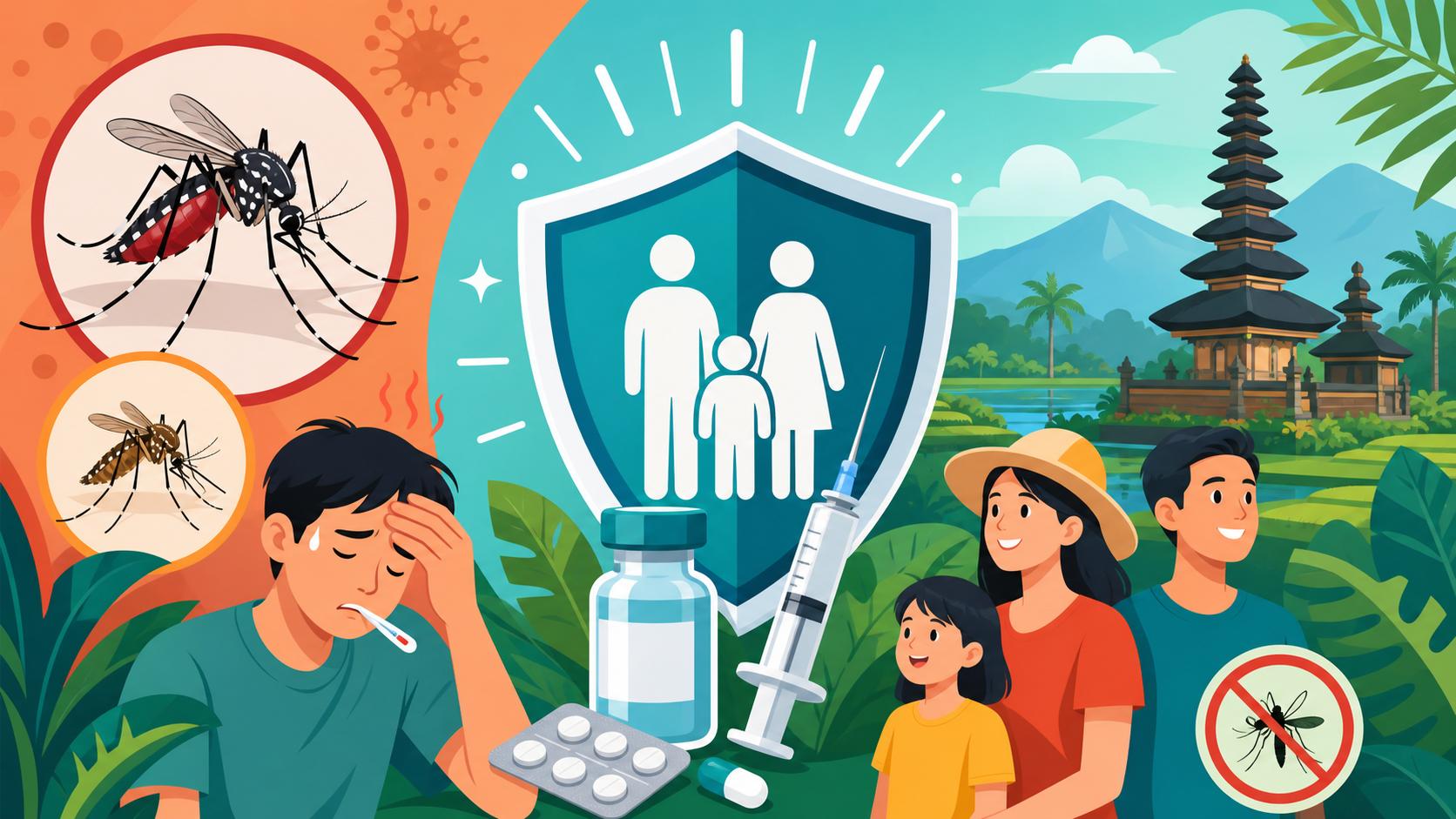
Dengue Fever and Malaria Prevention: Vaccines, Treatments, and Local Realities
The high-pitched whine of a mosquito near your ear at 3 AM isn't just an annoyance in Jakarta or Bali; it is a source of genuine "tropical anxiety." I remember my first week in a humid Canggu villa, obsessively checking every red bump on my skin and wondering if this was the one that would land me in a hospital ward. This guide provides the hard-won, boots-on-the-ground reality of preventing and managing Dengue and Malaria so you can stop worrying and start enjoying life in the archipelago.
The Reality of Tropical Mosquitoes in Indonesia
Living in Indonesia means accepting that mosquitoes are a permanent part of the landscape. Unlike the seasonal pests in temperate climates, Indonesian mosquitoes are active year-round, though their behavior and the risks they carry change significantly depending on the season and your specific island. Understanding the "enemy" is the first step toward not letting them dictate your lifestyle.
Understanding Dengue Fever and Local Realities
Dengue Fever, known locally as Demam Berdarah Dengue (DBD), is the primary concern for most expats living in major urban centers and tourist hubs. The Aedes aegypti mosquito, which carries the virus, is a "sophisticated" urbanite. It prefers clean, stagnant water—think of the tray under your water dispenser, the base of your indoor plants, or a discarded coconut shell in the garden. Crucially, these mosquitoes are daytime biters, peaking in activity shortly after sunrise and just before sunset.
In my experience, the rainy season (November to April) is when the DBD talk dominates expat forums. The influx of water creates endless breeding grounds, and the local news often tracks "outbreak" zones. It is not a disease of the "jungle"; it is a disease of the neighborhood. Most long-term residents will eventually know someone who has had it, or they will have a "Dengue scare" themselves. It is a high-fever, bone-aching illness that requires serious medical monitoring of your platelet levels, often referred to by local doctors as "trombosit."
The Local Context of Malaria in the Archipelago
Malaria is a different beast entirely, both geographically and biologically. While Dengue is everywhere, Malaria is much more localized in modern Indonesia. If you are living in Jakarta, Bali, or most of Java, your risk of contracting Malaria is statistically very low. However, the story changes the moment you head east. Regions like Papua, East Nusa Tenggara (NTT), and parts of Kalimantan and Sumatra still grapple with endemic Malaria.
The Anopheles mosquito, which transmits Malaria, is generally a nighttime biter. The symptoms are often more cyclical—chills, followed by high fever, followed by intense sweating. For many expats, the confusion arises during weekend trips. You might feel perfectly safe in your manicured Bali garden, but a quick surf trip to Sumba or a trekking expedition in Papua requires a completely different level of preparation. This is why Bali Healthcare Guide: Hospitals, Clinics, and Emergency Contacts for Residents is a vital resource for understanding where you stand geographically in relation to these risks.
The Myth of the "Safe" Zone
Newcomers often fall into the trap of thinking that air-conditioned apartments or high-end resorts are mosquito-free zones. While "fogging" (the chemical spraying of neighborhoods) is common in expat enclaves, it is not a silver bullet. Mosquitoes are remarkably resilient. I have seen them in the elevators of high-rise Jakarta offices and in the most expensive villas in Uluwatu.
The "local reality" is that prevention must be a 24/7 mindset. It’s about the cumulative effort: the repellent you apply before a morning coffee, the screen you make sure is closed before bed, and the awareness of your own body’s signals. You don't need to live in fear, but you do need to live with a strategy.
Preventing Bites: Beyond the Basics
If you ask a local how they avoid mosquitoes, they might point to a coil of burning incense (obat nyamuk) or a bottle of Soffell from the local Indomaret. While these work to an extent, expats often need a more robust, multi-layered approach to stay truly protected, especially if they have young children or are particularly "tasty" to insects.
Mosquito Proofing Your Indonesian Home
Your home is your sanctuary, but in the tropics, it can easily become a breeding ground. The first rule of thumb is "stagnant water is the enemy." Every week, do a "sweep" of your property. Look at the gutters, the decorative pots, and even the "dispenser air" (the drip tray under your water cooler). If you have a swimming pool, ensure the pump is running regularly and the chlorine levels are maintained.
Screens are another point of contention. Many beautiful "open-plan" villas in Bali are architectural masterpieces but practical nightmares for mosquito control. If you live in an open villa, your primary defense will be high-quality mosquito nets over the beds and "electric rackets" (the tennis-style zappers). For those in apartments or closed houses, check the seals on your doors. Even a tiny gap under a door is an invitation for an Aedes aegypti to spend the night. If you’re unsure about your current setup, Living in Indonesia as an Expat: The Complete Starter Guide (2027) offers more tips on setting up a tropical-proof household.
Repellents and Essential Supplies
When it comes to repellents, the local market is dominated by brands like Soffell and Autan. They are cheap and effective, but they can be harsh on the skin if used daily for years. Many expats prefer to source higher-quality, often organic or DEET-free alternatives. This is where a site like iHerb becomes indispensable for the expat community. I personally stock up on Picaridin-based repellents or essential oil blends from iHerb because they feel much lighter in the humidity and don't have that "chemical" sting.
Beyond lotions, consider "wearable" prevention. Permethrin-treated clothing is a godsend if you are heading into the bush or spending time in a garden-heavy area. You can spray your own clothes with Permethrin (available via international shipping), and it stays effective through several washes. In your home, electric plug-in vaporizers are standard. They are generally more effective and less irritating to the lungs than the traditional burning coils.
The Role of "Fogging" and Community Efforts
In many residential areas (Kompleks) or villas, you will periodically hear the roar of a two-stroke engine and see clouds of thick, white smoke. This is "fogging." The local neighborhood head (RT/RW) or your villa management will arrange this to kill adult mosquito populations. While it looks dramatic and is somewhat effective at knocking down the current population, it does not kill the larvae.
Don't rely on fogging as your only defense. In fact, many expats prefer to stay indoors and close all windows when the fogging happens, as the chemicals can be quite pungent. It is a community-level "Band-Aid" rather than a cure. Real prevention remains a personal responsibility, starting with what you apply to your skin and how you manage your immediate environment.
Vaccines and Medical Prophylaxis
For years, we lived in Indonesia with no vaccine for Dengue, but that has recently changed. This has been a massive relief for parents and long-term residents. However, the world of vaccines and preventative medication in Indonesia can be a bit confusing to navigate without a guide.
The Dengue Vaccine (Qdenga) in Indonesia
As of 2024 and 2025, the Qdenga vaccine has become widely available in Indonesian clinics and hospitals. Unlike earlier versions of Dengue vaccines, Qdenga can be administered regardless of whether you have previously had Dengue fever. It is a two-dose series, usually spaced three months apart.
I’ve seen many friends go through the process at clinics like SOS Medika or Siloam. The consensus is that while it doesn't offer 100% protection against infection, it is incredibly effective at preventing "severe Dengue"—the kind that leads to internal bleeding or organ failure. If you are staying long-term, discussing this with a doctor at an English-Speaking Clinic in South Jakarta (Kemang and SCBD) or a similar facility in Bali is highly recommended. It is a small investment for significant peace of mind.
Malaria Prophylaxis for Remote Travel
If you are planning a trip to Labuan Bajo (to see the Komodo dragons), Sumba, or Papua, you need to have the Malaria conversation. Unlike Dengue, there is no widely used "lifestyle" vaccine for Malaria. Instead, you take prophylaxis—pills that prevent the parasite from taking hold if you are bitten.
Common options include Malarone (Atovaquone/Proguanil), Doxycycline, or Lariam (Mefloquine). Most of these are available at major Indonesian pharmacies (Apotek), but you should ideally start them before you travel. Be aware that some, like Lariam, are known for "vivid dreams" or psychological side effects, which can be a bit unsettling when you're in a remote jungle hut. Always consult a specialist to find the right fit for your body. For more on how to navigate these purchases, check the Apotek Guide: Prescription Workflow, Refills, and Communicating with Pharmacists.
Managing Side Effects and Local Availability
One thing I’ve learned is that "tropical medicine" in Indonesia is very efficient. If you go to a local clinic and say you are traveling to an endemic area, they will know exactly what to prescribe. However, always double-check the brand names. If you prefer a specific international brand of prophylaxis, you might want to order it through your home country or check if specialized expat clinics carry it.
| Prevention Method | Target Disease | Best For | Availability |
|---|---|---|---|
| Qdenga Vaccine | Dengue Fever | Long-term Residents | Major Hospitals / Clinics |
| Malarone / Doxy | Malaria | Travelers to Eastern Indo | Most Apoteks / Travel Clinics |
| Permethrin Spray | Both | Hikers / Gardeners | iHerb / Specialty Stores |
| Picaridin Repellent | Both | Daily Use (Skin-friendly) | iHerb / Select Expat Shops |
| Soffell / Autan | Both | Emergency / Budget Use | Every Indomaret / Alfamart |
Navigating the Healthcare System when Sick
The moment you feel that "thumping" headache behind the eyes or a fever that comes on like a freight train, the clock starts ticking. In Indonesia, you don't wait three days to see if a fever "goes away." You act quickly.
Early Symptoms and When to Seek Help
Dengue often starts with a very high fever (39-40°C), severe muscle and joint pain (hence the nickname "breakbone fever"), and a characteristic pain behind the eyes. A rash may appear a few days later. Malaria can feel similar but often has a more "flu-like" beginning with cycles of shivering.
The "local rule" is this: if you have a high fever for more than 24 hours that doesn't respond well to paracetamol, go get a blood test. You don't necessarily need a full hospital admission yet. You can go to a lab like Prodia or Pramita and ask for a "Dengue NS1" test and a "Complete Blood Count" (Darah Rutin). This will tell you if the virus is present and where your platelet levels are. Waiting until you are "too weak to walk" is a dangerous game in the tropics.
Choosing Between Clinics and Hospitals
For expats, the choice of where to go is crucial. If you are in Bali, BIMC Hospital Bali: Services, Costs, and Insurance Direct Billing Options is often the first choice due to their international standards. In Jakarta, the Siloam or Medistra networks are the heavy hitters.
Why does the facility matter? Because Dengue management is all about fluid monitoring. You want a place that understands how to manage an IV drip without "over-hydrating" you, which can be a risk during the "leaky" phase of Dengue. Private hospitals are generally better equipped for this level of nursing care. If you have international coverage through a provider like Cigna Global, these private facilities will usually handle the billing directly, which is one less thing to worry about when you feel like death warmed over.
The Importance of the "Trombosit" Count
In Indonesia, the word "Trombosit" (platelets) will become very familiar if you are sick. A normal count is between 150,000 and 450,000. When you have Dengue, this number can plummet. If it drops below 100,000, doctors usually start discussing hospitalization. If it drops below 50,000, you are in the "danger zone" where internal bleeding becomes a risk.
Local doctors are experts at this. They have seen thousands of cases. They will likely suggest drinking plenty of water, isotonic drinks (like Pocari Sweat), and sometimes local remedies like guava juice (jambu biji), which is culturally believed to help raise platelets. While the science on guava juice is debated, it certainly doesn't hurt to stay hydrated. For more on navigating an emergency, see Emergency Medical Care in Indonesia: Ambulances, ERs, and Evacuation Protocols.
Treatment Realities: What to Expect in an Indonesian Ward
If you are admitted to an Indonesian hospital for Dengue or Malaria, it is a unique experience. It is not necessarily "scary," but it is different from a Western hospital stay.
Standard Protocols for Dengue Management
There is no "cure" for Dengue; the treatment is purely supportive. You will be put on an IV drip to keep your fluids up. Nurses will come in every few hours—even in the middle of the night—to prick your finger or draw blood for a fresh platelet count. This constant monitoring is vital because the "critical phase" of Dengue actually happens when the fever drops.
Many expats are surprised by how "social" Indonesian hospitals can be. You might have family members of other patients sleeping on mats in the hallways or a constant stream of visitors. If you prefer privacy and a quieter environment, you should always opt for a "VIP" or "VVIP" room. These rooms are more like hotel suites and provide the quiet you need to recover. This is where having a robust insurance plan from a company like Cigna Global pays off, as they typically cover these higher room classes.
Insurance and Hospital Billing
Indonesian hospitals often require a deposit or a "letter of guarantee" from your insurance company before they even wheel you into a room. If you are using Public vs Private Healthcare in Indonesia: BPJS Kesehatan and Expat Insurance, be aware that BPJS will usually put you in a standard ward (KRIS system) unless you pay for an upgrade.
Billing can be complex. You will see charges for everything from the IV needle to the individual tablets of paracetamol. It is always wise to ask for an itemized bill. If you have international insurance, the hospital's "International Patient" department will usually coordinate with your provider. If you are paying out of pocket, be prepared for a bill that can range from $500 to $3,000 depending on the length of stay and the room class. To avoid surprises, read up on Hospital Billing in Indonesia: Avoiding Overcharges and Understanding Inpatient Fees.
Local Care and "Jamu" Culture
Don't be surprised if your Indonesian friends or even some staff suggest supplemental local treatments. Jamu, the traditional Indonesian herbal medicine, is often used alongside Western medicine. While I always recommend sticking to your doctor’s clinical advice for the IV and monitoring, drinking a little bit of turmeric water or ginger tea can be soothing. Just make sure your doctor knows what you are consuming so it doesn't interfere with your blood tests.
Long-term Recovery and Community Health
Leaving the hospital doesn't mean you are "back to normal." The "Dengue hangover" is a real phenomenon that can last for weeks or even months.
Post-Viral Fatigue and Aftercare
One of the biggest mistakes expats make is trying to go back to work or hit the gym the day after they are discharged. Dengue and Malaria take a massive toll on your liver and your immune system. You will likely feel a profound "bone-tired" fatigue.
This is the time to focus on nutrition. I often turn back to iHerb during this phase to get high-quality Vitamin C, Zinc, and probiotics to rebuild my gut health after the stress of the illness. Listen to your body. If you push too hard, you risk a relapse of fatigue that can sideline you for a month. Gentle walks, plenty of sleep, and high-protein meals are your best friends here.
Community Mosquito Control and Responsibility
Once you’ve had Dengue, you have a strange kind of "immunity" to that specific strain, but there are four different strains of Dengue. Getting a second strain can sometimes be more severe than the first. This is why your commitment to prevention should actually increase after you’ve been sick.
Be the "mosquito police" in your neighborhood. If you see a neighbor with a stagnant pond or a construction site nearby with pooling water, speak up. In Indonesia, this is often done through the RT (neighborhood head). It’s about "Gotong Royong"—the Indonesian concept of mutual cooperation. By keeping your garden clean, you are protecting not just yourself, but the Indonesian family living next door and the other expats in your circle.
Psychological Recovery: Overcoming the Fear
Finally, there is the mental aspect. After a bad bout of a mosquito-borne illness, every buzz can trigger a minor panic attack. It takes time to feel "safe" in your garden again. My advice? Don't let it rob you of the beauty of living in Indonesia. With the Qdenga vaccine, better repellents from iHerb, and the excellent clinical care available at places like Siloam Hospitals Overview: What Expats Should Know About the Network, you have all the tools you need to manage the risk.
| Recovery Phase | Focus Area | Recommended Action |
|---|---|---|
| Week 1 Post-Discharge | Absolute Rest | No work, no exercise, high hydration. |
| Week 2-4 | Immune Support | Supplements (iHerb), liver-friendly diet. |
| Month 1+ | Prevention Audit | Install better screens, get vaccinated. |
| Ongoing | Community | Report stagnant water to neighborhood heads. |
Disclaimer
The information provided in this guide is for educational and informational purposes only and is based on personal expat experiences and general local knowledge in Indonesia. It is not a substitute for professional medical advice, diagnosis, or treatment. Always seek the advice of your physician or another qualified health provider with any questions you may have regarding a medical condition. Never disregard professional medical advice or delay in seeking it because of something you have read in this article. The healthcare landscape in Indonesia, including vaccine availability and insurance protocols, can change rapidly; always verify current regulations with official sources.