Everyday Etiquette: Religion, Culture, Garbage, and Community Norms
One of the most jarring moments for any new arrival in Indonesia is the realization that a well-intended gesture can be perceived as a profound insult. I remember my first week in Jakarta, handing a store clerk my credit card with my left hand, only to be met with a look of visible discomfort that I didn't understand for months. This guide solves the "invisible" social friction that makes expat life unnecessarily difficult by detailing the unwritten rules of religious respect, community hierarchy, and daily social conduct.
Navigating Religious Sensitivity with Grace
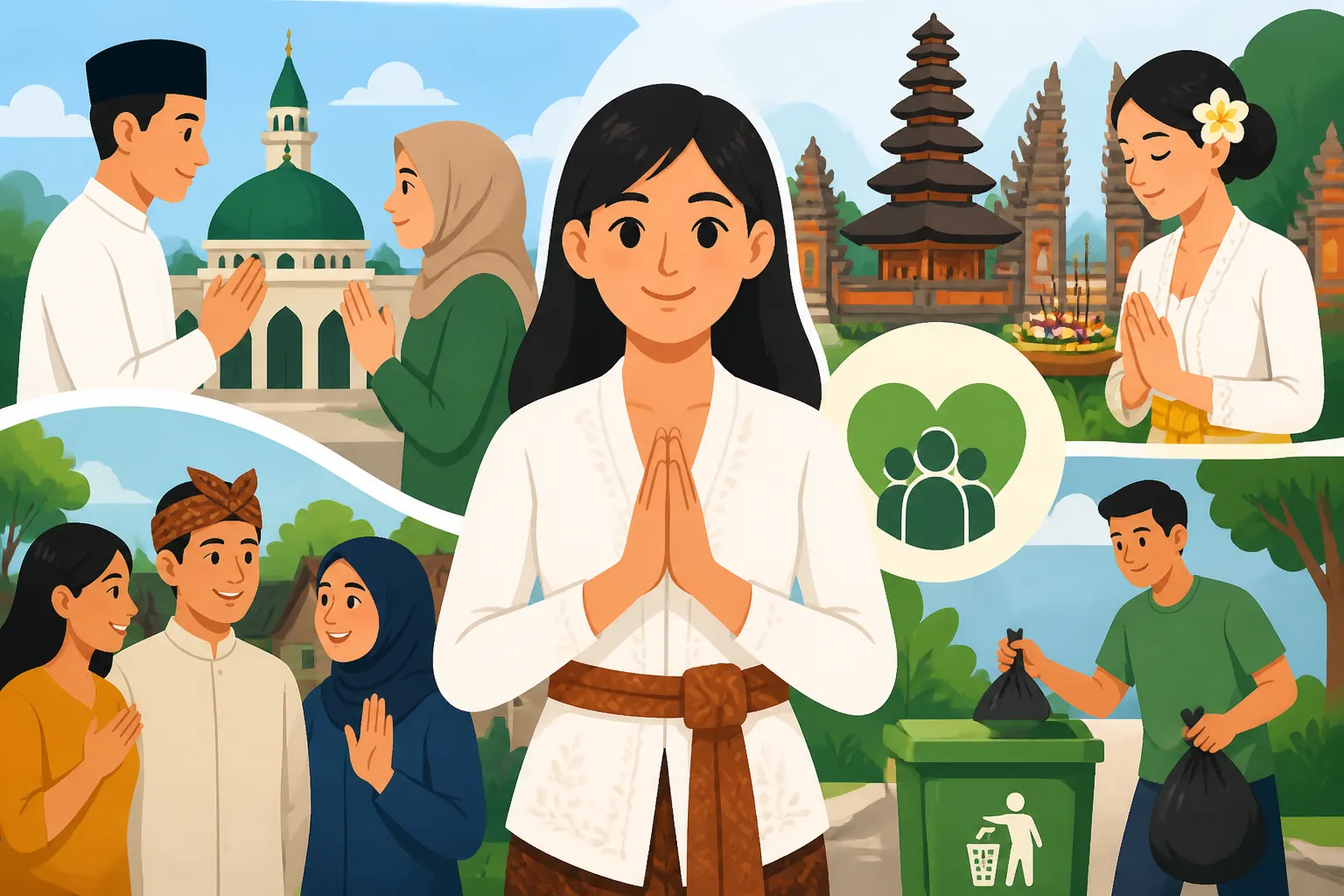
Religion is not a private matter in Indonesia; it is the bedrock of the national identity and daily rhythm. For the uninitiated, the five daily calls to prayer (Adzan) echoing from the minarets can be a sensory overload, but for locals, it is the heartbeat of the community. Understanding that the majority of the population is Muslim—while also respecting the massive Hindu presence in Bali and Christian enclaves in North Sulawesi or Papua—is the first step toward true integration.
The Call to Prayer and Mosque Etiquette
The Adzan is more than just a sound; it marks the transition of the day. If you live near a mosque, you will experience the 4:30 AM Subuh prayer. While it might tempt you to complain about the volume, doing so publicly is often seen as a direct attack on the faith itself. Veteran expats know that soundproofing your bedroom is a better long-term strategy than expressing frustration to your neighbors. When walking past a mosque during prayer times, it is polite to turn down your music or stop loud conversations.
If you are invited into a mosque, your attire must be impeccably modest. For men, this means long trousers and a shirt that covers the shoulders; for women, a headscarf and loose clothing that covers the arms and legs are essential. Always remove your shoes before stepping onto the perimeter tiles. Even if you are not religious, showing reverence for the space will earn you immense respect from your local community. You can easily find modest, high-quality clothing for these occasions on Shopee, which offers a vast range of traditional and modern modest wear delivered right to your door.
During the Friday congregational prayers (Shalat Jumat), which take place around midday, expect most offices to empty out and traffic to come to a standstill as men head to the mosque. If you are scheduling meetings or deliveries, avoid the 11:30 AM to 1:30 PM window on Fridays. Being mindful of these timings shows that you understand the local culture and aren't just living in an expat bubble.
Observing Ramadan as a Non-Muslim
Ramadan is a transformative month in Indonesia. From dawn until sunset, millions of people abstain from food and water. As an expat, you aren't expected to fast, but you are expected to be "sopan" (polite). Eating or drinking conspicuously in public during the day is considered insensitive. Many restaurants will stay open but will hang curtains over the windows to hide the diners from the view of those fasting outside.
During this month, you will notice a significant shift in the pace of life. Work hours often end earlier to allow people to return home for "Buka Puasa" (breaking the fast). If you are ordering food or using ride-hailing services, expect long wait times around 5:00 PM to 7:00 PM. I have found it incredibly helpful to stay connected with a local eSIM from Airalo to track delivery delays or message friends during these peak times without relying on spotty public Wi-Fi.
The spirit of Ramadan is one of charity and community. It is the time when you will be expected to provide the THR (Tunjangan Hari Raya) bonus to your staff. For more on the specifics of this mandatory payment, see our guide on Hiring a Domestic Helper (Pembantu): Salaries, THR, and Live-In Arrangements. Navigating this period with patience and generosity is perhaps the fastest way to build a deep bond with your Indonesian neighbors. For more detailed advice on this period, check out Navigating Ramadan as an Expat: Fasting Etiquette, Traffic, and Reduced Hours.
Religious Diversity: Balinese Offerings and Church Community
In Bali, the religious landscape shifts toward Agama Hindu Dharma. You will see "Canang Sari"—small palm-leaf baskets filled with flowers, incense, and food—placed on sidewalks, doorsteps, and even on the dashboards of cars. These are daily offerings to the gods. One of the most common cultural blunders for tourists and new residents is accidentally stepping on these offerings. While the Balinese are generally forgiving, intentionally disregarding them is seen as highly disrespectful.
If you are visiting Bali during the Balinese New Year, you must adhere to the rules of Nyepi. This is a day of total silence where no one is allowed on the streets, no lights are to be shown, and the airport even closes for 24 hours. Failure to comply can result in being detained by the "Pecalang" (traditional village security). For a full breakdown of how to prepare your household for this event, read our post on Understanding the Balinese Calendar: Nyepi (Day of Silence) Rules for Expats.
Outside of the major holidays, the community often centers around the local temple or church. In many parts of Indonesia, Sunday morning is dedicated to church services, and just like the Friday prayers, this can affect local traffic and business hours. Whether you are in a Hindu, Muslim, or Christian area, acknowledging the religious calendar is a vital part of everyday etiquette.
Social Interactions and the Concept of Sopan
The Indonesian concept of "Sopan Santun" (etiquette and decorum) is the oil that keeps the social machinery running smoothly. It is a culture rooted in harmony, where direct confrontation is avoided at all costs. To a Westerner, this can sometimes feel like "beating around the bush," but in Indonesia, maintaining "face" is more important than absolute bluntness.
The Power of the Smile and Indirect Communication
In Indonesia, a smile is not always an expression of happiness. It can be a way to apologize, a sign of embarrassment, or a way to soften a "no" that someone is uncomfortable saying. You might find that when you ask a question, the person smiles and gives you an answer that seems vague. This is often because they don't know the answer but don't want to disappoint you by saying "I don't know."
Learning to read between the lines is an essential skill for any expat. If you receive a "maybe" or a "later," it is often a polite "no." Pushing for a definitive answer can cause the other person to feel "malu" (ashamed or embarrassed). Instead of being forceful, try rephrasing your request or giving the person a graceful way to decline. This indirect communication style is a cornerstone of the Indonesian workplace and social life.
When you are out exploring different cities, perhaps booking a stay through Agoda to experience a local "kampung" or a traditional neighborhood, you will notice that people are incredibly friendly and curious. They may ask you personal questions like "Where are you going?" or "Are you married?" These aren't meant to be intrusive; they are standard greetings. Instead of feeling defensive, a simple, polite answer is all that is required to maintain the social harmony.
Body Language: Hands, Heads, and Feet
The physical way you carry yourself speaks volumes in Indonesia. As I mentioned earlier, the left hand is historically associated with hygiene and is considered "unclean." Always use your right hand to give or receive items, including money, business cards, and food. If your right hand is full, it is common to apologize by saying "maaf, tangan kiri" (sorry, left hand) as you hand something over.
The head is considered the most sacred part of the body. You should never touch an adult's head, and even ruffling a child's hair—which might be seen as affectionate in the West—can be viewed as inappropriate. Conversely, the feet are considered the lowest and dirtiest part of the body. Pointing your feet at someone, or using your feet to move a chair or point at an object, is a significant insult. Always keep your feet flat on the floor when sitting.
When walking in front of someone, especially someone older or of higher status, it is polite to slightly bow your head and extend one hand downward as a sign of "permisi" (excuse me). This small gesture of humility is highly valued and shows that you are making an effort to understand local norms. For more on how to dress the part of a respectful resident, see Dressing Modestly: What 'Sopan' Means Outside of Beach Resort Areas.
Hierarchy and Using Titles (Bapak/Ibu)
Indonesia is a hierarchical society where age and status are respected. Addressing someone simply by their first name is often too informal unless you are very close friends. The standard titles are "Bapak" (Mr./Father) for men and "Ibu" (Mrs./Mother) for women. Even if the person is younger than you, if they are in a position of authority or service, using these titles is a sign of respect.
In more casual settings, you might use "Mas" for a young man or "Mbak" for a young woman, especially in Java. In Bali, titles like "Bli" (brother) or "Gek" (sister) are common. If you are unsure, always default to Bapak or Ibu. It is also common to see people using these titles followed by the first name, such as "Ibu Sari" or "Bapak Agung."
This hierarchy extends to the way feedback is given. If you have an issue with a service provider or an employee, doing so in front of others is a major faux pas. Private, gentle feedback is much more effective than public criticism. For a deeper dive into managing these relationships, read our article on Navigating Cultural Clashes with Domestic Staff: Direct vs Indirect Feedback.
Community Living: The RT, RW, and Banjar Systems
When you rent a house or an apartment in Indonesia, you aren't just moving into a building; you are joining a micro-governance system. The RT (Rukun Tetangga) and RW (Rukun Warga) are the neighborhood and community administrative units that manage everything from security to administrative paperwork.
Registering with the Local Village Chief
One of your first tasks upon moving into a new home is to register with the local RT. Your landlord should facilitate this, but it is your responsibility to ensure it happens. You will need to provide copies of your passport, KITAS, and a domicile letter. This registration isn't just bureaucratic; it's how the community knows who belongs there.
The RT head is usually a volunteer from the neighborhood who knows everyone’s business. Being on good terms with your RT head can save you a lot of trouble, especially when it comes to getting local permissions or handling minor disputes. They are also the ones who will verify your residency if you ever need to open a bank account or apply for a local driving license. For a step-by-step guide on this process, see Rukun Tetangga (RT) / Rukun Warga (RW): Registering with the Local Village Chief.
In Bali, this system is supplemented by the "Banjar." The Banjar is a traditional community organization that is even more influential than the RT/RW in many ways. They manage local ceremonies, security, and even waste collection. If you are living in a villa in Bali, you will likely pay a monthly fee to the Banjar for these services. Understanding the power of the Banjar is key to a peaceful life on the island.
Gotong Royong: The Spirit of Mutual Cooperation
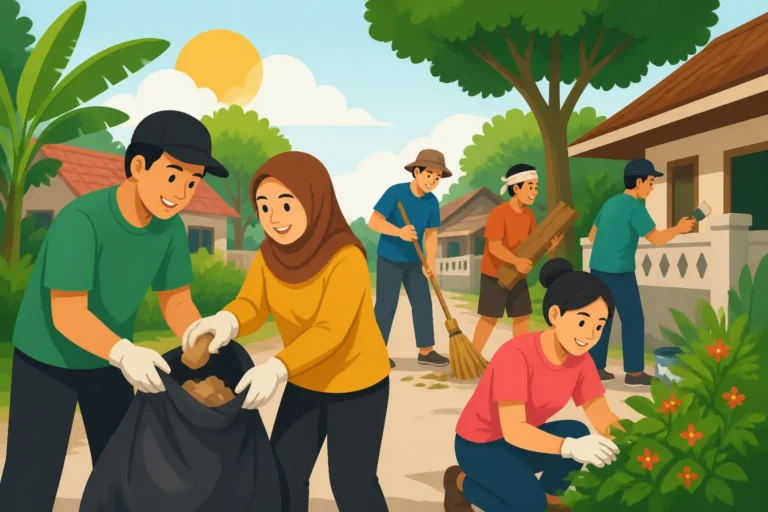
"Gotong Royong" is the Indonesian philosophy of mutual cooperation. It is the idea that the community works together for the common good. You might see neighbors gathered on a Sunday morning to clean the gutters or paint the community gates. While as an expat you might not be expected to pick up a broom, your presence and a small contribution of snacks or water for the workers go a long way.
Participating in these community events, even just for a few minutes, shows that you aren't just an outsider looking in. It builds a safety net of neighbors who will look out for your house when you are away and help you navigate local issues. I have found that a little effort in "Gotong Royong" pays back in spades when you need a favor from the neighborhood. You can read more about this in Participating in Gotong Royong.
This spirit of cooperation also applies to security. Many neighborhoods have a "Siskamling" (system of community security) where a "Satpam" (security guard) or local men take turns patrolling at night. If you live in a gated community, you will pay a monthly fee for this. Always greet your local Satpam; they are the eyes and ears of your street.
Handling Noise and Neighborhood Disputes
Noise is a fact of life in Indonesia. Between the mosques, the roaming "Kaki Lima" (street food) vendors with their distinct bells and clacks, and the occasional late-night community event, "peace and quiet" is a relative term. If a neighbor is being particularly loud, the worst thing you can do is storm over and demand they be quiet.
Instead, the traditional way to handle a dispute is through the RT or RW head. They act as mediators to ensure that harmony is maintained. If you have a problem, bring it to the RT head, and they will speak to the neighbor on your behalf. This avoids a direct confrontation and allows the issue to be resolved without anyone losing face.
On the flip side, if you are planning to have a party or do construction work, it is common etiquette to inform your neighbors and the RT head beforehand. A small gift of food (like a box of donuts or local snacks) delivered to the immediate neighbors before a party starts can prevent many complaints.
Garbage Management and Environmental Responsibility
Waste management is one of Indonesia's biggest challenges, and as an expat, how you handle your trash reflects your respect for the environment and the local community. The systems vary wildly between high-rise apartments in Jakarta and private villas in rural Bali.
Local Waste Collection vs. Private Services
In most neighborhoods, garbage is collected by a "Tukang Sampah" (garbage man) who pulls a cart through the streets. You pay a small monthly fee to the RT for this service. However, this waste often goes to a central dump without being sorted. If you are concerned about where your trash ends up, you might want to look into private waste services.
In Bali, many expats use services that focus on sorting and recycling. These private companies provide separate bins for plastics, paper, and organic waste. While they cost more than the Banjar service, they provide peace of mind that your waste isn't contributing to the island's landfill crisis. For more details on your options, see our guide on Garbage and Recycling in Indonesia: Local Pickups and Private Waste Services.
If you live in an apartment, the building management usually handles waste disposal. You simply drop your trash in a designated chute or room. However, even in apartments, recycling is often limited. I recommend finding local recycling drop-off points for glass and electronics, as these are rarely handled by standard collection services.
Recycling Initiatives and Plastic Reduction
Indonesia has made significant strides in reducing single-use plastics. In many cities, including Jakarta and Denpasar, plastic bags are banned in supermarkets and convenience stores. You are expected to bring your own reusable bags. If you forget, you can usually buy a reusable bag at the checkout for a small fee.
There are also several apps and startups in Indonesia focused on the "circular economy." You can use apps to have your recyclables picked up and even earn small rewards. This is particularly popular in expat-heavy areas where environmental awareness is high. Supporting these initiatives helps build a better infrastructure for everyone.
When shopping on Shopee, you will often notice that items are heavily wrapped in plastic and bubble wrap to survive the logistics chain. Being mindful of how you dispose of this packaging—perhaps reusing the bubble wrap for your own shipping needs—is a small but important part of being a responsible resident.
Composting and Managing Tropical Organic Waste
In the tropical heat, organic waste can become a problem very quickly. If you have a garden, starting a compost bin is a great way to manage food scraps. However, you need to be careful about pests. Closed-system composters or "Bokashi" bins are popular choices for expats because they ferment the waste and reduce odors.
If you don't have space for composting, try to minimize food waste by shopping more frequently for fresh produce at the "Pasar" (market). Not only is the food fresher, but it also comes with much less packaging than supermarket goods. For tips on navigating these local markets, check out Tipping and Haggling: Navigating Markets (Pasar) and Service Industries.
Managing your household's environmental footprint is part of being a good neighbor. When you take care of your waste properly, you set a positive example and contribute to the cleanliness of your "RT."
Household Staff and Professional Boundaries
Most expats in Indonesia will employ at least one person—be it a "Pembantu" (housekeeper), a "Sopir" (driver), or a "Nanny." Navigating these relationships requires a delicate balance of professional boundaries and cultural empathy.
Hiring and Managing a Pembantu or Driver
Hiring staff is often done through word-of-mouth recommendations from other expats or neighbors. While agencies exist, the most trusted employees are usually those with a long history in the neighborhood. When you hire someone, you aren't just hiring an employee; you are often taking on a level of responsibility for their well-being.
It is standard to provide meals (or a meal allowance) and to ensure that their working hours are reasonable. While some staff are "live-in," many "live-out" and work set hours. Clear communication about expectations is vital, but remember the indirect nature of Indonesian communication. Instead of asking "Do you understand?", which will almost always be answered with "Yes," ask them to show you how they will perform a task.
A driver can be a lifesaver in the chaotic traffic of Jakarta. They don't just drive; they take care of the car’s maintenance and often help with errands. Treat your driver as a partner in your daily logistics. For a complete look at the legal and social requirements, see Hiring a Domestic Helper (Pembantu): Salaries, THR, and Live-In Arrangements.
Navigating Cultural Clashes with Domestic Staff
Cultural misunderstandings are inevitable. One common issue is "jam karet" (rubber time), where staff might be late due to family obligations or community ceremonies. In Indonesia, family and community always come first. Being flexible with their schedule during important local events will build long-term loyalty.
Another clash often occurs around cleaning standards or the use of specific products. Indonesians often have their own traditional ways of cleaning that might differ from yours. Instead of being critical, explain why you prefer a certain method. Patience is the most important tool in your management toolkit.
If you find yourself struggling with communication, remember that many staff may not speak fluent English. Using a translation app or taking basic Bahasa Indonesia lessons can bridge this gap significantly. We cover more on this in our guide on Navigating Cultural Clashes with Domestic Staff: Direct vs Indirect Feedback.
The THR Bonus and Religious Holidays
The THR (Tunjangan Hari Raya) is a mandatory 13th-month salary paid before the employee's major religious holiday (usually Eid al-Fitr for Muslims or Christmas for Christians). This is not a "bonus" in the Western sense; it is a legal requirement for anyone who has worked for you for more than a year.
During the "Mudik" season (the exodus at the end of Ramadan), your staff will likely want to return to their home village for a week or two. This is the time when most expat households have to manage without help. Planning for this period—perhaps by stocking up on groceries or doing a deep clean before they leave—is essential.
Showing generosity during these times, perhaps by providing a small gift of food (Sembako) like rice, oil, and sugar, is a traditional way to show appreciation. These gestures strengthen the bond between you and your staff, ensuring a more harmonious household.
Money Etiquette and Daily Transactions
How you handle money in Indonesia is a direct reflection of your character. It is a society that is still very cash-centric in traditional areas, though digital payments are rapidly taking over in the cities.
Tipping and Haggling at the Pasar
In modern restaurants and hotels, a service charge is usually included in the bill. However, tipping a little extra for great service is always appreciated. For Gojek or Grab drivers, a small tip through the app is standard practice, especially if they had to navigate heavy rain or "macet" (traffic).
Haggling is expected at traditional markets (Pasar) and when dealing with street vendors, but it should always be done with a smile and a sense of "play." The goal isn't to squeeze every last rupiah out of the vendor, but to find a fair price that respects their work while ensuring you aren't being overcharged as a "Bule" (foreigner).
If you are at a high-end mall or a fixed-price store, haggling is not appropriate. For everything else, start at about 50-60% of the initial price and work your way up. For a more detailed guide on these interactions, read Tipping and Haggling: Navigating Markets (Pasar) and Service Industries.
Splitting the Bill in Social Settings
When dining with Indonesian friends or colleagues, the concept of splitting the bill down to the last cent is quite rare. Often, the person who invited the others will pay for everyone. If you are the highest-status person at the table (as expats often are perceived to be), there may be an unspoken expectation that you will pick up the tab.
If you want to split the bill, it’s best to do it evenly rather than by item. Indonesians find the "I had the salad, you had the steak" breakdown to be a bit "perhitungan" (too calculating/stingy). If you want to be seen as a generous friend, simply offer to pay and let others get the next one. You can find more on this in Splitting Bills: Why Indonesian Restaurants Rarely Let You Split by Item.
Using e-wallets like GoPay or OVO makes these transactions much easier. You can simply transfer your share to a friend with a few taps. Staying connected via Airalo ensures you can always access your banking and payment apps when the bill arrives.
Using E-Wallets and QRIS for Seamless Payments
The QRIS (Quick Response Code Indonesian Standard) system has revolutionized payments. You can now pay for everything from a street-side "Bakso" to a luxury boutique by scanning a single QR code with your Indonesian bank app or e-wallet.
As an expat, having a local bank account and setting up these apps is one of the first things you should do. It saves you from carrying piles of cash and makes you look more like a local. It also helps you avoid the "Bule price" in some informal settings because you are using the same payment system as everyone else.
| Etiquette Category | Do | Don't |
|---|---|---|
| Hands | Use your right hand for everything. | Never use your left hand to give/receive. |
| Communication | Smile to diffuse tension. | Use direct, public confrontation. |
| Dress | Dress modestly in villages/mosques. | Wear swimwear away from the beach. |
| Feet | Keep them flat on the floor. | Point your feet or shoes at someone. |
| Hierarchy | Use titles like Bapak and Ibu. | Address elders by their first name only. |
| Money | Use QRIS or small bills for markets. | Haggle aggressively in fixed-price malls. |
Disclaimer
This guide is intended for informational purposes only and represents the personal experiences and observations of the author living as an expat in Indonesia. Cultural norms and local regulations are subject to change and can vary significantly by region and community. While we strive for accuracy, always consult with local authorities or legal professionals for specific administrative requirements.