Home Internet Providers: IndiHome, Biznet, and Starlink Options in 2027
Trying to lead a high-stakes Zoom meeting from a tropical villa only to have your connection drop because a tropical downpour messed with a tangled mess of overhead cables is a rite of passage every expat knows too well. I vividly remember losing my mind during my first month in Bali when a wayward ceremonial kite cut my fiber line, leaving me offline for four days while the provider promised a technician would arrive "tomorrow." This guide breaks down the complicated landscape of Indonesian home internet to ensure you stay connected without the heartbreak.
The Infrastructure Reality of Indonesia in 2026
The first thing you need to understand about the Indonesian internet landscape is that it is fundamentally physical. While we talk about bits and bytes, your actual experience depends on which provider has physically run a cable to your specific gate. In many Bali Neighborhoods: Seminyak, Canggu, Sanur, Ubud, and the Bukit, certain gangs or streets are monopolized by a single provider who has the exclusive right from the local community or developer to lay fiber. If you fall in love with a villa, do not sign the lease until you have physically seen the router and run a speed test.
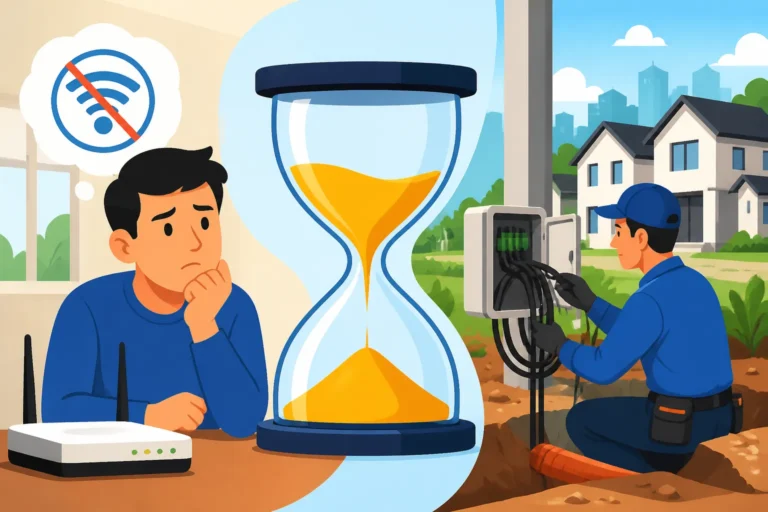
The "last mile" problem is real here. Even if a provider claims they cover your area, they might be out of "ports" on their local distribution box. This results in the infamous Internet Installation Wait Times: Dealing with Cable Access in New Areas where you might wait weeks for a new box to be installed. The fiber network has expanded significantly, but the reliability still hinges on local maintenance. Tropical humidity, salt air in coastal regions, and the sheer chaos of Indonesian utility poles—where power, phone, and fiber lines are woven together in a bird's nest of black plastic—mean that service interruptions are a "when," not an "if."
Another layer to the infrastructure is the "Internet Positif" filtering system. The Indonesian government mandates a nationwide DNS filter that blocks a wide range of sites, from adult content to certain social platforms and even some benign sites like Reddit. As a foreign resident, navigating this is part of daily life. While most people find their own technical workarounds, it is worth noting that some providers are more aggressive with their filtering and harder to bypass than others.
Telkomsel IndiHome The Ubiquitous Giant
IndiHome, now fully integrated under the Telkomsel brand as of 2026, remains the most widespread provider in the archipelago. If you are living in Jakarta Neighborhoods: Kemang, SCBD, Pondok Indah, and Menteng, you will find IndiHome in almost every building. Their greatest strength is their reach; they are often the only option in remote areas or older residential complexes. However, being the biggest also means they are often the most bureaucratic.
One of the major "gotchas" with IndiHome is their Fair Usage Policy (FUP). Unlike many Western providers where "unlimited" means truly unlimited, IndiHome has tiered speed throttling. Once you consume a certain amount of data—usually several hundred gigabytes—your speed will drop significantly for the remainder of the month. For a household of heavy streamers or remote workers, this can be a massive headache. Their packages have become more generous, but the FUP remains a core part of their business model.
Customer service for IndiHome has improved with the integration of the MyTelkomsel app, but it still requires patience. If your line goes down, you are often dealing with a massive ticketing system. Pro tip: if a technician gives you their WhatsApp number after a successful repair, keep it like gold. A direct message and a small tip (uang rokok) to a local technician often get you back online much faster than an official helpdesk ticket.
Biznet The Speed and Quality Leader for Expats
For most expats, Biznet is the "holy grail" of Indonesian home internet. They have traditionally focused on high-speed fiber-to-the-home (FTTH) and offer some of the best upload-to-download ratios in the country. This is critical if you are uploading large files to the cloud or participating in video calls. Their network is generally more modern than IndiHome’s, and they tend to have fewer issues with throttling.
However, Biznet's coverage is far more selective. They focus on high-density expat and business hubs. If you are lucky enough to be in a Biznet-ready building, the installation is usually sleek and professional. Their routers are generally better quality, though I always recommend buying your own high-end mesh system from Shopee to ensure the signal reaches every corner of your concrete-walled Indonesian home.
Biznet has also leaned heavily into "lifestyle" bundles, offering IPTV services that are actually usable. Their customer service tends to be more responsive to English speakers, and their billing is straightforward. Unlike the state-owned giant, Biznet operates more like a modern tech company. The main downside remains the "area not covered" message, which is why many expats specifically search for Biznet-ready housing when browsing through Agoda for long-stay apartments or villas.
Starlink The Game Changer for Remote Indonesia
The biggest shift in the 2026 connectivity landscape has been the widespread adoption of Starlink. For years, if you lived on a cliffside in Uluwatu or a remote beach in Lombok, you were stuck with erratic 4G modems. Starlink has completely disrupted this. It is now officially available across Indonesia, and for many, it has become the primary or at least the essential backup connection.
The hardware cost for Starlink in Indonesia has stabilized, but it still requires a significant upfront investment. You have to buy the dish and the router, which you can often find on Shopee or directly from authorized distributors. The monthly subscription is higher than local fiber, but the performance in clear-sky conditions is spectacular. For a digital nomad living the dream in a remote jungle hut, Starlink is the difference between being a professional and being "that guy" whose video always freezes.
The caveat with Starlink in Indonesia is the rainy season. Dense tropical clouds and heavy monsoon downpours can cause "rain fade," where the signal drops or speeds crawl. This is why many veteran residents use Starlink as a failover. When the local fiber line is inevitably cut by construction or a falling branch, you flip to the satellite. It’s also important to note that you still have to deal with Indonesian regulations; Starlink in Indonesia is routed through local gateways, meaning the same "Internet Positif" rules still apply.
Comparison of Top Home Internet Providers in 2026
| Provider | Best For | Typical Speeds | Reliability | Reach |
|---|---|---|---|---|
| Telkomsel IndiHome | General Coverage | 30Mbps – 300Mbps | Moderate | Nationwide |
| Biznet | Speed & Stability | 100Mbps – 1Gbps | High | Urban Hubs Only |
| Starlink | Remote Living | 50Mbps – 200Mbps | High (Weather Dependent) | Everywhere |
| First Media | Cable TV Bundles | 30Mbps – 500Mbps | Moderate | Major Cities |
| MyRepublic | Gamers & Streamers | 50Mbps – 500Mbps | High | Selected Clusters |
Installation Logistics and the Red Tape of Connectivity
Getting the internet into your house is often more difficult than picking a plan. When you sign up for a new service, you will likely need to provide a copy of your KITAS or Passport. Some providers require a local guarantor or a deposit for foreigners. This is all part of the standard Utilities and Setup: PLN Electricity, PDAM Water, and Home Internet in Indonesia process that every new resident must navigate.
Be prepared for the physical installation. In many cases, the technicians will need to string a wire from the nearest "pole" to your house. This might involve drilling through walls or running cables over your roof. Always supervise this process. I’ve seen technicians try to zip-tie fiber optic cables to hot water pipes or leave them dangling where they’ll get snagged by a passing truck. Ensure the cable is "tucked" and protected.
You should also check the local "rules" of your neighborhood. In some high-end complexes, you are not allowed to have overhead cables, and the provider must use underground ducts. If those ducts are full, you might be out of luck. This is where you might find yourself Troubleshooting Noisy Water Pumps and Septic Tank Issues in Villas and discovering that your internet cable is actually sharing a conduit with your water line—a recipe for disaster if there’s a leak.
Costs Contracts and Hidden Fees
Price-wise, Indonesian internet is relatively affordable compared to Europe or North America, but there are hidden traps. Most contracts are for 12 months. If you leave early—which happens often in the transient expat world—the termination fees can be stiff. Some providers will even blacklist your address or name if you leave without paying the final bill, making it impossible for the next tenant to get service.
Always ask about "Admin Fees" and "Installation Fees." Sometimes these are waived during promotions, but they can be a nasty surprise on your first bill. Also, pay attention to the equipment rental. Most providers "lend" you the ONT (Optical Network Terminal) and a basic Wi-Fi router. The Wi-Fi routers they provide are notoriously weak. To avoid frustration, I always suggest disabling the Wi-Fi on the provider's box and using your own high-quality router. When you buy these, make sure they are compatible with Indonesian voltage, or refer to Buying Appliances: Voltage Spikes and Why You Need a Stabilizer to protect your tech from the frequent power surges that plague the grid.
Most billing is handled through apps or e-wallets. You can pay your monthly bill via GoPay, OVO, or even at a local Indomaret. This is incredibly convenient and ensures your service doesn't get cut off while you are traveling. If you are just arriving and don't have local banking set up yet, keeping a data roaming eSIM from Airalo is a lifesaver so you can at least use your phone to pay your initial bills and navigate Navigating Gojek and Grab: Food Delivery, Transport, and Package Courier for your move-in essentials.
Redundancy The Secret to a Happy Expat Life
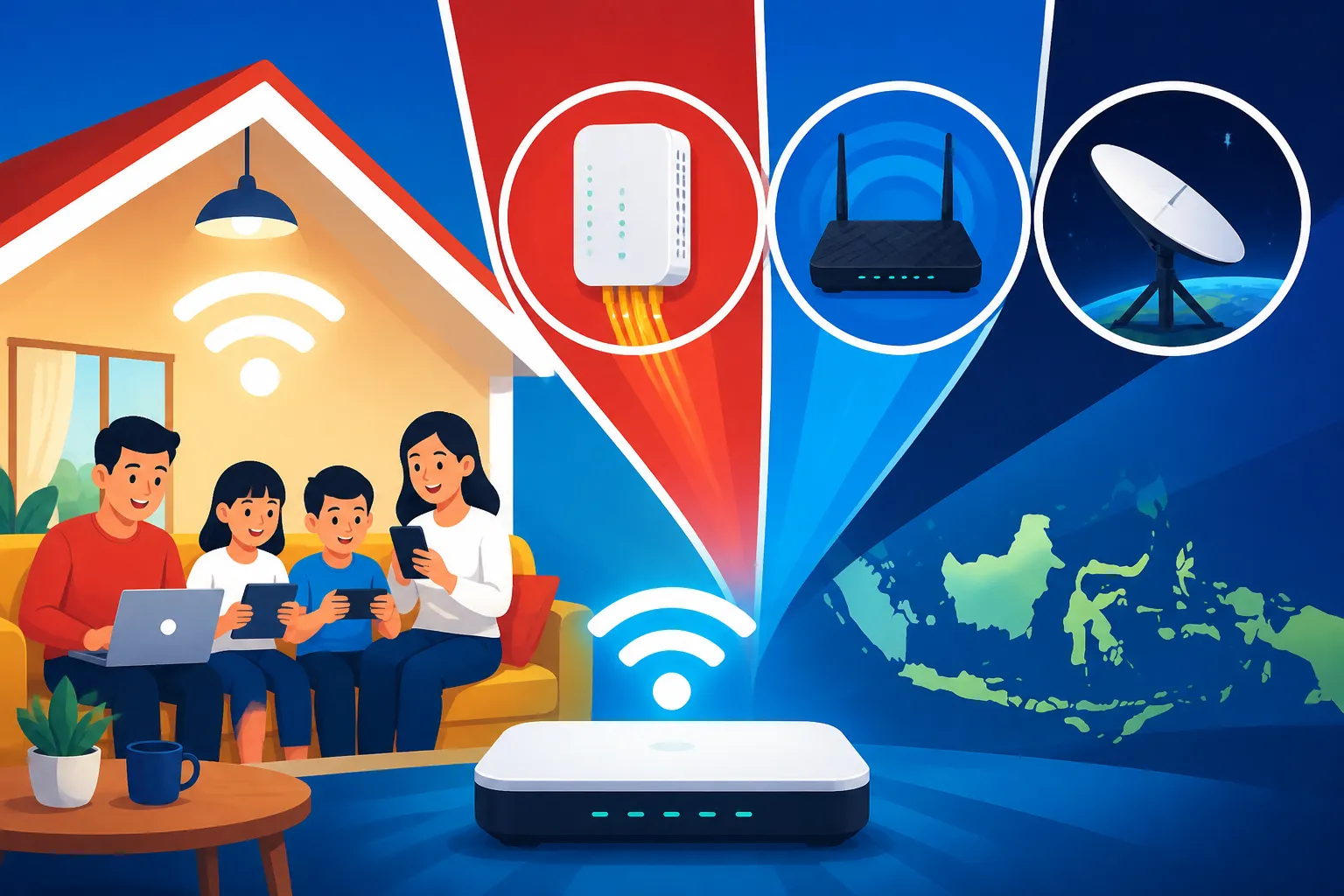
If you work online, one internet connection is zero internet connections. Redundancy is the only way to maintain your sanity. Even the best fiber connection in Jakarta or Bali will fail at some point. The "gold standard" setup for 2026 is a primary fiber line (Biznet or IndiHome) paired with a high-quality 4G/5G router as a backup.
Ensure you have a local SIM card with a large data package. You can learn more about this in our guide on Phones and Tech: IMEI Registration, SIM Cards, and Duty Tax Explained. Most modern routers have a "Failover" mode where they automatically switch to a USB modem or a secondary WAN if the main fiber goes down. During the heavy monsoon months, when the power flickers and the fiber lines are stressed, this secondary connection will save your job.
Lastly, consider your power supply. Indonesia’s power grid is prone to "mati lampu" (power outages). If your power goes out, your fiber router goes out, even if the provider's exchange still has power. Investing in a small UPS (Uninterruptible Power Supply) specifically for your modem and router is a low-cost way to stay online during a blackout. It’s these small, proactive steps that separate the stressed-out newcomers from the relaxed, veteran expats who seem to glide through Indonesian life effortlessly.
Important Disclaimer
This guide is based on personal experiences and the prevailing market conditions in Indonesia. Internet service quality can vary drastically from one street to the next. Always conduct a local speed test and consult with neighbors before committing to a long-term contract. I am not a legal or technical advisor, and you should verify all contract terms directly with the providers.