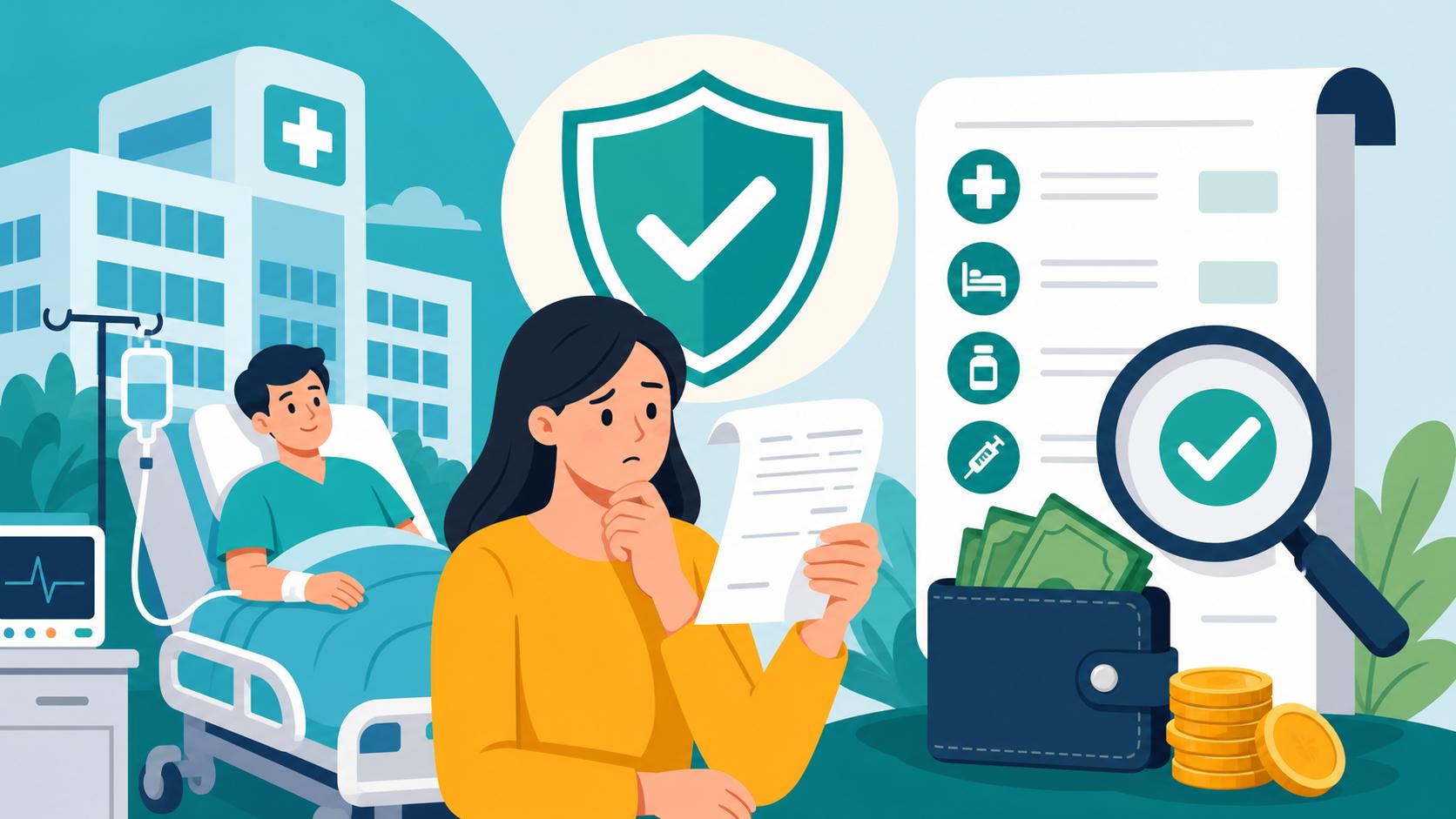
Hospital Billing in Indonesia: Avoiding Overcharges and Understanding Inpatient Fees
Navigating the financial side of a hospital stay in Indonesia can feel like trying to find your way through a Jakarta traffic jam without a GPS. I remember sitting in a stiff plastic chair in a South Jakarta hospital, clutching a three-page "rincian biaya" that looked more like an ancient scroll than a bill. This guide breaks down exactly how hospital billing works here so you can focus on recovery rather than financial shock.
Decoding the Indonesian Hospital Bill Structure
The first thing you will notice when looking at an Indonesian hospital bill is the sheer granularity of the items. Unlike some Western systems where you might see a single bundled charge for "Inpatient Services," Indonesian facilities break everything down to the individual cotton swab. This transparency is a double-edged sword; it allows you to see where your money goes, but it also creates numerous opportunities for small errors to snowball into significant overcharges.
Room Rates and the KRIS System
Hospital rooms in Indonesia have traditionally been divided into Class 3, 2, 1, VIP, VVIP, and Suite. However, as we move into 2026, the government is fully implementing the KRIS (Kelas Rawat Inap Standar) system. For those using public coverage, this means standardizing wards to ensure better ventilation and space. But for most expats, the choice usually leans toward VIP or higher. When you look at the room rate, remember that this fee is almost never "all-inclusive." It covers the bed and the nursing service, but usually excludes the administrative fees and the "visitasi" fees from the doctors.
In places like Jakarta or Bali, a VIP room can range from IDR 1,500,000 to IDR 3,500,000 per night. If you are staying at a premium facility like Pondok Indah Hospital or Siloam, these rates can rival five-star hotels. You must clarify if the room rate includes three meals a day, as some hospitals charge for "Nutrition Services" separately. It is also worth checking if the room allows for a companion (penunggu) to stay overnight, which is a standard cultural practice in Indonesia. If you have international coverage through a provider like Cigna Global, ensure your policy covers the specific tier you are choosing, as "Suite" rooms are often excluded from standard plans.
Medical Consumables and Alat Kesehatan
This is where the bill usually gets the longest. "Alat Kesehatan," often shortened to Alkes, refers to every syringe, IV line, bandage, and even the gloves the nurse wears when checking your vitals. In many private hospitals, these items are marked up significantly. It is not uncommon to see a charge for a single alcohol swab that is five times the price you would pay at a local Apotek. If you see a high volume of "consumables" on your bill, you have every right to ask for a detailed breakdown.
During a long stay, these Alkes charges can account for 20% to 30% of the total bill. I once noticed a charge for an oxygen mask on my bill every single day, even though the mask was only replaced once. When I questioned the billing department, they admitted it was a "system error" where the software automatically added the item daily. Be vigilant. For non-critical recovery items, you can sometimes save money by sourcing your own high-quality supplements or bandages from reputable sources like iHerb once you are discharged, rather than paying the hospital’s premium prices.
Professional Fees and Doctor Visitation Costs
In Indonesia, doctors are generally treated as independent contractors rather than hospital employees. This means the hospital bills you on their behalf. You will see "Jasa Dokter" (Doctor’s Fee) listed for every time a specialist walks into your room. Be aware that if you have multiple specialists—say, an internist and a cardiologist—you will be billed a visitation fee for each one, every single day they visit. These fees are not standardized and can vary wildly depending on the doctor’s seniority and the hospital’s prestige.
It is also important to note that "visitasi" fees often double on Sundays or public holidays. If a doctor visits you at 11:00 PM, you might also see an "emergency visitation" surcharge. If you are looking for more information on how the general system operates before you end up in a ward, I highly recommend reading Healthcare in Indonesia for Foreign Residents: Complete System Overview (2027). Understanding the hierarchy of medical professionals will help you understand why your bill has five different "Jasa" lines.
The Admission Maze Deposits and Guarantees
The financial experience of a hospital stay begins at the admissions desk, not the discharge desk. In Indonesia, unless it is a life-threatening emergency, most private hospitals will not assign you a bed until the financial arrangements are "settled." This can be a jarring experience for foreigners used to systems where billing happens weeks after treatment.
The Deposit System and Guarantee Letters
If you are a "self-pay" patient, the hospital will almost certainly ask for a significant deposit (uang muka) upfront. This deposit is usually estimated based on your expected length of stay and the nature of your illness. For a standard three-day inpatient stay for something like Dengue fever, a hospital in Bali might ask for IDR 10,000,000 to IDR 20,000,000 as a deposit. If you don't have this available on a credit card, the admission process can stall.
For those with private insurance, the process is smoother if the hospital has a "direct billing" agreement with your provider. You will need to present your insurance card, and the hospital will seek a Letter of Guarantee (LoG) from the insurer. If you are using a major international insurer like Cigna Global, this usually happens within a few hours. However, if you arrive at night or on a weekend, you might still be asked to pay a "temporary deposit" until the insurance office opens and confirms the LoG. To see which facilities are best prepared for this, check out Finding Medical Care in Indonesia: Clinics, Hospitals, and International Facilities.
Understanding Tiers VIP vs Standard Wards
When you are admitted, you will be asked to sign a form choosing your room class. This signature is legally binding and dictates the "price list" used for your entire stay. In the Indonesian system, it is not just the room price that changes between Class 1 and VIP; the price of the medicines, the lab tests, and the doctor’s fees also scale upward. This is a crucial "gotcha" for expats to understand.
If you choose a VIP room, a blood test might cost IDR 500,000. If you chose a Suite, that exact same blood test might be billed at IDR 800,000. The hospital justifies this by saying the "service level" is higher. Therefore, if your insurance has a cap on "ancillary charges," choosing a room that is too fancy might leave you with a massive out-of-pocket bill for the medicine and labs, even if the insurance covered the room itself. This is often discussed in detail when comparing Public vs Private Healthcare in Indonesia: BPJS Kesehatan and Expat Insurance.
Emergency Admissions and Upfront Payments
In a true emergency, Indonesian law states that hospitals must stabilize the patient first. However, "stabilization" is a narrow term. Once you are out of immediate danger, the billing department will approach you or your family members to discuss the deposit. It is a common frustration to be asked for a credit card while you are still in the Emergency Rooms (UGD) in Indonesia: Triage, Payment Upfront, and Documentation.
To avoid this stress, I always recommend keeping a digital copy of your insurance card and passport on your phone. Most major hospitals in Jakarta, like Siloam Hospitals Overview: What Expats Should Know About the Network, have dedicated international patient wings where the staff is more accustomed to handling these hurdles, but in smaller regional hospitals, you may need to be more assertive about your coverage.
Identifying and Challenging Billing Errors
Once the medical crisis has passed, you will eventually be presented with the final bill. Do not simply hand over your credit card. Hospital billing departments are human and high-volume; mistakes happen more often than you think. You have the right to sit down and review the "rincian biaya" line by line before you pay.
Auditing Your Rincian Biaya Itemized Bill
The "rincian" is usually a thick stack of papers. Look for duplicate entries. It is common to see a lab test billed twice because it was ordered once but the sample was taken twice. Also, look for "Admin Fees." Many hospitals charge a flat percentage of the total bill as an administration fee, often ranging from 5% to 10%. While common, this can be a massive amount on a large bill.
| Expense Category | Typical Expat Hospital (Jakarta/Bali) | Estimated Cost (IDR) |
|---|---|---|
| VIP Room Per Night | Siloam / BIMC / Medistra | 2,500,000 – 4,000,000 |
| Specialist Visit Fee | Per visit | 500,000 – 1,200,000 |
| Admin / Service Fee | % of total bill | 5% – 7% |
| Standard Blood Panel | Full CBC + Metabolic | 1,200,000 – 2,500,000 |
| Pharmacy Markup | Over retail price | 20% – 40% |
Negotiating Fees with the Billing Department
If you find a glaring error or a charge that seems exorbitant, ask to speak with the "Kasir" supervisor or a patient liaison. Be polite but firm. If a doctor visited you for thirty seconds and you were billed for an "extended consultation," point it out. In many cases, if you are a self-pay patient without insurance, you can ask for a "keringanan" (discount). Hospitals often have a "diskon tunai" (cash discount) for those paying the full amount out of pocket.
One specific area to watch is the "Pharmacy" section. Hospitals often charge a premium for basic painkillers or vitamins. While you can't usually bring your own meds while inpatient, for post-discharge meds, you can ask the doctor for a prescription to be filled at an outside Apotek Guide: Prescription Workflow, Refills, and Communicating with Pharmacists where prices are regulated. For long-term recovery items like specialized vitamins or skin creams, ordering through iHerb can often be significantly cheaper than the hospital’s discharge pharmacy.
Common Hidden Charges to Watch For
There are several "stealth" charges that often appear on Indonesian hospital bills. One is the "Alat Monitor" fee. If you are hooked up to a heart rate monitor, you are often charged per hour or per day for the use of that machine. Another is the "Linen" or "Laundry" fee, which is sometimes separated from the room rate.
Another charge to look for is the "Materai." For any bill over IDR 5,000,000, the government requires a tax stamp (Materai) which costs IDR 10,000. While small, seeing it on the bill often confuses people. Also, check for "Pajak" (VAT). Most medical services are exempt from VAT, but "luxury" items or certain supplements sold in the hospital pharmacy might have a 11% tax attached.
Insurance Dynamics BPJS vs Private Carriers
How you are billed depends heavily on which system you are using. Indonesia’s universal healthcare, BPJS Kesehatan, works on a "no-cost" basis at the point of service, but it has very strict referral rules. Private insurance is more flexible but requires a deep understanding of your policy limits.
The BPJS Referral Chain and Limitations
If you are an expat enrolled in BPJS, the billing is handled entirely between the hospital and the government. You shouldn't see a bill at all, provided you followed the referral path from your primary clinic (Faskes 1). However, if you decide to "self-refer" to a hospital or upgrade your room from the one assigned by your BPJS class, you will be billed for the difference. This is a complex area, and I suggest reading BPJS Kesehatan for Expats: Registration, Costs, and the New KRIS System to understand how to avoid "out-of-network" surprises.
The challenge for expats is that BPJS usually places you in a ward with multiple other patients. If you want a private room, you have to pay the "selisih harga" (price difference). Calculating this difference is notoriously difficult because the hospital uses one price list for the government and a different one for you. Always ask for a written estimate of the "selisih" before you agree to the upgrade.
Coordination of Benefits CoB Reality
In theory, you can use private insurance to "top up" what BPJS doesn't cover. In practice, this "Coordination of Benefits" is a bureaucratic nightmare in Indonesia. Most private hospitals prefer you choose one or the other. If you have a high-quality international policy like Cigna Global, it is often easier to use it as your primary coverage and ignore the BPJS for that specific stay.
Using private insurance usually means the hospital will bill for every single item at their highest price tier. This is fine if you have "full cover," but if your policy has a 20% co-pay, that 20% of a VIP bill can be higher than the total cost of a Class 1 stay paid in cash. For a deeper dive into these options, see Private Health Insurance in Indonesia: Bridging the Gap When BPJS Isn't Enough.
Post-Discharge Financial Management
The billing journey doesn't end when you walk out the hospital doors. You need to ensure your paperwork is in order for any future claims and manage your ongoing costs effectively.
Managing Out-of-Pocket Expenses
The "take-home" meds are usually the final surprise. Hospitals will often provide a 7-to-14 day supply of medication. These are billed at the highest possible rate. If you are on a budget, you can ask the doctor to write a "resep luar" (external prescription). This allows you to buy the same medicine at a chain pharmacy like Kimia Farma or Guardian for 30% less.
For long-term health management, many expats find that the local versions of supplements are either unavailable or lower in dosage. This is where I find iHerb invaluable for staying healthy post-discharge. Getting high-quality probiotics or specialized vitamins delivered to your door in Indonesia is now quite easy and often more cost-effective than buying the hospital’s recommended brands.
Estimating Inpatient Fees in Jakarta vs Bali
Location matters. A hospital stay in Jakarta’s "Golden Triangle" will almost always be more expensive than a similar stay in Denpasar or Surabaya. However, Bali has "tourist pricing" in certain areas like Canggu or Kuta. If you are in Bali and need non-emergency inpatient care, sometimes traveling to a larger hospital in Denpasar like Sanglah or Bali Royal can save you millions of rupiah compared to the boutique clinics in tourist hubs.
If you are curious about the specific costs in the capital, Jakarta Healthcare Guide for Expats: International Clinics and After-Hours Options provides a good benchmark. Always remember that "International" in the name of a hospital usually translates to "Higher Billing Tiers."
Keeping Records for Insurance and Tax
Finally, always ask for a "Legalized" copy of your bill and medical report (Resume Medis). Your insurance company back home or your international provider will need these to process your claim. In Indonesia, a document is often not considered "official" without a wet stamp (stempel). Don't leave the hospital without these stamps on your final invoice.
If you are a tax resident in Indonesia, some medical expenses might be relevant for your financial records, although they are generally not deductible for individuals. For more on the financial side of living here, check out Money in Indonesia for Foreign Residents: Banking, Tax, and Financial Setup (2027). Having a clear paper trail will save you hours of emails and phone calls six months down the line.
Disclaimer
The information provided in this guide is for educational and informational purposes only and does not constitute legal, financial, or medical advice. Hospital billing practices, government regulations like the KRIS system, and insurance protocols in Indonesia are subject to frequent change. Always verify current costs and procedures directly with your healthcare provider and insurance carrier. The author and publisher are not responsible for any financial losses or medical outcomes resulting from the use of this information.