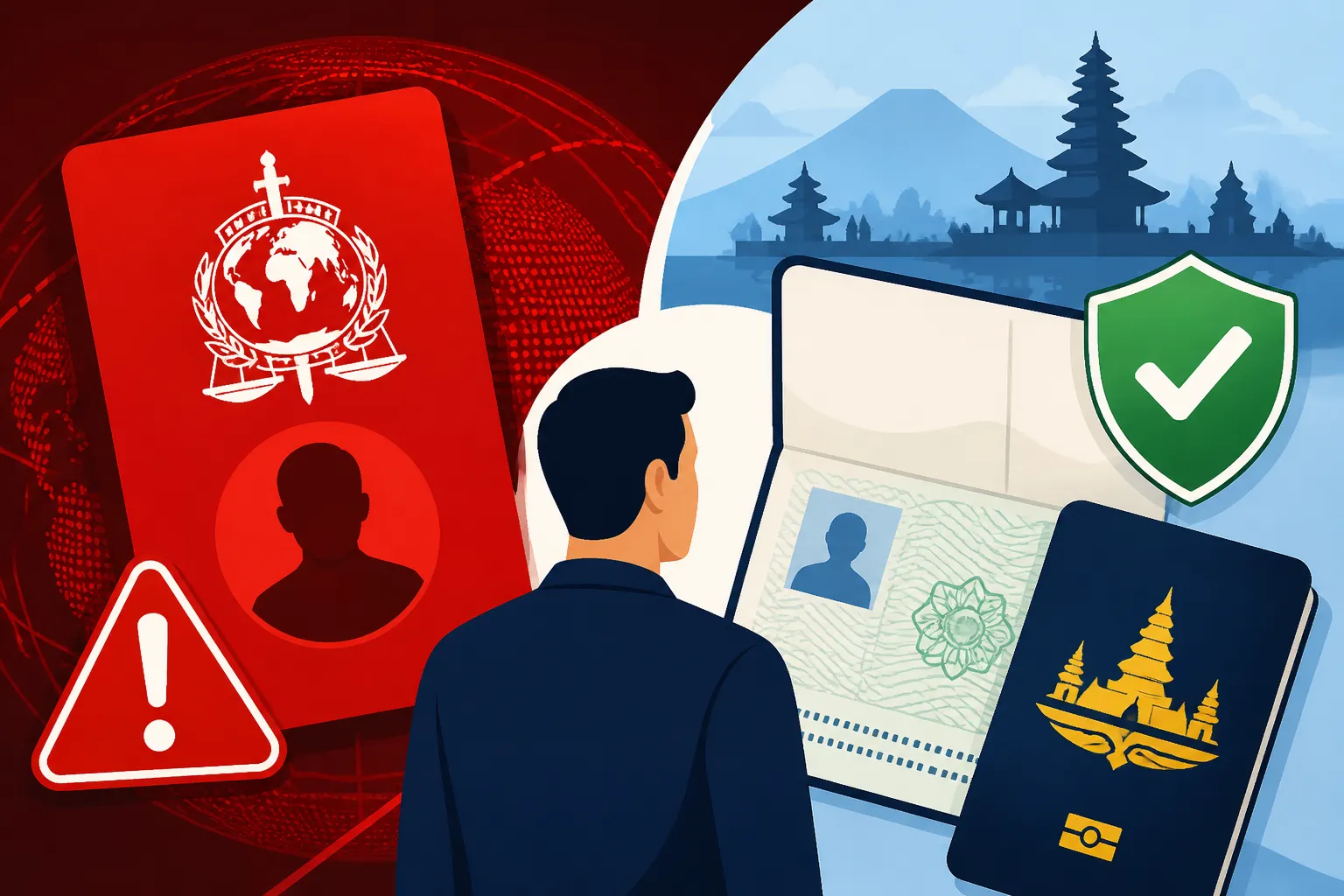
Understanding the Impact of Interpol Red Notices on Indonesian Visas
Few things can freeze an expat's heart like the word Interpol, especially when you are building a life in the sprawling beauty of Indonesia. I still remember the cold sweat I broke into when a close friend was pulled aside at Soekarno-Hatta for a "routine check" that felt anything but routine, highlighting how interconnected global security and local residency truly are. This guide clarifies how Interpol Red Notices intersect with the Indonesian immigration system, explaining the real-world consequences for your visa and your future in the archipelago.
Understanding the Intersection of Interpol and Indonesian Immigration
The first thing to understand is that Indonesia is an active member of Interpol and takes its international obligations seriously. However, the way a Red Notice impacts you on the ground is often misunderstood. A Red Notice is not an international arrest warrant; it is a request to law enforcement worldwide to locate and provisionally arrest a person pending extradition or similar legal action. In Indonesia, this request is funneled through the National Central Bureau (NCB) Jakarta, which sits within the Indonesian National Police.
When you apply for a visa or arrive at the airport, your data is run through the Indonesian Immigration Management System, known as SIMKIM. This system is increasingly sophisticated, linked directly to national security databases and international watchlists. If an Interpol Red Notice is active under your name, the SIMKIM system will trigger an alert. For most expats, the concern isn't about being a fugitive, but rather the fear of administrative errors or "ghosts" from the past—like old commercial disputes in a previous host country—suddenly manifesting at a Bali immigration counter.
While services like iVisa can help you navigate the standard application steps for a tourist or business entry, they cannot bypass these high-level security flags. If a flag appears, the standard automated process stops immediately. The officer at the desk is rarely authorized to clear a Red Notice alert on their own. Instead, they must follow a strict protocol that involves Ditjen Imigrasi (the Directorate General of Immigration) and often the police. This is why maintaining a clean legal record is just as vital as having a valid passport when living here.
| Interpol Alert Type | Purpose in Indonesia | Immediate Impact on Visa |
|---|---|---|
| Red Notice | Locate/Arrest for prosecution | Likely denial, detention, or deportation |
| Blue Notice | Collect info on identity/location | Scrutiny during interview or renewal |
| Green Notice | Warning about criminal activity | Enhanced monitoring by local authorities |
| Yellow Notice | Help locate missing persons | Identity verification at point of entry |
The Impact on Visa Applications and KITAS Renewals
The most common point of friction occurs during the visa application phase or the annual renewal of a stay permit. If you are using the e-Visa and Molina System: How to Apply Online Without Visiting an Embassy, the system performs an automated check against the "Daftar Pencegahan dan Penangkalan" (the Prevention and Deterrence List). A Red Notice almost always results in an individual being added to this local list, commonly referred to as the Blacklist.
If your name appears on the Blacklist due to an Interpol alert, your application will be rejected without a detailed explanation. This is where the frustration peaks for foreigners. You might see a generic "system error" or a notice to visit the nearest Indonesian Embassy. For those already in the country on a KITAS Explained: Working, Dependent, and Investor Temporary Stay Permits, the discovery of a Red Notice during a renewal can lead to the immediate cancellation of your permit and the issuance of an Exit Permit Only (EPO).
In such cases, your Immigration Compliance: Address Changes, EPOs, Overstays, and Reporting history won't save you. The Indonesian authorities view an Interpol Red Notice as a high-level security directive. Even if the underlying issue is a civil matter that was incorrectly classified as criminal in another jurisdiction, Indonesia will generally err on the side of caution. I have seen cases where expats had to leave the country within days because a "commercial misunderstanding" in the Middle East or Europe triggered a notice that the Indonesian system was not equipped to litigate.
Navigating the Blacklist and the Cekal System
If you find yourself flagged, you are dealing with what locals call "Cekal"—a portmanteau of cegah (prevent) and tangkal (deter). This is the administrative mechanism that enforces the Interpol alert. Understanding The Blacklist (Cekal): Reasons for Being Banned from Entering Indonesia is crucial because the list is managed by the Minister of Law and Human Rights. Once you are on it, your name stays there for six months at a time, often automatically renewing if the Interpol notice remains active.
The process of being removed from the Cekal list when an Interpol notice is involved is notoriously complex. It requires proving to the Indonesian authorities that the Red Notice has been deleted or is being challenged at the Interpol headquarters in Lyon, France. This is not a task for a standard "agent" you found on Instagram. You must be extremely careful when Dealing with Immigration Agents: How to Vet Biro Jasa and Avoid Scams, as many will claim they can "erase" a flag for a fee. In reality, security flags linked to Interpol require formal legal intervention and coordination between your embassy, the NCB Jakarta, and the Directorate General of Immigration.
During this time, your other life essentials might also be at risk. For instance, while Cigna Global provides excellent international health coverage, a legal battle of this magnitude can lead to the freezing of local bank accounts or the inability to travel domestically, as your passport details are flagged in the national flight booking systems as well. The psychological toll of being "trapped" or "blocked" in a country you love is immense, and the administrative machinery moves slowly.
Steps to Take if You Are Flagged or Wrongly Identified
Mistakes happen. Identity theft, similar names, or outdated records can lead to a "hit" in the system that doesn't actually belong to you. If you are stopped at immigration or your visa is denied due to an Interpol flag, your first step is to remain calm. Aggression toward Indonesian immigration officers is a surefire way to escalate a "check" into a "detention."
You will need to gather high-quality, translated evidence to prove your identity or the resolution of the legal matter. Using Certified Translators (Penerjemah Tersumpah) for Immigration Documents is mandatory here; a standard translation will not be accepted in a legal appeal. You may also need to navigate Consular Legalization vs Apostille: Indonesia’s New Apostille Rules Explained to ensure your home country’s court documents are recognized by the Indonesian Ministry of Law and Human Rights.
The path forward usually involves a formal request for a "Data Clarification." This is a process where your legal counsel presents evidence to the Directorate General of Immigration to show that the Interpol notice is either invalid, a case of mistaken identity, or has been revoked. If the initial clarification fails, you may need to learn How to Appeal a Visa Rejection Through Official Immigration Channels, which involves a higher-level review.
The following checklist is a realistic starting point if you suspect your name is linked to an international alert:
- Contact your Embassy immediately to verify the status of any international alerts.
- Retain a qualified Indonesian lawyer who specializes in immigration and administrative law.
- Request an official "Status Check" through the NCB Jakarta (usually via your legal representative).
- Ensure all documents proving the dismissal of charges in the originating country are apostilled and translated by a sworn translator.
- Prepare for a potential "stay of proceedings" where your visa status is put on hold while the investigation continues.
Prevention and Proactive Compliance for Expats
As a veteran expat, my best advice is to never leave "small" legal issues hanging in other countries. In our digital age, a forgotten court date or a disputed business debt in another country can easily escalate into a Red Notice that eventually finds you in Jakarta or Bali. Indonesia’s push toward a fully digital, biometrically-linked immigration system means there are fewer places for errors to hide.
Before making a massive investment like a Golden Visa or a long-term business KITAS, it is worth doing a "background self-check" if you have ever had legal friction abroad. While iVisa is great for getting you through the door for a holiday, long-term residency requires a deep dive into your own history. Ensure that all your previous "Exit Permits" from other countries are in order and that you have no outstanding "travel bans" elsewhere.
Living in Indonesia is a privilege that depends on the intersection of local laws and international cooperation. A Red Notice is a significant hurdle, but understanding the administrative pathways—rather than trying to find a "shortcut"—is the only way to protect your life in the Tropics. The system is designed to be rigorous to protect the country's security, and as residents, our job is to ensure our paperwork and our past remain as clear as the waters of Raja Ampat.
Disclaimer
This article is for informational purposes only and does not constitute legal advice. Interpol regulations and Indonesian immigration laws are subject to frequent changes. If you are facing legal issues or have been flagged by immigration, please consult with a qualified legal professional and contact your national embassy immediately.