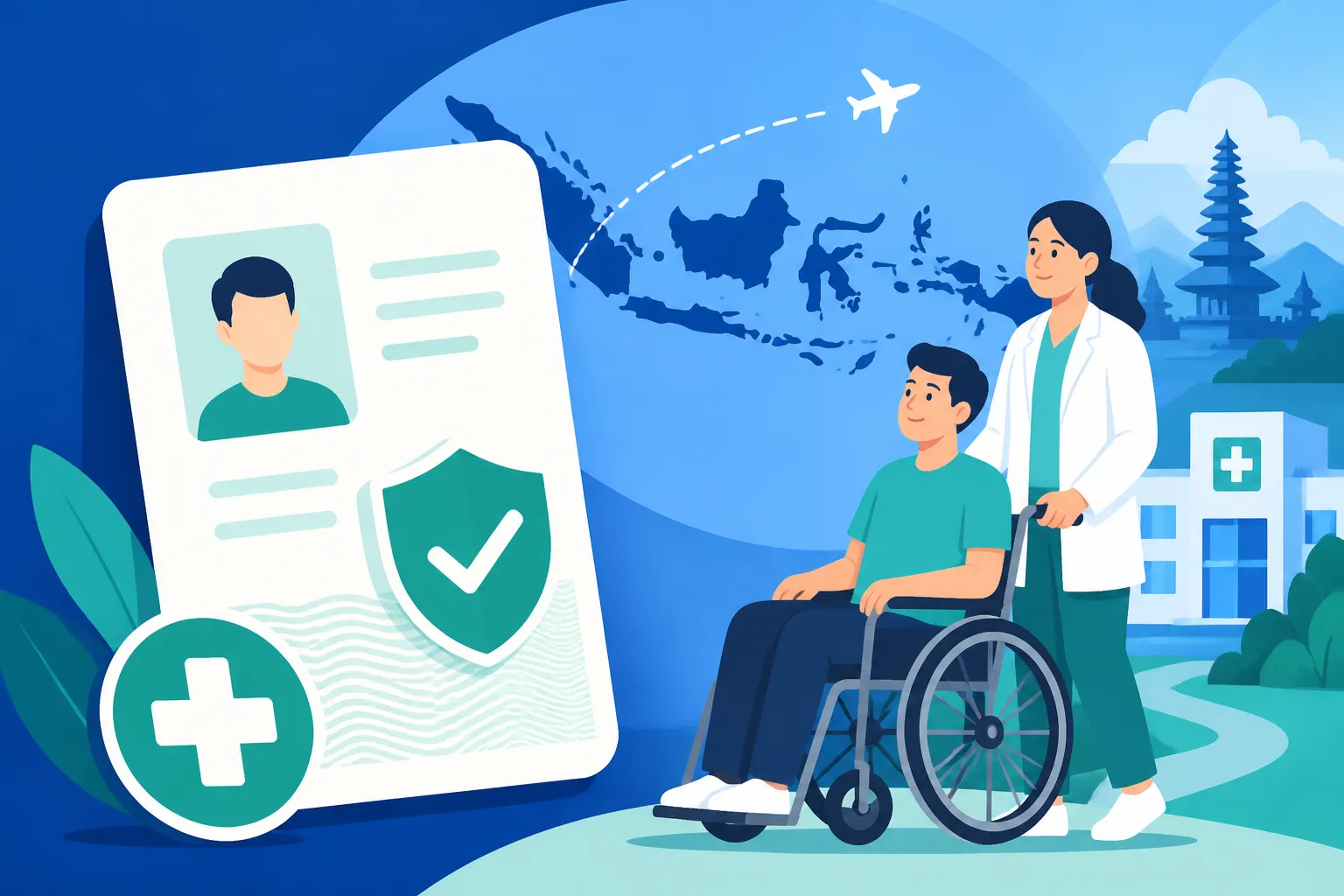
Understanding the Temporary Stay Permit for Medical Treatment (ITAS Pengobatan)
Finding yourself in an Indonesian hospital bed while your visa expiry date ticks closer is a special kind of nightmare. I remember the panic of trying to coordinate a surgery while my 30-day stamp was fading; it is an administrative hurdle you truly do not want while recovering. This guide explains how the ITAS Pengobatan offers a legal lifeline for long-term medical treatment.
Understanding the Scope of the ITAS Pengobatan
The ITAS Pengobatan, officially known in the 2026 immigration framework as a Temporary Stay Permit for medical reasons, is a specific residency permit designed for foreigners who require intensive or long-term medical care within the Republic of Indonesia. Unlike a standard tourist visa that expects you to be on the move, this permit acknowledges that your primary reason for staying is clinical. Whether you are undergoing a series of surgeries, requiring regular dialysis, or receiving specialized oncology treatments, this permit provides the legal stability you need to focus on health rather than border runs.
In my years living here, I have seen many people try to "wing it" on a Visa on Arrival (VoA), only to find themselves stuck in a bureaucratic loop when a complication arises and they cannot fly. The ITAS Pengobatan is not just a convenience; it is a protection against being flagged for overstaying while you are physically incapacitated. It is typically granted for an initial period of six months or one year, depending on the doctor's recommendation, and it can be extended if the medical necessity persists. However, it is vital to understand that this is not a "work" visa. Engaging in any form of employment while on an ITAS Pengobatan is a major compliance violation that could lead to deportation once you are fit to travel.
The eligibility for this visa is strictly tied to your medical condition. You cannot simply claim you are "feeling unwell" to get it. It requires a formal diagnosis and a treatment plan from a recognized Indonesian medical institution. This is where the Healthcare in Indonesia for Foreign Residents: Complete System Overview (2027) becomes essential reading, as it helps you understand the broader landscape of the Indonesian medical system before you commit to a long-term stay permit.
The Critical Role of Hospital Sponsorship
One of the most common points of confusion for expats is who exactly "sponsors" a medical visa. In Indonesia, every ITAS requires a sponsor, and for the ITAS Pengobatan, that sponsor must be the hospital or clinic where you are receiving treatment. This is a significant responsibility for the medical facility, as they are essentially telling the Directorate General of Immigration that they are responsible for your presence in the country.
When you are looking for a facility that can handle this, you should prioritize larger, international-standard networks. For instance, the Siloam Hospitals Overview: What Expats Should Know About the Network is a great place to start, as they have dedicated international patient departments familiar with the paperwork required for immigration. Similarly, if you are located in the south, BIMC Hospital Bali: Services, Costs, and Insurance Direct Billing Options offers extensive experience in handling foreign patients who need visa support alongside their clinical care.
The hospital will need to issue a formal "Surat Jaminan" (Letter of Guarantee) and a "Surat Keterangan Dokter" (Doctor’s Statement). This statement must clearly outline your diagnosis, why the treatment must happen in Indonesia, and the estimated duration of your recovery. If your original medical records are in a language other than Indonesian or English, you will likely need to use a service like RushTranslate to ensure that the Indonesian authorities can verify your medical history. Immigration is notoriously meticulous about document clarity; a poorly translated medical report is a one-way ticket to a rejected application.
Mandatory Documentation for the Application
Beyond the hospital's letters, you will need to provide your own set of documents. This includes a passport with at least 18 months of validity—a detail many forget until they are already in the hospital. You will also need to show proof of financial means, typically a bank statement showing at least $2,000 USD (or equivalent) to prove you can support yourself without working.
| Document Type | Source | Purpose |
|---|---|---|
| Surat Keterangan Dokter | Sponsoring Hospital | Proves medical necessity and duration |
| Surat Jaminan | Sponsoring Hospital | Legal guarantee for your stay |
| Proof of Funds | Personal Bank Statement | Ensures no illegal work is performed |
| Insurance Policy | International Provider | Covers costs to prevent state burden |
| Passport Scans | Personal | Legal identification (min. 18 mo validity) |
Furthermore, having a robust insurance policy is often a prerequisite for the hospital to agree to sponsorship. They need to know that the Hospital Billing in Indonesia: Avoiding Overcharges and Understanding Inpatient Fees will be covered. I often recommend providers like Cigna Global to expats because their policies are widely recognized by Indonesian private hospitals, making the sponsorship negotiation much smoother. If you are just entering the country and realize you need medical care, you might use iVisa to quickly secure a tourist entry which you can then convert to a medical stay permit once the clinical need is established.
Navigating the Application and Extension Process
The actual application process usually happens through the "Molina" (Modul Lalu Lintas Orang Asing) online system. However, don't let the "online" part fool you—there is still a significant amount of physical legwork involved. Once the online application is submitted and the fee is paid (which can be done via various local banks or apps), you will eventually be summoned to the local Immigration Office (Kantor Imigrasi or "KanIm") for biometric data collection.
This involves being photographed and fingerprinted. If you are physically unable to visit the immigration office due to being bedridden, the hospital can coordinate with immigration for a "mobile" biometric service. This is a rare and often expensive service, but it is available for genuine emergencies. For most, you will need to find a way to get to the office. This is where knowing about Emergency Medical Care in Indonesia: Ambulances, ERs, and Evacuation Protocols helps, as some private ambulance services can facilitate transport to immigration for patients in stable but fragile conditions.
Extensions are the next hurdle. If your six months are up but your doctor says you need another three months of physical therapy, you must begin the extension process at least 30 days before your current ITAS expires. The process is similar to the initial application but requires an updated doctor's progress report. If at any point the medical necessity ends, immigration expects you to begin the "Exit Permit Only" (EPO) process. You can find more on this in the guide on Exit Permit Only (EPO) vs ERP: Closing Your Visa Before Leaving Indonesia.
Converting from Other Visas
Many foreigners find themselves needing an ITAS Pengobatan while they are already in Indonesia on a B211A Social-Cultural visa or a Visa on Arrival. While it is technically possible to convert a B211A to an ITAS onshore, it is a complex process that usually requires the help of a reputable visa agent or a very proactive hospital legal department.
If you are on a VoA, you generally cannot convert it directly to an ITAS. You would typically need to leave the country and re-enter on a specific medical entry visa (Index 311) or have the hospital apply for a "telex" visa while you are still in the country, which is then processed into an ITAS. It sounds like a circular mess, and frankly, it can be. This is why having all your medical records ready and using Certified Translators (Penerjemah Tersumpah) for Immigration Documents to prepare your dossier in advance is so vital.
Practical Challenges and Compliance
Living on an ITAS Pengobatan isn't just about the medical treatment; it is about maintaining Immigration Compliance: Address Changes, EPOs, overstays, and Reporting. If you move from the hospital to a private villa for recovery, you must report your change of address to the local immigration office within 24 hours. Failing to do so can result in heavy fines or even the cancellation of your permit.
Another challenge is the cost. Between the visa fees, the agent fees (if you use one), and the hospital's administrative fees for sponsorship, you could be looking at several hundred dollars before you even pay for a single pill. If your condition is so severe that local care isn't enough, you might need to look into Medical Evacuation (Medevac) Services in Indonesia: Costs and Insurance Coverage, as the ITAS Pengobatan only covers your stay within Indonesia. If you are evacuated, your ITAS is effectively voided once you leave the country unless you have a Multiple Exit Re-entry Permit (MERP).
Finally, be wary of "visa agents" who claim they can get you a medical ITAS without a hospital sponsor. This is a major red flag. In the eyes of Indonesian law, if there is no medical facility backing your claim, the visa is fraudulent. Always vet your facilitators and ensure that your sponsorship is tied to a legitimate, licensed hospital. Indonesia is a beautiful place to recover, provided you have the right paperwork to keep the "Imigrasi" officers happy while you heal.
Disclaimer
The information provided in this article is for general informational purposes only and does not constitute legal, financial, or medical advice. Indonesian immigration laws and healthcare regulations are subject to frequent changes, and while we strive for accuracy, we cannot guarantee that all details reflect the most current 2026 policies at the time of your reading. Always consult with a qualified immigration lawyer, a reputable visa agent, or the official Directorate General of Immigration (Migrasi) website before making any visa-related decisions. Additionally, consult with a medical professional regarding any health concerns or treatment plans. Any reliance you place on the information in this guide is strictly at your own risk.