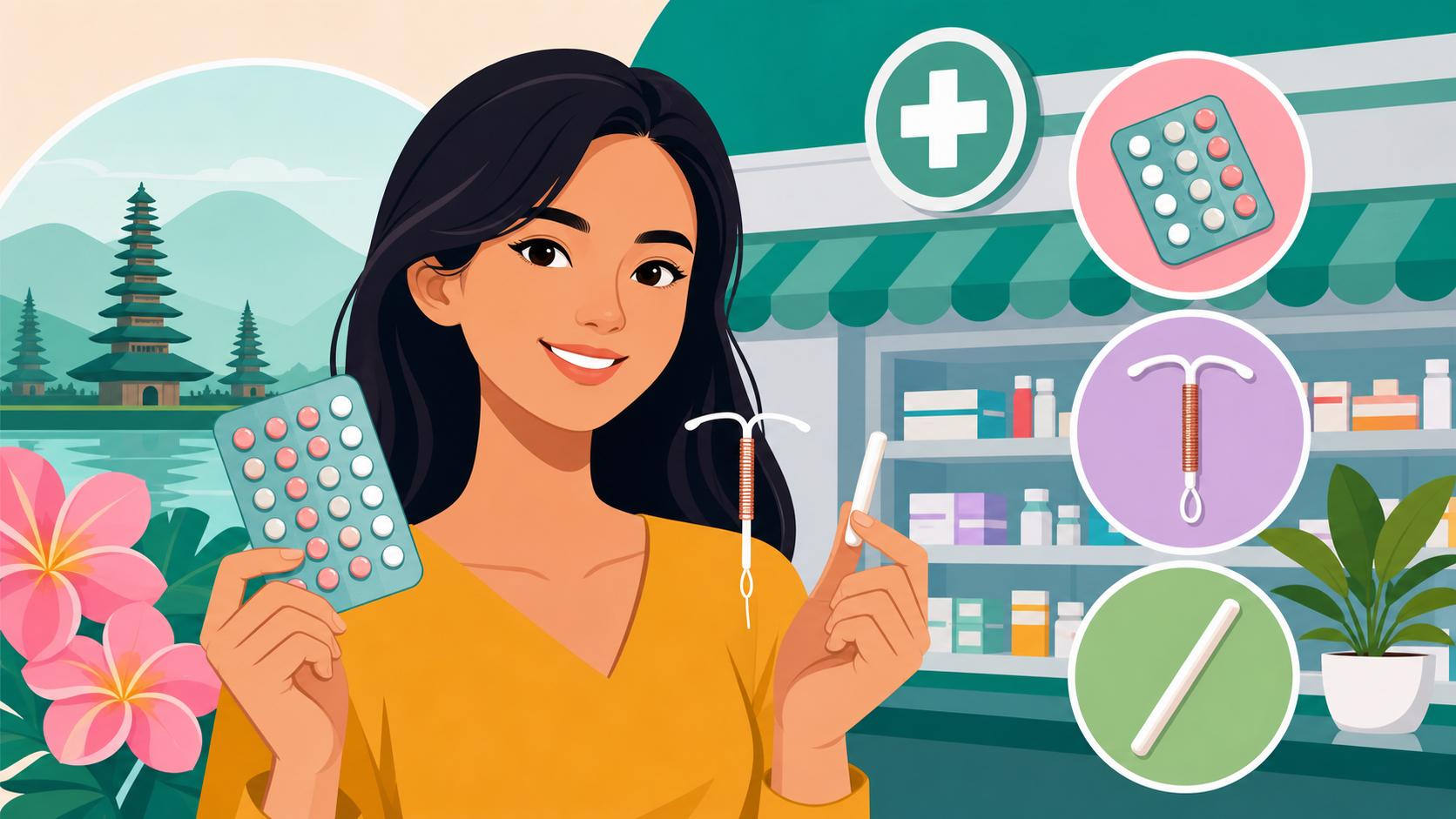
Birth Control in Indonesia: Accessing the Pill, IUDs, and Implants at Apoteks
Finding your preferred method of birth control in Indonesia can feel like navigating a maze of cultural sensitivities, varying pharmacy policies, and language barriers that leave you feeling more than a little exposed. I remember the sheer anxiety of my first trip to a local pharmacy, trying to explain my need for a specific pill brand while a line of people stood right behind me. This guide solves those hurdles by detailing exactly how to access the pill, IUDs, and implants safely and discreetly across the archipelago.
Navigating the Indonesian Apotek for Reproductive Health
Walking into a local pharmacy, or Apotek, for the first time is a sensory experience. You are often greeted by the hum of a struggling air conditioner and rows of glass cabinets. In Indonesia, the most common pharmacy chains you will encounter are Kimia Farma, K-24, and Guardian. While these are professional establishments, the approach to reproductive health can be influenced by local conservative norms. It is not uncommon for a pharmacist to glance at your hand for a wedding ring or ask if you are married, as "Family Planning" (Keluarga Berencana or KB) is technically framed as a service for married couples in the public health system.
However, as an expat in larger hubs like Jakarta or Bali, the experience is generally much more straightforward. Most pharmacists in these areas are used to foreign residents and are primarily concerned with whether they have the stock you need. If you find the face-to-face interaction daunting, many residents use Pharmacies and Medication in Indonesia: Apotek Guide, Prescriptions, and Safe Use to understand which chains are more likely to carry international brands. I’ve found that the smaller, independent "Apotek" shops are often more relaxed about documentation, whereas the larger state-owned ones like Kimia Farma might occasionally ask for a prescription that you don't actually have.
To make the process easier, I always recommend having a photo of your current birth control packaging on your phone. This bypasses the need for complex medical Indonesian. If you are looking for general health supplements to balance out the side effects of hormonal birth control, such as B-complex vitamins or magnesium, many expats rely on iHerb for international shipping, as local stocks can be hit or miss. This ensures you are maintaining your overall health while managing your reproductive choices in a tropical climate that already puts a lot of stress on the body.
The Reality of Buying Over the Counter
Legally, many forms of hormonal birth control in Indonesia are classified as "Daftar G" or ethical drugs, which technically require a prescription. In practice, however, the pill is widely available over the counter at almost any Apotek. You simply walk up to the counter and ask for the specific brand. This accessibility is a double-edged sword; while it is convenient, you lose the initial medical screening that ensures a specific pill is safe for your blood pressure and history. This is why having a robust Healthcare in Indonesia for Foreign Residents: Complete System Overview (2027) is vital, so you can have that first consultation with a professional.
When you buy over the counter, be prepared for price fluctuations. A pack of Microgynon might cost you very little, while premium imported brands like Yasmin or Diane-35 will be significantly more expensive. I always check the expiry date right there at the counter. The humidity in Indonesia can be brutal on medication stability if it hasn't been stored correctly. If you feel uncomfortable discussing this in person, you can use apps to order your supplies, which I will cover in detail later in this guide.
Privacy and Cultural Nuances
Privacy is a relative concept in Indonesia. Most pharmacies are open-plan, and "confidentiality" isn't always the top priority for the staff. If you are in a smaller town, you might find the pharmacist to be overly curious. My "veteran" tip is to go to a pharmacy inside a large mall or a high-end supermarket like Kem Chicks or Grand Lucky. The staff there are trained to be more discreet and are accustomed to the privacy expectations of the expat community.
It is also worth noting that while you can buy the pill easily, more invasive methods like the IUD or implant will almost always require a visit to a clinic. Here, the "marriage question" becomes more prominent. In public hospitals, you may be asked for your "Buku Nikah" (Marriage Book). For this reason, most expats stick to private international clinics where your marital status is treated as a private medical detail rather than a legal requirement for service. For those with premium international coverage like Cigna Global, these private consultations are usually covered, allowing you to bypass the judgmental hurdles of the public system.
Choosing the Right Method Availability and Costs
The landscape of available contraceptives in Indonesia is surprisingly broad, though it leans heavily toward what the government promotes for its local "KB" program. If you are used to a very specific, niche brand of progesterone-only pill from Europe or the US, you might find it difficult to source here. However, the major global brands have a strong presence. It is helpful to know the local equivalents before you run out of your imported supply.
Oral Contraceptive Options
The pill is the most common form of birth control used by the expat community in Indonesia. Brands like Yasmin, Diane-35, and Gynera are staples in most major pharmacies. These are combined estrogen-progesterone pills. If you are looking for the "mini-pill" (progesterone only), it can be slightly harder to find under that specific name, but brands like Microlut are available. The cost for a month's supply ranges from IDR 50,000 to IDR 250,000 depending on the brand and the pharmacy's location.
If you are transitioning to a local brand, I highly suggest consulting a gynecologist first to match the hormonal dosage. You can find more details on this in the guide on Women’s Health: Gynecology, Birth Control Access, and Routine Screenings. Switching brands can lead to breakthrough bleeding or mood swings—something I learned the hard way during a particularly stressful visa renewal month. Keeping your system stable with high-quality supplements from iHerb can help mitigate these transitions, especially if you find your hair or skin reacting to a new hormonal balance.
IUDs and Implants in Indonesia
For those who want a "set it and forget it" method, IUDs and implants are widely available, but they require a minor procedure. The most common IUD brand in Indonesia is Andalan, which is a copper IUD. It is very affordable and effective. Hormonal IUDs, like Mirena, are much rarer and usually only found in high-end private hospitals in Jakarta or Bali. If you have your heart set on a Mirena, you will likely need to call several hospitals in advance to check their stock.
The contraceptive implant (the "rod") is also available and is part of the national family planning program. The brand used locally is often Indoplant or Implanon. The procedure to insert these is relatively quick, but you should only have it done at a reputable clinic. I’ve seen many expats find success at BIMC Hospital Bali: Services, Costs, and Insurance Direct Billing Options, where the staff speaks excellent English and the facilities are world-class. Having a plan with Cigna Global is especially useful here, as the cost of the device and the procedure can add up if you are paying out of pocket at a premium facility.
Injectables and Emergency Contraception
Injectable birth control (Suntik KB) is actually the most popular method for Indonesian women. It is usually a three-month injection of medroxyprogesterone acetate. It is incredibly cheap and available at almost every village clinic (Puskesmas) and pharmacy. However, many expat women avoid this due to the potential for significant weight gain and the delay in returning to fertility. If you choose this method, ensure the pharmacist or nurse shows you the vial and the sterile needle before proceeding.
Emergency contraception, often referred to as the "morning-after pill," is available in Indonesia, primarily under the brand name Postinor-2. Like the daily pill, it is technically prescription-only but often sold over the counter at larger pharmacies. There is a lot of misinformation surrounding emergency contraception in Indonesia, so don't be surprised if a pharmacist gives you a strange look or claims they don't have it. If you encounter this, try a different pharmacy or use a telemedicine app for a quick prescription.
| Method | Common Local Brands | Estimated Cost (IDR) | Duration |
|---|---|---|---|
| Combined Pill | Yasmin, Diane-35, Microgynon | 50k – 250k per month | Daily |
| Progesterone Pill | Microlut | 60k – 150k per month | Daily |
| Copper IUD | Andalan | 300k – 1M (with insertion) | 5 – 10 years |
| Hormonal IUD | Mirena (Rare) | 3M – 5M (with insertion) | 5 years |
| Implant | Implanon, Indoplant | 1M – 2.5M (with insertion) | 3 years |
| Injection | Triclofem, Andalan | 30k – 100k per dose | 1 or 3 months |
| Emergency Pill | Postinor-2 | 150k – 300k | One-time use |
Where to Go for Professional Insertion and Consultations
While you can grab a pack of pills at a Guardian pharmacy while doing your grocery shopping, I cannot stress enough the importance of seeing a professional for LARC (Long-Acting Reversible Contraception) or if you are experiencing side effects. The medical culture in Indonesia can vary wildly between a local government hospital and a private international clinic. As an expat, you will likely prefer the latter for the level of communication and the adherence to Western medical protocols.
Private International Clinics vs. Local Hospitals
For any procedure involving an IUD or implant, your best bet is a private facility. In Jakarta, SOS Medika Clinics in Cipete and Kuningan: Services for Jakarta Expats are excellent choices. They offer a level of privacy and English-speaking proficiency that makes a sensitive appointment much less stressful. In Bali, Siloam or BIMC are the gold standards. These facilities will not ask for a marriage certificate and will treat your reproductive health with the confidentiality you expect.
Local hospitals (RSUD) are much cheaper, but the experience can be overwhelming. There are often long wait times, and the "Family Planning" wing is usually packed with local mothers and children. If you are comfortable with Bahasa Indonesia and want to save money, it is an option, but for most, the peace of mind offered by a private clinic is worth the extra cost. If you are worried about the expense, checking Private Health Insurance in Indonesia: Bridging the Gap When BPJS Isn't Enough can help you understand how to offset these costs. Many expats find that their Cigna Global policy allows them to access these top-tier clinics with little to no out-of-pocket expense.
Using Telemedicine for Discreet Access
If you are in a remote area or simply don't want to deal with a face-to-face interaction at a pharmacy, telemedicine is a game-changer in Indonesia. Apps like Halodoc and Alodokter allow you to chat with a doctor, get a prescription, and have the medication delivered to your door via a Gojek driver within the hour. It is incredibly discreet and efficient.
To learn how to navigate these platforms, check out How to Book a Doctor Appointment via Halodoc or Alodokter Apps. I have used Halodoc multiple times for prescription refills when I was too busy to visit the Apotek Guide: Prescription Workflow, Refills, and Communicating with Pharmacists. You simply upload a photo of your old prescription or have a five-minute video consult with an OB/GYN on the app. The "marriage question" rarely comes up in these digital spaces, making it a favorite for the younger expat and digital nomad community.
Practical Tips for Maintaining Your Supply
One of the biggest mistakes newcomers make is assuming their specific brand will always be in stock. Supply chains in Indonesia can be fickle. I’ve seen Yasmin disappear from every pharmacy in South Jakarta for three weeks due to "import issues." Always keep a three-month buffer of your birth control. If you see your brand in stock, buy a few packs at once.
If you are traveling between islands, keep your medication in your carry-on. The cargo holds of domestic planes and the decks of ferries can reach temperatures that will degrade the hormones in your pills. If you are looking for specific health products to help with the heat and humidity, such as high-quality sunscreens or electrolyte powders that aren't loaded with sugar, iHerb remains a reliable source for those of us living long-term in the tropics.
Lastly, make sure you have your documentation in order if you are bringing a large supply from home. While birth control is not a controlled substance like some ADHD medications, having a doctor's letter avoids any awkward questioning at customs. You can find more on this in Bringing Medication Into Indonesia: Customs Rules, Limits, and Required Letters. Being prepared is the key to a stress-free life in this beautiful, but sometimes bureaucratically complex, country.
Disclaimer
The information provided in this article is for informational and educational purposes only and does not constitute professional medical advice, diagnosis, or treatment. Always seek the advice of your physician or other qualified health provider with any questions you may have regarding a medical condition or contraceptive choice. Never disregard professional medical advice or delay in seeking it because of something you have read in this guide. The availability of medications and legal requirements in Indonesia are subject to change, and you should verify current regulations with local authorities or medical professionals.