Choosing a Primary Clinic (Faskes Tingkat 1) vs Going Direct to a Hospital
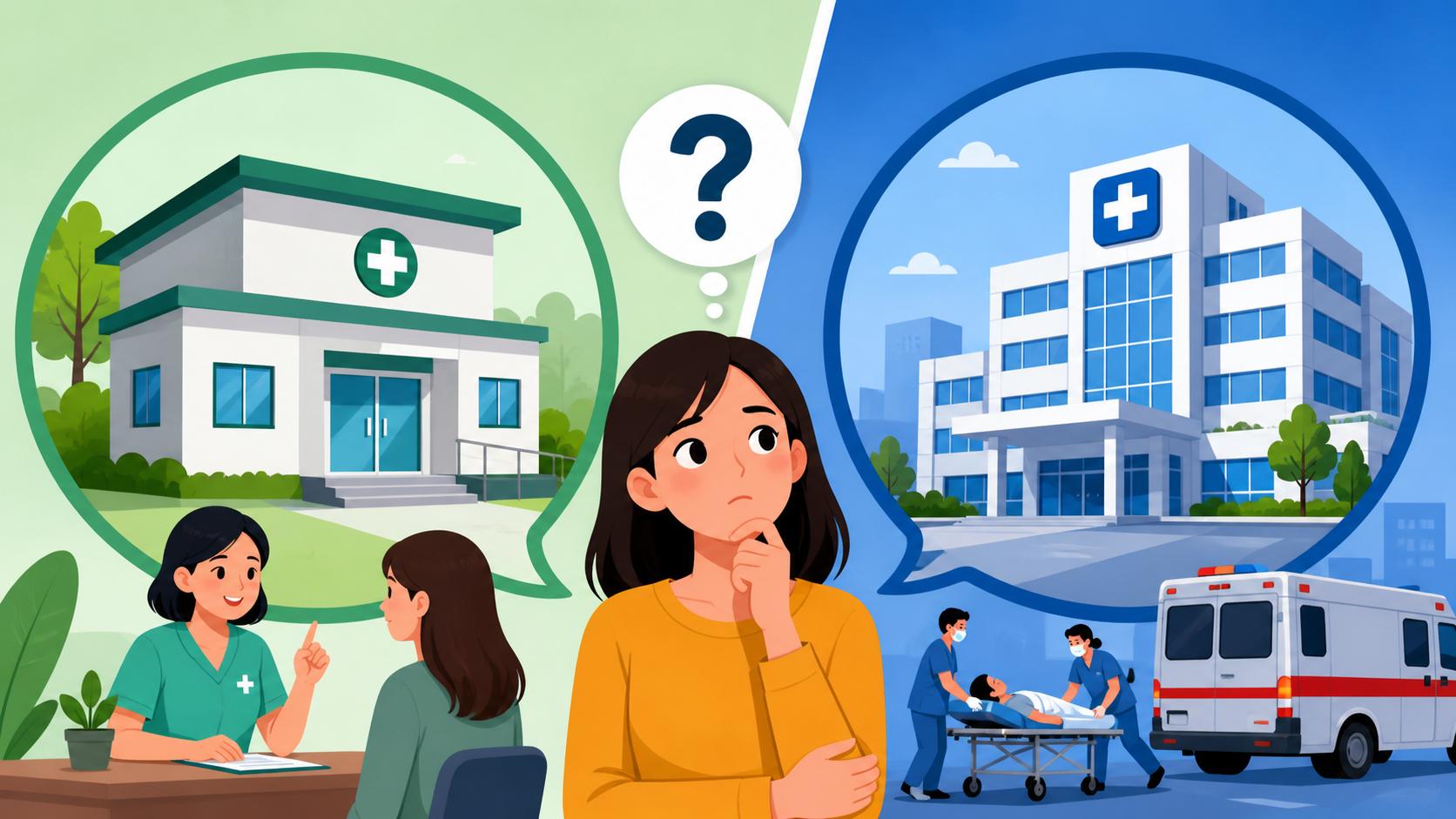
Navigating the Indonesian healthcare bureaucracy while nursing a tropical fever is a rite of passage no expat wants, yet almost all of us endure. I remember sitting in a humid waiting room in South Jakarta, clutching a plastic queue number and wondering why I couldn't just see a cardiologist for my palpitations without talking to a general practitioner first. This guide solves the "where do I go first" dilemma by deconstructing the critical choice between your registered Faskes Tingkat 1 and heading straight to a high-end hospital.
Understanding the BPJS Hierarchy: What is a Faskes Tingkat 1
The foundation of the Indonesian public health system, known as JKN-BPJS, is built on a tiered structure. At the very bottom—or rather, the entry point—is the Faskes Tingkat 1 (Level 1 Healthcare Facility). This is your gatekeeper. When you first receive your insurance card, you are assigned to a specific clinic or Puskesmas based on your residential address. For many foreigners, this system feels restrictive, but it is designed to prevent the country’s large hospitals from being overwhelmed by minor ailments that a local doctor could easily treat.
The Role of the Primary Healthcare Provider
Your Faskes 1 is meant to be your medical home. It is typically a small neighborhood clinic (Klinik) or a government-run community health center (Puskesmas). In these facilities, you will find general practitioners, nurses, and sometimes a basic laboratory. They handle vaccinations, common infections, and initial screenings. I’ve found that while the facilities can be modest, the doctors are often incredibly dedicated. However, you must realize that their primary goal is triage. They are there to determine if your condition can be managed with a simple prescription or if you truly need the heavy machinery found in a metropolitan hospital.
If you are just starting your journey, understanding Healthcare in Indonesia for Foreign Residents: Complete System Overview (2027) is essential to seeing where these clinics fit into the broader national strategy. Your Faskes 1 is where your medical history begins in the Indonesian system, and establishing a good relationship with the staff there can actually speed up your paperwork in the long run.
Why You Can't Just Walk into a Specialist
In many Western countries, if you have a skin rash, you call a dermatologist. In the Indonesian BPJS system, doing this will result in a rejected claim and a very expensive bill. To use your public insurance, you must present a "Surat Rujukan" (Referral Letter) from your Faskes 1. This letter is the golden ticket. Without it, the specialist at the hospital will not be covered by BPJS.
I’ve seen many expats get frustrated when they are told they must visit a small clinic for a "simple" referral. It feels like an extra step, but it is a legal requirement of the system. If you are looking for more details on the registration side of things, you should check out BPJS Kesehatan for Expats: Registration, Costs, and the New KRIS System to ensure your paperwork is in order before you actually get sick.
Identifying Your Registered Clinic
If you look at your Mobile JKN app—which you should definitely have installed—it will list your assigned Faskes 1. Many expats don't realize they can actually change this clinic once every three months. If your assigned Puskesmas is too far or too crowded, you can search for a private "Klinik" that accepts BPJS. These are often slightly more modern and might have shorter wait times. Knowing how to navigate this is part of Using Your BPJS Card (Kartu JKN): How to Register and Book at Local Faskes effectively. Don't feel stuck with the first place the system assigns you; do your homework and find a clinic that is convenient for your commute or home life.
The Referral System: Navigating the Paperwork Trail
The "Rujukan" system is the most common point of friction for foreigners living in Bali or Jakarta. It requires patience and a bit of "jam karet" (rubber time) flexibility. You aren't just getting a medical opinion; you are navigating a bureaucratic process that links your primary clinic to a secondary or tertiary hospital.
Getting Your Referral from Faskes 1
To get a referral, you must physically go to your Faskes 1. You cannot simply call or text. You will be examined by the GP, and you must explain why your condition requires a specialist. Be specific. If you have chronic back pain, don't just say it hurts; explain that you’ve tried basic physiotherapy and need an orthopedic consult. Once the doctor agrees, they will input the referral into the digital "P-Care" system.
Usually, the referral is valid for 90 days. This means you can visit the specialist multiple times for the same issue within that window. However, keep in mind that the system often dictates which hospital you can go to. It is usually the closest "Type C" or "Type B" hospital to your clinic. If you want a specific high-end hospital like Siloam or Medistra, you might find the BPJS system tries to steer you elsewhere unless those hospitals are specifically partnered with your Faskes 1. This is where Seeing Specialists in Indonesia: The BPJS Referral System and Private Alternatives becomes a vital read for those who want more control over their medical destination.
When Referrals Aren't Needed: The Emergency Exception
There is one major exception to the referral rule: the "Gawat Darurat" (Emergency). If you are in a life-threatening situation—think chest pains, severe trauma, or high-grade fever with convulsions—you can and should go directly to any hospital’s Emergency Room (UGD). In a true emergency, BPJS is required to cover your stabilization regardless of which Faskes 1 you are registered with.
However, be warned: the hospital's definition of "emergency" might be stricter than yours. If you show up at the ER with a sore throat at 2 AM, they may stabilize you but refuse to process it under BPJS, leaving you with the full bill. For those living in more remote areas, understanding Emergency Medical Care in Indonesia: Ambulances, ERs, and Evacuation Protocols is a literal lifesaver. I always tell my friends to keep a "medical emergency folder" with their passport copy and BPJS card ready to go at a moment's notice.
Managing Chronic Conditions and Recurring Referrals
For those of us managing long-term issues like hypertension or diabetes, the referral system can feel like a monthly chore. Usually, after your first specialist visit, the hospital will give you a "Surat Kontrol" (Control Letter). This allows you to bypass the Faskes 1 for subsequent visits for a set period. However, once that control letter expires, you must return to your Faskes 1 to "refresh" the referral. It's a cycle that requires careful calendar management.
During these gaps, or when the local pharmacy is out of stock, many expats turn to trusted sources like iHerb to maintain their supplement regimens or specific vitamins that aren't always available in the local Apotek. Having a backup supply of high-quality supplements ensures that your health doesn't dip just because a piece of paperwork is stuck in the system.
Going Direct to a Private Hospital: The Out-of-Pocket Reality
Sometimes, you just want to skip the line. If you are feeling miserable and don't want to spend four hours at a Puskesmas just to get a piece of paper, you have the option to go "Umum" (as a general, self-paying patient) to a private hospital. This is the path of least resistance, but it comes with a price tag.
Choosing Private Care for Speed and Comfort
In cities like Jakarta or Surabaya, private hospitals are like five-star hotels. You walk in, head to the specialist clinic, pay your consultation fee (typically between IDR 500,000 and IDR 1,500,000), and see the doctor within the hour. There is no referral needed. You have total freedom to choose the most renowned surgeon or the most empathetic pediatrician.
For many, the comfort of a private waiting room, air conditioning that actually works, and a cafeteria that serves decent coffee is worth the out-of-pocket expense. If you are navigating the capital, the Jakarta Healthcare Guide for Expats: International Clinics and After-Hours Options provides a curated list of facilities where "going direct" is the standard operating procedure for the international community.
International Standard Facilities in Jakarta and Bali
If you are in Bali, the landscape is slightly different. Hospitals like BIMC or Siloam Denpasar cater heavily to tourists and expats. They understand Western medical expectations and often have staff who speak fluent English. Going direct to these facilities is often the only way to access certain high-tech diagnostic tools like 3D MRIs or specialized cardiac labs.
The Bali Healthcare Guide: Hospitals, Clinics, and Emergency Contacts for Residents is an excellent resource for identifying which hospitals in the Uluwatu or Canggu areas are best for direct visits. In these areas, the "direct to hospital" route is often preferred because the local Faskes 1 options can be extremely overwhelmed by the local population density.
Direct Billing and Private Insurance Coordination
If you have international health insurance, such as Cigna Global, the "direct to hospital" route becomes much more attractive. Most top-tier Indonesian hospitals have international desks that handle direct billing with global insurers. This means you don't even have to pay and claim later; the hospital and Cigna Global settle the bill behind the scenes.
This is the ultimate stress-reducer. I've personally used this at Pondok Indah Hospital, and the transition from the waiting room to the specialist was seamless because they already had my insurance details on file. When you aren't tethered to the BPJS referral system, you can focus entirely on your recovery rather than the administrative hurdle. For a deeper look at how to balance these two worlds, read Public vs Private Healthcare in Indonesia: BPJS Kesehatan and Expat Insurance.
Comparing Primary Clinics vs. Hospital Specialists
To help you decide which path to take for your current ailment, I've put together a comparison of what you can expect from each. Neither is "better" in a vacuum; it depends on your symptoms, your budget, and your patience.
| Feature | Faskes Tingkat 1 (BPJS) | Private Hospital (Direct/Insurance) |
|---|---|---|
| Initial Cost | Free (Covered by monthly premium) | IDR 500k – 2.5 million+ per visit |
| Wait Times | 1 to 4 hours typically | 15 to 45 minutes with appointment |
| Referral Needed? | No (This is the start point) | No (Direct access to any doctor) |
| English Levels | Basic to Moderate | Usually High / Fluent |
| Facilities | Basic (Stethoscope, Blood Pressure) | Advanced (CT Scans, Specialized Labs) |
| Medication | Restricted to BPJS Formulary | Any brand available in Indonesia |
| Environment | Crowded, often non-AC | Private suites, very comfortable |
Practical Strategies for Expat Healthcare Management
After a few years in Indonesia, you learn that the "best" healthcare strategy is often a hybrid one. You use the BPJS system for the "big stuff" or chronic management, and you use private direct visits for acute issues where time is of the essence.
Using Telemedicine for Quick Triage
Before you even leave your house, use apps like Halodoc or Alodokter. For about $3 to $5, you can have a video call with a general practitioner. They can give you a professional opinion on whether you need to head to a hospital immediately or if it can wait for a Faskes 1 visit the next morning.
I’ve found that Telemedicine Apps: Halodoc vs Alodokter for Quick Prescriptions is one of the most underutilized tools by new expats. These doctors can even send a digital prescription to a nearby pharmacy, and your medicine will arrive via a Gojek driver within 30 minutes. It's the ultimate hack for avoiding waiting rooms altogether when you just have a standard stomach bug or "Bali Belly."
When to Supplement BPJS with Private Coverage
BPJS is fantastic for major surgeries and long-term care that would otherwise bankrupt you. However, it doesn't cover everything. It often uses generic medications and puts you in a "Standard Ward" (KRIS) which might be a shared room. This is why many veteran expats maintain a private policy with a provider like Cigna Global.
By having private insurance, you can choose to go direct to a hospital for the "luxury" of a private room and specialized care, while keeping your BPJS active for legal residency requirements and as a secondary safety net. It’s the "belt and braces" approach to tropical living. If you are struggling to find specific medications after your visit, don't forget the Apotek Guide: Prescription Workflow, Refills, and Communicating with Pharmacists to help you navigate the local pharmacy scene.
Stocking Your Home Medical Kit
Regardless of where you go for care, you will likely end up finishing your recovery at home. I always recommend keeping a well-stocked medical kit. Since local pharmacies can sometimes have limited stock of niche Western brands, I use iHerb to keep a supply of high-grade probiotics (essential for after a course of Indonesian antibiotics), electrolyte powders, and specific skin creams for the humidity-induced rashes that plague us all. Being able to treat minor issues at home saves you a trip to either the clinic or the hospital.
Regional Differences in Access: Jakarta vs. Bali
The decision between a Faskes 1 and a hospital also depends heavily on where you are currently standing. The infrastructure in a Tier-1 city like Jakarta is vastly different from a remote village in North Bali or a mining town in Kalimantan.
Navigating the Jakarta Hospital Network
In Jakarta, the sheer density of private hospitals means you are never more than 15 minutes away from a world-class specialist. If you live in Kemang, SCBD, or Pondok Indah, your "local" private hospital might actually be better equipped than the regional public hospital. In this environment, many expats ignore their Faskes 1 entirely for anything other than major procedures, choosing to pay the "convenience tax" of going direct. The quality of care in these hubs is exceptional, often rivaling what you would find in Singapore for routine matters.
Healthcare Logistics in Bali’s Tourist Hubs
In Bali, the system is under immense pressure from the "digital nomad" influx. A Faskes 1 in Canggu might have a line out the door by 7 AM. In these cases, going direct to a facility like BIMC isn't just a luxury; it’s a necessity if you actually want to be seen that day. However, be aware that many Bali clinics are "tourist clinics" and do not accept BPJS at all. Always check the sign at the door. If it doesn't say "Menerima Pasien BPJS," you are going to be paying private rates. For those living there long-term, Finding Medical Care in Indonesia: Clinics, Hospitals, and International Facilities will help you distinguish between a tourist trap and a legitimate resident facility.
Important Disclaimer
The information provided in this guide is for educational and informational purposes only and is based on the personal experiences of expatriates and the current administrative landscape in Indonesia. It does not constitute professional medical advice, diagnosis, or treatment. Healthcare regulations, BPJS policies, and hospital partnerships in Indonesia are subject to frequent changes by the Ministry of Health and BPJS Kesehatan. Always consult with a qualified healthcare professional or your insurance provider before making medical decisions. In the event of a medical emergency, immediately contact local emergency services or proceed to the nearest emergency room. Use of mentioned brands like Cigna Global or iHerb is at the user's discretion and should be based on individual needs and local legal compliance.