Filing a Medical Complaint: Navigating Malpractice Concerns in Indonesia
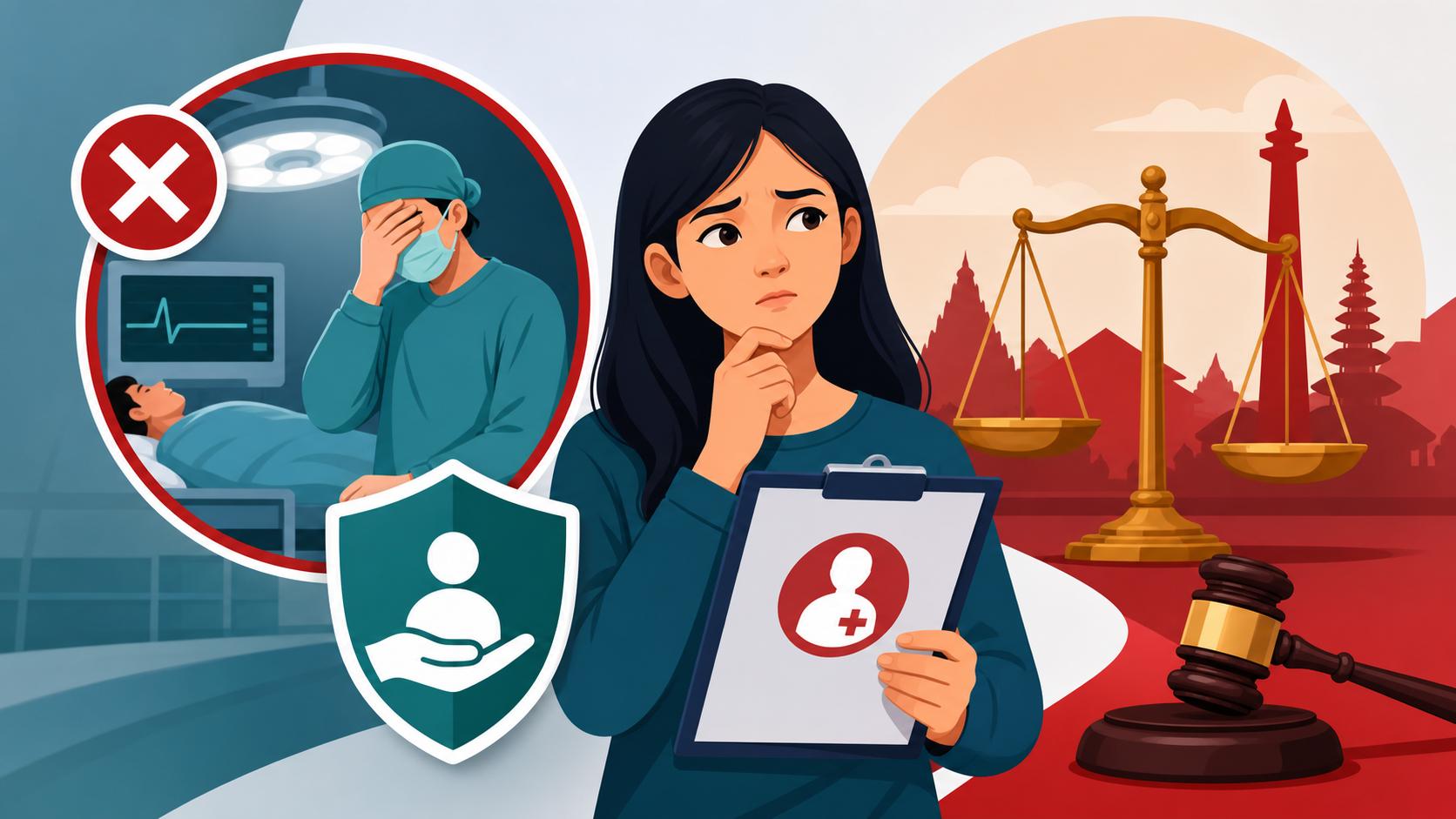
Dealing with a medical error or an unexpected complication while living in Indonesia is a uniquely isolating experience that can leave you feeling physically vulnerable and legally adrift. I remember the cold sweat I broke into when a standard prescription I was given led to a severe allergic reaction, only for the clinic to suggest it was simply "the weather" rather than their oversight. This guide is designed to help you navigate the complex, often opaque process of filing a medical complaint and addressing malpractice concerns within the Indonesian healthcare system.
The Cultural and Legal Landscape of Malpractice in Indonesia
Navigating the medical world in Indonesia requires an understanding that the system operates on a foundation of "musyawarah"—the cultural practice of consensus and deliberation—before it ever reaches the courtroom. For many expats, the first instinct when faced with a perceived medical error is to call a lawyer. While legal counsel is important, jumping straight to litigation in Indonesia can often be counterproductive. The local system is designed to favor mediation and internal resolution, and the legal definition of "malapraktik" (malpractice) under Indonesian law is notoriously specific.
The legal framework is primarily governed by the Omnibus Health Law (Law No. 17 of 2023), which consolidated several previous regulations. This law outlines the standards of care expected from healthcare professionals and the rights of patients to seek compensation. However, proving a breach of these standards requires navigating professional boards that are composed of the doctors' own peers. This is where many foreigners feel the "loss of face" culture plays a role; doctors may be extremely hesitant to admit a mistake directly because of the social and professional stigma involved.
When you are in the middle of a health crisis, your focus is naturally on recovery. You might be using supplements from iHerb to support your immune system or looking for specialized care, but if that care goes wrong, you need a paper trail. The Indonesian system places a heavy burden of proof on the patient. You must demonstrate that there was a deviation from the Standard Operating Procedure (SOP), that damage occurred, and that the deviation directly caused the damage.
Understanding Your Rights as a Patient
Before you can effectively file a complaint, you must understand the rights guaranteed to you under Indonesian law. Every patient in an Indonesian facility has the right to clear information regarding their diagnosis, the proposed treatment, and any potential risks. This is the core of "Informed Consent." If a procedure was performed on you without a clear explanation of the risks in a language you understand, you already have a significant basis for a complaint.
You also have the right to a second opinion. In the Indonesian medical culture, some doctors might take offense if you suggest seeing another specialist, but it is your legal right. Seeking a second opinion is often the first step in confirming whether malpractice actually occurred. If you find yourself in this position, it is vital to keep your insurance provider in the loop. High-end providers like Cigna Global often have dedicated teams that can help vet second-opinion specialists and ensure that your transition between facilities is documented correctly.
Furthermore, you have a right to your medical records. While the physical files are often considered the property of the hospital, the information within them belongs to you. You are entitled to a summary of your medical record, including lab results, imaging, and treatment history. Accessing these is often the most difficult part of the process, as hospitals may move slowly when they sense a complaint is coming. For more on the specifics of data rights, see our guide on Medical Privacy in Indonesia: What Expats Should Know About Confidentiality.
Step 1: The Internal Hospital Complaint Process
The most direct and often most successful path to resolution is through the hospital's internal "Manajemen Komplain" (Complaint Management) or "Customer Service" department. Every major private hospital, such as those in the Siloam or RS Pondok Indah networks, has a formal mechanism for handling patient grievances.
When you initiate this process, do not do it alone. If your Bahasa Indonesia is not fluent, the risk of "lost in translation" moments is high, and these can be used against you later. It is highly recommended to bring a professional interpreter or a trusted local friend. You can find more about how to secure one in our article on Medical Translation in Indonesia: When to Use It and Where to Find Interpreters.
During internal mediation, your goal should be to receive a formal explanation of what happened. If the hospital acknowledges a mistake, they may offer to waive fees, provide free corrective surgery, or offer a financial settlement. Be cautious about signing anything during these initial meetings. In Indonesia, once a settlement is signed through "musyawarah," it is very difficult to reopen the case in court. For an overview of how hospitals generally handle administrative issues, refer to Hospital Billing in Indonesia: Avoiding Overcharges and Understanding Inpatient Fees.
Step 2: Reporting to Professional Regulatory Bodies
If internal mediation fails, your next step is to elevate the complaint to the professional regulatory bodies. In Indonesia, the primary body for medical discipline is the MKDKI (Majelis Kehormatan Disiplin Kedokteran Indonesia), or the Indonesian Medical Discipline Honorary Council. This body is separate from the Indonesian Medical Association (IDI) and is tasked specifically with determining if a doctor violated professional standards.
The MKDKI process is administrative, not criminal. They do not award financial compensation. Instead, they can revoke a doctor’s license or mandate further training. Filing a report here is essential if you plan to go to court later, as a finding of "disciplinary breach" by the MKDKI serves as powerful evidence in a civil or criminal trial. To understand how these bodies fit into the wider healthcare landscape, you should read Healthcare in Indonesia for Foreign Residents: Complete System Overview (2027).
When filing with the MKDKI, you will need to provide:
- A written chronology of events.
- Copies of all relevant medical documents.
- Evidence of the harm caused (photos, secondary lab reports).
- Your KITAS/KITAP and passport identification.
This process can take months. It involves hearings where the doctor will be questioned by a panel of experts. As an expat, you may feel the system is weighted against you, which is why having comprehensive international insurance like Cigna Global is a lifesaver; they can sometimes provide advisory support or help you find a lawyer who specializes in medical law.
Step 3: Navigating Civil and Criminal Litigation
If you are seeking financial damages for lost wages, emotional distress, or long-term disability, you will need to file a civil lawsuit in an Indonesian District Court (Pengadilan Negeri). Alternatively, if the negligence was so gross that it resulted in permanent disability or death, it may be treated as a criminal matter under the Indonesian Penal Code (KUHP).
Criminal cases begin with a report to the police (SPKT – Sentra Pelayanan Kepolisian Terpadu). This is a heavy step. Once a police report is filed, the hospital and the doctor are likely to stop all communication with you, and the case becomes a matter for the state prosecutor. In many cases, the police will encourage a "Restorative Justice" approach, which is another form of mediated settlement aimed at avoiding a long trial.
In a civil case, you will need an Indonesian lawyer (Advokat). It is critical to hire one who has specific experience in medical malpractice. The Indonesian legal system is not based on "precedent" in the same way common law systems (like the US or UK) are, meaning outcomes can be highly unpredictable. During these trials, the court will often rely heavily on expert witnesses, usually other doctors from the same region. This is a common point of frustration for expats, as the medical community in Indonesia is tightly knit. You can find more about navigating the local hospital environment in our Siloam Hospitals Overview: What Expats Should Know About the Network.
Practical Documentation Checklist
Success in any medical complaint in Indonesia depends entirely on your documentation. From the moment you suspect something is wrong, you must become your own case manager. Do not assume the hospital will keep accurate records of your complaints.
| Document Type | Why It Is Essential | How to Obtain It |
|---|---|---|
| Medical Summary (Resume Medis) | Provides the doctor's official version of the diagnosis and treatment. | Request from the Medical Records department before checking out. |
| Informed Consent Forms | Proves whether you were warned of the specific risks involved. | You should have signed this before the procedure; ask for a copy. |
| Lab & Imaging Results | Objective evidence of your physical state before and after the event. | Most labs like Prodia provide digital copies; always keep the originals. |
| Chronological Diary | Your personal record of who said what and when. | Start a private document immediately; include names of nurses and staff. |
| Financial Receipts | Necessary for calculating "material damages" in a lawsuit. | Keep every invoice, even for small items like medication bought at an apotek. |
If you are currently recovering from a procedure gone wrong, ensuring you have the right support is vital. Whether you are ordering specialized recovery products from iHerb or looking for a professional to translate your case, every step counts. For those who need immediate help during a crisis, see our guide on Emergency Rooms (UGD) in Indonesia: Triage, Payment Upfront, and Documentation.
Dealing with Language and Bureaucracy
One of the biggest hurdles in filing a complaint is the sheer volume of bureaucracy. Every office you visit will require a different set of legalized documents. In Indonesia, many official processes require a "Surat Domisili" (Domicile Letter) or a "Surat Kuasa" (Power of Attorney) if someone else is helping you.
If the incident happened in a public hospital, the process is even more complex, as you are dealing with government employees. In these cases, you might need to involve the Ombudsman of the Republic of Indonesia if you feel the public service provided was substandard. For those navigating the public system, our guide on How to Request a Medical Interpreter at Local Public Hospitals (RSUD) offers practical advice on breaking through the language barrier.
It is also worth noting that many expats choose to seek corrective treatment outside of Indonesia, often in Singapore or Malaysia. If you do this, make sure the foreign doctor provides a very detailed report of their findings. This "external report" can be used as a point of comparison against the Indonesian treatment, though its admissibility in an Indonesian court will require it to be officially translated and legalized.
Finding Support and Second Opinions
You don't have to do this alone. The expat community in Jakarta and Bali is a wealth of information. While you should be careful about posting specific names on social media due to Indonesia's strict "UU ITE" (Electronic Information and Transactions Law) which covers defamation, you can ask for "recommendations for medical lawyers" or "doctors for a second opinion" in private groups.
Vetting your next doctor is crucial to ensure you don't face the same issues again. Use reliable directories and look for those who have a track record of working with international patients. Our resources on Finding English-Speaking Doctors in Indonesia: Reliable Directories and Vetting can help you narrow down your search for a practitioner who understands the standards you expect.
Lastly, remember that your health is the priority. If you are struggling with the emotional toll of a medical error, seeking counseling is a brave and necessary step. The stress of a legal battle in a foreign country can be overwhelming. Don't neglect your mental health while fighting for your physical rights.
Summary of the Complaint Pathway
- Internal Mediation: Speak to the hospital’s patient liaison or complaint manager first. Attempt a "musyawarah" resolution.
- Medical Records: Secure your "Resume Medis" and all test results immediately. Refer to Keeping Medical Records: Getting Physical Copies of Scans and Lab Work for the step-by-step process.
- Professional Board (MKDKI): File a disciplinary report if you believe the doctor deviated from professional SOPs.
- Legal Counsel: Hire a specialized medical lawyer for civil suits.
- Insurance Coordination: Inform Cigna Global or your provider of the situation to ensure coverage of corrective treatments.
Disclaimer
This article is for informational purposes only and does not constitute legal or medical advice. The laws and regulations in Indonesia regarding medical malpractice are subject to change, particularly following the 2023 Omnibus Health Law. Always consult with a qualified Indonesian legal advocate (Advokat) before pursuing litigation or signing settlement agreements. Your insurance provider should be consulted regarding coverage for legal or corrective medical expenses.