Cash Rules Everything: When You Absolutely Need Rupiah Banknotes
You are standing at a tiny, roadside warung in rural Central Java, the smell of sizzling satay is incredible, and your stomach is growling. You finish your meal, reach for your phone to scan a QRIS code, and see the dreaded "No Service" icon in the corner of your screen. I once spent a frantic thirty minutes trying to explain to a confused grandmother that I had money "in the cloud" while she stared blankly at my useless smartphone. This guide ensures you never face that social awkwardness by identifying exactly when digital payments fail and why physical Rupiah banknotes remain the ultimate survival tool in Indonesia.
The Digital Mirage: Why QRIS and E-Wallets Are Not Universal
It is easy to get lulled into a sense of digital security in places like Jakarta, Surabaya, or the tourist bubbles of Canggu. In these hubs, you can go weeks without touching a physical bill, relying entirely on GoPay, OVO, or the ubiquitous QRIS system. However, the moment you step off the paved main roads or enter a local neighborhood (kampung), the digital infrastructure often vanishes. Indonesia is a vast archipelago with varying levels of internet stability. Even today, many small-scale vendors do not have the hardware or the consistent data connection required to process digital transactions reliably.
Beyond infrastructure, there is the human element. For many micro-entrepreneurs, digital wallets represent a delay in liquidity. While a QRIS payment might hit their account quickly, withdrawing that cash to pay their own suppliers involves steps they may not want to take. Cash is immediate, tangible, and carries no transaction fees for the seller. When you are dealing with a vendor whose daily profit might be less than 200,000 IDR, every percentage point matters. Understanding Money in Indonesia for Foreign Residents: Banking, Tax, and Financial Setup (2027) requires acknowledging that while the country is modernizing rapidly, the grassroots economy still breathes through physical currency.
I always recommend using a service like NordVPN when accessing your Indonesian banking apps or e-wallets on public Wi-Fi. Security is paramount, and while we love the convenience of digital tools, they are only as good as the connection they run on. If your signal drops or your app glitches, your only backup is the paper in your wallet.
Traditional Markets and the Early Morning Rush
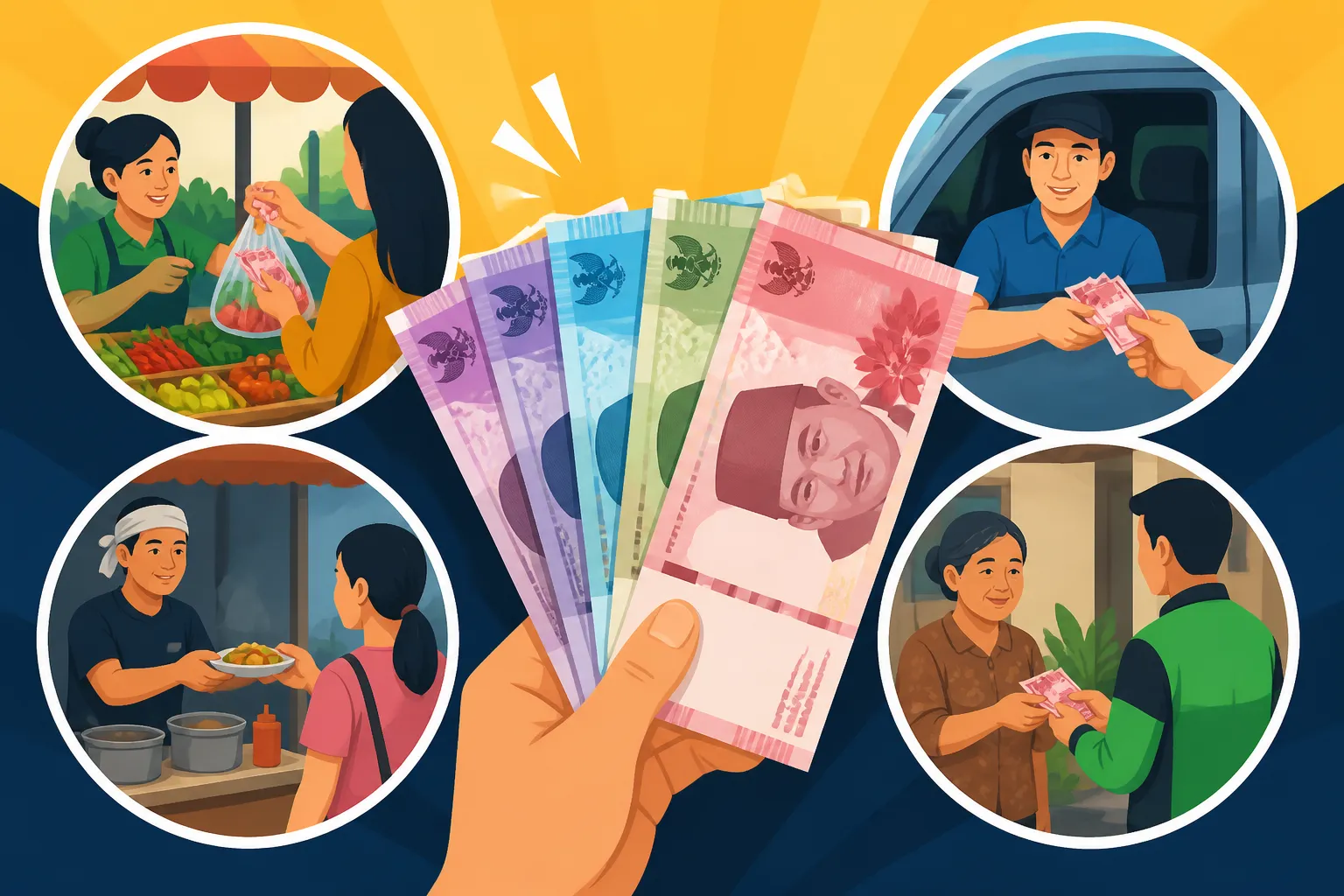
If you want to experience the real Indonesia, you must visit a pasar tradisional. This is where you find the freshest produce, the most aromatic spices, and the most vibrant local culture. It is also a place where a 100,000 IDR note is often treated with suspicion because nobody has enough "uang kembali" (change) for it. In these settings, Navigating the Traditional Market (Pasar Tradisional) Early Morning Rush is a tactile experience that demands small denominations of cash.
Imagine trying to buy a bunch of bananas for 15,000 IDR. If you present a digital wallet, the vendor—who is likely juggling five other customers and a mountain of spinach—will probably just wave you away. They don't have time for the "loading" screen. They want the 20,000 IDR note so they can hand you a 5,000 IDR bill and move to the next person. In the market, speed is currency, and cash is the fastest tool available.
The Invisible Economy of Parking and Tips
One of the first things every expat notices in Indonesia is the "tukang parkir." These are the men in orange or yellow vests who appear out of thin air to help you back your car or scooter out of a parking spot. Whether they are officially sanctioned or not is a topic for another day, but the reality is that their service is paid for in small banknotes. Usually, 2,000 IDR for a motorbike and 5,000 IDR for a car is the standard. These men do not carry QR codes around their necks.
Furthermore, Tipping Culture in Indonesia: Gojek Drivers, Waitstaff, and Spa Therapists is deeply rooted in cash. While apps like Gojek allow for digital tipping, giving a physical 10,000 or 20,000 IDR note to a driver who has just braved a monsoon to bring you dinner carries a different weight. It is an immediate gesture of gratitude that they can use instantly at the next gasoline stall or warung.
Ceremonial Obligations and Village Life
If you live in Indonesia long enough, you will eventually be invited to a wedding, a housewarming, or sadly, a funeral. These social pillars often involve a "sumbangan" or a contribution. In many villages, there is a formal desk at the entrance of a wedding where you sign a guestbook and drop an envelope containing cash into a locked box. While some urban weddings have started using QR codes on the invitation, the vast majority of Indonesia still follows the envelope tradition.
In Bali, village life is governed by the Banjar. There are frequent "iuran" (fees) for local security, trash collection, or ceremonial preparations. These are almost always collected door-to-door by a local representative. Having a stack of 20,000 and 50,000 IDR notes in your desk drawer is essential for these moments. It shows respect for local customs and ensures you are contributing your fair share to the community without making the collector jump through digital hoops.
Comparison: When to Use Cash vs. Digital
To help you navigate your daily spending, here is a breakdown of common transactions and the preferred payment method.
| Transaction Type | Recommended Method | Why? |
|---|---|---|
| High-End Malls / Supermarkets | Digital / Credit Card | Secure, trackable, and earns points. |
| Traditional Markets (Pasar) | Cash (Small Bills) | Speed and lack of digital infrastructure. |
| Gojek / Grab Transport | Digital (In-App) | Ease of use and transparent pricing. |
| Street Parking (Tukang Parkir) | Cash (2k – 5k IDR) | Strictly cash-only micro-service. |
| Rural Gas Stations (Pertamini) | Cash | Independent pumps rarely have signal/EDC. |
| Medical Clinics (International) | Digital / Card | Better for insurance documentation. |
| Local Warungs | Cash | Avoids "network busy" frustrations. |
| Large Bill Payments (PLN/Water) | Digital | Using QRIS: The Cashless Payment System Revolutionizing Indonesian Commerce is more efficient. |
Strategic Cash Management for Foreigners
Managing your physical money requires more than just carrying a wallet. The climate in Indonesia is humid, and "soft" money—banknotes that are torn, stained, or overly crumpled—is sometimes rejected by automated machines or even picky vendors. I’ve had more than one 100,000 IDR note rejected at a self-service laundry because of a tiny tear in the corner.
The Art of the Emergency Stash
I always recommend keeping an "emergency million" (1,000,000 IDR) hidden somewhere separate from your main wallet. This should be composed of two 100k notes, ten 50k notes, and the rest in smaller denominations. This stash has saved me during power outages when ATMs went offline and during unexpected road trips where the only fuel available was from a roadside "Pertamini" glass bottle.
ATM Strategy and Security
When you need to withdraw cash, ATM Fees in Indonesia: Using Alto, Prima, and ATM Bersama Networks can add up. Stick to ATMs located inside banks or major shopping malls to minimize risk. I’ve seen my fair share of card-skimming stories in beach towns, so Avoiding Skimming Scams: Safe ATM Practices in Bali Tourist Areas is a must-read for anyone new to the country. Always cover your hand when entering your PIN—it sounds basic, but it is your first line of defense.
Moving Money: Digital to Physical
For those of us managing international finances, getting money into the country efficiently is key. I personally use Wise for almost all my transfers into my Indonesian bank account. The exchange rates are far superior to what you get at a traditional bank, and the transfer is usually near-instant. Once the money is in your local account (like BCA or Mandiri), you can withdraw it as needed.
For long-term residents who are also investing, Interactive Brokers is a fantastic tool for keeping your wealth in more stable currencies while you live your life in Rupiah. And for those interested in the more modern side of finance, Binance offers a way to move between crypto and IDR via P2P markets, though this is a more advanced path and requires a firm grasp of local regulations. Regardless of how you move the money digitally, the final step for daily life in Indonesia remains the same: a trip to the ATM.
Handling Large vs. Small Denominations
The 100,000 IDR note is the "Big Boss" of Indonesian currency. While it’s great for filling your wallet, it’s a nightmare for small vendors. If you try to pay for a 5,000 IDR bottle of water with a 100,000 IDR note at 7:00 AM, you will likely be met with a pained expression and a "tidak ada kembalian" (no change).
Make it a habit to "break" your large notes at Indomaret or Alfamart. Buy a small pack of gum or a drink, and you’ll get a handful of smaller notes that are much more useful for your day-to-day interactions. Dealing with International Money Transfers: Using Wise, SWIFT, and Local Bank Remittances often results in large withdrawals, so being strategic about how you spend those first few notes is a veteran expat move.
Safety and Storage in the Tropics
Finally, let’s talk about keeping your cash safe. Pickpocketing isn't rampant in Indonesia compared to some European capitals, but "bag snatching" (jambret) can happen, particularly on scooters in tourist areas. Never keep all your cash in your scooter's front cubby hole or in a loosely hanging bag.
Keep your banknotes flat. In the tropical heat, if you keep money in your pocket, it will get damp with sweat. Many locals use small zippered pouches rather than traditional leather wallets to protect their bills from the humidity. If a note does get wet or damaged, don't panic. You can usually exchange it at a major branch of Bank Indonesia, though it’s a bureaucratic process you’d likely want to avoid.
Living in Indonesia is an exercise in balancing the high-tech future with a deeply traditional present. While we embrace the convenience of our apps and digital accounts, the physical Rupiah banknote remains a symbol of readiness. It is the bridge between you and the local community, the fuel for your adventures, and your ultimate safety net when the digital world goes dark.
Disclaimer
The information provided in this article is for informational purposes only and does not constitute financial, legal, or investment advice. Currency regulations, banking policies, and digital payment systems in Indonesia are subject to frequent change. While we strive to provide the most current and accurate data for 2026, readers are encouraged to verify specific requirements with official government sources or qualified professionals before making significant financial decisions. The author is not responsible for any losses or inconveniences incurred from following the advice in this guide.