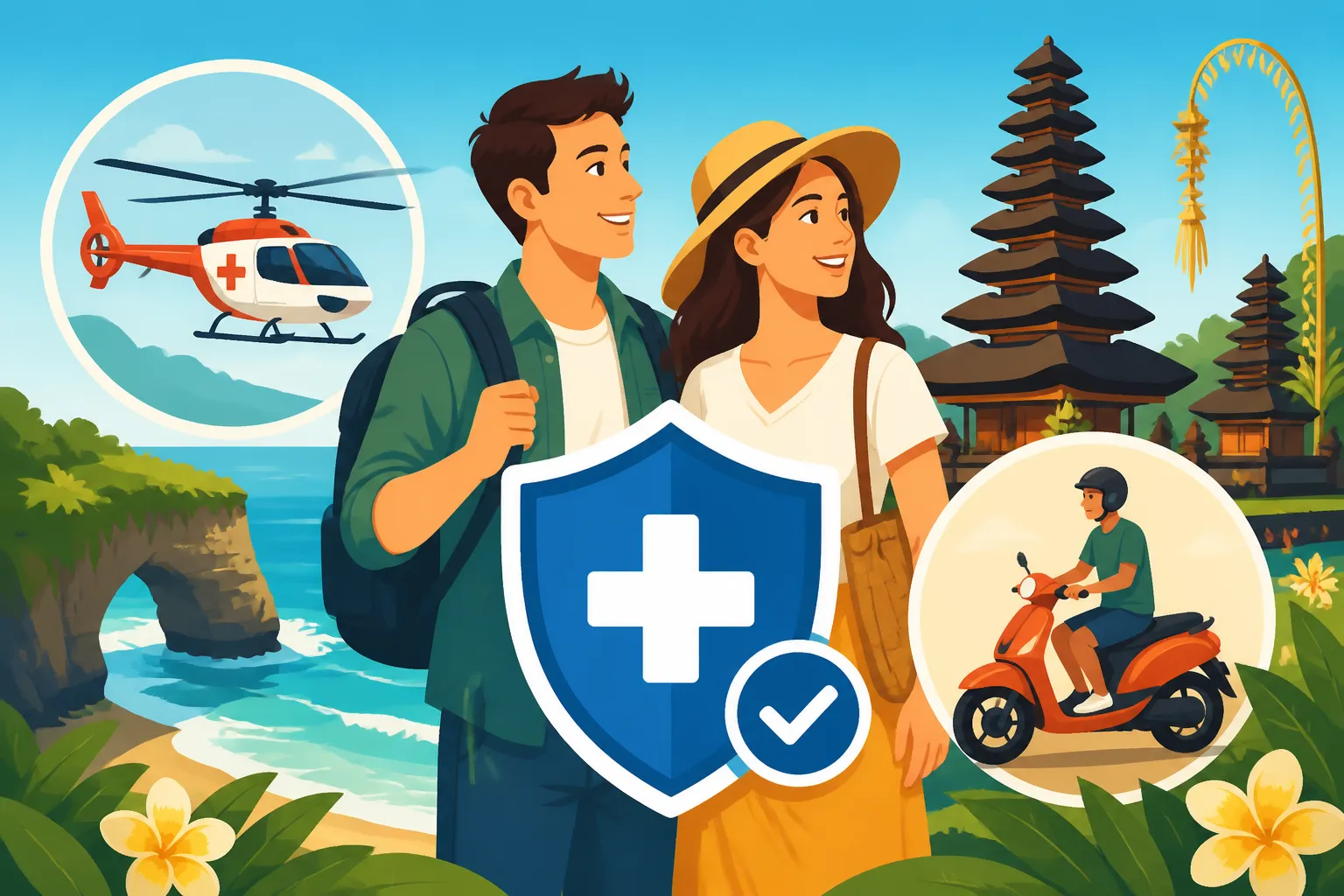
Travel Insurance for Bali Tourists: Ensuring Medevac and Scooter Coverage
One of the most heart-wrenching sights in Bali is a GoFundMe page created for a tourist who had a scooter accident and realized, too late, that their insurance wouldn't pay a cent. I’ve sat in hospital waiting rooms with friends who were staring down $40,000 bills because they lacked a simple endorsement. This guide ensures you don't become a cautionary tale by breaking down the non-negotiable insurance requirements for Bali.
The Reality of Medical Care and Billing in Bali
When you land in Denpasar, the tropical air and friendly smiles make it easy to forget that you are in a developing nation with a complex healthcare system. Bali has some excellent private facilities, but they operate on a business model that can be jarring for those used to socialized medicine or seamless billing. If you end up in a facility like BIMC or Siloam, the level of care is high, but the price tag reflects that.
Most tourists don't realize that Indonesian hospitals often require a significant financial guarantee or a "deposit" before they even admit you to a room. This is where your financial setup becomes critical. I always recommend having a multi-currency account like Wise ready to go. If your insurance company is slow to respond—which often happens during the "verification" phase—you might need to swipe a card for $2,000 just to get a specialist to see you. Having liquid funds in IDR via Wise can save you from the predatory exchange rates the hospital’s credit card machines often charge.
Furthermore, you need to understand that the public system, known as BPJS, is largely unavailable to you as a tourist. You are strictly in the private market. For more on how the local system operates, you should look at Finding Medical Care in Indonesia: Clinics, Hospitals, and International Facilities to understand the landscape. In the private sector, every gauze pad and paracetamol tablet is itemized. Without a solid insurance policy that offers "direct billing," you will be expected to pay the full amount upon discharge, which can lead to a very stressful situation if you are trying to coordinate with a claims adjuster back home in a different time zone.
The Scooter Trap: Why Your Policy Might Be Void
This is the most common reason claims are denied in Bali. Everyone wants to rent a scooter in Canggu or Ubud, but almost nobody has the correct paperwork to stay insured. In the eyes of an insurance company, if you are riding a scooter illegally, you are engaging in a "criminal act," which voids your medical coverage entirely. This doesn't just mean they won't fix your bike; it means they won't pay for your surgery or your hospital bed.
To be legally covered, you generally need two things. First, you must have a valid motorcycle license from your home country. A standard car license is not enough, even if the rental guy in Kuta tells you otherwise. Second, you must have an International Driving Permit (IDP) that specifically shows a motorcycle endorsement. If you don’t have these, you are essentially riding uninsured. I’ve seen insurers reject claims simply because the engine capacity of the rented scooter (often 125cc or 150cc) exceeded the limit of the traveler's home license. You can find more details on these regulations in our guide on Renting a Scooter in Bali: Avoiding Fines, Helmet Laws, and Police Checks.
Beyond licensing, there is the "helmet and alcohol" rule. It sounds obvious, but many people lose their coverage by not wearing a helmet or having a single beer before riding. Insurers in Bali are very savvy; they will request the police report and the hospital's toxicology screen. If there is a hint of negligence, you are on your own. This is why many long-term residents and savvy travelers keep their investment portfolios, perhaps managed via Interactive Brokers, entirely separate from their travel funds. You do not want a minor accident to force you into liquidating long-term assets just because a claim was denied over a missing helmet.
| Feature | Standard Travel Insurance | Bali-Specific Comprehensive |
|---|---|---|
| Medical Evacuation | Often capped at $20,000 | Should be $100,000+ (Unlimited preferred) |
| Scooter Coverage | Excluded or restricted to 50cc | Covered with valid IDP and License |
| Direct Billing | Rare; pay and reclaim | Standard for major Bali hospitals |
| Extreme Sports | Excluded (Surfing, Diving) | Included as riders |
| Theft/Loss | Limited to small amounts | Covers high-end laptops/cameras |
Medical Evacuation: The $100,000 Necessity
In Bali, the most serious cases—neurological trauma, complex cardiac issues, or severe internal injuries—often require a "Medevac" to Singapore or Darwin, Australia. Bali’s hospitals are good for stabilization, but for life-saving surgeries, you want to be in a world-class facility. A private air ambulance from Denpasar to Singapore can easily cost $50,000 to $100,000, and this must be paid upfront or guaranteed by an insurer before the plane leaves the tarmac.
When you are reviewing a policy, don't just look at the total "medical" limit. Look specifically for the "Emergency Medical Evacuation and Repatriation" section. It needs to be a massive number. I have seen families lose their homes trying to pay for a flight that wasn't covered. This is the ultimate "I've-been-there" advice: check the fine print for "pre-existing conditions" that might trigger an exclusion for a Medevac. Even if you think you’re healthy, a minor heart murmur on your record could be used to deny a flight if you have a cardiac episode in the heat. For a deeper look at these protocols, read Medical Evacuation (Medevac) Services in Indonesia: Costs and Insurance Coverage.
The logistics of an evacuation are a nightmare. Your insurer will need to communicate with the "Attending Physician" in Bali to confirm that the move is "medically necessary." If the hospital in Bali claims they can treat you, but you want to leave because you don't trust the facility, the insurer might refuse to pay for the flight. This is where having a clear understanding of Emergency Rooms (UGD) in Indonesia: Triage, Payment Upfront, and Documentation becomes vital so you can advocate for yourself or your loved ones during the triage process.
Digital Safety and Financial Management for Travelers
Living or vacationing in Bali involves a lot of digital transactions. You are likely booking villas, checking your insurance portal, and managing your bank accounts from cafes in Seminyak or Canggu. Public Wi-Fi is notoriously insecure in Bali, and the last thing you want is for your financial credentials to be stolen while you are already dealing with a medical crisis. I never access my insurance documents or banking apps without using NordVPN. It’s a small price to pay to ensure that your Binance account or your primary bank account isn't compromised while you’re using the "Free Guest Wi-Fi" at a clinic.
Additionally, for those who are staying long-term or digital nomading, your insurance needs might evolve. If you are starting to build a life here, you might move beyond simple travel insurance and look into international private medical insurance. These policies are more robust and allow you to keep your wealth growing in platforms like Interactive Brokers without the constant fear of a $50k hospital bill. It’s all about layers of protection: NordVPN for the digital layer, a solid insurance policy for the physical layer, and Wise for the liquidity layer.
Even "minor" issues in Bali can be expensive. Take "Bali Belly," for example. What starts as a stomach ache can quickly turn into severe dehydration requiring an IV drip. Most people don't want to claim a $200 clinic visit, but if you have a high deductible, you might be paying out of pocket anyway. Read our guide on Bali Belly and Food Safety: Avoiding and Treating Stomach Bugs to help avoid the clinic in the first place. If you do end up in the ER, be prepared for the paperwork. You can learn more about what to expect in Emergency Numbers in Indonesia: 118/119 for Ambulance and What to Expect and Hospital Billing in Indonesia: Avoiding Overcharges and Understanding Inpatient Fees.
Managing the Claims Process in a Crisis
If an accident happens, the first 24 hours are critical for your insurance claim. You must contact your insurer’s 24-hour emergency line immediately. Do not wait until you are discharged. The insurer will want to issue a "Letter of Guarantee" (LOG) to the hospital. Without this LOG, the hospital will treat you as a "cash patient," and you will be under immense pressure to pay as you go.
Always keep a digital and physical copy of your insurance certificate and the emergency contact number. I keep mine saved on a secure cloud drive, which I only access via NordVPN to ensure the connection is encrypted. If you are unconscious or unable to speak, your travel partner needs to know where these documents are. If you are traveling solo, I recommend having a "Health Checklist" ready. A good starting point is our Health Checklist for Your First 30 Days in Jakarta or Bali.
Finally, keep every single receipt. In Indonesia, "thermal paper" receipts from pharmacies or small clinics can fade quickly in the humidity. Take a photo of every document immediately. If you need to buy medication that the hospital doesn't have, you’ll likely go to a local pharmacy. Make sure the receipt has your name and the doctor's stamp. If you are managing your emergency funds through a crypto platform like Binance, remember that converting to IDR and getting it into a local bank account can take time, so always have a few days' worth of cash or a high-limit credit card as a buffer.
Final Thoughts on Policy Selection
Choosing travel insurance for Bali isn't about finding the cheapest premium; it's about finding the policy that actually works when you're lying on a stretcher. You want a company that understands the Indonesian "Biro Jasa" (service agency) culture and has established relationships with hospitals like Siloam and BIMC.
Look for policies that include:
- Unlimited or very high medical expenses ($10M+).
- Specific "Motorcycle/Scooter" coverage riders.
- 24/7 emergency assistance that actually answers the phone.
- Coverage for "Search and Rescue" if you plan on trekking Mt. Batur or Mt. Agung.
- High limits for "Personal Liability" (in case you hit someone else with that scooter).
Bali is a paradise, but it’s a paradise with sharp edges. Taking the time to secure a robust policy, setting up a Wise account for quick transfers, and ensuring your digital life is protected with NordVPN allows you to enjoy the island without the looming shadow of financial ruin. Be smart, stay legal on the roads, and keep those insurance documents handy.
Disclaimer
The information provided in this article is for educational and informational purposes only and does not constitute professional legal, financial, or medical advice. Insurance regulations and hospital policies in Indonesia are subject to frequent changes. Always verify your coverage details directly with your insurance provider and consult with a qualified professional regarding your specific situation before making travel or financial decisions. The author and publisher are not responsible for any claims denied or financial losses incurred while traveling.