Cryptocurrencies in Indonesia: Tax Regulations and Trading Accounts
Navigating the world of digital assets in Indonesia can feel like trying to drive a scooter through Jakarta at rush hour: it is chaotic, the rules seem to change at every intersection, and if you do not have your paperwork in order, the "traffic police" will certainly notice. I remember the sheer confusion I felt sitting in a small cafe in Canggu, trying to figure out why my local bank transfer to a trading platform was suddenly rejected without explanation. This guide solves the mystery of the Indonesian crypto landscape, providing you with a clear roadmap for legal trading, tax compliance, and account management as a foreign resident.
The Legal Status of Crypto in Indonesia (2026 Update)
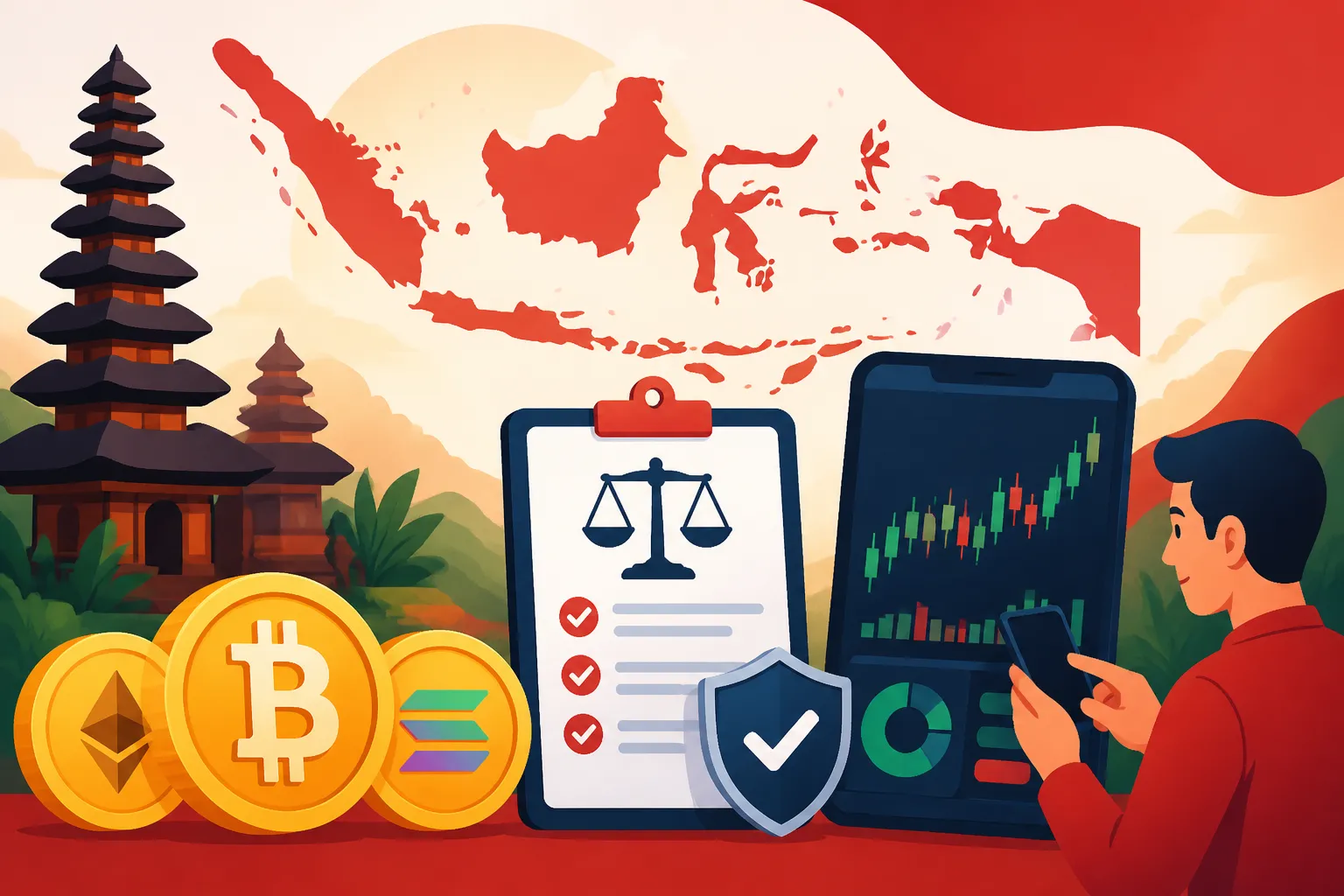
If you are coming from a country where cryptocurrency is viewed primarily as a financial instrument or a currency, you need to shift your perspective immediately upon landing in the archipelago. In Indonesia, the government is very specific: cryptocurrency is a commodity (komoditas), not a legal tender. You cannot walk into a luxury villa in Uluwatu and pay for your stay in Bitcoin. Doing so technically violates the law that mandates the use of the Indonesian Rupiah for all domestic transactions. Understanding this distinction is the foundation of Money in Indonesia for Foreign Residents: Banking, Tax, and Financial Setup (2027).
Bappebti and the Transition to OJK Oversight
For years, the regulatory body in charge of crypto was Bappebti (the Commodity Futures Trading Regulatory Agency). However, as we move through 2026, we are witnessing the final stages of the transition of crypto oversight to the OJK (Otoritas Jasa Keuangan), which is the Financial Services Authority. This shift means that crypto is being treated with more formal financial scrutiny than ever before. For us expats, this is actually good news. It means more institutional stability, but it also means that the "wild west" days of anonymous trading are long gone. Every legitimate exchange now requires a deep dive into your personal documentation, and the days of skating by without an NPWP (Tax ID) are over.
The National Crypto Exchange and Clearing House
Indonesia has established a state-backed "National Crypto Exchange" which acts similarly to a traditional stock exchange. This body does not trade directly with you; instead, it provides a centralized clearing house and depository for the private exchanges you actually use. This layer of bureaucracy is designed to protect investors from "rug pulls" and exchange collapses. When you trade on a local platform, your assets are technically recorded within this national framework, providing a level of security that many other Southeast Asian nations lack. It is a far cry from the decentralization Bitcoin purists dream of, but for a resident trying to stay legal, it offers significant peace of mind.
Commodity vs. Currency: The Practical Reality
The practical reality of the "commodity" status means that while you can buy, sell, and hold crypto as an investment, any attempt to use it as a medium of exchange for goods or services can lead to deportation or heavy fines. I have seen enthusiasts try to set up "crypto-friendly" cafes only to be shut down within weeks. Stick to trading on platforms and keeping your investment life separate from your daily spending. If you need to pay for your lifestyle, you are better off learning how to manage Digital Banking and E-Wallets: How to Register for GoPay, OVO, and Dana to convert your gains into usable Rupiah.
Setting Up Your Trading Infrastructure as an Expat
As a foreigner, you cannot just download an app and start trading. The KYC (Know Your Customer) process in Indonesia is famously rigorous. To open an account on a local exchange like Tokocrypto or Indodax, you generally need three things: your passport, your valid KITAS or KITAP, and your NPWP. Without these, you will likely be limited to "Level 0" accounts that do not allow for Rupiah withdrawals, which defeats the purpose of local trading. This is often why the first step for any serious investor is Opening a Bank Account in Indonesia: Document Checklists (KITAS, NPWP, Passport).
Choosing Between Local and International Exchanges
Most veterans in the Indonesian expat community use a hybrid approach. Local exchanges like Tokocrypto are essential because they have direct "on-ramps" and "off-ramps" to Indonesian banks like BCA or Mandiri. However, for more advanced trading pairs or higher liquidity, many still prefer Binance. Because the Indonesian government occasionally blocks access to international crypto sites through "Internet Positif" filters, using a reliable service like NordVPN is a standard practice to maintain access to your global portfolio. While local exchanges are great for moving money in and out of the country, global giants like Binance often provide better security features and a wider range of altcoins.
Linking Your Indonesian Bank Account
When you link your local bank to an exchange, ensure the name on your bank account matches the name on your KITAS and your exchange profile exactly. I once spent three weeks in a bureaucratic loop because my bank included my middle name while the exchange did not. If you are moving larger sums of money, expect a phone call from your bank’s compliance department. They are not necessarily looking to block you; they are mandated to report significant "suspicious" activity. Having your NPWP ready and linked is the easiest way to satisfy these queries. For those who need to move their crypto profits back to their home country, using Wise can be a life-saver for its transparent fees and speed when moving funds between your Indonesian account and an international one.
Using Global Brokerages for Crypto Exposure
If you find the local exchange landscape too daunting or the "commodity" regulations too restrictive, some expats opt for indirect exposure. Using Interactive Brokers, you can invest in Bitcoin ETFs or crypto-related stocks that are traded on international markets. This allows you to keep your capital in a more stable, internationally regulated environment while still benefiting from the price action of the crypto market. This is a particularly popular route for those who do not want to deal with the complexities of Taxes in Indonesia for Expats: NPWP, PPh 21, and the 183-Day Rule regarding direct digital asset ownership.
| Feature | Local Indonesian Exchanges | Global Exchanges (e.g., Binance) | International Brokerages |
|---|---|---|---|
| KYC Requirements | KITAS/KITAP + NPWP | Passport | Passport + Proof of Address |
| IDR On-Ramp | Direct Bank Transfer/OVO | P2P Trading Only | Wire Transfer (use Wise) |
| Tax Handling | Automated Final Tax (0.21%) | Self-Reporting Required | Subject to Global Capital Gains |
| Access | Unrestricted | Often requires NordVPN | Unrestricted |
| Security | OJK/Bappebti Regulated | High (Global Standards) | High (SEC/FCA Regulated) |
Taxes, PPh, and Staying Compliant
The Indonesian tax office (Ditjen Pajak) has become incredibly sophisticated in tracking digital assets. As of 2026, a "Final Tax" system is in place for crypto transactions. This means that if you use a registered local exchange, they are legally required to withhold taxes on every trade you make. You do not have to calculate the profit or loss for every single trade yourself; the exchange does it for you. This is a double-edged sword: it is convenient, but it means the government knows exactly how much you are trading.
Understanding PPh and PPN on Crypto
The current tax structure usually involves two components: Income Tax (PPh) and Value Added Tax (PPN). For transactions on registered exchanges, the rates are generally 0.1% for PPh and 0.11% for PPN, totaling 0.21% per transaction. If you are trading on an unregistered international exchange, the rates are significantly higher—often double. This is why many expats choose to do their heavy trading on Binance but move their funds through a local exchange for the "off-ramp" process to ensure the taxes are handled at the lower "registered" rate. Failure to account for these nuances can complicate your Filing the Annual Tax Return (Formulir 1770): Deadlines and Required Documents.
Reporting Assets on Your SPT (Annual Tax Return)
Even though you pay a "final tax" on each trade, you are still required to report your total crypto holdings on your annual SPT. You must list your digital assets under the "Wealth" (Harta) section. You should value them based on the purchase price or the market value at the end of the tax year, depending on the current guidance from your tax consultant. I have seen people skip this step, thinking the "final tax" covered everything, only to get an audit letter because their bank account balance did not match their reported income. With Understanding NPWP Integration with NIK: What the 2025/2026 Changes Mean, the tax office has more data-sharing capabilities than ever, making transparency your best friend.
The Risks of Non-Compliance and Peer-to-Peer Trading
Some expats try to avoid the tax man by using Peer-to-Peer (P2P) platforms or informal Telegram groups to swap crypto for Rupiah. I strongly advise against this. Not only are you at a high risk of being scammed, but the Indonesian government has stepped up its monitoring of "suspicious" bank transfers. If you receive 50 million Rupiah from a random individual and cannot prove it came from a legitimate source, your account can be frozen under anti-money laundering laws. It is much safer to use a regulated platform, pay the 0.21%, and keep your record clean.
Bridging the Gap: Local Profits to International Wealth
Once you have successfully traded and paid your taxes in Indonesia, you may find yourself with a significant amount of Rupiah sitting in a local bank account. For many of us, the goal is to eventually move that wealth back into a "hard" currency like USD or EUR. This is where the integration of various financial tools becomes vital. You cannot simply "send" Rupiah abroad from a mobile app in many cases without encountering heavy fees and unfavorable exchange rates.
Moving Funds with Efficiency
This is where Wise becomes an essential part of your toolkit. You can transfer your Rupiah from your BCA or Mandiri account to Wise, convert it at the mid-market rate, and send it to your home bank account or even to Interactive Brokers for further investment. The transparency of this process is vital for your own records; should the tax authorities in your home country ask about the source of the funds, you will have a clear paper trail of the exchange, the tax paid in Indonesia, and the transfer.
Managing Privacy and Security
In the world of crypto, security is everything. Beyond using a hardware wallet for your long-term holdings, you must secure your digital footprint. Using NordVPN is not just about bypassing "Internet Positif" blocks; it is about encrypting your connection when you are accessing sensitive financial apps at a cafe in Seminyak or a co-working space in Jakarta. Public Wi-Fi is a breeding ground for man-in-the-middle attacks. If you are managing significant assets on Binance or checking your balance on Interactive Brokers, do not do it over an unsecured network.
Planning for the Long Term
The Indonesian government’s stance on crypto is evolving. We are hearing whispers of even more integrated systems where your crypto holdings might eventually be linked to your KTP WNA (Foreigner ID). As you build your portfolio, keep a meticulous folder of all your transaction history. If you ever decide to leave the country, you will need this documentation for your tax clearance (EPO). Moving your wealth is a process, and as long as you follow the steps—trade legally, pay the transaction tax, and use reliable services like Wise and NordVPN—you can navigate the Indonesian crypto world with the confidence of a seasoned local.
Taxes and Financial Disclaimer
The information provided in this article is for educational and informational purposes only and does not constitute professional financial, legal, or tax advice. Cryptocurrency regulations and tax laws in Indonesia are subject to frequent changes, especially during the transition to OJK oversight in 2026. While we strive to provide the most accurate and up-to-date information, you should always consult with a qualified tax professional or legal advisor who specializes in Indonesian expat affairs before making significant financial decisions. The use of VPNs to access restricted sites should be done in accordance with local laws and the terms of service of the respective platforms. All investments carry risk, and past performance is not indicative of future results.