Bank Account Rejection: Common Issues with Name Matching and Missing NPWP
You have just spent three hours navigating Jakarta's midday heat, folder of documents in hand, only to have a bank teller tell you "data tidak sesuai" because your middle name is on your passport but not your residency permit. I have personally sat in those plastic chairs for an entire afternoon only to be rejected over a single hyphen. This guide solves the mystery of Indonesian bank account rejections, focusing on the specific documentation traps and the 2026 tax ID requirements that catch most foreigners off guard.
Why Indonesian Banks are Surprisingly Strict with Foreign Residents
The banking landscape in Indonesia has shifted dramatically over the last few years. While it used to be possible to open an account with just a passport and a "sponsor letter" at certain local branches, those days are largely over. The Otoritas Jasa Keuangan (OJK) has tightened Anti-Money Laundering (AML) and Know Your Customer (KYC) protocols to a level that often feels adversarial to the average expat. When a teller rejects your application, it is rarely a personal judgment; it is a systemic rigidity. The banking software used by major institutions like BCA or Mandiri is often hard-coded to expect specific Indonesian naming conventions and identification numbers.
If you are a US citizen, the frustration is doubled. Due to FATCA (Foreign Account Tax Compliance Act) requirements, many smaller Indonesian bank branches simply refuse to deal with the paperwork associated with American clients. You might find yourself being told that the "system is down" or "the manager is out," which is often a polite way of avoiding the compliance headache. Understanding US Citizens in Indonesia: FATCA Reporting and Banking Frustrations is essential before you even step foot in a branch, as it allows you to target the specific "International Desk" branches that are equipped to handle your file.
The Nightmare of Name Matching: Passport vs. KITAS vs. NPWP
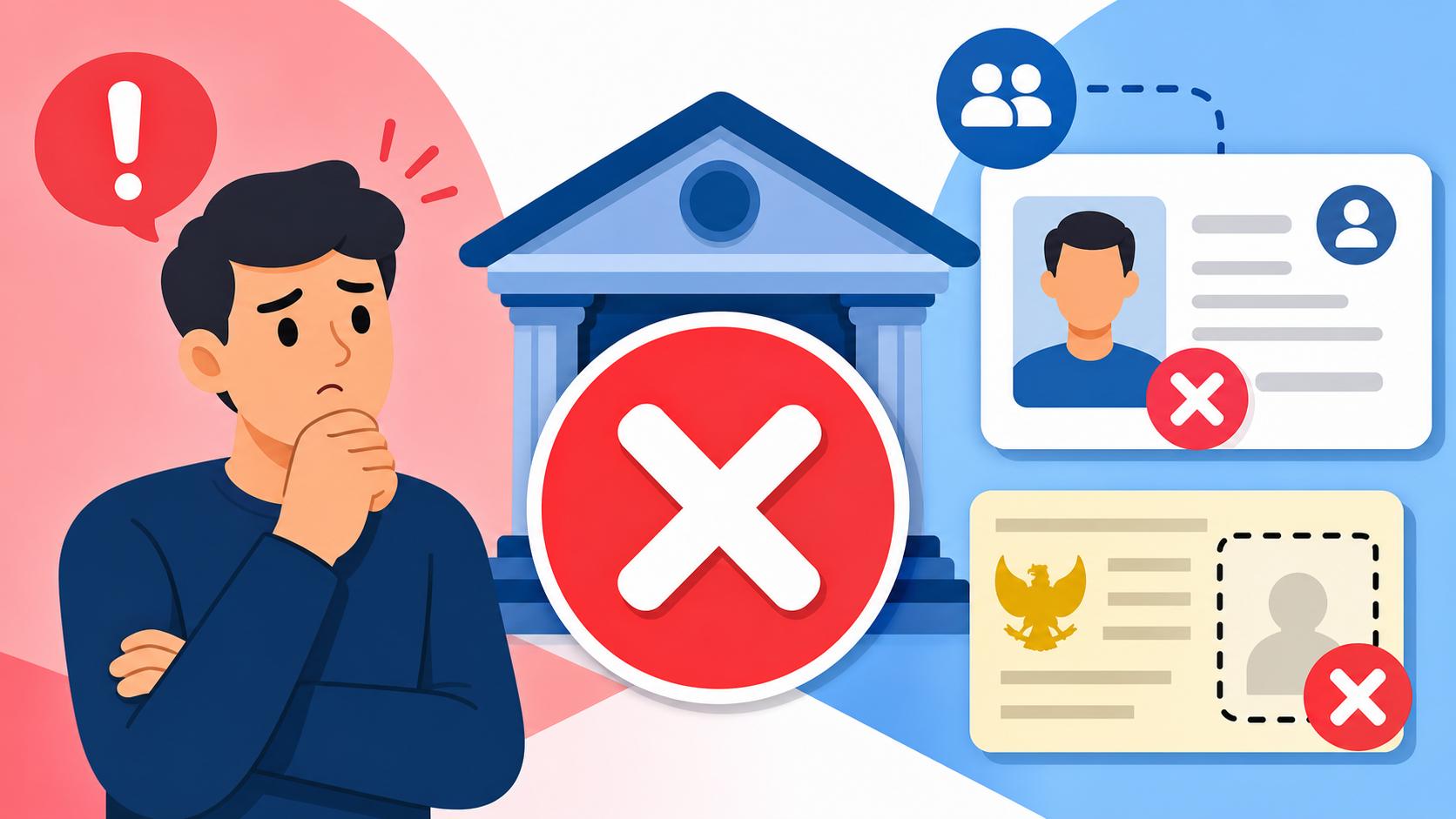
The single most common reason for a "silent rejection" or a flat-out denial is a name mismatch. In the West, we are used to a certain level of flexibility with middle names or initials. In Indonesia, the system is literal. If your Passport says "Johnathan Quinton Smith," your KITAS says "Johnathan Q. Smith," and your tax ID says "Johnathan Smith," the bank’s computer will flag these as three different people. The teller cannot simply "overrule" the system because the back-office compliance team will reject the digital scan later that evening.
The Middle Name and Initial Trap
In many Western countries, middle names are secondary. In Indonesia, they are part of a continuous string of text. I once saw an expat rejected because their employer’s HR department omitted their middle name on the RPTKA (Work Permit) application. When the bank tried to verify the Opening a Bank Account in Indonesia: Document Checklists (KITAS, NPWP, Passport), the names didn't align. If your passport has two middle names, ensure every single document you receive in Indonesia—from your residency permit to your domicile letter—includes them exactly as they appear in the machine-readable zone of your passport.
Handling Hyphens and Special Characters
Indonesian systems often struggle with apostrophes and hyphens. If your name is "O'Malley" or "Smith-Jones," one government agency might input it with the character, while another might replace it with a space. This creates a data mismatch that is nearly impossible to fix at the bank level. You must fix it at the source. If you are currently in the process of applying for your visa, insist that your agent or HR department uses the exact spelling and punctuation found on your passport. If they don't, you will spend months chasing a KTP WNA (Foreigner ID Card): Why Banks Will Ask You For It just to prove you are the person you claim to be.
The "Name Too Long" System Constraint
Believe it or not, some older banking systems in Indonesia have a character limit for the "Name" field. If you have a particularly long name common in some European or South Asian cultures, the teller might truncate it to fit. However, if the truncated name doesn't match the government's database during the automated verification check, the application will fail. In these cases, it is often better to visit a major "Kantor Cabang Utama" (KCU) rather than a smaller "Kantor Cabang Pembantu" (KCP), as the main branches usually have access to updated software that handles longer name strings.
The NPWP (Tax ID) Hurdle: Mandatory or Optional
The NPWP (Nomor Pokok Wajib Pajak) is no longer a "nice to have" for expats; it is effectively mandatory for banking. While some banks might let you open an account without one on the promise that you will provide it within 30 days, failing to do so will lead to your account being frozen or restricted to "credit only" status. This means you can receive your salary, but you cannot withdraw it or use your debit card.
The 2026 NIK-NPWP Integration Reality
The Indonesian government has recently integrated the NIK (National Identity Number) with the NPWP. For foreigners, this means your Tax ID is now directly linked to your residency data in the civil registry. If your bank application doesn't include an NPWP, the bank cannot properly report your interest earnings or comply with tax withholding laws. Before heading to the bank, you should ensure you are Registering for an NPWP (Tax ID): How Expats Link NIK to Tax Records in 2027 to avoid a loop where the bank asks for the ID and the tax office asks for a bank statement.
Dealing with the "No NPWP, No Account" Policy
Many expats, particularly those on a Remote Worker Visa (E33G): Digital Nomad Requirements and Limitations, try to avoid the NPWP to simplify their tax life. However, if you intend to stay in Indonesia for more than 183 days, you are legally a tax resident. Banks are the primary enforcers of this residency rule. If you do not have an NPWP, you will often be charged a significantly higher withholding tax on any interest earned in your account (usually 30% instead of 20%). More importantly, the lack of this ID is a red flag for the bank’s compliance department, which may assume you are trying to hide income.
Tax Residency and Global Income Reporting
Banks are increasingly asking for your "Tax Residency Certificate" or its equivalent from your home country. This is part of the Common Reporting Standard (CRS) that Indonesia participates in. If you are being rejected, it might be because the bank cannot verify your tax status abroad. Understanding how Taxes in Indonesia for Expats: NPWP, PPh 21, and the 183-Day Rule interact with your banking profile is crucial. If the bank suspects you are not properly registered for taxes, they will view your account as a high-risk liability and choose to reject the application rather than risk an audit by the tax authorities.
Comparison of Banking Success Rates for Foreigners in 2026
| Bank Name | Expat Friendliness | NPWP Requirement | Best For | Typical Rejection Reason |
|---|---|---|---|---|
| BCA (Bank Central Asia) | High | Strictly Mandatory | Daily use and QRIS | Name mismatch with KITAS |
| Bank Mandiri | Medium-High | Mandatory | Large transfers / Corporate | Missing Domicile Letter |
| BNI (Bank Negara Indonesia) | Medium | Required | Investor KITAS holders | US Citizen (FATCA) hurdles |
| Jenius (BTPN) | High (App-based) | Optional initially | Tech-savvy expats | Digital ID verification failure |
| Permata Bank | High | Mandatory | International connectivity | Signature mismatch with Passport |
Visa Types and Their Impact on Your Success Rate
The type of visa stamped in your passport is the first thing a security guard or receptionist will look at before they even give you a queue number. If you are on a Visa on Arrival (VoA) or a B211A tourist visa, your chances of opening a standard bank account are nearly zero in 2026. Banks require a "Long-Term Stay Permit" (ITAS/ITAP) to satisfy the "Permanent Address" requirement of their KYC protocols.
Why Tourist Visas and B211A Usually Fail
From a bank’s perspective, a tourist is a transient entity. There is no legal way for the bank to "recover" funds or serve legal papers to someone who could leave the country tomorrow. Even if you show a 6-month lease for a villa in Canggu, most banks will still reject you because your visa doesn't allow you to work or stay indefinitely. If you are struggling with local banking, you should focus on Everyday Budgeting in Indonesia: Cost of Living in Jakarta vs Bali vs Regional while using international alternatives like Wise to manage your local expenses via a multi-currency account.
The Remote Worker Visa (E33G) Complications
The E33G Remote Worker Visa is a newer category, and many bank tellers are still not trained on how to handle it. Since this visa specifically states you are working for an entity outside Indonesia, banks often get confused about how to categorize your source of funds. If your application is rejected on an E33G, it is often because the bank's internal system doesn't have a "Remote Worker" drop-down menu in their employment field. In this scenario, you may need to provide six months of bank statements from your home country and a letter of employment from your overseas boss to prove your income is legitimate.
Practical Solutions When You Get Rejected
If you’ve hit a wall with the traditional banks, do not panic. There are several ways to navigate the financial system in Indonesia without a standard local account, or by using "bridge" services that satisfy the bank’s requirements.
Using Digital Alternatives and Multi-Currency Accounts
While you wait for your documentation to be perfect, using Wise is the most efficient way to pay for your life in Indonesia. You can hold IDR in your digital wallet and send money to local accounts (like your landlord or Gojek) instantly. This bypasses the need for a local debit card for the first few months. Additionally, for those who need to keep their investments growing while living in Bali or Jakarta, using a platform like Interactive Brokers allows you to maintain a global portfolio that isn't tied to the volatility or the bureaucracy of the Indonesian banking system.
Online Security and Privacy for Banking
When navigating Indonesian banking apps or accessing your home accounts from a cafe in Ubud, security is paramount. I have seen many expats have their accounts flagged or "locked" by their home banks because they logged in from an Indonesian IP address. Using NordVPN is a standard practice for veteran expats; it allows you to maintain a "Home Country" IP address, preventing your international banks from freezing your accounts due to "suspicious foreign activity." It also provides an extra layer of encryption when you are forced to use a bank’s public Wi-Fi during a long afternoon of paperwork.
Managing High-Value Assets and Crypto
For those involved in the digital economy, Binance remains a vital tool. If your local bank rejects your transfer from an exchange, it is often because they don't have a clear "Crypto" category for incoming funds. Many expats use a combination of local e-wallets and international exchanges to manage their liquid assets until their KITAS and NPWP are fully synced with a local bank like BCA. Once you have a local account, you can learn How to Get a BCA Debit Card on the Same Day You Apply to finally integrate your local and global financial lives.
The Importance of the Domicile Letter
Many rejections occur because the expat provides a "Villa Address" that isn't registered in the government's domicile database. You need a Surat Domisili (Domicile Letter) from your local Kelurahan or Banjar. If the address on your bank application doesn't match the address on your residency permit or your domicile letter, the bank will reject you. This is another form of "Name Matching" but for locations. Ensure your landlord has properly registered your stay, or your bank account journey will end before it begins.
Health and Medical Disclaimer
The information provided in this article is for informational purposes only and does not constitute financial, legal, or tax advice. Banking regulations in Indonesia are subject to frequent change without notice. Always consult with a qualified legal professional or a certified tax consultant before making significant financial decisions or applying for residency permits in Indonesia. Be aware that using certain financial platforms may carry inherent risks related to currency volatility and regulatory shifts.