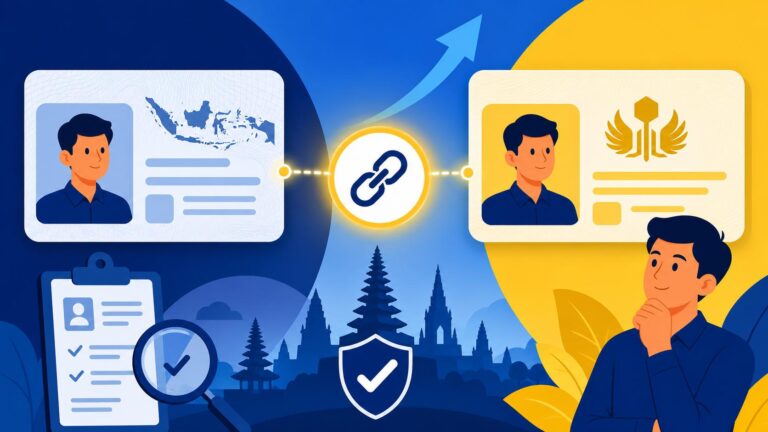
Can Tourists Open a Bank Account in Bali? Current Regulations and Loopholes
Trying to navigate the financial landscape of Bali as a tourist often feels like hitting a brick wall the moment you step away from the ATM. I spent my first three weeks in Berawa lugging around thick envelopes of Rupiah just to pay for my villa rental because no local bank would look at me without a residency permit. This guide breaks down exactly why the system is so rigid and the few remaining loopholes that might still work for you.
The Reality of Banking on a Tourist Visa in Indonesia
If you walk into a bright, air-conditioned branch of BCA or Mandiri in the heart of Seminyak with nothing but your passport and a Visa on Arrival, the security guard will likely give you a sympathetic smile before the teller politely declines your application. The core of the issue lies in the strict regulations set by the OJK (Otoritas Jasa Keuangan), Indonesia’s financial services authority. These rules are designed to prevent money laundering and ensure that everyone using the local banking system is a tax-paying resident.
In the past, there was a bit of a "Wild West" atmosphere where a friendly relationship with a branch manager or a small "donation" to a local fixer could get a tourist account opened in an afternoon. Those days are largely over. Today, the system is centralized and digital, meaning the software literally won't let a teller proceed without inputting a KITAS (Limited Stay Permit) number. This is the primary hurdle described in our guide on Opening a Bank Account in Indonesia: Document Checklists (KITAS, NPWP, Passport). Without that residency status, you are viewed by the system as a transient visitor, and transient visitors are considered high-risk for the bank's compliance departments.
Furthermore, the pressure on Indonesian banks to maintain international standards means they are increasingly wary of foreign accounts. If you are an American citizen, for example, the FATCA reporting requirements make you a "headache" for smaller branches that aren't equipped to handle the extra paperwork. This shift has made it nearly impossible for those on a standard tourist visa or the B211A visit visa to access full-service banking. You won't get a standard debit card, you won't get access to high-interest savings, and you certainly won't be able to apply for local credit facilities.
Exceptions and Current Workarounds
Despite the rigid rules, there are a few narrow corridors you can walk down if you are determined to have a local account. Some major banks have introduced "Tourist Accounts" or "Limited Balance Accounts" specifically for visitors. BCA, for instance, occasionally offers a "Rekening Turis" (Tourist Account) that requires only a passport and a small initial deposit, usually around $2,000 USD. However, these accounts come with heavy strings attached. The maximum balance is often capped, and you may find that the account is automatically closed if you don't perform a transaction within a certain period.
Another route people often discuss in the digital nomad circles of Ubud involves using a local sponsor. In this scenario, an Indonesian citizen "sponsors" your account, essentially vouching for you. While this was a common loophole a few years ago, banks have tightened the screws here too. Most now require the sponsor to be a family member or a legal employer. If you find an agency claiming they can open an account for you for a fee, proceed with extreme caution. These "agent-assisted" accounts are often flagged by compliance teams, and you run the risk of having your funds frozen without warning.
Digital banking has provided the most realistic "loophole" in 2026. Bank Mandiri’s "Livin' by Mandiri" app has occasionally allowed foreigners to register with just a passport, provided they have a local Indonesian SIM card. This isn't a full bank account in the traditional sense, but it gives you a digital wallet that can be used for the ubiquitous QRIS payments you see at every warung and cafe. If you are trying to understand the broader landscape, it’s worth Top Banks for Expats: Comparing BCA, Mandiri, BNI, and Digital Banks (Jenius) to see how these options stack up against the more permanent solutions available to residents.
Digital Alternatives and E-Wallets
For most tourists in Bali, a traditional bank account is actually overkill for what they really need: a way to pay locally without 3% foreign transaction fees and a way to use the local apps like Gojek and Grab. This is where e-wallets become your best friend. Apps like GoPay, OVO, and Dana are the lifeblood of the Indonesian economy. You can top these up at any Indomaret or Alfamart convenience store with cash, or via a transfer from a service like Wise.
Using Wise is particularly effective because it allows you to hold a balance in Indonesian Rupiah (IDR) and transfer it directly to local bank accounts or e-wallets for a fraction of the cost of a SWIFT wire. When you need to pay your villa owner, you can send the money from your Wise IDR pocket directly to their BCA or Mandiri account. It arrives almost instantly and looks like a local transfer to them, which avoids the awkward "where is my money?" conversations that happen when international transfers get stuck in intermediary bank limbo. This is a crucial part of Everyday Budgeting in Indonesia: Cost of Living in Jakarta vs Bali vs Regional because it saves you hundreds of dollars in hidden fees over a few months.
For those who are trading or managing larger assets while traveling, you might also look into Binance for peer-to-peer (P2P) transfers into local e-wallets, or Interactive Brokers for maintaining your long-term investment strategy while abroad. However, remember that whenever you are accessing financial apps or banking portals on the notoriously spotty public Wi-Fi in Bali cafes, you should be using NordVPN to encrypt your connection. I’ve known several people who had their banking credentials compromised while sipping lattes on "Canggu_Free_WiFi," and it’s a nightmare you want to avoid.
Navigating the Cashless Revolution with QRIS
The biggest reason tourists want a local account today is to access QRIS (Quick Response Code Indonesian Standard). You will see these square barcodes at every coffee shop, beach club, and even the smallest satay stall on the side of the road. It has effectively replaced cash for the local population. As a tourist, if you don't have a local app linked to a local balance, you are stuck using cash or a foreign credit card—the latter of which is often rejected at smaller establishments.
You can actually participate in this cashless system without a formal bank account by Upgrading E-Wallets to Premium (GoPay Plus) Using a Foreign Passport. Once you have a "Plus" or "Premier" version of an e-wallet, you can scan any QRIS code and pay instantly. This eliminates the need for a local debit card entirely. It also helps you stay safe; carrying millions of Rupiah in your pocket makes you a target for petty theft, whereas a digital wallet is protected by your phone's biometrics. For more on the technical side, check out Using QRIS: The Cashless Payment System Revolutionizing Indonesian Commerce.
If you do find yourself needing physical cash, you need to be smart about which machines you use. Always use ATMs located inside a proper bank branch with a security guard. Stand-alone ATMs in convenience stores or on the street are prime targets for skimming devices. This is a major part of Avoiding Skimming Scams: Safe ATM Practices in Bali Tourist Areas. Also, keep in mind the network fees; our guide on ATM Fees in Indonesia: Using Alto, Prima, and ATM Bersama Networks explains why your home bank might be charging you $5 every time you withdraw $100.
| Option | Ease of Opening | Best For | Requirement |
|---|---|---|---|
| Traditional Bank | Very Difficult | Large Transfers | KITAS / Sponsor |
| BCA Tourist Account | Moderate | Mid-term stays | Passport + $2k Deposit |
| Wise (Digital) | Very Easy | Daily spending | Foreign Passport |
| GoPay / OVO | Easy | QRIS & Deliveries | Local SIM Card |
| Mandiri Livin' | Moderate | Digital banking | Passport + Local SIM |
Essential Preparation for Managing Your Money
If you are set on trying to open an account, perhaps because you are planning to transition to a more permanent visa later, you need to have your "ducks in a row" before you visit a branch. First, you must have an Indonesian phone number. You cannot register for any local banking services with a foreign number. Second, bring a printed copy of your passport and your latest visa entry stamp. Banks in Bali love physical paperwork, and showing up with everything neatly organized makes you look much more like a "serious" applicant.
It is also helpful to have a local address, even if it's just your long-term villa or guesthouse. A "Surat Domisili" (Domicile Letter) from the local village head can sometimes act as a substitute for a utility bill, which is a standard requirement for residency. If you can prove you have been in the country for more than 30 days, some branches are more lenient. However, always be prepared for a "No." If you get rejected at one branch, don't argue. Just try another branch of the same bank in a different neighborhood; sometimes the rules are interpreted differently by different managers.
Managing your finances without a local account also means being your own bookkeeper. When you pay for utilities or rent via a bank transfer from a foreign service, always keep the digital receipt. If there is ever a dispute with a landlord, you won't have the luxury of walking into a local branch to get a stamped statement. For those staying longer than a month, learning How to Pay Utilities via M-Banking Apps (BCA Mobile, Livin' by Mandiri) is a godsend, even if you are just using a friend's app to facilitate the payment while you give them the cash. Finally, if you ever find yourself needing to move large sums back home, you'll want to look at the Best Ways to Send IDR to USD/EUR: Avoiding Hidden Conversion Fees to ensure you aren't losing 5-10% of your money in the process.
Disclaimer
The information provided in this guide is for informational purposes only and does not constitute legal or financial advice. Banking regulations in Indonesia are subject to frequent changes without notice, and the "loopholes" or "workarounds" mentioned may be closed or altered at any time by the OJK or individual banking institutions. Always verify current requirements with a professional consultant or directly with the bank before attempting to open an account or transferring significant funds. The author and publisher are not responsible for any financial loss or legal issues arising from the use of this information.