Monthly Grocery Budgets: Local Markets (Pasar) vs Expat Supermarkets (Grand Lucky)
Walking into an Indonesian supermarket for the first time can feel like a financial rollercoaster, where a local papaya costs pennies but a box of imported cereal feels like a luxury investment. I have spent more than I care to admit on taste-of-home comforts during my first year in Jakarta, only to realize I was bleeding my savings dry. This guide breaks down how to balance local pasar shopping with expat staples to master your monthly grocery budget.
Understanding the Indonesian Grocery Ecosystem
When you first land in Indonesia, the sheer variety of shopping options can be overwhelming. You aren't just choosing between "supermarket A" and "supermarket B." You are choosing between distinct tiers of the economy. The way you navigate these tiers will dictate whether you spend 4 million IDR or 15 million IDR per month on food. For a broader look at how these costs fit into your overall lifestyle, check out Everyday Budgeting in Indonesia: Cost of Living in Jakarta vs Bali vs Regional.
The Traditional Pasar (Pasar Tradisional)
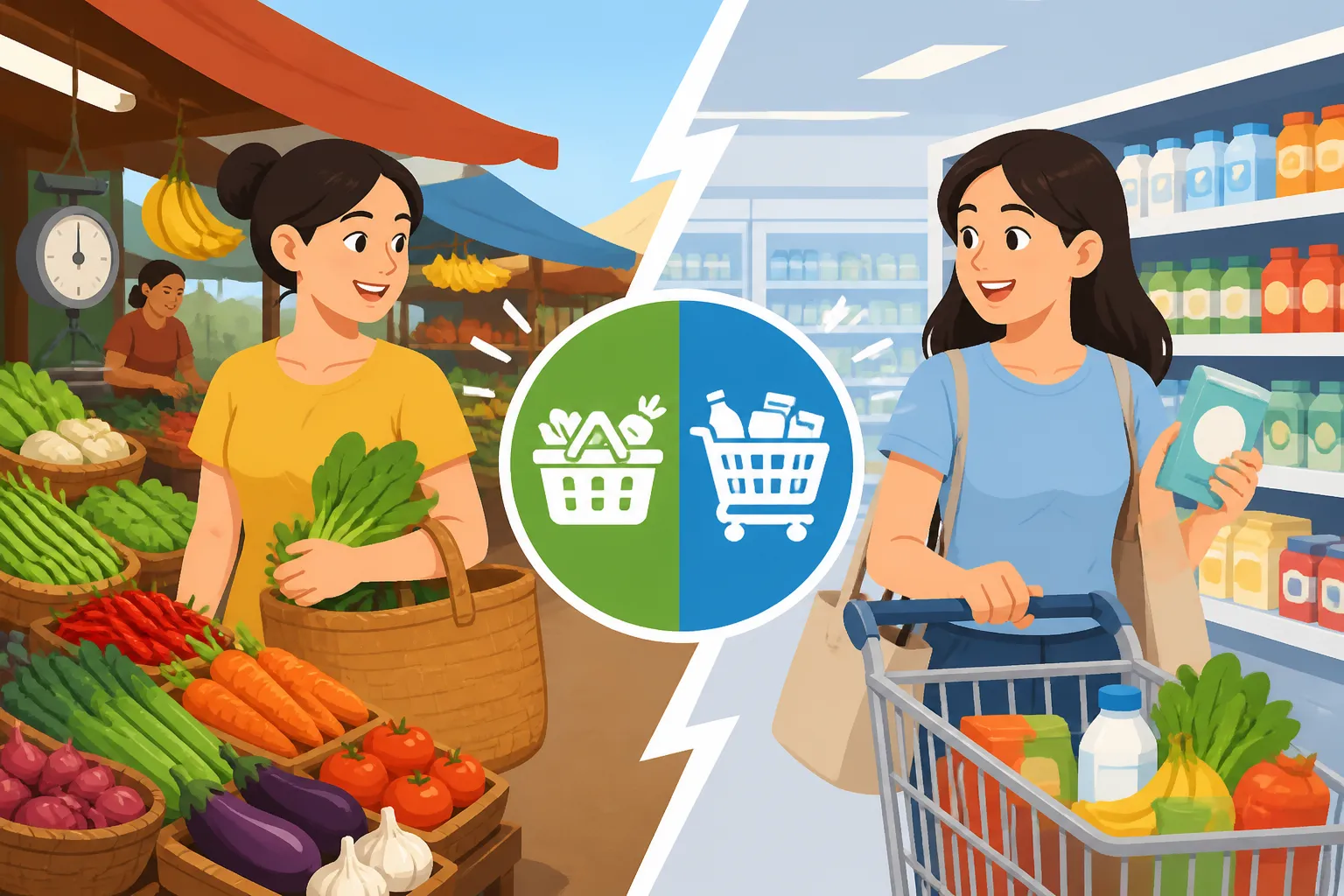
The Pasar is the heartbeat of Indonesian commerce. These are often wet markets where local farmers and wholesalers bring their produce at the crack of dawn. If you want the freshest spinach (bayam), chilies, and tropical fruits, this is where you go. However, it is not for the faint of heart. You will encounter wet floors, the strong scent of raw shrimp paste, and the necessity of basic Bahasa Indonesia.
I remember my first trip to a pasar in South Jakarta. I arrived at 8 AM, which I later learned was "late." The best produce is gone by 7 AM. Prices here are not marked; they are negotiated or "perceived" based on the daily market rate. As a foreigner, you might experience a slight "bule price," but even then, the cost is significantly lower than any air-conditioned store. Shopping here requires cash or, increasingly, Using QRIS: The Cashless Payment System Revolutionizing Indonesian Commerce, which has become a lifesaver for those of us who hate carrying bulky stacks of 2,000 IDR notes.
Local Supermarkets (Super Indo and Hypermart)
These are the middle-ground heroes for most expats. Super Indo, in particular, is a favorite because it offers a clean, organized environment with prices that remain very close to the local market. You can find high-quality local chicken, beef, and a massive selection of local snacks. It’s the perfect place for your "weekly staples" like eggs, rice, and cleaning supplies.
The experience here is much more "Western" in terms of logistics, but the inventory is still 80% local. If you are trying to stick to a tight budget while living in a high-cost area, these stores are your best friend. For those residing in the capital, understanding these nuances is key to managing the Cost of Living in Jakarta 2026: Rent, Schooling, and Lifestyle Benchmarks.
Expat Supermarkets (Grand Lucky, Ranch Market, and Papaya)
Then we have the premium tier. Grand Lucky and Ranch Market are the cathedrals of imported goods. If you absolutely need Australian ribeye, French brie, or American root beer, you will find it here. Papaya Fresh Gallery is a Japanese-focused supermarket that is unparalleled for fresh fish and bakery items.
The caveat? The prices reflect the heavy import duties (often 30% or more) and the logistics of keeping perishable goods fresh in a tropical climate. I’ve seen a head of imported broccoli cost the same as a three-course local meal. While these stores are essential for mental health—sometimes you just need a specific brand of chocolate—they are the primary reason expat budgets spiral out of control. You can read more about these specific outlets in our Expat Groceries: Grand Lucky, Ranch Market, and Papaya Supermarket Guide.
Monthly Budget Breakdown: Local vs. Expat
To give you a realistic idea of what you’re looking at, I’ve compiled a comparison of common items. Please note that prices in 2026 have stabilized somewhat, but inflation and currency fluctuations still play a role. When managing these fluctuations, I often use International Money Transfers: Using Wise, SWIFT, and Local Bank Remittances to move my home currency into Rupiah at the best possible rates.
Price Comparison Table (Estimated 2026 Prices)
| Item | Local Pasar (IDR) | Premium Supermarket (IDR) | Price Difference (%) |
|---|---|---|---|
| Local Bananas (1kg) | 15,000 | 35,000 | 133% |
| Chicken Breast (1kg) | 55,000 | 95,000 | 72% |
| Eggs (Pack of 10) | 22,000 | 45,000 (Omega/Organic) | 104% |
| Imported Cheese (200g) | N/A | 120,000 – 180,000 | N/A |
| Local Rice (5kg) | 75,000 | 130,000 (Premium/Organic) | 73% |
| Milk (1L Fresh) | 22,000 | 38,000 (Imported/Specialty) | 72% |
| Instant Noodles (1 pack) | 3,500 | 4,500 | 28% |
Why the Price Gap Exists
The price gap isn't just about "greed." Indonesia has strict regulations on food imports to protect local farmers. When you buy a box of blueberries at Grand Lucky, you are paying for the air freight, the refrigerated storage, and a significant amount of government-mandated "luxury" tax.
For many of us, the "Pasar" represents a 60% saving on the monthly bill. If your monthly grocery budget is 8 million IDR, shopping at a Pasar for your produce could easily knock that down to 5 million IDR. That 3 million IDR difference, over a year, is essentially a free holiday to Labuan Bajo or a significant contribution to your portfolio on Interactive Brokers.
Strategies for a Sustainable Grocery Budget
Living here as a veteran expat has taught me that the "All-or-Nothing" approach fails. If you try to shop only at the Pasar, you’ll burn out from the logistics and miss your home comforts. If you shop only at Grand Lucky, you’ll wonder where your salary went.
The 70/30 Rule
I recommend the 70/30 rule. 70% of your basket should be local products (produce, poultry, rice, local coffee) sourced from the Pasar or Super Indo. The remaining 30% can be your "imported indulgences" from Grand Lucky. This keeps your Money in Indonesia for Foreign Residents: Banking, Tax, and Financial Setup (2027) in a healthy state while ensuring you don't feel like you're "roughing it."
Leverage Technology and Delivery
In 2026, you don't always have to physically go to the market. Apps like Gojek and Grab have "GoMart" or "GrabMart" services. Even better, many local Pasar sellers now have WhatsApp numbers. You can text your order, and they will send it via a bike courier. This allows you to get Pasar prices without the 5 AM wake-up call.
When using these apps, ensure you are using a secure connection, especially if you have your credit cards linked. I always keep NordVPN active on my phone when managing these transactions to prevent data snooping on local networks. Additionally, for those who prefer to keep their finances in the digital asset space, using Binance to off-ramp into local e-wallets is a common strategy for nomads in Bali. If you are based in the islands, you might want to look at the Cost of Living in Bali 2026: Budgeting for Digital Nomads and Retirees for more localized tips.
Managing E-Wallets and Payments
Most grocery transactions in Indonesia are now digital. Whether you’re at a high-end mall or a roadside fruit stall, QRIS is king. Make sure you have your Digital Banking and E-Wallets: How to Register for GoPay, OVO, and Dana set up correctly.
Top tip: Keep a small "food fund" in a separate e-wallet. It helps you track exactly how much you're spending on groceries versus eating out. When you're out with friends, remember the Splitting the Bill (Patungan): Social Money Etiquette in Indonesian Dining rules to avoid any social awkwardness.
Long-term Financial Health and Food Shopping
It might seem strange to link grocery shopping to your long-term financial goals, but in a country like Indonesia, "leakage" is the biggest threat to expat wealth. Small, daily overpayments on food add up to massive amounts over a 3-to-5-year KITAS stint.
The Hidden Costs of Convenience
The convenience of "Expat Supermarkets" often hides the fact that you're paying a premium for things you can get elsewhere for half the price. For example, cleaning supplies (detergent, floor cleaner) are the same brands at Super Indo as they are at Ranch Market, but often 20% cheaper at the former.
By automating your savings and being intentional with your spending, you can divert that "convenience tax" into more productive areas. Many expats use Wise to send their surplus Rupiah back into their home country's retirement funds or into global markets. If you are diligent, the difference between a "Grand Lucky lifestyle" and a "Hybrid lifestyle" can be the difference between retiring five years earlier.
Quality and Health Considerations
One reason some expats shy away from local markets is the concern over food safety or pesticides. While it's true that "Organic" labels are more prevalent in premium stores, many local pasars now have "Pasar Organik" sections. Additionally, the high turnover at a busy wet market often means the meat is fresher than the "pre-packaged" stuff that has been sitting in a supermarket fridge for three days.
Always wash your vegetables with a vinegar solution or a food-grade wash. If you’re worried about the water quality for washing, check out How to Pay Utilities via M-Banking Apps (BCA Mobile, Livin' by Mandiri) to ensure your water filtration system's maintenance is always paid on time.
Final Thoughts on the Grocery Balance
Mastering the Indonesian grocery budget is less about deprivation and more about awareness. Embrace the chaos of the local pasar at least once a week—it’s a cultural experience as much as a shopping trip. Use the local middle-tier supermarkets for your heavy lifting, and treat the expat supermarkets as a specialty resource rather than a primary source.
By aligning your shopping habits with the local economy, you’ll find that Indonesia is one of the most affordable places in the world to live exceptionally well. The money you save can then be used to further your financial freedom, whether that’s through Interactive Brokers or simply building a robust emergency fund in a high-yield local account.
Disclaimer
The information provided in this guide is for informational purposes only and does not constitute financial, legal, or professional advice. Prices and regulations in Indonesia are subject to change, and users should verify current rates and laws with official sources. The author is not responsible for any financial losses or administrative issues arising from the use of this information.