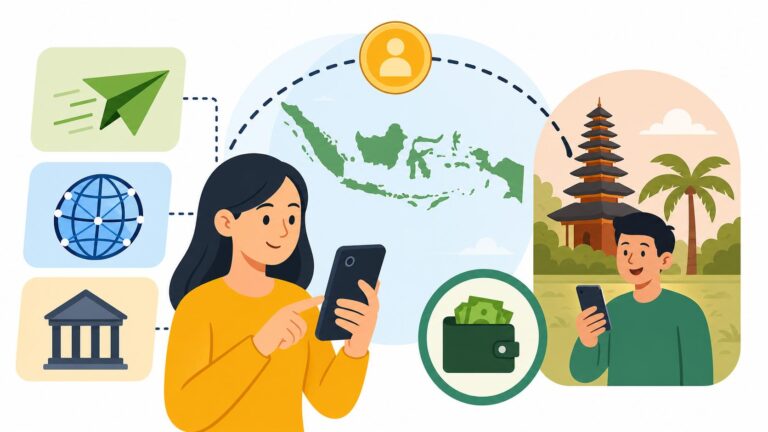
Getting a Secured Credit Card: Using a Time Deposit as Collateral at BCA/BNI
Walking into a sleek bank branch in Sudirman or Seminyak only to be told your KITAS isn't "strong enough" for a basic credit card is a rite of passage for most expats. I remember sitting in those blue chairs for two hours, documents in hand, only to be rejected because I hadn't been in the country for three years. This guide solves that roadblock by explaining the secured credit card "cheat code" using a time deposit.
Why Indonesian Banks Reject Expats and How Secured Cards Fix It
The frustration of financial exclusion is real when you first arrive. You have the income, you have the legal right to live here, but the traditional credit scoring system in Indonesia is often a closed loop for foreigners. Most local banks view expats as "high-risk" simply because our residence permits are temporary. If you leave the country suddenly, the bank has no way to recoup the credit they extended to you. This is why the standard application for a Top Banks for Expats: Comparing BCA, Mandiri, BNI, and Digital Banks (Jenius) often ends in a polite but firm "no" for a traditional credit card.
The KITAS and NPWP Hurdle
Even if you have a valid Work KITAS and an NPWP (Tax ID), most banks will still ask for a high minimum salary or a specific length of employment—usually two to three years with the same company. For many of us, especially those in the tech sector or those who have just started their own PT PMA, meeting these criteria is impossible in the first year. The bank's risk assessment doesn't care about your global credit score or your six-figure savings account back home. They want local stability, which is hard to prove when your visa expires every twelve months. This is where Opening a Bank Account in Indonesia: Document Checklists (KITAS, NPWP, Passport) becomes the foundational step, but not the final solution.
Credit History in Indonesia vs Back Home
One of the most common misconceptions I see among newcomers is the belief that a high credit score from the US, UK, or Australia will help them here. It won't. Indonesia uses its own system, and you are starting from zero. Without a credit card or a local loan, you aren't building a history. A secured credit card allows you to bypass this "ghost" status. By putting up your own money as collateral, you are essentially telling the bank, "I am guaranteeing my own debt." It removes the risk for them and provides you with the plastic you need for Everyday Budgeting in Indonesia: Cost of Living in Jakarta vs Bali vs Regional.
The Secured Logic: Why Banks Say Yes to Collateral
A secured credit card is tied directly to a "Deposito" (Time Deposit). If you want a credit limit of 20 million IDR, you deposit roughly 20 to 22 million IDR into a locked account. The bank then issues a card with a limit based on a percentage of that deposit—usually 80% to 100%. If you fail to pay your bill, the bank simply takes it from the deposit. It’s a win-win. They get a new customer and zero risk, and you get a card that works for Using QRIS: The Cashless Payment System Revolutionizing Indonesian Commerce and online bookings that require a "real" credit card rather than a debit card.
The Step-by-Step Guide to Getting a Secured Card at BCA or BNI
BCA and BNI are the two most reliable institutions for this specific product. While Mandiri and CIMB Niaga offer similar setups, BCA’s "Kartu Kredit BCA" with a collateral lock and BNI’s "BNI Credit Card with Collateral" are the most expat-friendly in terms of process. I personally went through the BNI process in Jakarta, and while it requires a bit of patience with the "Customer Service" (CS) queue, it is a guaranteed way to get a card without a local co-signer.
Opening the Time Deposit Deposito
The first step isn't applying for the card; it’s opening the Deposito. You will need to bring your physical passport, your KITAS (or the e-KITAS printout), and your NPWP. I highly recommend using Wise to transfer the funds into your Indonesian account beforehand, as the exchange rates provided by local banks for incoming wire transfers are often subpar. Once the funds are in your IDR savings account, tell the Customer Service officer you want to open a "Deposito Berjangka" specifically as collateral for a credit card. This is a crucial distinction. Not all time deposits can be used as collateral; it must be flagged in their system as "blocked" for the credit card division.
The Application Process: Documents and Down Payments
Once your deposit is set—let’s say you’ve put in 50 million IDR—you will fill out the standard credit card application form. Even though it's secured, they will still ask for your employer's details and your monthly income. Don't worry about the "rejection" fear here; the blocked deposit acts as your approval. You will also need to sign a "Letter of Pledge" or "Surat Kuasa Pembebanan Jaminan." This is a legal document that gives the bank permission to seize your deposit if you default. Pro tip: Always bring your own "Materai 10000" (legal stamps) or be prepared to buy them at the branch. You’ll likely need two or three for the various forms. During this time, make sure your mobile banking is set up. I always use NordVPN when accessing these apps on public Wi-Fi or even on some local 4G networks to ensure my financial data stays encrypted in transit.
Managing Your Credit Limit and Deposit
Your credit limit will typically be 90% of your deposit at BNI or 100% at BCA, depending on the specific card tier (Silver, Gold, or Platinum). While the money is "blocked," it actually still earns interest! This is the part most expats forget. You are building credit and earning a (modest) return on your collateral at the same time. However, you cannot withdraw that deposit as long as the credit card is active. If you decide to leave Indonesia and want your money back, you must follow the process for Deactivating BPJS Kesehatan When Leaving Indonesia Permanently and, similarly, close your credit card account first. The bank will usually take 14 to 30 days to "unblock" the funds after the card is cancelled to ensure no final "late" charges appear.
Living Your Financial Life in Indonesia Beyond Credit Cards
Having a local credit card is a massive relief, especially for those high-limit purchases or when a hotel in Bali insists on a "pre-authorization" that would otherwise tie up your debit card's cash flow. But a secured card is just one piece of the puzzle. To really thrive here, you need to look at how you manage the rest of your capital and security.
Moving Money with Wise and Investing
As a veteran expat, I never keep all my eggs in one Indonesian basket. While I keep enough in BCA or BNI to cover my "Deposito" and monthly expenses, I use Wise for all my international transfers. It is significantly cheaper than the SWIFT transfers offered by local banks. For long-term wealth building, I don't look at local mutual funds, which can be complex for foreigners to exit. Instead, I use Interactive Brokers to invest in global ETFs while living here. It allows me to maintain a global portfolio that isn't tied to the volatility of the Indonesian Rupiah.
Managing Digital Security and Crypto
Living in a high-growth tech hub like Indonesia means being aware of digital risks. I’ve seen many friends lose access to their banking apps due to SIM-swapping or unencrypted connections. This is why I consider NordVPN an essential "living in Indonesia" cost. Furthermore, if you are into the digital asset space, Binance remains a popular choice for expats here to manage their portfolio, though you must be careful to link it with a reputable local exchange if you ever need to off-ramp into Rupiah. Always ensure you are compliant with local regulations regarding Cryptocurrencies in Indonesia: Tax Regulations and Trading Accounts.
Paying Local Bills and QRIS
Once you have your secured credit card, you can link it to apps like Gojek and Grab. However, for the most seamless experience at local "Warungs" or coffee shops, you will still rely on QRIS. Most secured credit cards can now be linked to your bank's mobile app (like BCA Mobile or BNI Mobile) to facilitate these payments. This makes Digital Banking and E-Wallets: How to Register for GoPay, OVO, and Dana much easier to manage, as you can use your credit line for daily spending and keep your actual cash in a high-interest savings account or invested abroad.
Pros, Cons, and Hidden Fees of Collateral-Based Banking
Before you rush to the bank, it’s important to understand the trade-offs. A secured card isn't "free money"; it’s a strategic tool. You are essentially paying for the privilege of building a local reputation.
| Feature | BCA Secured Card | BNI Secured Card |
|---|---|---|
| Minimum Deposit | Approx. 10 Million IDR | Approx. 15 Million IDR |
| Credit Limit | 100% of Collateral | 80% – 90% of Collateral |
| Interest Earned | Yes, on the Deposito | Yes, on the Deposito |
| Annual Fee | 125k – 450k IDR | 150k – 600k IDR |
| Approval Rate | Near 100% with Collateral | Near 100% with Collateral |
| Processing Time | 2 – 3 Weeks | 3 – 4 Weeks |
The Benefits of Building Local Credit
The biggest pro is obviously the approval guarantee. But beyond that, having a local card means avoiding the 3% "foreign transaction fees" your home-country card likely charges every time you buy groceries at Grand Lucky. It also makes you look "local" in the eyes of the system. If you eventually move from a KITAS to a KITAP (Permanent Stay): Eligibility, 5-Year Validity, and How to Upgrade, having a three-year history with a secured card can often help you "convert" it into a regular, unsecured card with a much higher limit.
Potential Pitfalls: Liquidity and Interest Rates
The main con is liquidity. If you put 100 million IDR into a deposit to get a Platinum card, that money is dead to you for as long as you have the card. In a high-inflation environment, or if you suddenly need emergency surgery and your Private Health Insurance in Indonesia: Bridging the Gap When BPJS Isn't Enough hasn't kicked in yet, you might regret having that cash locked away. Additionally, the interest rates on credit card balances in Indonesia are quite high (around 1.75% per month). Never carry a balance on a secured card. You’ve already given them the money; don’t give them high interest payments too. Use it, pay it off in full via the app every month, and let it sit there as a silent builder of your Indonesian financial life.
Important Disclaimer Regarding Financial Advice
This guide is intended for informational purposes only and is based on the personal experiences of expatriates living in Indonesia. Banking regulations, interest rates, and internal bank policies can change without notice. I am not a certified financial advisor or a representative of BCA, BNI, or any other financial institution. Before entering into any collateral-based agreement or time deposit, you should read the terms and conditions provided by the bank thoroughly and consider consulting with a professional tax or legal advisor to ensure compliance with both Indonesian laws and the regulations of your home country. All brand mentions are for contextual helpfulness and do not constitute a formal endorsement of the banking products themselves.