Setting Up PLN Electricity: Token Systems (Prabayar) vs Postpaid Billing
Imagine waking up at 2 AM in the sweltering Jakarta heat because your air conditioner suddenly cut out, replaced by a frantic, high-pitched "beep-beep-beep" echoing through your vents. I’ve been there, standing in my pajamas on the sidewalk, desperately trying to find a 24-hour minimarket because I didn’t realize my electricity meter was empty. This guide will ensure you never face that midnight darkness by mastering Indonesia’s PLN electricity systems.
Understanding the Indonesian Electricity Landscape: PLN and Power Capacity
When you first move into a house or apartment in Indonesia, the electricity setup is often one of the most confusing hurdles. Unlike many Western countries where utility companies are private, here you deal exclusively with Perusahaan Listrik Negara (PLN), the state-owned power provider. Every residential property is linked to a specific "ID Pelanggan" (Customer ID) which is the golden key to every transaction you will make.
What is PLN and How Does It Operate
PLN is the sole provider of electricity across the archipelago. While the service has improved significantly over the last decade, particularly in major hubs like Jakarta and Bali, it still operates under a unique set of rules that expats must learn quickly. Whether you are Living in Indonesia as an Expat: The Complete Starter Guide (2027) or just staying for a few months, you are essentially a customer of this massive state bureaucracy. The infrastructure relies on a mix of coal, gas, and increasingly, renewable energy, but for the end-user, the focus is entirely on the meter box attached to the front of your home.
One thing to keep in mind is that PLN operates on a regional basis. A "gang" (alleyway) in Bali might have different maintenance schedules than a high-rise in SCBD Jakarta. However, the billing systems—Prepaid and Postpaid—are standardized nationwide. Understanding which one your landlord has installed is the first step in your Financial Checklist for Your First 30 Days in Indonesia.
Power Capacity (VA) and Why It Matters
In Indonesia, you don't just "get electricity"; you get a specific "power limit" measured in Volt-Amperes (VA). Common residential limits are 900VA, 1300VA, 2200VA, 3500VA, and upwards of 6600VA for large villas. This is a frequent point of frustration for foreigners who try to run three air conditioners, a microwave, and a water heater simultaneously on a 2200VA connection, only to have the circuit breaker trip immediately.
If you find your power constantly cutting out, it’s not necessarily a grid failure; it’s likely that your home’s VA capacity is too low for your lifestyle. Upgrading this capacity involves a formal request to PLN and a fee, which can be complicated if you are Renting in Indonesia: The 1-Year Upfront Rule, Contracts, and Avoiding Scams because the landlord must approve the permanent change to the property’s subscription.
Voltage Stability and the Need for Protection
The Indonesian grid can be temperamental. Voltage spikes and "brownouts" (partial drops in power) are common, especially during the monsoon season when lightning strikes or falling branches interfere with lines. For an expat, this isn't just an inconvenience; it’s a threat to your expensive electronics. I learned this the hard way when a sudden spike fried the motherboard of my specialized gaming PC.
When you are Buying Appliances: Voltage Spikes and Why You Need a Stabilizer, always factor in the cost of "STAVOL" (Stabilizer Voltage) units for your fridge, TV, and computers. These devices sit between the wall outlet and your appliance, regulating the flow of electricity to prevent damage. Without them, the inconsistent flow from the PLN grid can significantly shorten the lifespan of your household goods.
Prepaid Electricity (Listrik Prabayar): The Token System
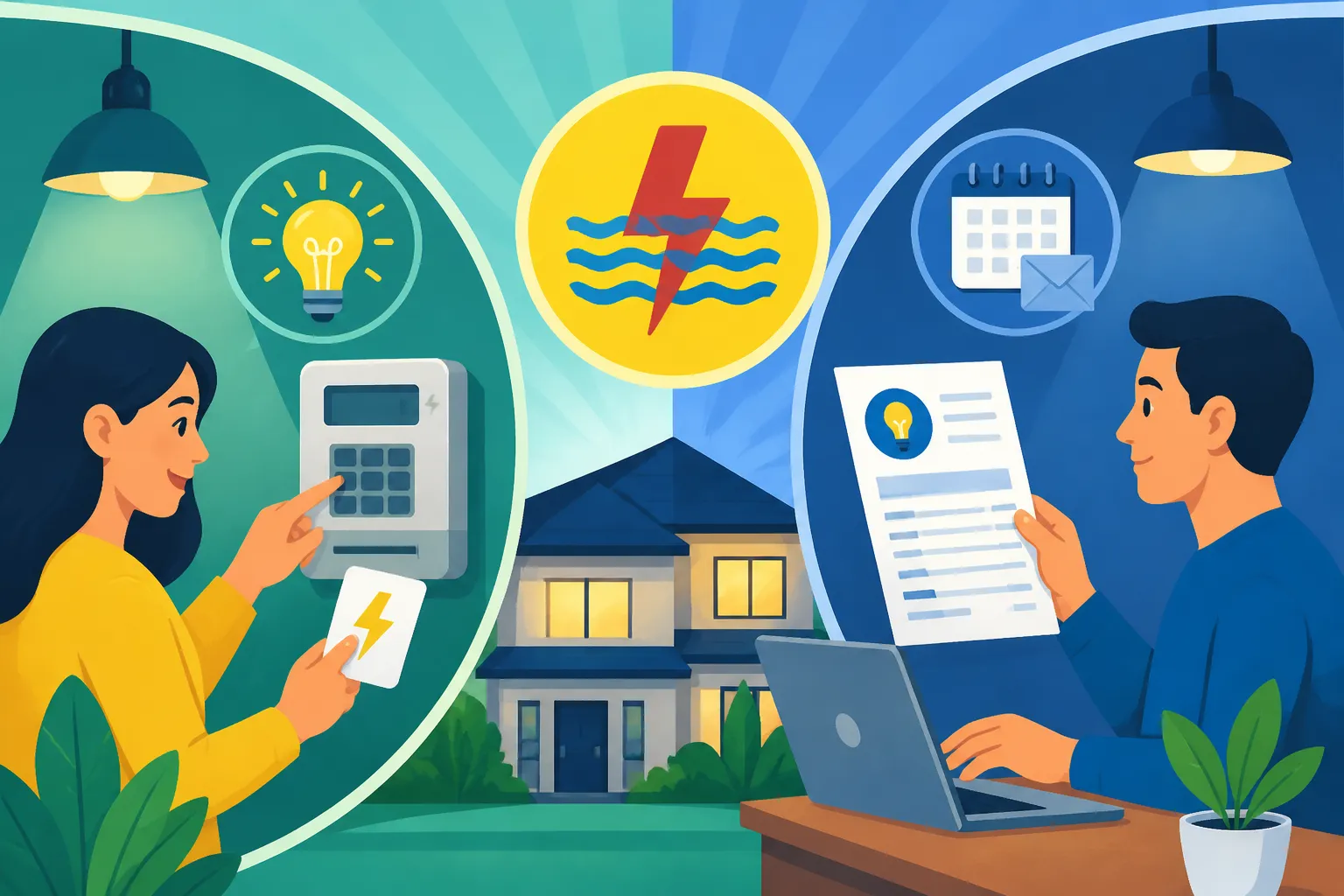
Most modern homes and virtually all new apartment developments in Indonesia use the "Listrik Pintar" (Smart Electricity) prepaid system. This is a "pay-as-you-go" model where you purchase 20-digit tokens and manually enter them into your meter. It offers incredible transparency but requires a level of micro-management that many expats find jarring at first.
How the Token System and Meters Work
The prepaid meter features a small screen and a numeric keypad. The screen displays your remaining "kWh" (kilowatt-hours), not the amount of money you have left. As you use electricity, this number counts down. When your balance hits a certain threshold—usually 20 kWh or 10 kWh—the meter will begin to emit a loud, persistent beeping sound. This is your warning that the lights are about to go out.
To top up, you buy a token for a specific Rupiah amount (e.g., 100,000 IDR or 1,000,000 IDR). You are then given a 20-digit code. You punch this code into the meter's keypad and press "Enter." If successful, the screen will say "ACCEPT" (or "BENAR") and your kWh balance will increase. If you make a mistake, it will say "REJECT" (or "SALAH"), and you’ll have to re-enter the string of numbers carefully.
Pros and Cons of Going Prepaid
The primary advantage of the token system is that you will never receive a "surprise" bill at the end of the month. You see exactly how much you are consuming in real-time. If you notice the numbers dropping too fast, you can turn off an extra AC unit to save money. This is particularly useful if you are managing a strict budget or if you frequently travel and don't want to pay for electricity you aren't using.
The downside is the "midnight blackout." If you ignore the beeping or simply don't hear it because you’re in a back bedroom, the power will cut off the second you hit 0.00 kWh. There is no grace period. Furthermore, if you are staying in a short-term rental or an apartment booked through Agoda, you must clarify who is responsible for buying these tokens. Some hosts include a "starter pack" of electricity, but expect you to top it up thereafter.
Where and How to Buy Tokens
Convenience is king when it comes to buying tokens. You can find them at any Indomaret or Alfamart—just tell the cashier you want to buy "Token Listrik" and give them your 11 or 12-digit ID Pelanggan. However, most savvy expats use digital methods. You can easily purchase tokens on Shopee, which often has small discounts or cashback coins.
If you have already set up local banking, using "M-Banking" is the most reliable way to stay powered. This is a critical skill, and knowing How to Buy PLN Electricity Tokens via Mobile Banking at 2 AM can save you from a very uncomfortable night. Always keep a photo of your ID Pelanggan on your phone so you can buy a token from anywhere, even if you’re at work and realize the maid mentioned the meter was beeping.
Postpaid Electricity (Listrik Pascabayar): The Traditional Bill
While prepaid is the new standard, many older "heritage" homes in Menteng, Jakarta, or established villas in Sanur, Bali, still use the postpaid system. This is the traditional model where you use electricity all month and pay the bill the following month.
How Postpaid Billing and Meter Reading Works
In a postpaid setup, a PLN official (identifiable by their yellow and blue uniform) will visit your property once a month to read the physical meter. They record the numbers, and a bill is generated based on your monthly consumption. In some high-end gated communities, the management office handles this and sends you an invoice.
One quirk of the postpaid system in Indonesia is the "estimation" factor. Occasionally, if the meter reader cannot gain access to your property (perhaps your gate is locked and you aren't home), PLN will estimate your usage based on previous months. This can lead to a massive "correction" bill the following month if the estimate was too low. It’s always a good idea to be friendly with your local meter reader; it’s a small part of Everyday Etiquette: Religion, Culture, Garbage, and Community Norms that can prevent administrative headaches.
Pros and Cons of the Postpaid System
The biggest "pro" is the peace of mind. Your power will never cut out because you forgot to buy a token. This is essential for those running critical equipment, such as home medical devices or high-end security systems. You also don't have to deal with the annoying beeping of a prepaid meter.
However, the "con" is the lack of immediate feedback. If you have a leaky AC unit or if a staff member leaves the water heater on 24/7, you won't know the financial damage until the bill arrives 30 days later. There have been many "expat horror stories" of people receiving 5 million IDR bills because they didn't realize their pool pump was malfunctioning. If you are on a postpaid plan, I highly recommend checking your meter weekly to ensure there are no sudden spikes in usage.
Payment Methods, Deadlines, and Penalties
Postpaid bills are typically due by the 20th of every month. If you miss this deadline, PLN is remarkably quick to take action. Usually, by the 21st or 22nd, you will receive a late fee. If the bill remains unpaid, PLN will send a team to "disconnect" your power. Unlike in some countries where this involves a long legal process, in Indonesia, they will simply remove the fuse or seal the breaker.
Paying your postpaid bill is similar to buying tokens. You can pay via Shopee, Tokopedia, or your local bank app. Look for the "PLN Postpaid" or "Tagihan Listrik" section. You should also ensure this is part of your Health Checklist for Your First 30 Days in Jakarta or Bali, as losing power often means losing your water pump, which can lead to hygiene issues in a tropical climate.
Comparing the Two: Which One Suits Your Expat Lifestyle?
Choosing between the two isn't always an option, as most properties are hardwired into one system or the other. However, if you are looking for a new home, the electricity system should be a factor in your decision-making process.
| Feature | Prepaid (Prabayar) | Postpaid (Pascabayar) |
|---|---|---|
| Payment Timing | Before usage (Tokens) | After usage (Monthly bill) |
| Cost Control | High (Immediate feedback on meter) | Low (Bill arrives end of month) |
| Risk of Blackout | High (If credit runs out) | Low (Only if bill is unpaid for weeks) |
| Transparency | High (See kWh usage daily) | Medium (Dependent on meter readings) |
| Ease of Setup | Standard for all new connections | Becoming rare/harder to request |
| Maintenance | Self-managed | Requires monthly meter access |
Budgeting and Transparency Considerations
If you are a "data person," you will love the prepaid system. You can calculate exactly how much it costs to run your dryer or how much you save by switching to LED bulbs. This level of transparency is rare in Indonesian utilities. On the other hand, if you prefer to "set it and forget it" and have a high enough balance in your bank account to handle a fluctuating bill, postpaid is the way to go.
For those on a fixed expat package where the company pays the utilities, postpaid is usually preferred because the office can handle the monthly bank transfer without you needing to punch in numbers every few days. If you are a digital nomad relying on an Airalo eSIM to stay connected while working from a villa, the last thing you want is your router dying because you forgot to top up the meter.
Convenience for Rental Properties and Landlords
If you are the tenant, the prepaid system protects you. You only pay for what you use. When you move out, you don't have to worry about a lingering bill in your name. For landlords, prepaid is also the gold standard because it eliminates the risk of a tenant fleeing the country and leaving behind millions of Rupiah in unpaid electricity bills.
In my experience, if you are looking at two identical villas and one has a prepaid meter while the other is postpaid, the prepaid one is usually the lower-stress option for a newcomer. It integrates perfectly with the modern Indonesian digital economy, allowing you to manage your home through the same apps you use for food delivery and transport.
Managing Multiple Properties or Frequent Travel
If you travel back to your home country for a month every summer, the prepaid system is a godsend. You can leave just enough credit to keep the fridge and security cameras running. With a postpaid system, you still have to pay a "minimum charge" (Abodemen) even if your usage is zero. This minimum charge is based on your VA capacity, so a high-capacity 6600VA home can have a significant base cost even when empty.
Practical Steps for Setup and Maintenance
Setting up a new connection or dealing with a broken meter requires patience and a basic understanding of the "PLN Mobile" app, which has become the primary portal for all electricity-related tasks.
Registering a New Connection or Changing Systems
If you've bought a shell of a house or are doing a major renovation, you'll need to apply for a "Pasang Baru" (New Installation). This requires your passport, KITAS, and usually a Domicile Letter from the local village head. The process is now mostly digital via the PLN Mobile app. You will pay a connection fee (Uang Jaminan Langganan for postpaid or a startup credit for prepaid).
Changing from postpaid to prepaid is often encouraged by PLN and is sometimes done for free as part of their "modernization" programs. However, changing from prepaid back to postpaid is nearly impossible for residential customers now, as PLN is phasing out the old billing model to reduce their administrative burden.
Troubleshooting Common Meter Issues
The most common "error" on a prepaid meter is the word "PERIKSA" (Check). This usually indicates a wiring fault, a ground-leakage issue, or that the meter cover has been tampered with. If you see "PERIKSA," do not try to fix it yourself. The meter has an internal anti-tamper switch that will permanently lockout the system if you open the box.
Another common issue is Troubleshooting Noisy Water Pumps and Septic Tank Issues in Villas. In many Indonesian homes, the water pump is a high-wattage device. If your lights flicker every time the pump kicks in, it's a sign that your start-up current is exceeding your VA limit or that your wiring is insufficient. This is the moment to call a certified electrician, not just the local handyman.
Dealing with PLN Officers and Avoiding Scams
Always verify the identity of anyone claiming to be from PLN. Official technicians will always wear a uniform and carry an ID card and a work order ("Surat Tugas"). A common scam involves people going door-to-door offering "power-saving devices" or claiming your meter is broken and demanding an "on-the-spot" fine.
Official PLN payments are never made in cash to an individual. Every fine, connection fee, or bill must be paid through an official channel like a bank, a post office, or an app like Shopee using a reference number. If someone asks for cash at your gate, they are likely a scammer. Knowing Utilities and Setup: PLN Electricity, PDAM Water, and Home Internet in Indonesia in detail will help you spot these red flags immediately.
Useful Resources for Expats
Navigating PLN becomes much easier when you have the right tools on your smartphone. The digital shift in Indonesia means that "walking into an office" is rarely the most efficient way to get things done.
The PLN Mobile App: Your Central Hub
Download the "PLN Mobile" app immediately. You can register your ID Pelanggan, and it will send you notifications when your prepaid balance is low or when your postpaid bill is ready. You can also see a map of local power outages (Pemadaman) and their estimated repair times. The app even allows you to buy tokens directly, though sometimes foreign credit cards are finicky, which is why having Shopee as a backup is essential.
The app also features a "Complaint" (Pengaduan) section. If your power goes out, you can file a report, and you’ll receive a tracking number and the name of the technician assigned to your case. It is surprisingly efficient for a state-run utility.
Emergency Numbers and Reporting Outages
If you don't have internet access, you can call the PLN hotline at 123. If you are calling from a mobile phone, you must add the area code (e.g., 021-123 for Jakarta or 0361-123 for Bali). Most operators speak basic English, but it helps to have a few phrases of Bahasa Indonesia ready, such as "Listrik mati" (The electricity is dead).
In the event of a neighborhood-wide outage, check with your neighbors first. If the whole street is dark, it’s a grid issue. If it’s just your house, check your meter for the "PERIKSA" sign or see if your balance has hit zero. Staying calm and having a flashlight (and a fully charged power bank) is just part of the local lifestyle. Once you get the hang of the token system, it becomes second nature—just another small quirk of living in this vibrant, beautiful country.
Disclaimer
This guide is for informational purposes only. Electricity regulations, tariffs, and PLN procedures in Indonesia are subject to change by the government. Always verify current rates and requirements through the official PLN Mobile app or at a local PLN office (Kantor PLN). The author is an expat sharing personal experiences and is not an official representative of PLN.