Safety 101: Petty Theft, ATM Skimming, and Home Security in Indonesia
Walking down a busy street in Seminyak or navigating a crowded Jakarta market can feel like a dream until the sudden tug of a bag-snatch reminds you of the local "jambret" reality. I still remember the sinking feeling in my stomach when a friend lost a month’s worth of photography work to a quick-fingered motorbike thief in my second year here. This guide provides the tactical, ground-level security knowledge you need to navigate petty theft, digital fraud, and home safety without living in a state of constant anxiety.
Understanding Petty Theft and Street Safety
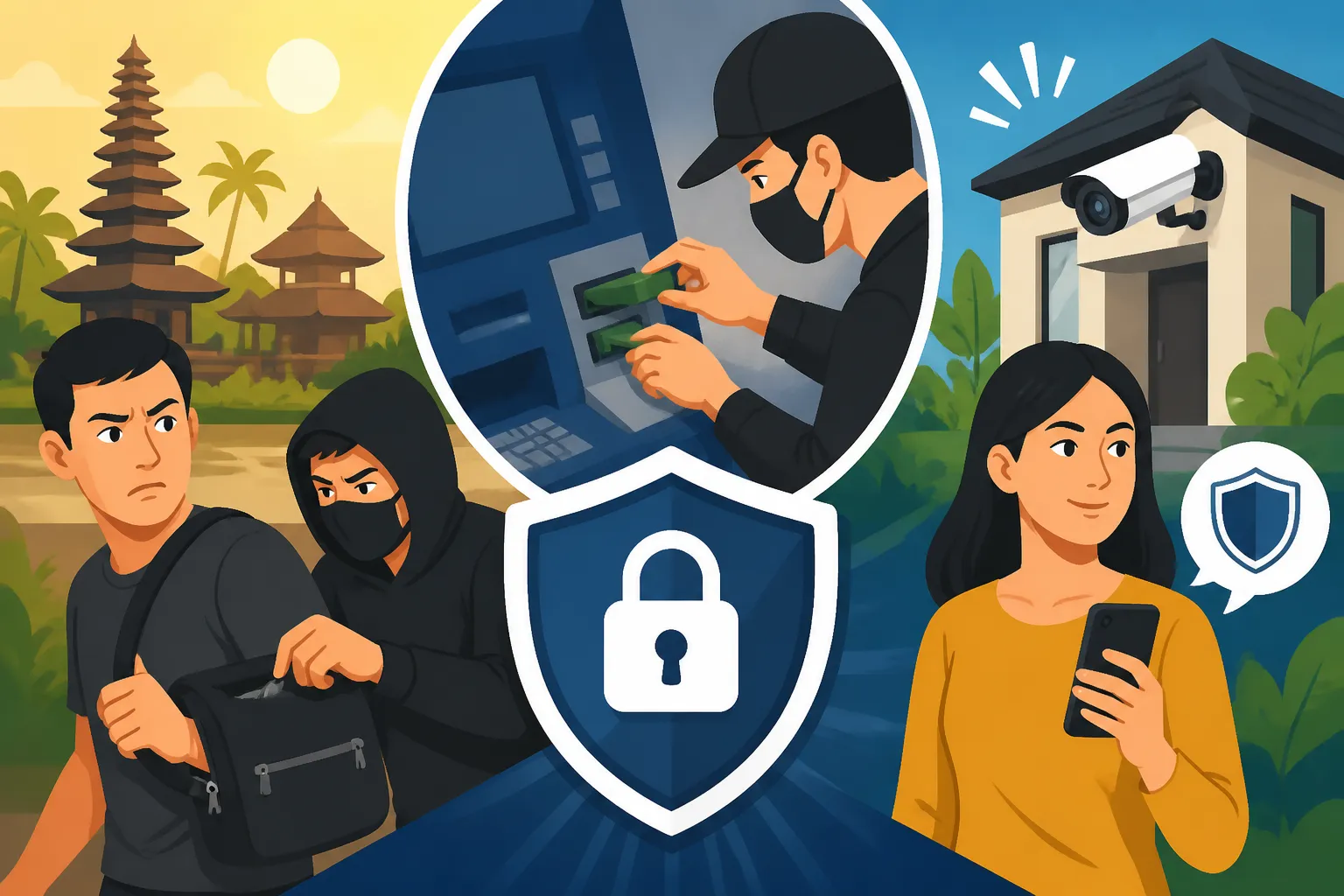
Petty theft in Indonesia often takes the form of "jambret," which is a snatch-and-grab performed by someone on a motorcycle. These thieves are incredibly opportunistic and skilled at spotting distracted foreigners. They often target people walking on the side of the road with their phones out or bags hanging loosely over one shoulder. It isn't just about the loss of the item; the physical danger of being pulled over or losing your balance can lead to serious injury.
To avoid becoming a target, you must change how you carry yourself. Always wear your bag on the side away from the street, or better yet, use a backpack worn on your front in highly crowded areas. Never use your phone while standing near the curb; step back into a shop or toward a wall before checking your maps. I have seen countless expats lose their latest iPhones simply because they were looking at a Grab or Gojek app too close to the moving traffic. Staying aware of your surroundings and adhering to Everyday Etiquette: Religion, Culture, Garbage, and Community Norms will help you blend in more effectively and look less like a distracted "tourist" target.
Motorbike Snatchings and Bag Grabs
The "jambret" is the most common form of street crime you will encounter in both Bali and Jakarta. These thieves often work in pairs—one driver and one snatcher. They look for "easy" targets: women with shoulder bags, people with cameras around their necks, or anyone visibly preoccupied. If you are walking along a road without a sidewalk, which is common in many parts of Indonesia, keep your valuables in a secure cross-body bag tucked under your arm.
One of the best ways to prepare is to ensure your mobile data is secure and reliable so you aren't wandering aimlessly. Using a service like Airalo can keep you connected without relying on sketchy public Wi-Fi, allowing you to check your location discreetly. If a snatching does occur, the general advice from veteran expats is not to fight back if the thief is already moving. The momentum of the motorbike is enough to pull you onto the asphalt, which can result in more than just a lost bag—it can lead to a visit to a local clinic or hospital. If you find yourself in need of care after such an incident, consult our Finding Medical Care in Indonesia: Clinics, Hospitals, and International Facilities guide for the best expat-friendly options.
Pickpocketing in Crowded Markets and Public Transport
Public transportation like the KRL Commuterline in Jakarta or the local "bemo" vans can be hotspots for pickpockets. These individuals are often incredibly subtle, using the crowded environment to their advantage. They may use a "bump and grab" technique or a "distract and dip" method where one person asks you a confusing question while another relieves you of your wallet.
When you are in these high-density areas, keep your wallet in your front pocket or a zippered internal compartment of your bag. If you are staying in a hotel or guesthouse while searching for a permanent home, booking through a reputable site like Agoda allows you to filter for places with in-room safes, where you should leave your passport and excess cash. Only carry what you need for the day. If you do lose your ID or credit cards, knowing the Emergency Numbers in Indonesia: 118/119 for Ambulance and What to Expect is vital, though for theft, you will need to head to the nearest "Polsek" (local police station) to file a "Surat Keterangan Tanda Lapor Kehilangan" (Loss Report).
Scams and "Broken Window" Tactics
While less common than snatching, some thieves use more aggressive tactics like the "broken window" or "flat tire" scam. This typically involves someone pointing at your car or scooter and gesturing that something is wrong. When you pull over to check, an accomplice grabs items from your vehicle. This is why it is essential to keep your car doors locked at all times, even while driving, and to never leave valuables visible on the seat of your scooter.
For those renting a vehicle, always ensure your items are placed in the "bagasi" (under-seat storage) of your scooter rather than the front hook. Even then, "bagasi" theft can happen if the seat isn't properly locked. If you are new to the country and still figuring out the logistics of local travel, our Living in Indonesia as an Expat: The Complete Starter Guide (2027) provides more context on how to move around safely and what to look out for in your first few weeks.
ATM Skimming and Financial Digital Safety
ATM skimming remains a persistent issue in Indonesia, particularly in high-traffic tourist hubs like Canggu, Seminyak, and parts of South Jakarta. These devices are often installed in the middle of the night at standalone ATMs that lack 24-hour security guards. The goal is to capture your card’s magnetic strip data and your PIN, allowing the criminals to clone your card and withdraw funds from an overseas location.
The most effective way to avoid this is to only use ATMs located inside a bank branch during operating hours. These machines are monitored by "Satpam" (security guards) and are much harder for criminals to tamper with. If you must use a standalone machine, always wiggle the card reader slot; if it feels loose or looks bulky, walk away. Always cover your hand when typing your PIN, as many skimmers use tiny hidden cameras to record your keystrokes. Before you start banking locally, make sure you understand the requirements in Opening a Bank Account in Indonesia: Document Checklists (KITAS, NPWP, Passport) to ensure you have a secure local account.
Identifying Skimming Devices at ATMs
A skimming device often looks like a legitimate part of the machine. It might be a plastic overlay on the card slot or a false keypad. In recent years, "shimmers"—even thinner devices that fit inside the card slot—have appeared. The most common sign of a compromised ATM is a loose card reader or a strangely placed piece of plastic above the screen where a camera might be hidden.
I always tell newcomers to use the "BCA" or "Mandiri" ATMs inside malls or supermarkets. These are generally safer than the ones found in "Alfamart" or "Indomaret" convenience stores, although even those are better than a dark ATM on a street corner. If your card is compromised, you will need to act fast. Having a local bank account makes this easier, as you can often "lock" your card via a mobile app like BCA Mobile or Livin' by Mandiri. If you're still using your home-country cards, ensure you have international roaming or a local SIM to receive transaction alerts immediately.
Avoiding Online Scams on WhatsApp and Social Media
Digital scams have become more sophisticated. A very common one involves receiving a WhatsApp message from an unknown number with a file attached, often disguised as a wedding invitation or a shipping receipt (the "APK scam"). Opening this file installs malware that can intercept your SMS messages, giving hackers access to your banking OTPs (One-Time Passwords).
Never click on suspicious links or download files from people you don't know. Even if the message appears to be from a friend, verify it through another channel first. Scammers also frequent platforms like Facebook Marketplace and Shopee, trying to lure you into "off-platform" transactions. Always keep your purchases within the official app to benefit from their buyer protection programs. If you are looking to buy security equipment for your home, you can find great deals on Shopee, but ensure you are buying from a "Star" or "Mall" seller with high ratings and thousands of reviews.
Safe E-Wallet and Mobile Banking Practices
E-wallets like GoPay, OVO, and Dana are the lifeblood of the Indonesian digital economy. They are incredibly convenient, but they require their own set of security protocols. Never share your 6-digit PIN or OTP with anyone, even if they claim to be from the company’s customer service. Indonesian scammers are very persistent and may call you, sounding very professional, claiming there is a problem with your account.
Set up biometric authentication (fingerprint or face ID) for all your financial apps. This adds a layer of security that a simple PIN cannot provide. It is also wise to keep your e-wallet balance relatively low, only topping up when you need to make a purchase. This limits your exposure if your phone is stolen and unlocked. If you're living in Bali and need to know where the closest help is in case of a tech-related emergency, refer to the Bali Healthcare Guide: Hospitals, Clinics, and Emergency Contacts for Residents which often lists clinics near central tech hubs.
Home Security and Residential Safety
Securing your home in Indonesia is as much about community integration as it is about locks and bars. Whether you live in a high-rise apartment in Jakarta or a standalone villa in Bali, your approach to security will differ significantly. Apartments generally offer better baseline security with 24-hour guards, CCTV, and card-access elevators. Landed houses, however, require a more hands-on approach.
When Renting in Indonesia: The 1-Year Upfront Rule, Contracts, and Avoiding Scams, check the perimeter of the property. Are the walls high enough? Is there "beling" (broken glass) or barbed wire on top? While it might look intimidating, these are standard security measures for landed houses. Most importantly, get to know your "Satpam" or your local "Banjar" (community council in Bali). These are the people who will actually watch your house when you are away. A small tip or "uang rokok" (cigarette money) to your local security guards goes a long way in ensuring they pay extra attention to your gate.
Apartment vs. Landed House Security
Living in an apartment in a neighborhood like Kemang or SCBD offers a "lock and leave" lifestyle. You have multiple layers of security before anyone gets to your front door. However, don't let your guard down entirely. I've known people who had items stolen from their balcony or by "guests" who were not properly vetted by the building management. For more on choosing the right neighborhood, see our guide on Jakarta Healthcare Guide for Expats: International Clinics and After-Hours Options which highlights areas with high security and medical access.
Landed houses (Rumah Tapak) are more vulnerable to "climb-over" thefts. These are usually non-violent, occurring at night or while the residents are at work. The thief simply jumps the wall and takes whatever is left outside—shoes, bicycles, or laundry. Consider the trade-offs discussed in Apartment vs Landed House (Rumah Tapak): Pros and Cons for Expats before signing a long-term lease. In a house, you are responsible for your own alarm systems and CCTV, whereas, in an apartment, this is managed by the building.
The Role of the Banjar and Local Security (Satpam)
In Bali, the "Banjar" is the heart of the community. If you live in a villa, you are technically under the protection and jurisdiction of the local Banjar. It is customary to pay a small monthly security fee to the Banjar. This isn't just a "tax"; it’s your way of entering the local social safety net. If something goes wrong, the Banjar is often faster to respond than the police.
In Jakarta and other large cities, you will likely interact with "Satpam." A professional Satpam is your first line of defense. They monitor who enters and exits the housing complex. Building a friendly relationship with them—knowing their names and saying hello—makes you a person rather than just another "bule" (foreigner) in the eyes of the staff. This social capital is the most effective security measure you can have in Indonesia.
Practical Home Fortification: Locks and Technology
Technology has made home security much more accessible in Indonesia. You can easily buy smart door locks, Wi-Fi cameras, and motion-sensor lights on Shopee for very reasonable prices. I highly recommend installing at least one camera facing your main gate and another in the living area. These act as a strong deterrent.
If you are Hiring a Domestic Helper (Pembantu): Salaries, THR, and Live-In Arrangements, transparency is key. Tell your staff about the cameras. It’s not about lack of trust; it’s about mutual accountability. Most "inside" thefts are opportunistic. By keeping your high-value jewelry and cash in a small bolted-down safe, you remove the temptation. Also, ensure your windows have "teralis" (iron bars), which are standard in Indonesian houses to prevent easy entry while allowing for ventilation.
Comparison of Common Safety Risks and Prevention
| Risk Type | Common Method | Best Prevention | Immediate Action if Occurs |
|---|---|---|---|
| Jambret | Snatching bags/phones from motorbikes. | Walk away from curb; keep phone hidden. | Do not chase; file police report for insurance. |
| ATM Skimming | False card readers and hidden cameras. | Use ATMs inside bank branches only. | Block card via mobile app immediately. |
| APK Scam | Malicious files sent via WhatsApp. | Never download files from unknown numbers. | Factory reset phone; change all passwords. |
| Climb-Over | Jumping villa walls to steal items. | Motion lights; CCTV; do not leave shoes out. | Inform the Banjar or complex security. |
| Fake Courier | Scammers posing as Shopee/GoSend. | Verify tracking number in the official app. | Report the user on the shopping platform. |
Personal Safety for Solo Expats and Families
Personal safety in Indonesia is generally very high. Violent crime against foreigners is rare, but it is not non-existent. For solo travelers and expats, the most common issues arise during late-night travel or in nightlife districts like Kuta in Bali or Jalan Jaksa in Jakarta. If you’ve been out for drinks, never walk home alone. Use a reputable ride-hailing service like Bluebird, Grab, or Gojek.
Families should be particularly mindful of their children in crowded public spaces. While Indonesians generally love children and will often try to interact with them, it can be overwhelming for a child (and a parent). Always keep a close eye on your little ones in malls or markets. If you are moving with a family and worried about safety and health, check our guide on Bali Healthcare Guide: Hospitals, Clinics, and Emergency Contacts for Residents to know where the best pediatric emergency rooms are located.
Navigating Nightlife and Late-Night Travel
Nightlife areas can attract "pickpockets" who target intoxicated people. If you're heading out to a club, take only what you need: a copy of your ID, one credit card, and enough cash for the night. Leave your primary passport and other cards in your room safe. Booking your accommodation through Agoda can help you find hotels in well-lit, busy areas where the walk from the taxi to the lobby is short and secure.
When using taxis late at night, Bluebird is the gold standard for safety in Indonesia. Their drivers are vetted, and their cars are tracked. If you use Grab or Gojek, use the "Share My Ride" feature to let a friend know your location in real-time. If you ever feel uncomfortable during a ride, don't hesitate to ask the driver to stop at a well-lit convenience store like a 24-hour "Indomaret" and get out there.
Emergency Reporting and Local Support
If you are a victim of a crime, your first stop should be the local police station (Polsek). You will need a police report for any insurance claims or to replace a lost passport. Be prepared for a slow process and, in some cases, a language barrier. If your Bahasa Indonesia isn't strong yet, bringing a local friend or an agent can help speed things up.
The expat community in Indonesia is very active on social media. Joining local Facebook groups (e.g., "Canggu Community" or "Jakarta Expats") can provide real-time warnings about new scams or crime trends in your specific neighborhood. These groups are often the first place people report a "jambret" hotspot or a compromised ATM.
Building a Safety Network
Your best defense is a strong offense, and in Indonesia, that means a social network. Introduce yourself to your neighbors. In Indonesia, "gotong royong" (communal helping) is a core value. If your neighbors know you, they are much more likely to shout or call you if they see someone suspicious lingering near your gate.
If you are Buying Property as a Foreigner: Hak Pakai, Hak Milik Nominees, and Risks, the safety of your investment is also tied to your relationship with the local community. A foreigner who is well-integrated and respectful is far less likely to be targeted for scams or theft than one who remains isolated. Building these bridges takes time, but it is the most rewarding part of living in this beautiful archipelago.
Disclaimer
The information provided in this guide is for informational purposes only and does not constitute legal or security advice. While we strive to keep the information up to date, safety conditions and local laws in Indonesia can change rapidly. Always consult with local authorities or professional security consultants for specific concerns regarding your personal or residential safety.
By staying aware, integrating into your local community, and using a bit of common sense, you can enjoy everything Indonesia has to offer with peace of mind. Safety here isn't about living in fear; it's about being "pintar" (smart) and prepared.