How to Secure Your Property When Traveling Abroad for Extended Periods
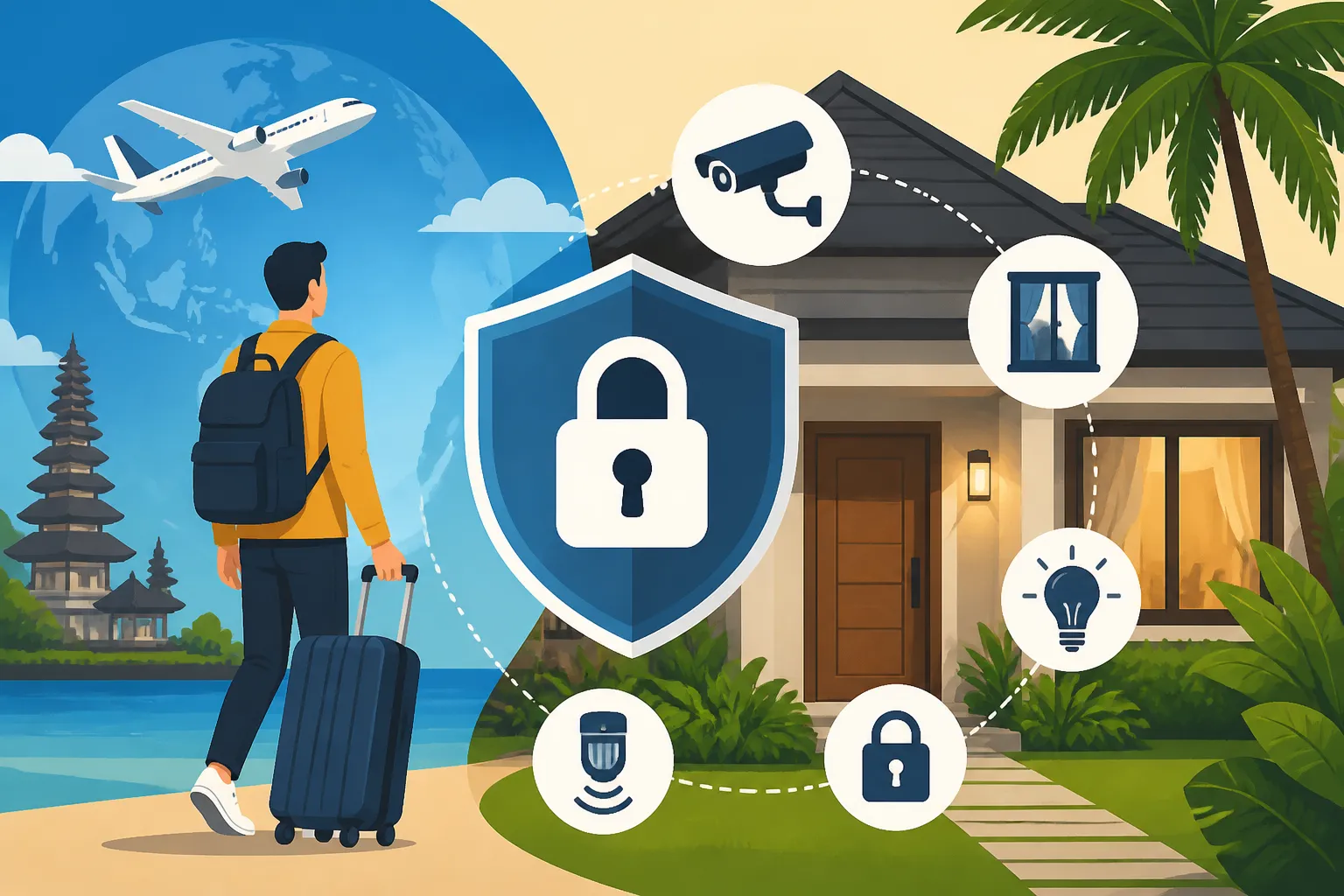
Leaving your home unattended in Indonesia isn't as simple as just locking the front door and heading to the airport. I learned this the hard way during my first trip back home, returning to a villa that had essentially become a high-end mold museum and a playground for local pests. This guide solves the complex logistical puzzle of securing your property against humidity, theft, and utility failures while you are abroad.
Fortifying Physical Security in the Indonesian Context
The first layer of defense for any expat home is physical security, but in Indonesia, this is as much about social engineering as it is about deadbolts. If you live in a gated "perumahan" (housing complex) in South Jakarta or a managed estate in Bali, you already have the benefit of a "Satpam" (security guard) at the gate. However, do not assume their presence is a guarantee. I’ve found that a small "tip" or a promise of a souvenir from your travels goes a long way in ensuring they actually walk past your specific gate twice a night.
For those in independent houses, smart home technology has become a lifesaver. You can easily find high-quality Wi-Fi cameras and smart bulbs on Shopee that allow you to monitor your living room from halfway across the world. The key is to set your lights on a staggered timer. In many Indonesian neighborhoods, a house that is pitch black at 7 PM or, conversely, has the porch light on for three days straight, is a massive "empty house" signal to anyone watching. I personally use smart plugs to trigger a radio or a lamp at random intervals to simulate a lived-in environment.
Beyond the threat of intruders, you must consider the "tropical entry points." Indonesian homes are often designed for airflow, which means gaps above doors and windows are common. Before you leave, check your roof tiles. A single displaced tile during a monsoon can lead to a flooded living room and a collapsed gypsum ceiling. If you haven't done so recently, it is vital to review AC Maintenance: Routine Servicing and Freon Rules for Tropical Climates to ensure your units are sealed and won't leak during your absence if left on a dry-mode timer.
Managing the Silent Killers Humidity and Mold
In the West, we worry about burst pipes; in Indonesia, we worry about "jamur" (mold). The humidity here is relentless, and within just ten days of total enclosure, mold can colonize your leather shoes, wooden furniture, and expensive camera gear. I once lost a beautiful leather jacket to a fuzzy green coating because I forgot that the air doesn't circulate when the house is shut tight. To prevent this, you need a strategy that balances sealing the house and allowing moisture to escape.
One effective method is using electric dehumidifiers, but these require someone to empty the water tank every few days. A more passive approach involves using "Serap Air" (moisture absorber) tubs, which you can buy in bulk. Place at least two in every wardrobe and one in every bathroom. If you are leaving for more than a month, these will fill up, so you’ll need a trusted person to swap them out. If you have the budget, leaving one or two AC units on "Dry Mode" at 26 or 27 degrees Celsius is the gold standard, but this requires a stable power supply and a healthy balance on your electricity meter.
Before you shut down the house, ensure all your laundry is bone-dry. Even a slightly damp towel left in a basket can trigger a fungal outbreak that spreads to your curtains and rugs. If you're rushing to pack, it's often better to send your final load of laundry to a professional service or even book a cheap night via Agoda for your last 24 hours so you can properly clean and dry your primary residence without the chaos of last-minute packing. Also, remember to look into Dealing with Termites (Rayap) in Wooden Villas: Prevention and Treatment because these silent destroyers love the quiet of an empty house.
Utility Management and the PLN Token Struggle
There is nothing quite like the panic of being in London or New York and realizing your "Pulsa Listrik" (prepaid electricity) is about to hit zero. In Indonesia, if your power cuts out, your fridge deflowers its contents, your security cameras go offline, and your smart home setup becomes a collection of expensive paperweights. If you are on the prepaid system, calculate your average daily usage and triple it for your duration away, just to be safe. You can easily top up your meter through most Indonesian banking apps, but having a massive buffer before you board the plane is essential.
Water is the next concern. If you use "PDAM" (city water), make sure your bill is settled or has a credit balance. If you use a "Sumur Bor" (borewell), your pump relies on the electricity we just discussed. I always recommend turning off the main water valve if you aren't leaving the AC on or if no one is staying in the house. A small leak in a bathroom pipe can lead to a catastrophic bill or, worse, a flooded foundation while you’re gone. For more details on these setups, see Utilities and Setup: PLN Electricity, PDAM Water, and Home Internet in Indonesia.
Don't forget your internet connection. Most providers like Biznet or IndiHome will continue to bill you monthly. If your credit card on file expires while you’re abroad, they will cut the line, and your security system will fail. Double-check your payment gateways. To stay connected to your local Indonesian apps and bank notifications while abroad, using an eSIM from Airalo ensures you can receive those crucial OTPs (One-Time Passwords) without having to swap physical SIM cards at the airport, which is often where people lose their primary Indonesian SIM.
| Pre-Departure Category | Action Item | Local Tool/Service |
|---|---|---|
| Electricity | Top up PLN tokens or settle postpaid bill | Mobile Banking / Tokopedia |
| Water | Turn off main valve (unless AC is on) | Manual Valve at Meter |
| Security | Notify Satpam and RT/RW | Personal Visit + Small Tip |
| Pests | Clear out all perishables from pantry | Trash Disposal Service |
| Humidity | Place moisture absorbers in all closets | Serap Air (Local Brand) |
| Connectivity | Set up remote camera access | Wi-Fi + Smart Home App |
Navigating the Social Layer: Staff and Community
In Indonesia, your neighbors and your staff are your most effective security system. If you have a "Pembantu" (housekeeper) or a "Tukang Kebun" (gardener), I highly recommend keeping them on a part-time schedule while you are away. Having someone come in three times a week to sweep the porch, water the plants, and open the windows for an hour creates the "activity" that deters thieves. It also allows them to spot issues like a leaking roof or a dead fridge before they become disasters. If you're curious about the legalities of this, check Hiring a Domestic Helper (Pembantu): Salaries, THR, and Live-In Arrangements.
If you don't have regular staff, you must inform your "RT" or "RW" (neighborhood heads). This is a uniquely Indonesian administrative layer that expats often overlook. A quick visit to the RT's house to say, "Pak, I’m going abroad for three weeks," ensures that if someone shows up with a moving truck at your gate, the neighbors will actually step out and ask questions. This community-based watch is often more effective than any high-tech alarm. You should also ensure your "Surat Domisili" is up to date, as mentioned in Reporting Address Changes: Why Immigration Will Check Your Domicile Letter, just in case a neighborly check involves a local official.
Lastly, make sure you have a "local emergency contact" who holds a spare key. This shouldn't just be a random friend, but someone who knows how to navigate Indonesian bureaucracy and utilities. If a pipe bursts, you need someone who can call a local plumber and supervise the repair. It’s also wise to leave a small "emergency fund" in cash or via a bank transfer to this person. Managing these relationships is a core part of Living in Indonesia as an Expat: The Complete Starter Guide (2027).
Preparing for the Return: Avoiding the "First Night" Disaster
There is nothing worse than landing at Soekarno-Hatta after a 20-hour flight, dealing with Airport Immigration: E-Gates, Fast Tracks, and Handling Customs Questioning, and arriving home to a house with no electricity, no water, and a thick layer of dust. To avoid this, coordinate with your housekeeper or a friend to visit the house 24 hours before your arrival. Have them turn on the fridge, check the water pressure, and perhaps run the AC so the "stale air" smell is gone.
If you don't have staff, consider booking a ride through GoCar vs GrabCar vs Bluebird: Which is Safest and Most Reliable in Jakarta? to ensure you get home quickly, and perhaps order some basic groceries via an app to be delivered just as you arrive. If your house feels too "cold" or unready for that first night, don't be afraid to book a nearby hotel on Agoda for one night while you do a deep clean and reset of your property. It’s a small price to pay for your sanity after a long international journey.
Finally, remember that your home's safety is also tied to your legal status. If your KITAS is nearing expiration while you are away, ensure you’ve read up on Exit Permit Only (EPO) vs ERP: Closing Your Visa Before Leaving Indonesia to avoid being flagged at the border upon your return. A secure home is useless if you can't get back into the country to enjoy it!
Disclaimer
This guide is provided for informational purposes only and is based on personal experiences and local observations in Indonesia. Security and environmental conditions vary significantly between regions (e.g., Jakarta vs. Bali). Always consult with professional security providers, insurance agents, and local community leaders to ensure your specific property is adequately protected. The author and publisher are not responsible for any property damage, loss, or legal issues arising from the use of this guide.