Overstaying Your Visa in Indonesia: IDR 1,000,000 Daily Fines and Deportation Risk
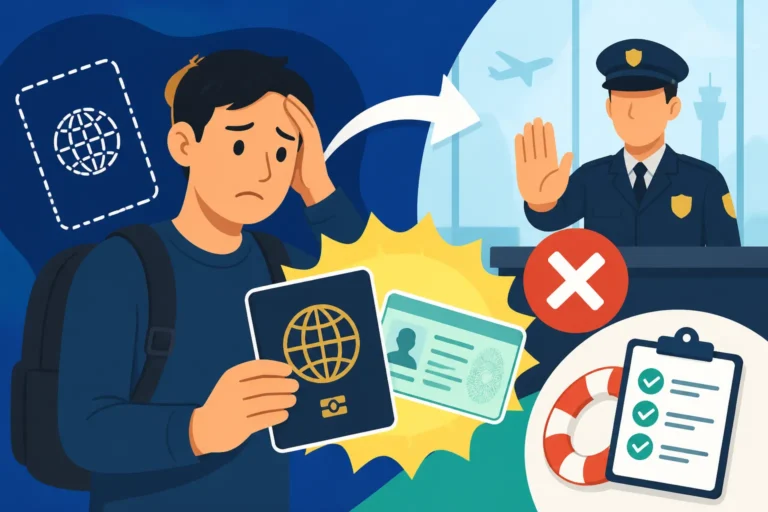
It happens to the best of us. You are lounging in a cafe in Canggu or navigating the bustling streets of Jakarta when a sudden, cold realization hits your stomach: your visa expired yesterday. I have been there, staring at that small stamp in my passport, heart hammering, realizing I had miscounted the "30 days" for the 31st time. In Indonesia, a one-day mistake is an expensive mistake, and a sixty-day mistake can change your life forever. This guide is here to walk you through the high-stakes world of Indonesian overstays, from the stinging IDR 1,000,000 daily fine to the very real risk of deportation and blacklisting.
The High Cost of a Simple Mistake: Understanding the IDR 1,000,000 Daily Fine
For many years, the fine for overstaying was a relatively manageable IDR 300,000. Those days are long gone. In 2019, the Indonesian government tripled the fine to IDR 1,000,000 per day. This is a flat rate regardless of whether you are on a Visa on Arrival, a B211A, or a KITAS. If you are even one hour past the midnight deadline of your expiration date, you are technically in overstay territory. The fine is designed to be punitive; it is not a "fee" for staying longer, but a penalty for failing to manage your legal status.
How the Fine is Calculated and Where to Pay It
The math is simple but brutal. If you overstay by five days, you owe IDR 5,000,000. If you overstay by 50 days, you owe IDR 50,000,000. Most short-term overstays (under 60 days) are handled directly at the airport departure gate. When you present your passport at the immigration counter to leave, the officer will scan your stamp, the system will flag the overstay, and you will be escorted to a side office.
In this room, you will be asked to pay the fine in cash (Indonesian Rupiah). Some major airports like Soekarno-Hatta or Ngurah Rai may have credit card machines, but they are notoriously finicky with foreign cards. I always tell friends: if you know you are overstayed, go to the airport with a thick stack of Rupiah. You will receive an official receipt, and once the payment is processed, your passport is stamped, and you are allowed to board your flight. However, do not expect the airline to hold the plane for you while you negotiate with an immigration officer.
The 60 Day Threshold: When a Fine Becomes a Criminal Matter
There is a massive legal "cliff" at the 60-day mark. If your overstay is 60 days or less, it is considered an administrative violation. You pay the fine, you leave, and generally, you are free to return to Indonesia on a new visa whenever you like. However, the moment you hit day 61, you have crossed into the territory of Article 78 of the Immigration Law.
At 61 days, you are no longer allowed to simply "pay and go." You are now subject to "Administrative Immigration Action," which includes mandatory deportation and a stay in a detention center. The daily fine often stops accruing at this point because the penalty shifts from monetary to physical removal from the country. If you find yourself approaching this window, you must stop what you are doing and seek professional help from a reputable agency. You can learn more about the nuances of staying legal in our guide on Immigration Compliance: Address Changes, EPOs, Overstays, and Reporting.
Navigating the Immigration Office: What Happens When You Turn Yourself In
If you realize you have overstayed and your flight isn't for another week, do not wait until you get to the airport. "Turning yourself in" at a local Kantor Imigrasi (Immigration Office) is often the smoother path, though it involves more paperwork. It shows good faith and allows you to resolve the issue without the stress of a looming boarding call.
The Voluntary Disclosure Process at the Airport vs the Local Office
When you walk into a local office to report an overstay, you will be directed to the "Wasdakim" (Supervision and Enforcement) section. This is not the same friendly counter where you get your photos taken for a KITAS. It is a more formal environment. You will be asked to fill out a statement letter admitting to the overstay and explaining the reason.
The advantage of doing this at the office is that you can sometimes negotiate the timeline of your departure. The officers will give you a set number of days to leave the country after you have paid your fines. If you try to resolve this at the airport and don't have enough cash, you might miss your flight, lose the ticket value, and then still have to find a way to pay the fine while being technically "stuck" in the departure hall. For anyone feeling overwhelmed by the digital side of this, it’s worth checking e-Visa and Molina System: How to Apply Online Without Visiting an Embassy to ensure your next entry is handled correctly from the start.
Essential Documentation You Need to Carry
When you go to resolve an overstay, do not go empty-handed. You need your original passport, a copy of your flight ticket (which should be as soon as possible), and a formal letter of explanation. If your overstay was caused by a medical emergency, this is the one time you might receive a bit of leniency—not necessarily in the fine, but in the avoidance of the blacklist.
You will need a doctor's letter from a recognized hospital, which must be translated if it isn't in Indonesian or English. Using a service like RushTranslate can be vital here to ensure your medical records are accepted by the officers. Even with a medical excuse, you will likely still be required to pay the IDR 1,000,000 per day fine unless the government declares a state of "Force Majeure," which only happens during extreme events like volcanic eruptions or global pandemics.
| Overstay Duration | Primary Penalty | Legal Status | Blacklist Risk |
|---|---|---|---|
| 1 – 60 Days | IDR 1,000,000 per day | Administrative Violation | Low (if paid) |
| 61+ Days | Deportation & Detention | Serious Violation | Guaranteed (6 months+) |
| Repeat Offender | Fine + Deportation | High-Risk Profile | Permanent Ban Possible |
Beyond the Fines: The Risk of Detention and Deportation
If you have overstayed beyond 60 days, or if you are caught during a "Razia" (immigration raid) at a villa or workplace, the situation becomes significantly more grim. This is the part of the veteran expat experience that nobody wants to live through. You are no longer a guest; you are a detainee.
Life Inside an Immigration Detention Center (RuDenIm)
If you are detained for an overstay, you will likely be sent to a Rumah Detensi Imigrasi (RuDenIm). These are not hotels. While the conditions vary between regions, you should expect shared cells, limited privacy, and restricted access to your phone. You will be held there until your deportation paperwork is finalized and your flight is booked.
During this time, you are responsible for the cost of your own food (often supplemented by friends or agents) and, crucially, the cost of your deportation flight. Immigration will not pay for your ticket home. If you cannot afford a ticket, you will remain in detention until someone—a family member, an embassy, or a friend—buys it for you. It is a stressful, exhausting process that underscores the importance of knowing Visa on Arrival (VoA) and B211A Tourist Visas: What You Can and Cannot Do before you land.
The Deportation Process and the Financial Burden
Deportation in Indonesia is a formal affair. You will be escorted to the airport by at least two immigration officers. They will hold your passport until the very last moment, often handing it to the flight purser rather than to you. You are usually not allowed to leave the plane during layovers if you are being deported under guard.
Beyond the flight ticket and the daily fines, there are administrative costs. You might be required to pay for the "escort" services of the officers. This can run into thousands of dollars depending on the length of your stay and the complexity of your case. This is why having comprehensive Cigna Global coverage is so important for expats—while it doesn't cover visa fines, it ensures that a medical crisis doesn't drain your bank account, leaving you unable to pay for the very fines that would keep you out of detention.
The Blacklist: Why Your Future in Indonesia Might Be Canceled
The "Daftar Penangkalan" (Blacklist) is the ultimate nightmare for anyone who has built a life in Bali or Jakarta. If you are deported, you are automatically placed on this list. This isn't just a "do not enter" note; it is a digital block on your passport number across every Indonesian embassy and border crossing in the world.
Understanding the Cekal System and Duration of Entry Bans
"Cekal" is the shorthand for "Cegah" (prevent) and "Tangkal" (block). For a standard overstay of more than 60 days, the initial blacklist period is usually six months. However, this is not a "sliding window." After six months, your name does not automatically disappear. It often requires an active request or a "clearing" process to be removed from the system.
In some cases, especially if immigration believes you were working illegally while overstayed, the ban can be extended to two years, five years, or even a lifetime. Being on the blacklist means you cannot even apply for a visa. Your application will be rejected at the "checking" stage. For a deeper dive into these risks, see our article on The Blacklist (Cekal): Reasons for Being Banned from Entering Indonesia.
Legal Options for Appealing an Entry Ban
Can you fight a blacklist? Yes, but it is expensive and requires a very good lawyer or a high-level biro jasa. You have to prove that the overstay was not intentional or was caused by circumstances entirely beyond your control. This usually involves a formal appeal to the Director General of Immigration in Jakarta.
You will need to provide "Sponsor" letters, clean police records from your home country, and often, a mountain of translated documents. Again, using RushTranslate for these official appeals is mandatory to ensure the legal terminology is exactly right. Even with a perfect appeal, the process can take months, and there is no guarantee of success. The Indonesian government takes its border sovereignty very seriously.
Practical Prevention Strategies for Every Expat and Tourist
The best way to handle an overstay is to never have one. In the "Island Life" fog of Bali, it is incredibly easy to lose track of time. I’ve seen tourists think a "one month" visa means 31 days, only to find out the hard way that Indonesia counts the day you land as "Day 1."
Using Technology and Automation to Track Your Stay
Do not rely on your memory. The moment you clear immigration, look at the stamp. Open your phone and set a calendar alert for five days before the expiry. This gives you a buffer to deal with any "macet" (traffic) or office holidays.
There are also third-party apps and visa services like iVisa that can help track your documentation and send you reminders when it's time to renew. If you are on an e-Visa, keep a digital copy on your phone and a printed copy in your bag. The "I lost my passport" excuse does not stop the fine from accruing; you will still need to visit the immigration office to get an emergency stay permit while your embassy replaces your book.
Knowing Your Visa Limits and Extension Windows
Each visa has different rules. A Visa on Arrival (VoA) is good for 30 days and can be extended once for another 30 days. You must start the extension process at least 7 to 10 days before the first 30 days expire. If you wait until day 29, you might be forced into an overstay because the system cannot process the extension fast enough.
If you are on a B211A, the windows are different. You need to be very aware of whether your visa is "onshore" or "offshore." To avoid the stress of DIY extensions, many expats use an agent. Just make sure you are Dealing with Immigration Agents: How to Vet Biro Jasa and Avoid Scams to ensure they actually submit your passport to the office rather than just holding it in a drawer.
Emergency Scenarios: What to Do If You Are Already Overstayed
If you are reading this and you are already in overstay, take a deep breath. Panic leads to bad decisions, like trying to "hide" or taking a boat to a neighboring island. These will only make your situation criminal.
The Airport Exit Strategy for Short Overstays
If you are overstayed by 1 to 10 days, your best bet is usually to just head to the airport. Ensure you have the cash (IDR 1,000,000 x days) and arrive four hours before your flight. Be extremely polite. Smile, apologize, and don't argue about the law. The officers have heard every excuse in the book. If you are respectful and have the money, they will process you quickly.
Check our guide on Airport Immigration: E-Gates, Fast Tracks, and Handling Customs Questioning to understand the layout of the major airports so you know where the administrative offices are located. The "Airport Exit" is the standard way to "clean" a short overstay.
Dealing with Medical Emergencies and Force Majeure
If you are in a hospital bed, you (or a friend) must contact the nearest immigration office immediately. Do not wait until you are discharged. If you can provide a "Surat Sakit" (Medical Certificate) from the hospital while you are still there, immigration may issue a temporary stay permit (ITAS Pengobatan) or at least note your file so that you aren't treated as a "runaway."
If you find yourself in this situation, having Cigna Global is a lifesaver for the medical side, but you still need a local representative to talk to the officers. If your overstay is due to a natural disaster, keep screenshots of news reports and airline cancellation emails. These are your "get out of jail free" cards, but they must be presented formally. For more on managing your health during such times, read about Emergency Medical Care in Indonesia: Ambulances, ERs, and Evacuation Protocols.
Disclaimer
The information provided in this article is for general informational purposes only and does not constitute legal advice. Immigration laws and fine structures in Indonesia are subject to frequent change without notice. While we strive to provide the most up-to-date information for 2026, always verify current regulations with the official Directorate General of Immigration (Direktorat Jenderal Imigrasi) or a licensed legal professional before making travel or residency decisions. The author and publisher are not responsible for any fines, detentions, or deportations resulting from the use of this guide.