How to Enroll in BPJS Kesehatan After Getting Your KITAS (Step-by-Step)
The bureaucratic maze of Indonesian administration can feel like navigating a rainforest without a map, especially when you are just trying to secure basic medical coverage. I remember the sheer confusion of my first month in Jakarta, clutching a stack of photocopies and wondering why the "simple" process of health registration felt like a full-time job. This guide breaks down exactly how to navigate the BPJS Kesehatan enrollment process so you can stop worrying about red tape and start enjoying your new life.
Understanding the BPJS Mandate for Foreigners
If you have recently secured your Limited Stay Permit (KITAS), you have likely heard whispers about the mandatory nature of Indonesia’s national health insurance, BPJS Kesehatan. Under Law No. 40 of 2004 and subsequent regulations, every resident—including foreigners who have worked in Indonesia for at least six months—is legally required to participate in the National Health Insurance (JKN) scheme.
While some expats initially view this as just another tax, it is important to understand that BPJS is the foundation of the Indonesian medical system. Even if you have a premium international policy from a provider like Cigna Global, having your BPJS card (Kartu JKN) is often a prerequisite for other administrative tasks, including certain visa renewals or vehicle registrations. You are not just buying health insurance; you are buying into the local administrative ecosystem. For a deeper dive into the legalities, you might want to check out the Do Foreign Residents Have to Join BPJS Kesehatan? Plain-English Answer to see how the rules apply to your specific visa type.
The system is built on the principle of gotong royong (mutual cooperation). Your contributions help fund a system that provides care to millions. For you, the expat, it means access to a network of public and private hospitals that might otherwise require significant cash deposits upfront. However, do not expect a Western-style concierge experience. The public system is robust but can be slow, which is why many of us choose to keep a secondary private policy for elective surgeries or faster specialist access.
The Essential Document Checklist
Before you even think about heading to a BPJS office or downloading the app, you need to have your "administrative armor" ready. In Indonesia, the photocopy is king. If a manual tells you that you need one copy, bring three. If they ask for the original, have the original and a scan on your phone. Missing one stamped paper can result in a wasted day in Jakarta traffic.
Here is what you need to gather for a smooth enrollment:
- Passport: Original and clear photocopies of your bio-page and your current KITAS stamp.
- KITAS/ITAS Card: Whether it is a physical card or the electronic version (E-ITAS), have it printed out.
- Family Card (Kartu Keluarga): If you are married to an Indonesian or have a family KITAS, this is vital. For single expats, your "SKSKP" or residency certificate often suffices.
- NPWP (Tax ID): While not always strictly enforced at every branch, many officers now ask for this to link your records. You can learn more about this in Registering for an NPWP (Tax ID): How Expats Link NIK to Tax Records in 2027.
- Domicile Letter (Surat Keterangan Domisili): This proves where you live and determines which primary clinic (Faskes) you will be assigned to. See Surat Domisili (Domicile Letter): How to Get it from the Village Head for tips on securing this from your local RT/RW.
- Work Permit (IMTA/RPTKA): If you are sponsored by a company, they usually handle this, but keep a copy of your work permit handy just in case.
| Document Type | Requirement for Expats | Pro-Tip |
|---|---|---|
| KITAS/ITAS | Mandatory | Ensure it is valid for at least 6 months. |
| Passport | Mandatory | Photocopy every page with a stamp. |
| Domicile Letter | Mandatory | Must be issued by the local Kelurahan. |
| NPWP | Highly Recommended | Needed for the 5% vs 6% deduction rules. |
| Bank Account | Mandatory | Necessary for Autodebet setup. |
Registration Channels: Offline vs. Online
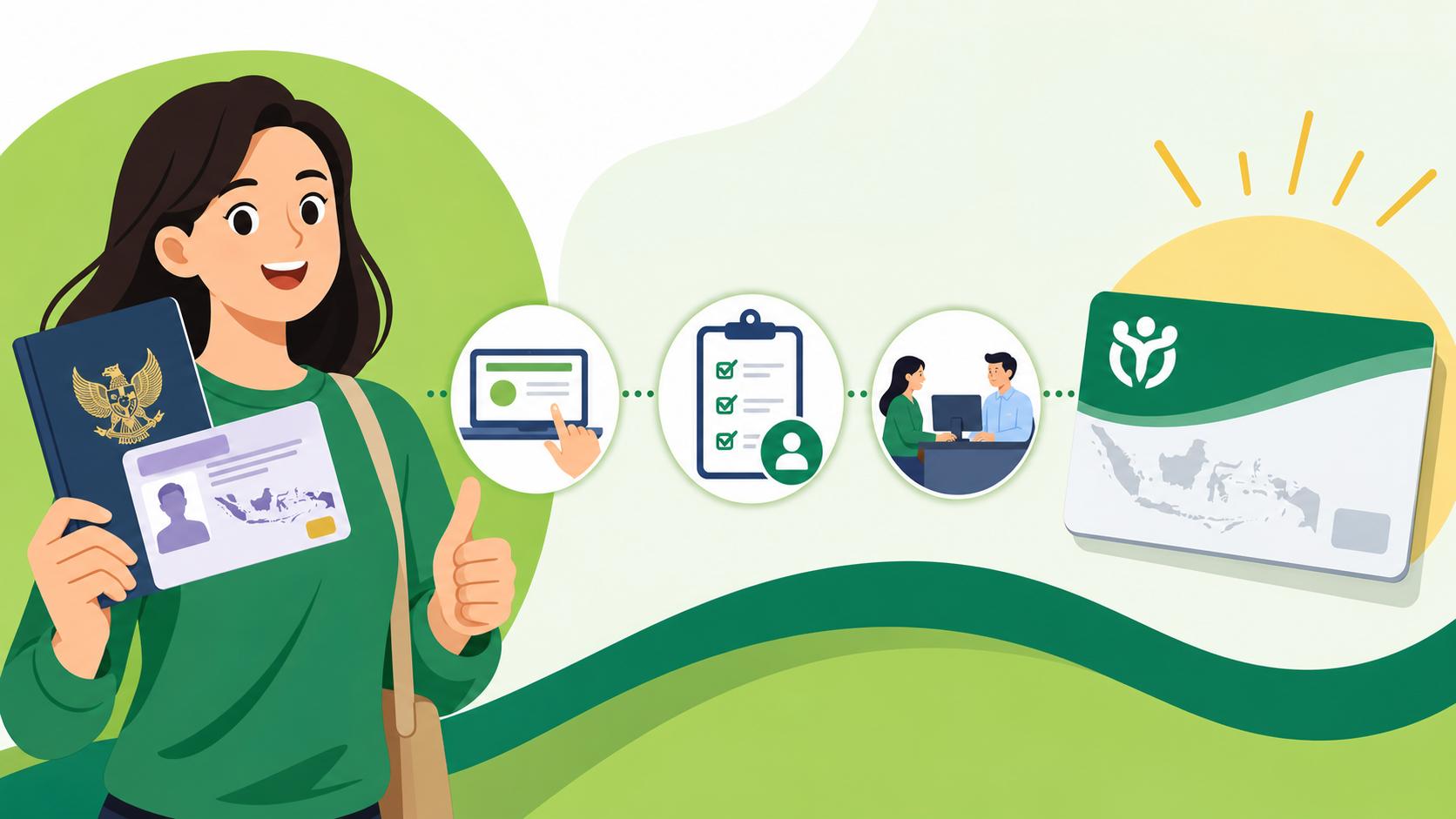
There are two primary ways to get into the system: visiting a branch office (Kantor Cabang) or using the Mobile JKN app. As a veteran, I suggest the office visit for your initial registration. While the app is improving, foreign passports and KITAS numbers sometimes trigger "data not found" errors that only a human officer can override.
The Office Visit (The Traditional Route)
If you are in a major hub, search for the "BPJS Kesehatan KCP" nearest to your home. Arrive early—ideally by 8:00 AM. When you enter, the security guard (Satpam) is your best friend. Tell them "Daftar BPJS baru untuk WNA" (New BPJS registration for a foreigner). They will give you a queue number and a form.
Once your number is called, the officer will input your data. This is where you choose your "Faskes Tingkat 1"—your primary care clinic. Choose one close to your house to avoid cross-town commutes when you have a fever. You will also need to select your class of service. Most expats on a KITAS are automatically enrolled in Class 1 if their salary is above a certain threshold. For the specifics on how your paycheck is affected, refer to Calculating BPJS Contributions: The 12 Million IDR Salary Cap Explained.
The Mobile JKN App (The Digital Route)
If you are tech-savvy and your data is already synchronized with the Ministry of Law and Human Rights, you can try the app. Download "Mobile JKN" from the App Store or Play Store. You will need an Indonesian phone number and an active email address.
The app is excellent for long-term management, such as Using the Mobile JKN App: Registration, Checking Status, and Changing Clinics. However, if the app asks for a NIK (National ID Number) and your KITAS "FIN" number isn't working, do not panic. This is a common glitch for foreigners and usually requires a one-time visit to the office to "activate" your foreigner status in their database.
The 14-Day Waiting Period and First Payment
One of the biggest surprises for newcomers is that you cannot use BPJS the moment you sign up. There is a mandatory 14-day "administrative waiting period" from the time you receive your Virtual Account (VA) number to the time you can make your first payment.
During this window, the system is verifying your data. Once the 14 days have passed, you must pay your first premium. If you fail to pay within 30 days of the VA being issued, your application may expire, and you will have to start the process over. You can handle these payments easily through local apps or even at a convenience store. For a breakdown of these methods, see How to Pay BPJS Independently via GoPay, Tokopedia, or Minimarkets.
Once the first payment is confirmed, your status becomes "Active." You don't necessarily need a physical card anymore; the digital card on the Mobile JKN app is accepted at almost all hospitals and clinics. If you are the type who prefers a backup, you can print the e-ID from the app and keep it in your wallet.
Managing Family Members
If you are in Indonesia with a spouse and children, they are not automatically covered under your registration unless you explicitly add them. Each family member will have their own VA number and their own individual premium, even if the total is deducted from a single bank account or paycheck.
The process for adding dependents is similar to your own, but you will need to provide marriage certificates and birth certificates. If these documents are not in Indonesian or English, they must be translated by a certified professional. Check out Adding Family Members to BPJS: Spouse and Children Enrollment Steps for the specific order of operations when dealing with the Civil Registry office. It is worth noting that for child-specific care, the system works quite well, though you may want to supplement their health needs with quality vitamins and supplements from platforms like iHerb, which ships reliably to Indonesia.
Why BPJS Might Not Be Enough
While BPJS is excellent for emergencies and chronic conditions, it operates on a referral system. This means you cannot simply walk into a top-tier specialist at a private hospital like Siloam or SOS Medika and expect it to be covered. You must first visit your primary clinic (Faskes 1), and if they cannot treat you, they will issue a digital referral.
This "gatekeeper" system can be frustrating when you just want a quick consultation. This is why many expats treat BPJS as their "catastrophic" coverage and maintain a private policy from Cigna Global for "outpatient" needs, dental work, or English-speaking specialists. Having both ensures that you are legally compliant with Indonesian law while also having the comfort of international-standard care. You can read more about how these two systems interact in Private Health Insurance in Indonesia: Bridging the Gap When BPJS Isn't Enough.
Furthermore, BPJS often covers generic medications. While these are effective, some expats prefer specific international brands for things like skincare or specialized supplements. In these cases, using a service like iHerb to stock up on familiar wellness products is a common strategy among the community to bridge the gap between local availability and personal preference. For more on local medicine, see Pharmacies and Medication in Indonesia: Apotek Guide, Prescriptions, and Safe Use.
Common Pitfalls and How to Avoid Them
The most common mistake I see is "KITAS neglect." Your BPJS is tied directly to the validity of your stay permit. If your KITAS expires or is in the process of being extended, your BPJS status might flip to "Inactive." Always update your data at the BPJS office whenever you get a new KITAS stamp or a new passport book. Failing to do this can result in a denied claim at the hospital during an emergency.
Another issue is the "Class Upgrade" trap. While you are assigned a class (1, 2, or 3), some hospitals allow you to "top up" to a VIP room by paying the difference out of pocket. However, with the new KRIS system being implemented, these rules are changing. Keep an eye on Transitioning to KRIS: What Standard Inpatient Classes Mean for Expats to stay ahead of the curve.
Lastly, do not forget your employer's role. If you are working for an Indonesian entity (PT PMA), they are legally obligated to pay a portion of your premium. Ensure your HR department has actually registered you. Sometimes, companies delay this to save on costs, leaving you vulnerable. Check your payslip for the deduction and cross-reference it with the Employer Responsibilities: What Your PT PMA Must Pay for Your BPJS guide.
Summary Checklist for Your First Month
To make sure you don't miss a beat, follow this timeline during your first 30 days in the country:
- Week 1: Secure your KITAS and your Domicile Letter from the Kelurahan.
- Week 2: Photocopy everything and visit the BPJS office or attempt the Mobile JKN registration.
- Week 3: Receive your VA number and set a calendar reminder for the 14-day mark.
- Week 4: Make your first payment via an e-wallet or bank transfer and verify your "Active" status on the app.
Once you are active, you can breathe a sigh of relief. You have successfully navigated one of the most important administrative hurdles in Indonesia. Whether you are heading to BIMC Hospital Bali: Services, Costs, and Insurance Direct Billing Options for a checkup or just visiting a local clinic for a cold, having that active status will save you time, money, and a lot of stress.
Disclaimer
This guide is intended for informational purposes only and does not constitute legal or professional medical advice. Indonesian immigration and healthcare regulations, including BPJS Kesehatan policies, are subject to frequent change without prior notice. Always verify current requirements with the official BPJS Kesehatan website, your local immigration office, or a qualified legal consultant before making financial or administrative decisions. External brands mentioned are for contextual reference and do not imply a medical endorsement.