Adding Family Members to BPJS: Spouse and Children Enrollment Steps
You’ve finally secured your own KITAS and work permit, but then you realize your spouse and kids are essentially invisible to the public health system until you manually bridge the gap. I remember the sheer frustration of standing in a humid government office in South Jakarta, clutching a stack of papers, only to be told my daughter's name didn't match the database perfectly. This guide solves the complex puzzle of adding your family members to the Indonesian social security system.
Understanding the Mandate for Family Enrollment
The Indonesian government has made it clear that healthcare is a universal right, but for us foreigners, it is also a legal obligation once we’ve resided here for six months. When you are employed by a local company or a PT PMA, you are automatically enrolled in BPJS Kesehatan. However, the system does not automatically "see" your dependents. You have to be the one to initiate their inclusion, ensuring that your spouse and children have the same access to the Healthcare in Indonesia for Foreign Residents: Complete System Overview (2027) as you do.
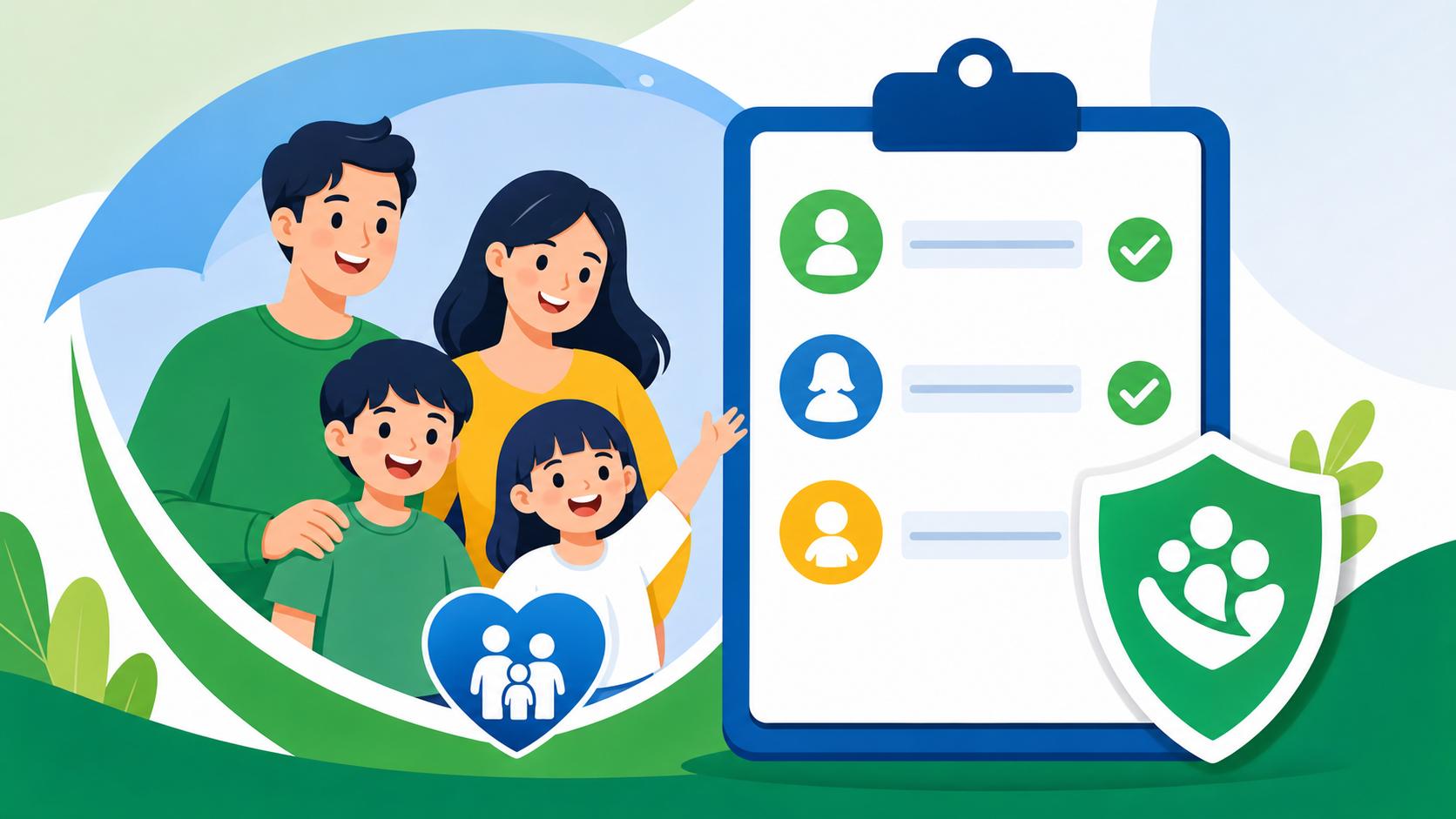
The definition of "family" under the BPJS regulations is quite specific. It typically includes one legal spouse and up to three children. These children must be legitimate, under the age of 21 (or 25 if they are still full-time students), and not yet married or earning their own income. If you have a fourth child or want to add a parent, the rules change slightly, often requiring additional contributions or a separate registration path.
I’ve seen many expats ignore this until an emergency happens. While the system can be a headache to navigate, having that JKN card for your child is a massive relief when they inevitably catch a tropical bug. It’s about more than just the money; it’s about being part of the system so you don't face administrative blocks at the hospital door. For those who want more than the basic public coverage, many families choose to supplement their BPJS with Public vs Private Healthcare in Indonesia: BPJS Kesehatan and Expat Insurance to ensure they have access to private rooms and international-standard specialists.
Documentary Requirements for Spouse and Children
The lifeblood of Indonesian bureaucracy is paperwork, and the BPJS office is no exception. Before you even think about visiting an office or talking to your HR department, you need to have a very specific set of documents for each family member. In my experience, if even a single letter is off in a name or a date of birth, the system will reject the application, sending you back to square one.
The most critical document for an expat family is the SKTT (Surat Keterangan Tempat Tinggal), which is effectively your "Green Card" version of a family card. Since foreigners do not have a traditional Indonesian Kartu Keluarga (KK), the SKTT acts as the primary proof of residence and family ties. You will also need clear copies of their KITAS, their passports, and a marriage certificate that has been legalized or translated by a certified translator.
If your children were born in Indonesia, the process is slightly different but requires the same level of detail regarding their birth certificates. For those moving here with older children, you may need a letter from their school or university to prove they are still dependents if they are over 21. Navigating this is much easier if you are already familiar with the BPJS Kesehatan for Expats: Registration, Costs, and the New KRIS System, as the underlying logic of the system remains the same regardless of who is being added.
Step-by-Step Enrollment Through Your Employer
If you are working in Indonesia, your employer is legally obligated to manage your BPJS contributions. This category is known as PPU (Pekerja Penerima Upah). In this scenario, your HR department is your best friend. They are responsible for adding your dependents to the company’s collective account. You should provide them with all the documents mentioned above and follow up weekly—things tend to "sit" on desks here longer than they should.
When you add family members through your employer, the contribution is calculated as a percentage of your salary. This is generally a great deal because the employer pays 4% and you pay 1% from your gross salary. This 5% total covers you, your spouse, and up to three children. Understanding how this fits into your budget is easier when you look at the details of Calculating BPJS Contributions: The 12 Million IDR Salary Cap Explained, which sets the ceiling for how much you actually have to pay.
I once worked with an HR manager who insisted that spouses could only be added if they also had a work permit. That is factually incorrect. A non-working spouse on a dependent KITAS is absolutely eligible to be covered under the primary breadwinner’s BPJS. If you hit this kind of "logic wall," politely ask them to check the latest BPJS circulars regarding foreign workers. It’s often just a case of them not having dealt with many expat families before.
Registering Dependents Independently via the Mandiri Path
There are times when you cannot go through an employer. Perhaps you are here on an Investor KITAS, a Remote Worker Visa, or your employer only covers the "employee" and expects you to handle the rest. This is known as the "Mandiri" (independent) path. While it involves more legwork on your part, it gives you direct control over the account. You can manage this via the Mobile JKN app, though the app’s interface is notoriously finicky for those who don't speak Bahasa Indonesia.
To register independently, you’ll need to set up a "Family Account." This means all members of the family must be registered under one head of the household. You cannot have one person in Class 1 and another in Class 2; the entire family must be in the same "class" of service. This is particularly relevant now that the system is moving toward a unified standard, which you can read about in Transitioning to KRIS: What Standard Inpatient Classes Mean for Expats.
Paying for Mandiri BPJS is quite simple once the registration is done. You can use local apps like GoPay or Tokopedia, or even go to a nearby Indomaret or Alfamart. The key is to never let the payment lapse. If you miss a month, the entire family’s coverage is suspended immediately. I always recommend setting up an auto-debit through a local bank account like BCA or Mandiri to avoid the "I forgot" moment that usually happens right before someone gets sick.
| Feature | Employer-Sponsored (PPU) | Independent (Mandiri) |
|---|---|---|
| Responsibility | HR Department | Individual Expat |
| Payment Method | Payroll Deduction | E-Wallet, Mobile Banking, or Minimarkets |
| Cost Basis | 5% of Monthly Salary (capped) | Fixed Monthly Premium per Person |
| Family Inclusion | Spouse + 3 Children included in 5% | Each person paid for individually |
| Documentation | KITAS, Passport, SKTT, Marriage Cert | KITAS, Passport, SKTT, Marriage Cert |
Selecting the Right Primary Clinic for the Family
Once your family members are registered and you have your JKN numbers (which you can see in the app even before the physical cards arrive), you must choose a "Faskes Tingkat 1" (First-Level Healthcare Facility). This is the clinic or Puskesmas where your family must go for any non-emergency issues. You cannot just walk into a big hospital and expect BPJS to cover it; you need a referral from your Faskes 1 first.
Choosing a Faskes is a strategic decision. If you live in a major city, you want to find a clinic that is relatively close to your home and, ideally, has some English-speaking staff. For families in the capital, Finding an English-Speaking Clinic in South Jakarta (Kemang and SCBD) is a great place to start looking for facilities that understand the needs of international residents. Even if the clinic itself is basic, a good relationship with the doctor there makes getting referrals to specialists much smoother.
For parents, the choice of Faskes is even more critical because this is where your children will go for routine vaccinations and basic checkups. The quality can vary wildly. Some expat families prefer to use their BPJS for major hospitalizations but continue to pay out-of-pocket for routine pediatric visits at international clinics. You can learn more about finding the right doctor for your kids in the guide to Pediatricians in Indonesia (Dokter Anak): Finding the Right Fit for Your Child.
Navigating the Referral System for Family Members
The referral system (Rujukan) is often where expat families get frustrated. If your child has a persistent ear infection that the local clinic can't handle, they will issue a digital referral to a hospital. This referral is usually valid for 90 days and for a specific hospital. You don't always get to pick the "fanciest" hospital in town; the system will suggest the closest ones that have the necessary specialists available.
If you find that the BPJS-affiliated hospitals in your area don't meet your standards for a specific condition, this is where private insurance like Cigna Global becomes invaluable. It allows you to bypass the referral queue and go straight to the top-tier private facilities like Siloam or Medistra. However, for everyday issues, Using Your BPJS Card (Kartu JKN): How to Register and Book at Local Faskes is an efficient way to handle healthcare without spending a fortune.
When you do go to the hospital with a family member, always bring the physical KITAS and a printout of the BPJS digital card. While the system is becoming more digital, many hospital administrators still love a physical piece of paper to staple to their files. If you are in a different city, such as East Java, you should consult the Surabaya Healthcare Guide: Where to Go and How to Book Medical Appointments to see how local referral patterns might differ.
Common Hurdles and How to Solve Them
One of the most common issues when adding family members is the "Data Not Found" error. This usually happens because the name in the BPJS system hasn't been synchronized with the immigration database (SINKRON). If this happens, you often have to visit the BPJS office in person with your original documents to "push" the update through. It’s a tedious morning of sitting in plastic chairs, but it’s the only way to fix it.
Another hurdle is the "Six-Month Rule." Technically, foreigners are supposed to be here for six months before they can enroll, but if you are on a work KITAS, many offices will allow you to enroll immediately as part of your employment. For dependents, however, they may be stricter. If your family is in that "waiting period," ensure you have a robust travel insurance policy or a private plan like Cigna Global to cover any gaps. I also suggest keeping a stock of high-quality vitamins and supplements from iHerb to keep everyone’s immune system strong during the transition to the Indonesian climate.
Lastly, remember that BPJS does not cover everything. While it is excellent for Family Health in Indonesia: Pregnancy, Childbirth, and Pediatric Care, there are certain "lifestyle" medications or high-end imported drugs that might not be on the formulary. For those items, you might still find yourself visiting a local apotek and paying out-of-pocket, or ordering specialized items through iHerb if they aren't available locally.
Long-Term Maintenance of the Family Account
Once the family is in the system, your job isn't quite done. Every time you renew your KITAS, you need to update the BPJS system with your new permit dates. If your KITAS expires in the BPJS database, the card will be deactivated, even if you’ve already received your new physical permit from immigration. This update can usually be done via the Pandawa (WhatsApp-based) service, which is a godsend compared to visiting the office.
Keep an eye on the ages of your children. Once they hit 21, they will be automatically dropped from your account unless you provide proof of university enrollment. If they graduate and stay in Indonesia on their own KITAS, they will need to move to their own Mandiri or PPU account. Transitioning these accounts requires a "deactivation letter" from the primary account holder, which can be another administrative hurdle if you aren't prepared for it.
If you ever decide to move to a different part of Indonesia, you will need to change your Faskes 1. This can be done once a month via the Mobile JKN app. It takes effect on the first of the following month. For those relocating, Finding Medical Care in Indonesia: Clinics, Hospitals, and International Facilities provides a broad overview of what to expect in different provinces, helping you make an informed choice for your family's new primary care home.
Disclaimer
This guide is for informational purposes only and is based on the author's personal experiences as an expat and the regulations as of 2026. Indonesian immigration and healthcare laws are subject to frequent changes without prior notice. Always verify the current requirements with your HR department, an official BPJS representative, or a licensed legal consultant before making financial or legal decisions.