Medical Emergency in Indonesia: What to Say When Calling 118 or 119
Finding yourself in a medical crisis in Indonesia is a terrifying prospect, especially when you realize that the local emergency infrastructure doesn't always mirror what you left behind in the West. I remember the paralyzing fear I felt when a friend suffered a severe allergic reaction in a remote part of Bali; the language barrier suddenly felt like an insurmountable wall. This guide solves that problem by providing the exact Indonesian phrases you need and explaining how to navigate the 118 and 119 dispatch systems effectively.
Understanding the Emergency Number System in Indonesia
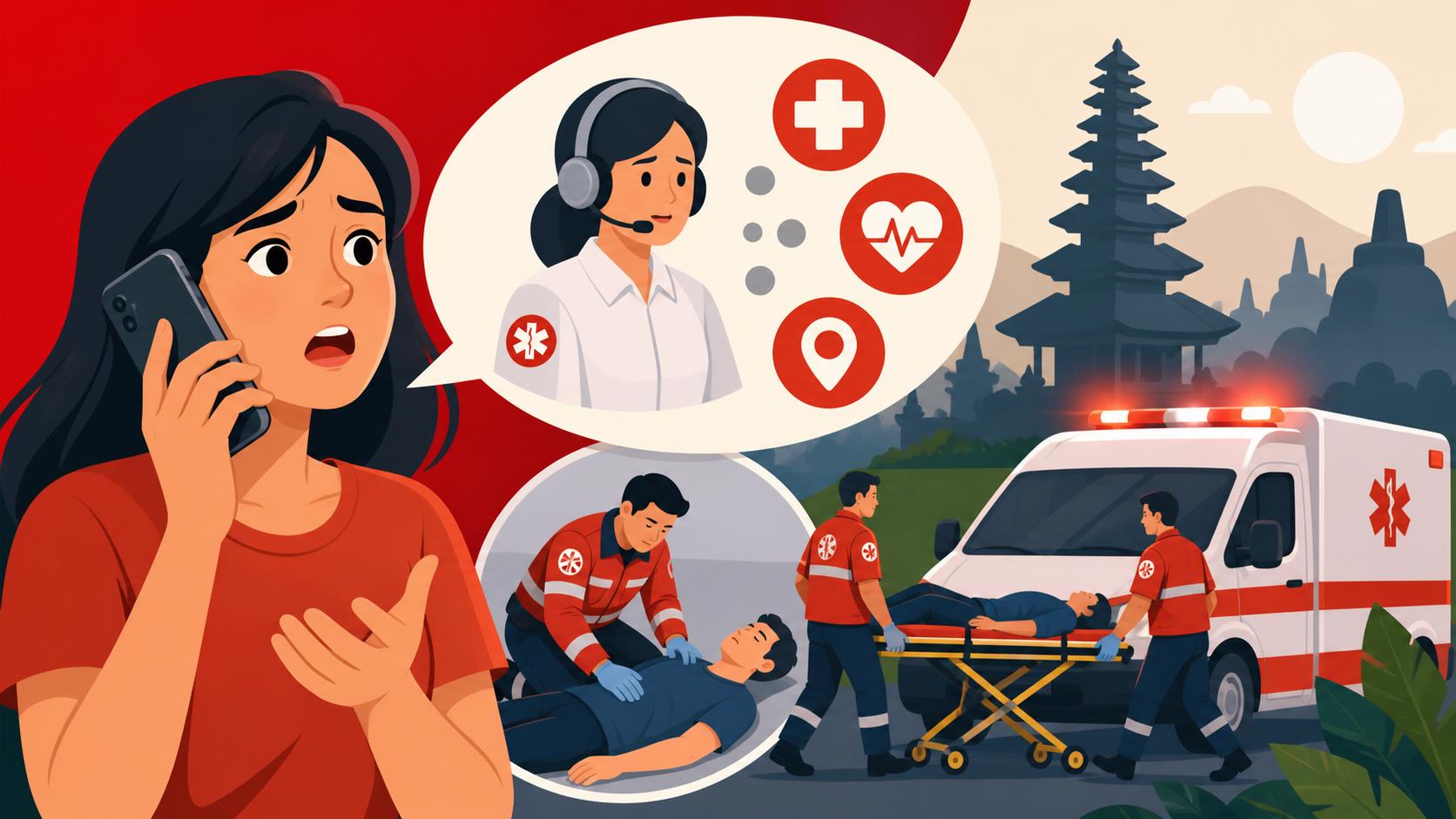
In Indonesia, the emergency landscape is divided primarily between two numbers that function quite differently depending on your location. For years, the standard was 118, which is the direct line to the Indonesian Red Cross (Palang Merah Indonesia or PMI). This service is generally focused on ambulance transport and is a reliable choice in major metropolitan areas where the Red Cross has a significant presence. However, the government has been pushing for a more integrated system, which led to the creation of 119.
The 119 system is the National Command Center for medical emergencies. In theory, this is the "one-stop shop" where dispatchers can coordinate between various hospitals, police, and specialized medical teams. When you dial 119, you are often connected to a regional hub that uses the Emergency Numbers in Indonesia: 118/119 for Ambulance and What to Expect protocols to determine which facility is best equipped to handle your specific case. In my experience, 119 is becoming the more robust option in Jakarta and Surabaya, while 118 remains a powerhouse in many parts of Bali and Central Java.
It is worth noting that while these numbers are free to call from any mobile or landline, the response times can vary wildly based on traffic—the infamous "macet"—and the availability of vehicles. This is why many veteran expats also keep the direct numbers for private hospitals saved in their phones. Whether you use public or private services, having a policy like Cigna Global ensures that once you reach the facility, your focus can remain on recovery rather than the daunting hospital bill.
Vital Bahasa Indonesia Phrases for Your Call
When you dial 118 or 119, the dispatcher will likely answer in Bahasa Indonesia. While some dispatchers in tourist-heavy areas like Seminyak or Kuningan might speak basic English, you should never count on it. The first thirty seconds of the call are the most critical. You need to be calm, clear, and ready to provide your "patokan"—a landmark—since Western-style street addresses are often ignored by drivers in favor of visual cues.
Establishing Your Location with Landmarks
In Indonesia, saying "I am at 45 Jalan Raya" is often less helpful than saying "I am next to the big Indomaret near the banyan tree." This is the concept of the landmark or "patokan." If you cannot communicate this, the ambulance may circle your neighborhood for valuable minutes. Use the following phrases to help the dispatcher find you:
- Saya ada di… (I am at…)
- Alamat saya… (My address is…)
- Patokannya adalah… (The landmark is…)
- Dekat dengan… (Near to…)
- Di seberang… (Across from…)
If you are struggling to find a landmark, look for a nearby mosque (Mesjid), school (Sekolah), or a well-known convenience store. If you are in a gated community or a "Cluster," make sure to mention the name of the complex and the block number specifically. If you have been maintaining your health with supplements from iHerb, you might even find yourself in a better position to handle the stress of these situations, but nothing beats clear communication when the sirens are needed.
Describing the Medical Condition Simply
You do not need to be a medical expert to describe what is happening. The goal is to give the dispatcher enough information to determine the level of urgency. Use these simple descriptors to explain the situation:
- Ada keadaan darurat medis. (There is a medical emergency.)
- Teman saya pingsan. (My friend is unconscious.)
- Dia tidak bisa bernapas. (He/She cannot breathe.)
- Ada banyak darah. (There is a lot of blood.)
- Serangan jantung. (Heart attack.)
- Kecelakaan motor. (Motorcycle accident.)
For more detailed communication strategies, especially if you are in a high-stress environment with no local help, refer to our guide on Calling an Ambulance Without Bahasa Indonesia: Language Support Expectations. Understanding these nuances can be the difference between a ten-minute wait and a forty-minute disaster.
Navigating the Language Barrier During a Crisis
If you find yourself in a situation where the dispatcher truly cannot understand you, do not hang up. Panic is your worst enemy. Instead, try to find a local "Gojek" driver or a neighbor immediately. Indonesians are incredibly helpful in emergencies and will often take the phone to explain the exact directions to the dispatcher.
Using Local Assistance Effectively
If you are at home, run to the street and shout "Tolong! Ada orang sakit!" (Help! There is a sick person!). Pass your phone to the first person who responds. They will be able to provide the "patokan" and the nuanced directions that Google Maps might miss. While they talk, go back inside and start gathering the necessary items. You will need to prepare yourself for the financial and administrative side of the trip, as detailed in our guide on What to Bring to an Indonesian ER: BPJS Card, Passport, and Payment Proof.
Translation Tools as a Last Resort
If you are completely alone, use a translation app to play a pre-recorded message into the phone. While not ideal, it is better than silence. However, the best preparation is to have a "cheat sheet" taped to your refrigerator or saved as a favorite photo on your phone. This sheet should have your address, your landmark, and your blood type written in Indonesian. Having international insurance through Cigna Global also provides access to their 24-hour hotlines, which can sometimes provide translation support or coordinate directly with the hospital.
| Service Type | Phone Number | Best For | Typical Response Time |
|---|---|---|---|
| National Emergency | 119 | General medical crises, triage, and hospital coordination. | Variable (15-45 mins) |
| Red Cross (PMI) | 118 | Trauma transport and accidents in major cities. | Moderate (10-30 mins) |
| Private Hospital | Direct Line | Fast response for those with private insurance/cash. | Fast (10-20 mins) |
| Police | 110 | Accidents involving crime or severe traffic blockages. | Variable |
What to Expect When the Ambulance Arrives
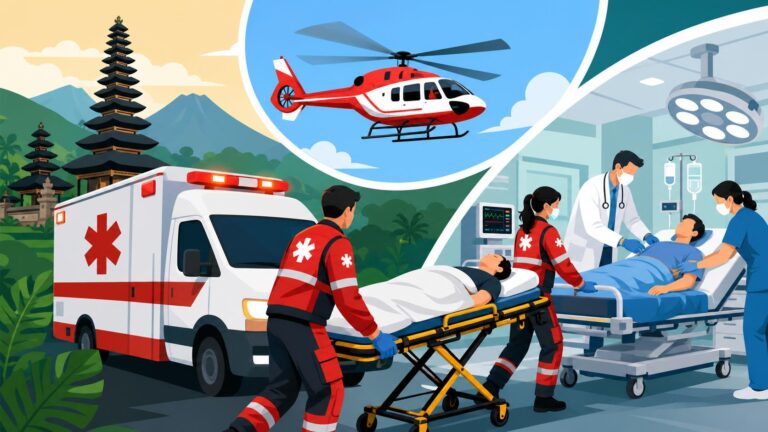
When the ambulance finally pulls up, do not expect a mobile intensive care unit like you might see in Europe or the US. Indonesian ambulances are often categorized into "Transporter" and "Emergency" classes. A Transporter is essentially a van with a stretcher and basic oxygen, while an Emergency vehicle will have more advanced life-support equipment.
The Triage Process on the Street
The paramedics will likely perform a very quick assessment. In many cases, their primary goal is "scoop and run." They want to get you to the Emergency Rooms (UGD) in Indonesia: Triage, Payment Upfront, and Documentation center of the nearest hospital as quickly as possible. Be prepared for a bumpy ride; Indonesian ambulances often have to weave through dense traffic, and while they use sirens, not all drivers yield immediately.
Payment Expectations and Documentation
Here is a hard truth about the Indonesian medical system: you will often be asked about payment or insurance before you are even wheeled into the ER. If you are a KITAS holder, you should have your BPJS card ready, though most private hospitals will prefer to see a credit card or a guarantee of payment from a provider like Cigna Global. If you are in Bali and use a specialized facility, you can find more specific advice in our BIMC Hospital Bali: Services, Costs, and Insurance Direct Billing Options overview.
If you are using the 118 or 119 service, there is theoretically no "upfront" fee for the call itself, but the hospital will certainly bill you for the transport once you arrive. Keeping a small "emergency stash" of Rupiah (IDR 2,000,000 to 5,000,000) in your wallet is a veteran expat move that can smooth over many administrative hurdles.
Private Ambulance Alternatives in Major Cities
For those living in Jakarta or Bali, relying solely on 118 or 119 might not be the most efficient strategy. Many of the top-tier private hospitals operate their own fleet of ambulances which are often better equipped and staffed by English-speaking paramedics. If you are in South Jakarta, for instance, knowing the direct number for SOS Medika Clinics in Cipete and Kuningan: Services for Jakarta Expats can save you significant time.
Why Choose Private Over Public?
The main advantage of a private ambulance is the direct link to the hospital's ER. When you call a private facility, they already have your medical records (if you are a registered patient) and can prepare the specific specialists you need before you even arrive. This is particularly vital for cardiac issues or strokes where every second counts.
In Bali, the situation is similar. Facilities like BIMC and Siloam have localized dispatch centers that understand the specific geography of the island better than a national call center might. You can learn more about these area-specific options in our Bali Healthcare Guide: Hospitals, Clinics, and Emergency Contacts for Residents or the Jakarta Healthcare Guide for Expats: International Clinics and After-Hours Options.
Logistics and Preparation Checklist
Before an emergency happens, you need to "harden" your home and your phone. Do not wait until you are smelling smoke or clutching your chest to figure out how to explain where you live.
- Save Numbers: Store 118, 119, and your nearest private hospital's emergency line in your contacts.
- Prepare the Patokan: Write down your landmark in Indonesian and keep it by the door.
- ID and Insurance: Keep a photocopy of your passport and insurance card in a "go-bag."
- Cash is King: Have at least IDR 3 million in cash easily accessible.
- App Readiness: Download Halodoc or Alodokter. While they are for tele-consults, they can help you find the nearest open pharmacy or clinic in a pinch.
After the crisis has passed, you will likely need to restock your home health supplies. I frequently use iHerb to get high-quality bandages, antiseptic creams, and recovery supplements that are sometimes hard to find in local "apoteks." Maintaining your baseline health makes it much easier for your body to bounce back from a trauma. For a broader look at how the whole machine works, I highly recommend reading Healthcare in Indonesia for Foreign Residents: Complete System Overview (2027) to understand the transition from emergency care to long-term recovery.
Health and Medical Disclaimer
The information provided in this article is for educational and informational purposes only and is not intended as medical advice. Emergency protocols and contact numbers in Indonesia are subject to change by the Ministry of Health and local authorities. Always consult with a qualified healthcare professional or your insurance provider regarding your specific medical needs and coverage. In a life-threatening situation, dial 118 or 119 immediately.