Can You Opt Out of BPJS if You Have International Health Insurance?
You’ve just landed your dream role in Jakarta or Bali, and you’re staring at your first payslip, wondering why there’s a deduction for a local health scheme when you already pay for a top-tier global policy. I remember sitting in my HR manager’s office for an hour trying to explain that my overseas insurance was superior, only to be told it didn't matter. This guide clarifies the legal requirements and explains why you cannot simply opt out of the Indonesian national system.
The Legal Reality of Mandatory Enrollment
In Indonesia, the national health insurance system is known as BPJS Kesehatan. Under the Social Security Law, participation is not a "nice-to-have" option; it is a mandatory requirement for everyone living and working in the country for more than six months. This includes foreigners on a KITAS or KITAP. While it might feel like a redundant expense when you already have a premium policy, the Indonesian government views social security as a collective responsibility rather than an individual choice.
The 6-Month Resident Rule
The law is quite specific: any foreigner who has worked or resided in Indonesia for at least six months must be registered in the national social security program. I have met many expats who thought they could fly under the radar because they were on a digital nomad visa or a remote contract. However, as soon as you transition to a formal work permit or a long-term residency, your name must hit the BPJS database. It is often one of the first things the Ministry of Manpower or Immigration checks during a routine audit of a PT PMA.
For those just starting their journey, you might want to look into Mandatory BPJS Enrollment: Who Must Register and Employer Obligations to understand how your specific visa type interacts with the law. Even if you are an investor or a retiree, if you are a resident, you fall under this umbrella. The system is designed to be inclusive, ensuring that the burden of healthcare costs is shared across the entire population, including the expat community.
Employer Responsibilities and Legal Compliance
If you are employed by an Indonesian company, your employer is legally bound to register you. They cannot "waive" this requirement just because you signed a waiver or showed them your international insurance card. If they fail to register you, they face administrative sanctions, ranging from fines to the revocation of their business licenses. This is why your HR department will be so persistent about getting your documents processed as soon as your KITAS is active.
You can read more about what your company is required to handle in the guide on Employer Responsibilities: What Your PT PMA Must Pay for Your BPJS. For the employer, it is about staying compliant with the law to avoid any friction with the government. For you, it means a small portion of your salary will be deducted every month, usually capped at a very reasonable rate compared to international standards. It is simply part of the "cost of doing business" while living in this beautiful archipelago.
Why International Health Insurance Does Not Replace BPJS
A common point of confusion is the belief that private insurance is a "replacement" for public insurance. In many Western countries, you can opt out of state systems if you prove you have private coverage. In Indonesia, the two systems run in parallel but serve different masters. BPJS is a legal administrative requirement, while international insurance is a lifestyle and quality-of-care choice.
The Legal Obligation vs The Medical Necessity
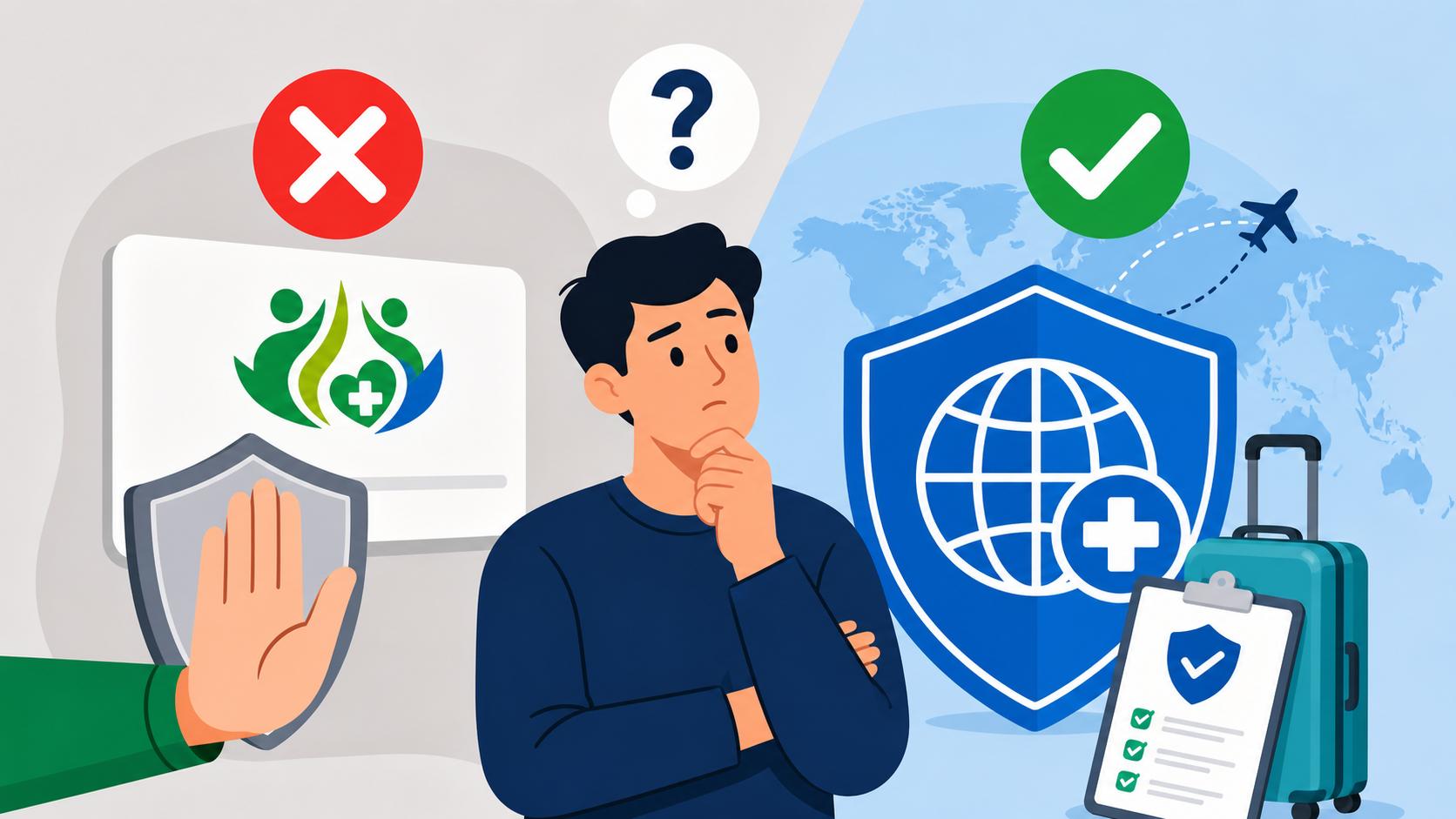
The short answer to the question of whether you can opt out is a firm "no." There is no official mechanism to "opt out" of BPJS based on having private insurance. The Indonesian government does not recognize Cigna Global or any other international provider as a substitute for the national social security mandate. Even if your global policy offers a 1-million-dollar limit and evacuation to Singapore, the local labor laws still require you to be a part of the Indonesian system.
Think of it like a car registration fee. You might have the best private breakdown cover in the world, but you still have to pay the government for the right to have the car on the road. For more details on the nuances of this requirement, check out Do Foreign Residents Have to Join BPJS Kesehatan? Plain-English Answer. Attempting to skip this can lead to issues with your KITAS renewal, as proof of BPJS membership is often a required attachment for stay permit extensions in many regions.
Addressing the Redundancy Frustration
I completely understand the frustration of feeling like you are paying twice. When I first moved here, I felt that the BPJS deduction was just a "tax" because I never intended to use a public hospital. However, the reality is that the systems function differently. BPJS is incredibly useful for chronic, long-term conditions that might hit a limit on a private policy, or for emergencies in remote areas where only a public facility is available.
While you might rely on your premium plan for elective surgeries or international-standard clinics, BPJS acts as your foundational safety net. To understand how to manage your finances around these two costs, see our breakdown on Healthcare Budgeting: BPJS Caps, Out-of-Pocket Costs, and Private Copays. It helps to view BPJS as your contribution to the country’s development, while your private plan is your personal security blanket.
The Practical Benefits of Maintaining Both Policies
Once you accept that you have to pay for both, you can actually start to see how they complement each other. Using a hybrid approach—where you use BPJS for some things and private insurance for others—can actually be quite efficient. For instance, you can use your BPJS card for minor prescriptions and routine check-ups at local clinics, while saving your private insurance for the "big stuff" to keep your claims history clean.
Accessing Specialists and the Referral System
The biggest hurdle for expats using BPJS is the referral system. You can’t just walk into a top-tier hospital and see a specialist; you have to visit your primary clinic (Faskes 1) first. This can be time-consuming and involves a lot of waiting. This is where having a secondary policy like Cigna Global becomes a lifesaver. With a private policy, you bypass the gatekeepers and go straight to the specialist of your choice at a private facility like Siloam or Medistra.
If you want to dive deeper into how this works, read Seeing Specialists in Indonesia: The BPJS Referral System and Private Alternatives. By having both, you have the option to choose. If you have time and want to save money, use the BPJS route. If you are in pain or need immediate expert advice in English, use your private insurance. It gives you the best of both worlds in a healthcare system that can sometimes be hard to navigate.
Bridging the Gap in Quality of Care
Let’s be honest: public hospital wards in Indonesia are not always what an expat is used to. While the medical expertise is often excellent, the facilities can be crowded. The Indonesian government is currently Transitioning to KRIS: What Standard Inpatient Classes Mean for Expats, which aims to standardize the quality of hospital rooms. However, even with these improvements, a private policy will still offer you a private VIP suite, better food, and more flexible visiting hours.
Having a global policy ensures that if you are hospitalized, you are in the most comfortable environment possible. You can read more about this in Public vs Private Healthcare in Indonesia: BPJS Kesehatan and Expat Insurance. Many expats find that Private Health Insurance in Indonesia: Bridging the Gap When BPJS Isn't Enough is the only way to maintain the standard of living they are accustomed to back home.
Cost Analysis and Payroll Realities
The good news is that BPJS is not actually that expensive for most expats. The contribution is based on your monthly salary, but there is a cap. Even if you are earning a high executive salary, you won't be paying a percentage of your entire income.
The Salary Cap and Deductions
The calculation for BPJS is generally 5% of your monthly salary. However, the employer pays 4%, and you only pay 1%. Furthermore, there is a maximum salary limit used for this calculation. Currently, it is around 12 million IDR. This means that if you earn 50 million IDR, your 1% deduction is only calculated on that 12 million cap.
For a detailed look at the numbers, check out Calculating BPJS Contributions: The 12 Million IDR Salary Cap Explained. When you see it broken down, you realize the cost is usually less than the price of a couple of fancy dinners in Seminyak. It’s a small price to pay for staying legally compliant and having a backup medical plan.
Using Your Card Effectively
Once you are registered, you should download the Mobile JKN app. This is your digital ID and allows you to see which clinic you are assigned to. I highly recommend taking the time to learn Using Your BPJS Card (Kartu JKN): How to Register and Book at Local Faskes. Even if you never plan to use it for a major surgery, knowing how to book an appointment for a quick flu check or a routine lab test can save you a lot of money in the long run.
| Feature | BPJS Kesehatan (Public) | International Health Insurance (Private) |
|---|---|---|
| Requirement | Mandatory for 6+ month residents | Optional but highly recommended |
| Referrals | Must start at Faskes 1 primary clinic | Direct access to specialists |
| Room Class | Standardized (KRIS) wards | Private / VIP suites |
| Network | Nationwide public & select private | Global coverage (often including Singapore) |
| Cost | Fixed % of salary (capped) | Premium based on age and history |
| Medication | Formularium Nasional (Generic) | Brand-name & imported options |
Managing Your Health Beyond the Hospital
Beyond just insurance, living in Indonesia requires a proactive approach to wellness. The tropical climate can be tough on the system, and sometimes you need things that aren't easily found in a local "Apotek."
Sourcing Supplements and Specialty Items
While BPJS and private insurance cover your medical bills, they don't usually cover your daily vitamins or specific health foods. For those items, I always turn to iHerb. It is often much cheaper to order high-quality supplements from them and have them shipped to Indonesia than to try and find the same brands in a local mall. Just keep an eye on the import limits to avoid high customs duties!
Global Peace of Mind
If you travel frequently within Southeast Asia, having a policy like Cigna Global is indispensable. BPJS only works within the borders of Indonesia. If you take a weekend trip to Singapore or Thailand and have a medical emergency, your BPJS card is useless. This is where your international insurance really earns its keep, providing coverage that follows you across borders and ensuring you get the same level of care regardless of where you are.
Final Thoughts on the Opt-Out Question
While the dream of "opting out" of BPJS is a common one among newcomers, the reality of living in Indonesia involves embracing the local systems. It is not just about the healthcare—it is about being a legal, responsible resident. By maintaining your BPJS for compliance and emergency backup, and keeping your international health insurance for comfort and specialized care, you are setting yourself up for a stress-free life in the tropics.
I’ve found that once you stop fighting the system and just treat the BPJS deduction as a minor administrative tax, life becomes much easier. You get your KITAS renewed without a hitch, your employer stays happy, and you have the ultimate peace of mind knowing you are covered by two different layers of protection.
Disclaimer
The information provided in this article is for general informational purposes only and does not constitute legal or financial advice. Regulations regarding BPJS and immigration in Indonesia are subject to frequent change. Always consult with a qualified legal professional or your company’s HR department to ensure you are meeting the most current requirements for your specific situation.