Healthcare Considerations for Retirees on the Second Home Visa
Landing in Indonesia with the new Second Home Visa feels like a victory after navigating the IDR 2 billion deposit requirement, but the real challenge begins when you step into a local clinic for the first time. I remember the panic of my first major health scare here, realizing that a premium visa doesn't automatically grant premium medical access. This guide solves the confusion around mandatory insurance, private gaps, and medical quality for long-term retirees.
Understanding the Second Home Visa Healthcare Landscape
The Second Home Visa is a game-changer for those with significant savings, but it is important to remember that Indonesian immigration and the Ministry of Health operate in different silos. Having the right to live here for 10 years does not mean the government has pre-arranged your medical care. As a retiree, your health is your most significant liability and your most important investment.
One of the first questions I always get from newcomers is whether they are legally required to join the national health system. The short answer is yes. Anyone staying on a long-term stay permit, including those on the Second Home Visa, is technically required to participate in the national social security program. You should review the Healthcare in Indonesia for Foreign Residents: Complete System Overview (2027) to understand how the bureaucracy handles foreign residents. While the government is still streamlining how "non-working" retirees pay into the system without a traditional employer, having a BPJS card is increasingly becoming a prerequisite for various administrative renewals.
However, relying solely on public coverage as a retiree can be a frustrating experience. The system is designed for the masses, and as a foreign resident, you may find the wait times and the referral loops exhausting. Understanding the distinction between Public vs Private Healthcare in Indonesia: BPJS Kesehatan and Expat Insurance is the first step in building a realistic retirement plan. Most retirees I know use the public system as a "back pocket" emergency option while relying on private international policies for their day-to-day needs.
The Reality of Standardized Inpatient Classes
Indonesia is currently moving away from the old three-class system for hospital stays and implementing KRIS (Kelas Rawat Inap Standar). For a retiree who might have been expecting a private VIP suite under the old "Class 1" system, this transition can be a bit of a shock. Transitioning to KRIS: What Standard Inpatient Classes Mean for Expats explains that the goal is to provide a uniform standard of care, but for many Western retirees, the lack of privacy in a standard ward can be a dealbreaker during a long recovery.
The Bureaucracy of Medical Records
Another hurdle you’ll face is the fragmentation of medical records. In many Western countries, your history follows you digitally. In Indonesia, you are often the primary keeper of your own records. If you are managing chronic conditions, you need to be meticulous. I’ve spent countless hours in "Rumah Sakit" (hospital) administrative offices trying to get copies of my own scans. Always ask for physical copies and digital versions of every lab result or X-ray you receive locally.
Private Health Insurance Bridging the Gaps
Because the local system can be unpredictable, especially in more remote retirement hubs like North Bali or parts of Lombok, private international insurance is not just a luxury; it is a necessity. High-quality providers like Cigna Global offer specific modules tailored to seniors that include out-of-patient care and, crucially, international medical evacuation. When you are 70 years old and facing a complex neurological or cardiac event, the ability to be airlifted to Singapore or back to your home country is the ultimate peace of mind.
Most retirees find that Private Health Insurance in Indonesia: Bridging the Gap When BPJS Isn't Enough is the most effective way to navigate the local healthcare maze. Private insurance allows you to bypass the primary "Puskesmas" (community clinic) and go directly to international-standard hospitals. This saves you from the "referral ladder" that often characterizes the public system, where you must visit a local clinic before being allowed to see a specialist at a hospital.
Pre-existing Conditions and Age Limits
The biggest frustration for retirees moving on the Second Home Visa is the "pre-existing condition" clause. Many international insurers are hesitant to take on new clients over the age of 75, or they will exclude the very conditions you need coverage for. This is why it is vital to secure your global policy the moment you receive your visa, or even before you arrive. If you wait until you are already settled in Bali or Manado, you might find yourself "uninsurable" in the eyes of many providers.
Understanding Direct Billing vs Reimbursement
Nothing ruins a quiet retirement faster than a massive, unexpected hospital bill that you have to pay upfront in cash. Many local hospitals in Indonesia will demand a significant "DP" (down payment) before admitting you, even in an emergency. Choosing a provider like Cigna Global is advantageous because they have established direct-billing relationships with major hospital chains like Siloam and BIMC. This means the hospital coordinates directly with the insurer, sparing you the stress of swipe-limit anxiety on your credit card while you are in a hospital gown.
| Healthcare Aspect | BPJS Kesehatan (Public) | International Private (e.g., Cigna Global) |
|---|---|---|
| Primary Access | Local Puskesmas / Primary Clinic | Direct Specialist Access |
| Ward Type | KRIS (Standardized Wards) | Private / VIP Room Options |
| Language | Primarily Bahasa Indonesia | English-Speaking Staff / Translators |
| Coverage Area | Indonesia Only | Worldwide (Excl./Incl. USA) |
| Wait Times | Can be long (hours to days) | Minimal to Same-Day |
| Medevac | Not included | Included in Premium Tiers |
Medical Facilities and Quality of Care for Retirees
Your experience with healthcare in Indonesia will vary wildly depending on where you choose to live. If you are retiring in South Jakarta, you have access to some of the best private facilities in Southeast Asia. If you are in a remote village in Sumba, the nearest "UGD" (Emergency Room) might be a three-hour drive away.
For those on the Second Home Visa, Bali remains the most popular choice. Facilities like BIMC Hospital Bali: Services, Costs, and Insurance Direct Billing Options have built their entire business model around the needs of the expat and retiree community. They understand the "Western" expectation of bedside manner and clinical transparency. If you have a specific health concern, it is worth Finding English-Speaking Doctors in Indonesia: Reliable Directories and Vetting before you commit to a specific neighborhood. Living ten minutes away from a reputable hospital can literally be a lifesaver.
Accessing Chronic Medication and Pharmacy Needs
Managing regular prescriptions is another area where retirees often feel the "culture shock." Many medications that are strictly controlled in the US or Europe are available over-the-counter here, while other common medications (like certain ADHD or high-end pain meds) are strictly prohibited or difficult to find.
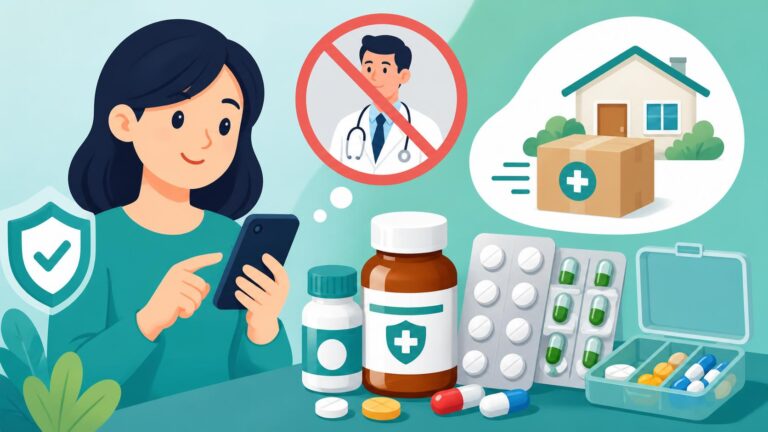
I’ve found that the Apotek Guide: Prescription Workflow, Refills, and Communicating with Pharmacists is essential reading for anyone taking daily maintenance drugs. You will likely become a regular at "Apotek Kimia Farma" or "Apotek K-24." For supplements, high-quality vitamins, or specialized health foods that haven't quite made it to the local Indonesian supermarket shelves yet, I frequently use iHerb. They ship reliably to Indonesia, though you must be aware of the customs limits—keep your orders under the $500 threshold and ensure your IMEI is registered if you're using their app on a foreign phone to avoid connectivity issues. Using iHerb allows you to maintain the specific brand consistency you had back home, which is a huge relief for those with sensitive health regimens.
Specialized Care and Geriatrics
Geriatric medicine as a specialized field is still growing in Indonesia. While nursing care is incredibly affordable—you can hire a full-time, live-in nurse for a fraction of the cost in Sydney or London—the clinical oversight for complex aging issues like dementia or advanced oncology is concentrated in Jakarta and Bali. If you require highly specialized ongoing treatment, you must verify that the local "Spesialis" actually exists in your chosen city.
Emergency Protocols and Evacuation Realities
This is the "difficult conversation" every Second Home Visa holder needs to have with their family. In a life-threatening emergency, the "Golden Hour" is often compromised by Indonesia’s infamous "macet" (traffic). If you are in Jakarta, an ambulance might take an hour to move five kilometers. In Bali, the narrow lanes of Canggu or Ubud can be just as restrictive.
You must have a plan for Emergency Medical Care in Indonesia: Ambulances, ERs, and Evacuation Protocols. Do not assume that calling 118/119 will result in a rapid response. Most veteran expats keep the direct emergency numbers of private hospitals like Siloam or SOS Medika programmed into their phones.
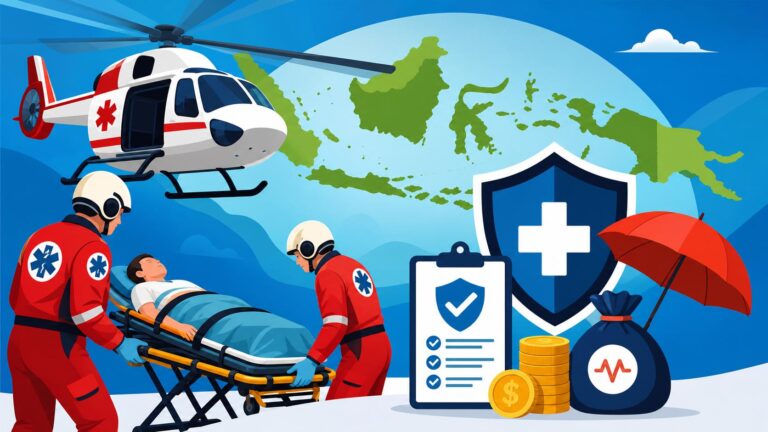
Furthermore, you need to understand the nuances of Medical Evacuation (Medevac) Services in Indonesia: Costs and Insurance Coverage. If a surgery is too complex for local surgeons, you will likely want to be moved to Singapore. Without a private policy that covers medevac, a private jet evacuation can cost upwards of $40,000 USD, payable upfront. This is where your IDR 2 billion visa deposit can disappear in a single afternoon if you aren't properly insured.
Setting Up Your Home for Health
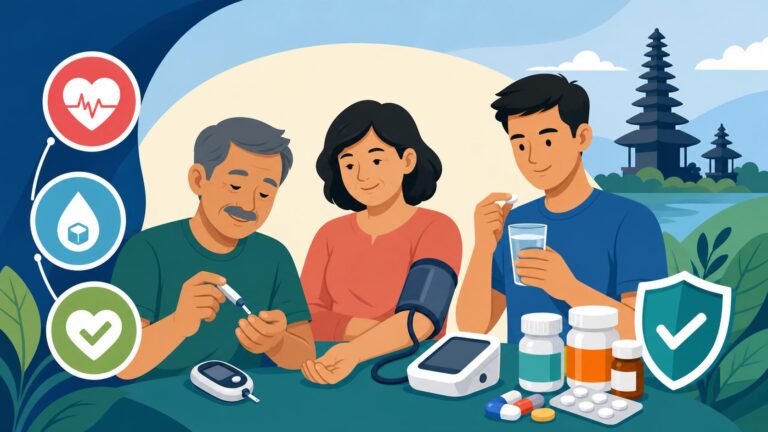
Retiring in a tropical environment brings unique challenges. High humidity leads to mold, which can exacerbate respiratory issues. Many retirees invest in high-end air purifiers and water filtration systems to avoid the "Bali Belly" or long-term heavy metal exposure from bore water. I always suggest keeping a well-stocked "emergency kit" at home, including basic diagnostics like a blood pressure cuff and a pulse oximeter. For high-quality first aid supplies and natural wellness products that are hard to find in local "warungs," iHerb remains my go-to resource for maintaining a healthy home environment.
The Role of Domestic Staff in Health
One of the perks of the Second Home Visa is the ability to hire domestic help. For a retiree, your "Pembantu" or "Sopir" (driver) often becomes your first line of medical defense. They are the ones who will notice if you haven't come out of your room, or they will be the ones navigating the language barrier with the ambulance driver. It is worth paying for your staff to take a basic first-aid course. Treating your staff well isn't just about being a good person; in a medical emergency, their local knowledge and loyalty are more valuable than any insurance card.
Final Preparations for a Healthy Retirement
Retiring in Indonesia is a dream for many, but it requires a shift in mindset from "the system will take care of me" to "I am responsible for my own care." The Second Home Visa provides the legal bridge to stay, but you must build the medical bridge yourself.
Start by securing a policy from a global provider like Cigna Global that understands the Indonesian context. Next, familiarize yourself with the top-tier hospitals in your specific region and build a relationship with a local GP who speaks your language. Finally, ensure you have a reliable way to get your maintenance medications and supplements, whether through a local "Apotek" or via iHerb. If you take these steps early, your retirement will be defined by the sunsets and the culture, not by the stress of navigating a hospital corridor in a crisis.
Medical Disclaimer
The information provided in this article is for informational purposes only and does not constitute professional medical or legal advice. Healthcare regulations and visa requirements in Indonesia are subject to frequent change. Always consult with a qualified medical professional and a licensed immigration consultant regarding your specific health needs and legal status. Personal experiences shared are anecdotal and may not reflect the current reality at every medical facility.