Using Your BPJS Card (Kartu JKN): How to Register and Book at Local Faskes
The moment you walk into a local Indonesian health center with your BPJS card, you’ll likely feel that familiar wave of expat confusion—rows of plastic chairs, cryptic ticket numbers, and a language barrier that feels ten feet tall. I remember my first time in a crowded Puskesmas in Denpasar; I stood there holding my phone, wondering if I was even in the right building. This guide breaks down exactly how to use your Kartu JKN so you don't have to wander aimlessly like I did.
Understanding Your Kartu JKN and the Mobile JKN App
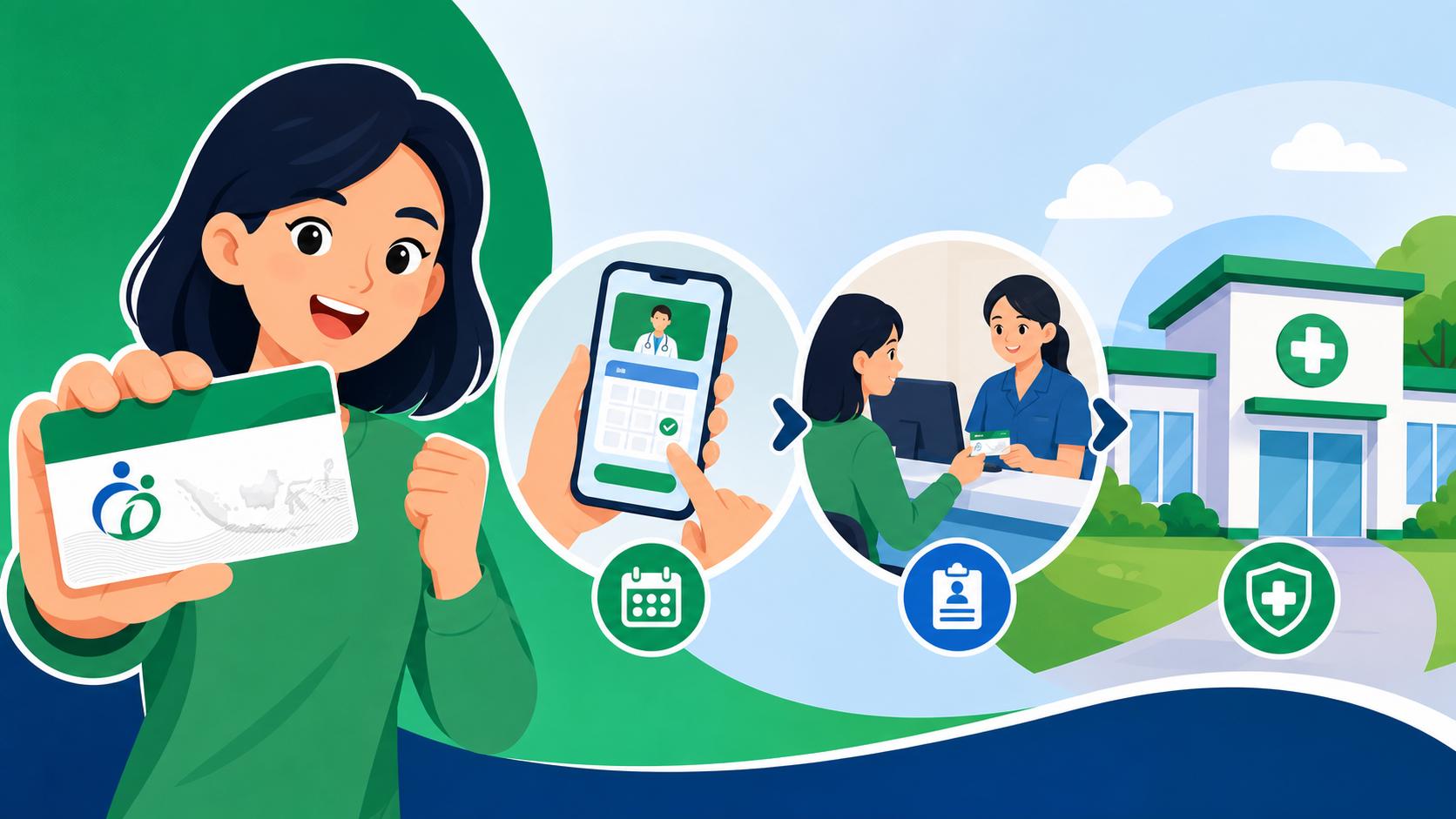
In the old days, everyone carried a physical green-and-white plastic card known as the Kartu JKN (Jaminan Kesehatan Nasional). If you’ve just received your KITAS and completed your BPJS Kesehatan for Expats: Registration, Costs, and the New KRIS System, you might be wondering where your physical card is. The reality is that Indonesia has gone almost entirely digital. While you can sometimes request a physical card at the BPJS office (Kantor Cabang), most health facilities now expect you to show your digital ID via the Mobile JKN app or simply provide your NIK (National Identification Number) from your KTP-el or SKTT.
The Shift from Physical Cards to Digital Identity
The transition to a digital-first system was a headache for many of us who prefer having something tangible in our wallets. However, the convenience of the digital "Kartu KIS" (Kartu Indonesia Sehat) inside the app cannot be overstated. When you arrive at a clinic, the registration desk will often have a QR code. You scan this code using the app to "check-in," which confirms your eligibility and active status. If you are still waiting for a physical card, don't panic. As long as your employer has registered you or you have paid your first independent premium, your NIK is your key to the kingdom.
I’ve found that keeping a screenshot of my digital card in a dedicated "Health" folder on my phone is a lifesaver. Internet connections in some older Puskesmas buildings can be spotty, and the last thing you want is to be standing at the front of a thirty-person queue while your app refuses to load. If the system is down, the staff can manually input your NIK into their "P-Care" system to verify your coverage. This is why having your Lost Your Insurance Proof? Using Your NIK/KTP for Medical Access knowledge is vital for every resident.
Setting Up the Mobile JKN App for the First Time
Registering the app is often the first "boss fight" for foreigners. You need an Indonesian phone number that matches the one you used during your BPJS registration. The app will send an OTP (One-Time Password), and if your number has changed, you’ll have to visit a BPJS office to update it before you can log in. Once inside, the app offers a range of services, from checking your premium payment history to changing your registered clinic.
For those of us who aren't fluent in Bahasa Indonesia, the interface can be daunting. You’ll want to look for the "Kartu" icon to see your digital ID and the "Pendaftaran Pelayanan" icon to book appointments. I highly recommend spending an hour clicking through the menus while you're at home and relaxed. If you struggle with the technicalities, you can always refer to Using the Mobile JKN App: Registration, Checking Status, and Changing Clinics for a more granular walkthrough of the button-by-button process.
Choosing and Registering Your Primary Clinic (Faskes Tingkat 1)
Every BPJS participant is assigned to a "Faskes Tingkat 1" (First-Level Health Facility). This is your gatekeeper. You cannot go directly to a major hospital for a non-emergency issue and expect BPJS to cover it; you must start at your Faskes 1. For most expats, this is either a public Puskesmas (Pusat Kesehatan Masyarakat) or a private clinic (Klinik Pratama) that has a contract with BPJS.
Puskesmas vs. Private Clinics (Klinik Pratama)
The choice between a public Puskesmas and a private Klinik Pratama is a significant one. Puskesmas are the backbone of Indonesian community health. They are usually larger, have more doctors on-site, and often include basic dental and lab services. However, they are also incredibly busy. You might find yourself sharing a waiting area with dozens of local families, which is a great way to integrate but can be overwhelming if you are feeling unwell.
Private clinics, on the other hand, often feel a bit more familiar to Westerners. They are usually smaller, located in shop-lots (ruko), and might have slightly shorter wait times. However, their facilities are often more limited than a Puskesmas. If your private clinic doesn't have a lab, they’ll have to send you elsewhere for blood tests, adding another step to your journey. I personally prefer a private clinic in a quieter neighborhood, even if I have to drive a bit further, just to avoid the 7 AM rush at the local Puskesmas. You can weigh these options further by reading Choosing a Primary Clinic (Faskes Tingkat 1) vs Going Direct to a Hospital.
| Feature | Puskesmas (Public) | Klinik Pratama (Private) |
|---|---|---|
| Wait Times | Generally longer (1-3 hours) | Often shorter (30-60 mins) |
| Facilities | Often include basic labs & dental | Limited; often refer out for labs |
| Staffing | Multiple doctors & midwives | Usually 1-2 doctors on shift |
| Atmosphere | Busy, community-focused | Quiet, clinical |
| Operating Hours | Mostly morning to afternoon | Often open until late evening |
How to Change Your Assigned Faskes via the App
When you first get registered, the system might automatically assign you to the Puskesmas closest to your recorded address. This isn't always the best fit. I once lived in South Jakarta but was assigned to a clinic in East Jakarta because of an old administrative error. Thankfully, changing your Faskes is now possible through the Mobile JKN app without having to talk to a single human.
There is one major caveat: you can only change your Faskes once every three months. To do this, go to "Perubahan Data Peserta" in the app, select your name, and choose "Fasilitas Kesehatan Tingkat 1." You can then search for a new clinic by district (kecamatan). I recommend visiting a few clinics in person first to see if they have English-speaking staff or if the facility looks well-maintained. If you find the process confusing, check out the Mandatory BPJS Enrollment: Who Must Register and Employer Obligations guide to ensure your records are up to date.
Booking Your First Appointment at a Local Faskes
The "old way" of using BPJS involved waking up at 5 AM, standing in line to get a paper ticket, and waiting half the day. While that still happens in some rural areas, most urban centers now utilize the "Antrean Online" (Online Queue) system. This has been a game-changer for those of us trying to balance a job with a doctor's visit.
Using the Online Queue (Antrean Online) System
Within the Mobile JKN app, you can select "Pendaftaran Pelayanan" and choose your Faskes 1. You then pick the doctor or clinic type (General, Dental, etc.) and the date. The system will give you a "Nomor Antrean" (Queue Number) and an estimated time of arrival. It is vital to show up at least 15 to 30 minutes before your estimated slot. When you arrive, you’ll usually find a kiosk or a staff member at a desk. You must "Check-In" to let the system know you are physically present.
I’ve learned the hard way that the "estimated time" is exactly that—an estimate. If the doctor gets called into an emergency or if a previous patient has a complex issue, the queue will stall. However, the app will update in real-time to show you which number is currently being called. This allows you to wait in a nearby coffee shop rather than the plastic chairs of the clinic. For more tips on navigating these digital tools, refer to How to Book a Doctor Appointment via Halodoc or Alodokter Apps, as many private clinics use these as secondary booking platforms.
Walk-in Realities and Jam Karet (Rubber Time)
Despite the digital advancements, "Jam Karet" (rubber time) remains a factor. You might have an appointment for 10:00 AM, but the doctor might not arrive until 10:30 AM. It’s important to stay patient and empathetic. The staff are often overworked and doing their best with limited resources. If you are a walk-in patient without an online booking, you will almost always be placed at the back of the line, which can result in a four-hour wait.
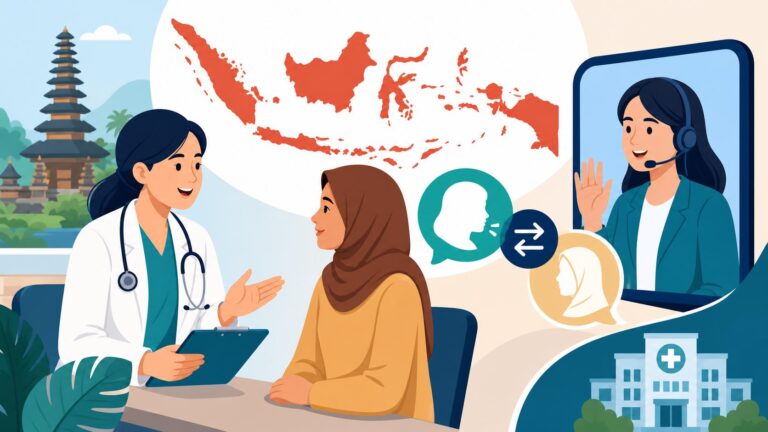
If you don't speak much Bahasa Indonesia, this is the stage where things get tricky. When your name is called over the loudspeaker, it might be mispronounced, or the staff might use a title like "Bapak" or "Ibu." I always keep my app open to the "Antrean" screen so I can show it to the nurse if I’m unsure. If you're feeling anxious about the language barrier, it's worth reading Finding English-Speaking Doctors in Indonesia: Reliable Directories and Vetting to find clinics that are known for being expat-friendly.
The Referral System: Moving from Faskes 1 to Specialists
One of the biggest frustrations for expats is the inability to go straight to a specialist for chronic issues. If you have a persistent skin rash or a heart condition, you still have to visit your Faskes 1 general practitioner (GP) first. This GP will assess you and decide if a "Rujukan" (Referral) is necessary.
Obtaining a Rujukan (Referral Letter)
If the GP agrees that you need specialized care, they will issue a digital referral. You can usually choose which hospital you want to go to, provided that the hospital has a contract with BPJS and has an available "quota" for that specialty. The referral is typically valid for 90 days and allows for multiple visits to the same specialist for that specific issue.
When I needed to see an ENT specialist in Jakarta, my GP at the local clinic was very helpful, but I had to be firm about why my issue couldn't be solved with basic antibiotics. It helps to bring any previous medical records or scans from your home country. Once the digital referral is in the system, you can book your specialist appointment through the Mobile JKN app just like you did for the clinic. For a deeper dive into this hierarchy, see Seeing Specialists in Indonesia: The BPJS Referral System and Private Alternatives.
Emergency Exceptions: When You Can Skip the Referral
There is one major exception to the referral rule: life-threatening emergencies. If you are in an accident or have a sudden, severe medical crisis (like a heart attack or a high-grade fever in a child), you can go directly to the Emergency Room (UGD – Unit Gawat Darurat) of any hospital that accepts BPJS. You do not need a referral letter in these cases. The hospital's medical team will determine if it qualifies as a "True Emergency" under BPJS rules.
Be careful, though. If the hospital deems your condition "non-emergency" (for example, a mild stomach ache that could have waited for a clinic), they might treat you but refuse to bill BPJS, leaving you with a private bill. This is a common point of contention for foreigners. Understanding the nuances of Emergency Medical Care in Indonesia: Ambulances, ERs, and Evacuation Protocols can save you a lot of money and stress during a crisis.
Practical Comparisons: BPJS vs. Private Healthcare Logistics
While BPJS is a fantastic safety net, it isn't always the fastest or most comfortable experience. Many of us choose to use BPJS for routine things but keep a private policy like Cigna Global for more serious procedures or when we want a higher level of comfort.
Wait Times and Facility Standards
The most glaring difference between using your BPJS card and using private insurance is the wait time. In a private hospital like Siloam or BIMC, you can often see a specialist within 20 minutes of your appointment time. With BPJS, even with a referral, you might spend half a day at the hospital for a 10-minute consultation. The facilities at BPJS-heavy hospitals are functional but often lack the "hotel-like" feel of premium private wings.
Moreover, the transition to the KRIS (Kalas Rawat Inap Standar) system means that inpatient wards are becoming more standardized. You won't necessarily get a private room just because you are an expat. If you value privacy and want to ensure you have a single-occupancy room, having a secondary private insurance plan is almost essential. This "bridge" is explained thoroughly in Private Health Insurance in Indonesia: Bridging the Gap When BPJS Isn't Enough.
Cost-Benefit Analysis for Expats
For many, the cost of BPJS is negligible compared to international plans. If you are employed by a PT PMA, your contribution is capped and deducted from your salary, making it a very affordable "base layer." However, BPJS does not cover everything. Certain "lifestyle" drugs, high-end prosthetics, or specific brands of medication might not be on the formulary.
This is where I often turn to Cigna Global to ensure that if I ever need a complex surgery, I have the option to be treated in Singapore or a top-tier private room in Jakarta without worrying about the bill. Additionally, for daily wellness and supplements that BPJS definitely won't cover, I usually order from iHerb to keep my health in check. You can find more about budgeting these costs in Healthcare Budgeting: BPJS Caps, Out-of-Pocket Costs, and Private Copays.
Managing Your Healthcare Routine as a Resident
Once you’ve mastered the art of the clinic visit, you need to manage your ongoing care. This involves getting prescriptions filled and knowing how to handle chronic conditions within the local system.
Medication Refills and Pharmacies
If your Faskes 1 doctor prescribes medication, you usually pick it up at the "Apotek" (Pharmacy) attached to the clinic or a designated partner pharmacy. Under BPJS, the medicine is free, but you are restricted to the generic versions listed in the National Formulary. These are effective, but if you have a specific brand preference, you will likely have to pay out of pocket at a commercial pharmacy like Kimia Farma or Guardian.
For chronic conditions like hypertension or diabetes, you generally need to visit your Faskes 1 every month to get a new prescription. The system doesn't usually allow for 6-month refills in one go. If you are bringing medication from home and need to find the local equivalent, the Apotek Guide: Prescription Workflow, Refills, and Communicating with Pharmacists is an invaluable resource for navigating the shelves.
Health Maintenance and Language Barriers
Long-term health in Indonesia requires a proactive approach. Beyond the doctor's office, you need to think about tropical disease prevention and general wellness. I always keep a stock of basic supplies from iHerb—things like high-quality probiotics and electrolytes—because "Bali Belly" is a rite of passage for almost every resident at some point.
The language barrier will always be the biggest hurdle. Even if your doctor speaks English, the administrative staff and nurses at the Faskes 1 might not. Learning basic medical terms in Bahasa Indonesia—like sakit (pain), demam (fever), and resep (prescription)—will go a long way. If you’re living in a major hub, check out the Jakarta Healthcare Guide for Expats: International Clinics and After-Hours Options to see which facilities have the best English support.
Important Disclaimer
The information provided in this guide is for educational and informational purposes only and does not constitute professional medical or legal advice. While every effort has been made to ensure the accuracy of the details regarding the BPJS system in Indonesia, regulations and procedures can change frequently. Always consult with official BPJS Kesehatan representatives, qualified medical professionals, or legal experts regarding your specific healthcare needs and insurance obligations in Indonesia. The author and publisher are not responsible for any actions taken based on the content of this article.