QRIS Payments Without an Indonesian Bank Account: Is It Possible?
Standing at a small warung in Canggu, I remember the sinking feeling of holding a crisp 100k note only to see a "QRIS Only" sign. I've spent years navigating the digital shift in Indonesia, and I know how isolating it feels when your foreign card is useless. This guide explains exactly how to use QRIS without a local bank account.
Understanding the QRIS Ecosystem and the Expat Barrier
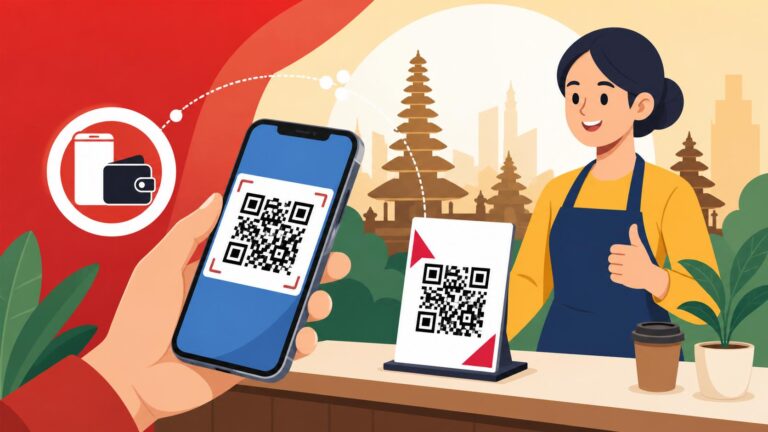
If you have spent more than ten minutes in a major Indonesian city recently, you have seen the ubiquitous square barcode sitting on every checkout counter. QRIS, which stands for Quick Response Code Indonesian Standard, was designed to unify all digital payment providers into a single, seamless system. For locals, it is a dream. For those of us arriving from abroad, it can feel like a high-tech wall. The system was fundamentally built to link Indonesian bank accounts and local e-wallets, often leaving those with international credit cards standing awkwardly at the register.
The frustration is real because the "cashless" movement in Indonesia has moved faster than the banking regulations for foreigners. Many smaller merchants, especially the ones with the best sate or the most unique handicrafts, no longer carry significant amounts of change. They prefer QRIS because the funds settle directly into their digital accounts, reducing the risk of theft or counterfeit notes. When you try to pay with a foreign-issued Visa or Mastercard, the terminal often lacks a traditional card reader, or the transaction fails due to regional "pull" payment restrictions.
Navigating Money in Indonesia for Foreign Residents: Banking, Tax, and Financial Setup (2027) requires understanding that QRIS is a "push" payment. You are the one initiating the transfer from your balance to theirs. This is why a standard credit card, which relies on a merchant "pulling" funds, often cannot bridge the gap. However, as we head into mid-2026, the landscape is shifting, and several reliable workarounds have emerged for the unbanked expat or the short-term tourist.
The ASEAN Cross-Border Shortcut
The most significant breakthrough in the last year has been the expansion of cross-border QRIS linkages. If you are lucky enough to hold a bank account or a digital wallet from specific neighboring countries, you might already have a QRIS-compatible tool in your pocket without realizing it. Indonesia’s central bank (Bank Indonesia) has been aggressively partnering with regional neighbors to make travel more fluid.
Currently, if you have a mobile banking app from Singapore (using NETS), Malaysia (using DuitNow), or Thailand (using PromptPay), you can often scan an Indonesian QRIS code directly. The app handles the currency conversion on the fly, deducting the equivalent amount from your home balance. This is a game-changer for digital nomads who maintain regional hubs. It circumvents the need for a local account entirely.
However, for those from the US, Europe, or Australia, this shortcut isn't yet an option. You are still operating in a system that expects a local footprint. This is where Using QRIS: The Cashless Payment System Revolutionizing Indonesian Commerce becomes a more manual process. You need to "locate" your digital presence within the Indonesian borders by using local e-wallet providers that allow for foreign registration.
E-Wallets as the Gateway for Foreigners
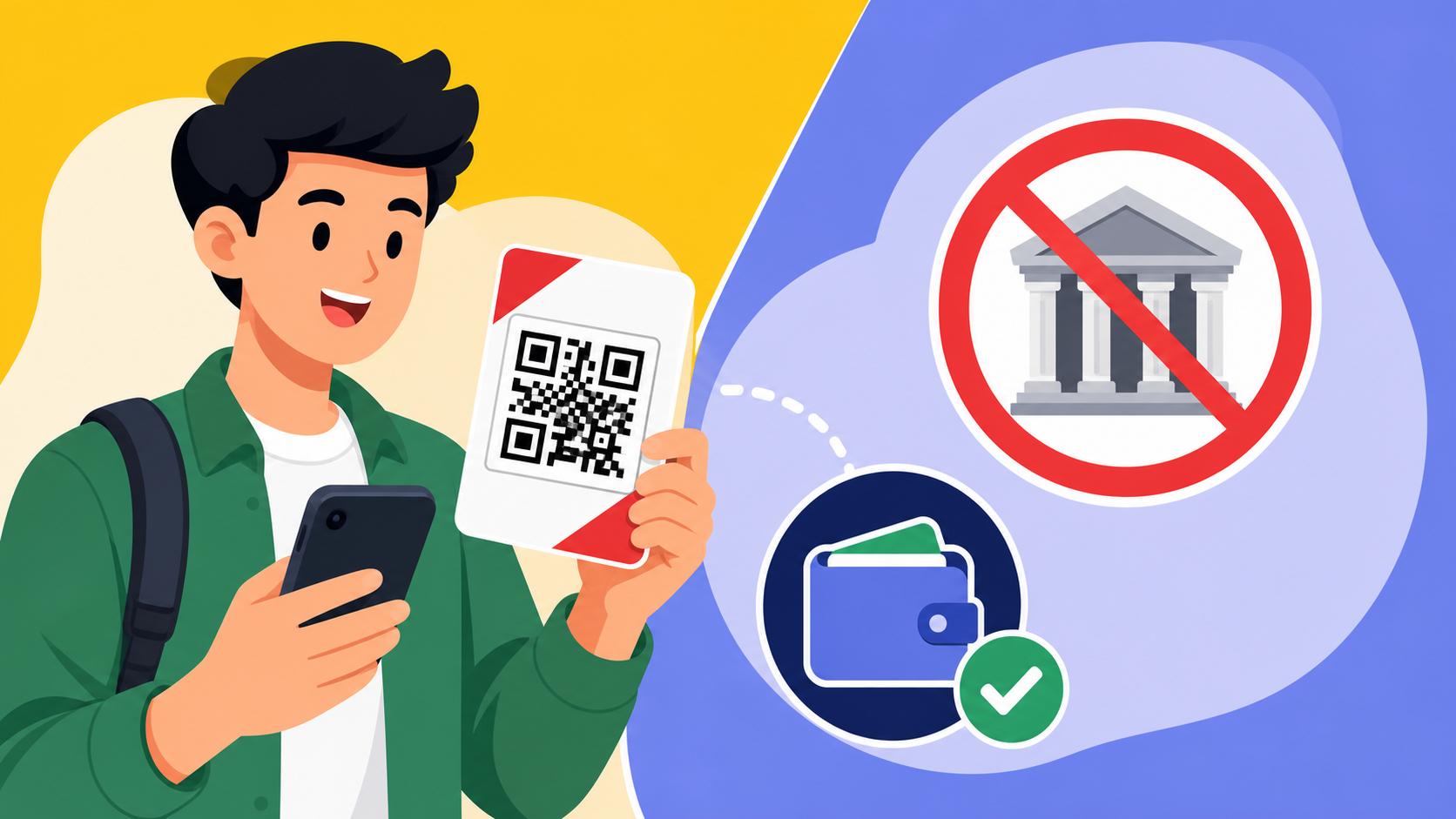
The most realistic way to pay via QRIS without an Indonesian bank account is by using a local e-wallet. The "Big Three" in Indonesia—GoPay, OVO, and Dana—have all made strides in allowing foreigners to register using their international passports. While you won't get a bank account, you get a digital balance that is 100% QRIS-ready.
GoPay and the Gojek Ecosystem
GoPay is perhaps the most accessible for newcomers. Since almost every expat installs the Gojek app for transport and food delivery, the payment infrastructure is already there. You can register with a foreign phone number, though I highly recommend getting a local SIM to avoid SMS verification delays. To use QRIS, you simply tap the "Pay" icon in the app and scan the code.
The challenge is "top-up." Since you don't have a local bank account, you can't just transfer funds from a local ATM. Instead, you can ask a Gojek driver to top you up in exchange for cash, or visit a "Minimarket" like Alfamart or Indomaret. You hand the clerk your cash and your phone number, and they load your balance for a small fee (usually around IDR 2,000). For larger amounts, Upgrading E-Wallets to Premium (GoPay Plus) Using a Foreign Passport is essential, as it raises your balance limit from 2 million to 20 million IDR.
OVO and Grab Integration
OVO operates similarly to GoPay but is integrated with the Grab app. In my experience, OVO can be slightly more temperamental with foreign passport verification, but it is widely accepted. If you frequent malls or larger retail chains, OVO often has better "cashback" deals. Like GoPay, you can top up OVO at Indomaret or through certain "Booth" locations found in major shopping centers.
Dana and Independent QRIS Usage
Dana is a standalone e-wallet that is very popular for bill payments. It is particularly useful if you are staying in a villa and need to manage How to Pay Utilities via M-Banking Apps (BCA Mobile, Livin' by Mandiri) without a full bank account. Dana’s QRIS scanner is robust and works even with slightly damaged or faded QR codes at local stalls.
Funding Your Digital Balance from Abroad
The biggest hurdle is getting your money from your home country into these e-wallets without losing 10% to "hidden" fees or predatory exchange rates. This is where veteran expats use a combination of international fintech and local e-wallets to create a "virtual" banking experience.
Using Wise is the gold standard here. You can use your Wise account to send IDR directly to a GoPay or OVO ID. The fees are transparent and the exchange rate is the mid-market rate. I personally keep my main savings in a high-yield environment and only "drip-feed" my GoPay balance via Wise as needed. This protects your main funds while keeping you "liquid" on the streets of Jakarta or Bali.
For more tech-savvy residents who deal with cryptocurrency, Binance offers a P2P (Peer-to-Peer) marketplace. You can sell USDT or other coins directly to an Indonesian individual who will then transfer the equivalent IDR to your GoPay or OVO balance. This is often the fastest way to get funds if your home bank is giving you trouble with international transfers. However, always ensure you are using a secure connection. I never check my financial apps without NordVPN active, especially when using the "Free Wi-Fi" at a beach club. The risk of packet sniffing on unsecured networks in tourist hubs is a reality we have to live with.
| App Name | Foreigner Friendly? | Best Top-Up Method | Max Balance (Unverified) |
|---|---|---|---|
| GoPay | High | Minimarkets / Drivers / Wise | IDR 2,000,000 |
| OVO | Medium | Minimarket / Mall Booths | IDR 2,000,000 |
| Dana | Medium | Minimarkets / Bluebird Drivers | IDR 2,000,000 |
| Wise | High | Bank Transfer / Debit Card | N/A (Linked Wallet) |
Bridging the Gap with Digital Banks
If you are finding the e-wallet limits too restrictive, you might consider a digital bank that caters to the "KITAS-lite" crowd. While technically a bank account, apps like Jenius or Line Bank sometimes offer easier entry points than the "Big Four" traditional banks. You will still likely need a valid residence permit (KITAS), but for those on long-term remote worker visas, this is the ultimate solution.
If you are on a shorter stay, stick to the e-wallet and Wise combination. It is less bureaucratic and doesn't require a visit to a physical branch. For those managing long-term wealth while living the tropical life, keeping your main investments in a platform like Interactive Brokers while using a local e-wallet for daily coffee runs is the most efficient way to maintain a Cost of Living in Bali 2026: Budgeting for Digital Nomads and Retirees strategy. It separates your "play money" from your "future money."
| Step | Action Item | Why It Matters |
|---|---|---|
| 1 | Get a local SIM card | SMS verification for e-wallets is much more reliable locally. |
| 2 | Download Gojek/Grab | These apps provide the underlying infrastructure for GoPay and OVO. |
| 3 | Use a passport for verification | This increases your daily and monthly spending limits. |
| 4 | Link to Wise | This is the cheapest way to "top up" your IDR balance from your home currency. |
Practical Challenges and Troubleshooting
Even with the right apps, you will encounter glitches. I’ve been in situations where the QRIS code simply won't scan because of poor lighting or a low-resolution printout. Always have a small amount of "emergency cash" tucked into your phone case for these moments. Avoiding Skimming Scams: Safe ATM Practices in Bali Tourist Areas is still a necessary skill, as you will occasionally need to withdraw physical bills to top up your digital wallet at a convenience store.
Another common issue is "Transaction Pending." Sometimes the network is slow, and the merchant doesn't receive a notification immediately. Most seasoned expats know to take a screenshot of the "Success" screen on their phone to show the merchant. Most of the time, this is enough to let you walk away with your Nasi Jinggo while the backend systems catch up.
If you are planning to stay long-term, eventually Opening a Bank Account in Indonesia: Document Checklists (KITAS, NPWP, Passport) will be your best bet. But for the first few months, or for a nomadic lifestyle, the e-wallet loop is a perfectly legal and efficient way to live like a local. It takes about an hour to set up and will save you from the "No Change" argument at the end of every meal.
Navigating the Future of Digital Payments
The trend is clear: Indonesia wants to be a cashless society. By mid-2026, we are seeing even more integration with global payment rails. Some high-end merchants have started testing direct QRIS-to-Credit-Card bridges, but the rollout is slow and inconsistent. Relying on these "new" features is a gamble; relying on a pre-loaded GoPay or OVO balance is a sure thing.
Include this in your Financial Checklist for Your First 30 Days in Indonesia: do not wait until you are at the front of a long queue to find out if your app works. Test it at a quiet Indomaret first. Buy a bottle of water, scan the QRIS, and see how the flow feels. Once you have successfully bridged your international funds into the local digital ecosystem, the country opens up in a whole new way. You can pay for a motorbike taxi, a boutique dinner, or a laundry service without ever touching a dirty banknote.
Living here taught me that "patience" is a currency just as valuable as Rupiah. The system might be complex, but once you master the e-wallet workaround, you’ve conquered one of the biggest hurdles of the modern Indonesian expat experience. You are no longer just a "turis" with a credit card; you are a resident with a scanner.
Disclaimer
The information provided in this guide is for informational purposes only and does not constitute financial, legal, or immigration advice. Regulations regarding digital payments, banking, and visa requirements in Indonesia change frequently. Always verify the latest rules with official government sources or qualified professionals before making financial commitments. Neither the author nor this publication is responsible for any losses incurred through the use of third-party applications or financial services mentioned herein.