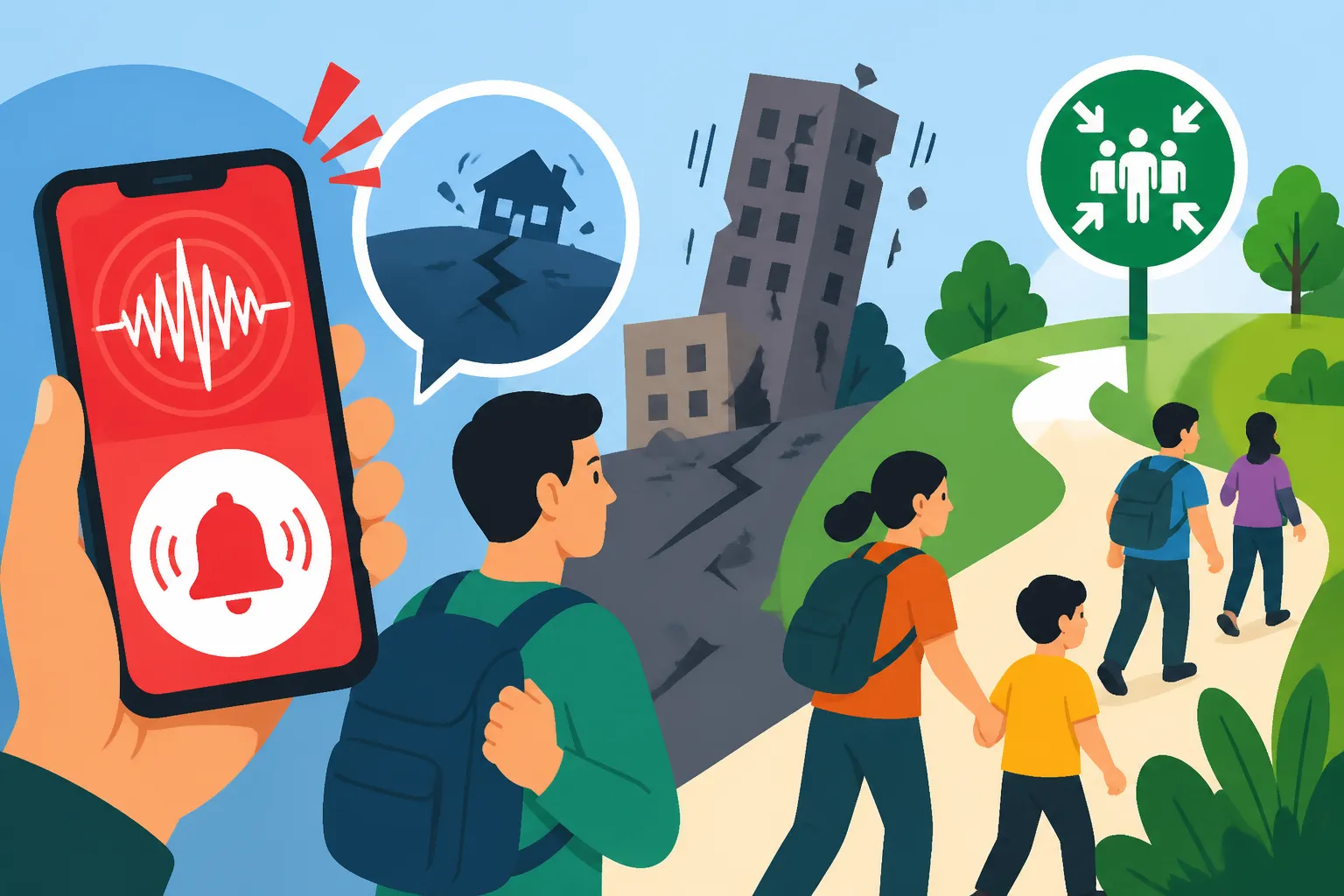
Earthquake Preparedness: Alerts (BMKG App) and Evacuation Plans
You are sitting at your desk in South Jakarta or a cafe in Canggu when the floor suddenly becomes liquid, and the windows start to rattle with a bone-deep vibration. I remember my first 6.0 magnitude tremor in Lombok; the sheer helplessness I felt while frozen in a doorway was a wake-up call that "winging it" is not a strategy in the Ring of Fire. This guide provides a comprehensive roadmap for earthquake preparedness, from mastering the BMKG alert system to building an evacuation plan that actually works in the Indonesian context.
Understanding the Ring of Fire Reality for Expats
Living in Indonesia means accepting that the ground beneath you is rarely truly still. The archipelago sits at the meeting point of several major tectonic plates, making it one of the most seismically active regions on Earth. For many of us coming from more stable geologies, the first few "lindu" (earthquakes) can be psychologically jarring, often leading to a sense of hyper-vigilance or, conversely, a dangerous level of complacency after a few minor shakes.
Why Indonesia is Geologically Unique
Indonesia's position is a result of the subduction of the Indo-Australian Plate beneath the Eurasian Plate. This doesn't just create mountains; it creates deep-sea trenches and a string of over 100 active volcanoes. When you are scouting for a home in Bali Neighborhoods: Seminyak, Canggu, Sanur, Ubud, and the Bukit, you aren't just looking at the view; you are positioning yourself within a complex network of fault lines. Understanding that tremors are a natural part of the landscape is the first step toward effective preparation. It’s not a matter of if a shake will happen, but when, and how large it will be.
The geological diversity also means that the impact of an earthquake varies wildly depending on where you are. In the sediment-heavy basins of North Jakarta, the "liquefaction" risk—where solid ground behaves like a liquid—is a genuine concern. Meanwhile, in the limestone cliffs of the Bukit, the risk might be more related to landslides or rockfalls. This regional variance is why a "one size fits all" plan from a generic manual won't suffice. You need to understand the specific ground conditions of your immediate neighborhood to know whether your primary risk is structural collapse or secondary effects like tsunamis.
Living with Constant Low-Level Tremors
After a year or two of living here, you will notice that the locals often don't even look up from their "nasi jinggo" during a 4.0 magnitude shake. This cultural nonchalance can be infectious, but it’s important to distinguish between "not panicking" and "not being prepared." Small tremors are daily occurrences in Indonesia, often too small to be felt but recorded by sensors. These minor events are helpful reminders to check your shelving and ensure that heavy items aren't perched precariously above your bed.
I’ve found that the best way to manage the anxiety of living in a seismic zone is to integrate preparedness into your daily routine. This means knowing which sounds are "normal" for your villa—the creak of the roof beams, the rattling of the sliding glass doors—and which sounds indicate a serious event. If you are staying in temporary accommodation booked via Agoda, take five minutes upon arrival to locate the nearest open space and check the sturdiness of the furniture. This isn't being paranoid; it's being a seasoned expat who respects the power of the local environment.
Immediate Alert Systems: The BMKG App and Real-Time Notifications
The Indonesian Agency for Meteorology, Climatology, and Geophysics (BMKG) is your most vital source of information. In a country where "fake news" can spread via WhatsApp groups faster than a seismic wave, having the official BMKG app installed is non-negotiable. It provides the most accurate, sensor-verified data on magnitude, epicenter, and most importantly, tsunami potential within minutes of an event.
Setting Up the Info BMKG App
The app, officially titled "Info BMKG," is available on both iOS and Android. While the interface is primarily in Bahasa Indonesia, it is highly visual and intuitive. Once installed, you should navigate to the settings to enable "Push Notifications" for earthquakes above a certain magnitude (usually 5.0 is a good threshold for alerts). The app will give you a loud, distinctive siren sound for significant events, which can be a literal lifesaver if a quake strikes while you are asleep.
Beyond just earthquake alerts, the app provides weather forecasts and air quality indices, which are useful for Asthma and Air Quality: Managing Respiratory Issues During Haze Season. One pro-tip: don't rely solely on your home Wi-Fi for these alerts. Ensure you have a reliable mobile data plan. If you are a new arrival, using an eSIM from Airalo can give you immediate data access before you've even cleared customs, ensuring you are connected to the alert grid from hour one. This connectivity is crucial because, during a major quake, landline internet is often the first thing to fail.
Decoding Earthquake Magnitude and Tsunami Warnings
When an alert pops up, the BMKG uses a specific format. You will see the magnitude (M), the depth (Kedalaman), and the location (Lokasi). Pay close attention to the "Potensi Tsunami" field. If it says "Tidak berpotensi tsunami," you can breathe a sigh of relief regarding the ocean. If it says "Waspada," "Siaga," or "Awas," these are escalating levels of tsunami warnings that require immediate evacuation to higher ground. You should memorize these three terms; they are the difference between staying put and running for the hills.
The "Depth" of an earthquake is also a critical metric. A 7.0 magnitude quake at a depth of 300km might barely rattle your coffee cup, but a 6.0 magnitude quake at a depth of 10km can be catastrophic. Generally, any quake shallower than 30km is considered "shallow" and has the potential for significant surface damage. If you feel a long, rolling shake that lasts for more than 30 seconds, don't wait for the app notification—move to a safe area immediately. The technology is fast, but physics is faster.
Creating a Robust Household Evacuation Plan
Your evacuation plan needs to be practiced until it becomes muscle memory. In the heat of the moment, the "lizard brain" takes over, and you won't be able to remember complex instructions. A good plan covers two scenarios: staying inside a "seismically safe" structure and exiting a building that poses a collapse risk.
Identifying Safe Zones in Your Home or Villa
In many Indonesian villas, the most dangerous place to be is near large glass windows or under heavy tiled roofs. If you are in Jakarta Neighborhoods: Kemang, SCBD, Pondok Indah, and Menteng, you might be living in a high-rise apartment. In these structures, the standard advice is "Drop, Cover, and Hold On." Stay away from the exterior walls and elevators. Modern high-rises in Jakarta are built with seismic dampers designed to sway; the swaying can be terrifying, but the building is doing exactly what it was designed to do.
In a traditional Balinese villa, the "safe zone" is often the open-air "bale" or a sturdy garden area away from walls. Brick "pagar" (perimeter walls) in Indonesia are notoriously unstable during quakes because they often lack deep foundations or steel reinforcement. I’ve seen many of these walls collapse outward during minor tremors. Your plan should involve identifying a spot in your yard that is clear of walls, power lines, and overhanging trees. Practice walking this route in the dark, as power outages almost always accompany significant quakes.
The Importance of a "Go-Bag" for Indonesian Realities
A "Go-Bag" is a pre-packed kit containing everything you need for 72 hours of self-sufficiency. In Indonesia, this bag needs to be waterproof (due to the tropical rain) and easily accessible. You can source high-quality dry bags and emergency supplies on Shopee, which is often the most convenient way to get specialized gear delivered to your door. Your bag should include a power bank, a flashlight with extra batteries, a basic first aid kit, and copies of your essential documents (Passport, KITAS, and Insurance).
Specific to Indonesia, you should also include:
- Small denominations of Rupiah (ATMs will likely be down).
- A bottle of "Minyak Kayu Putih" (useful for everything from insect bites to nausea).
- A heavy-duty face mask (to protect against dust from collapsed masonry).
- A printed list of Emergency Numbers in Indonesia: 118/119 for Ambulance and What to Expect.
- High-energy snacks that won't melt in the heat.
| Essential Go-Bag Item | Why You Need It in Indonesia |
|---|---|
| Waterproof Pouch | Protects documents from humidity and sudden monsoons. |
| Whistle | Essential for signaling rescuers if trapped under debris. |
| 3 Liters of Water | Dehydration happens fast in 30+ degree heat. |
| Spare Power Bank | Keeps your BMKG app running during grid failures. |
| Personal Meds | Access to Pharmacies and Medication in Indonesia: Apotek Guide, Prescriptions, and Safe Use will be limited. |
Building a Communication and Community Network
You are not an island, even if you live on one. Preparedness in Indonesia is a communal effort. The local concept of "Gotong Royong" (mutual cooperation) becomes the backbone of disaster response. Integrating yourself into the local neighborhood structure is not just a social nicety; it is a vital safety measure.
Coordinating with Your Neighborhood RT/RW
Every neighborhood in Indonesia is overseen by an RT (Rukun Tetangga) and an RW (Rukun Warga). These are the smallest units of local government. When you move in, you should introduce yourself to the "Ketua RT" (the head of the neighborhood). They are responsible for the local census and often have a "WhatsApp Group RT" where emergency information is shared. Make sure you or your household staff are in this group.
In the event of a disaster, the RT is usually the first to organize local search and rescue or food distribution. Knowing who your neighbors are—and who might need extra help, such as the elderly or families with young children—is part of being a responsible resident. If you are involved in Health and Wellness in Bali: Yoga, Holistic Clinics, Diet, and Retreats, consider organizing a basic first aid or earthquake drill for your local community or staff. It’s a great way to build bridges and ensure everyone is on the same page.
Digital Communication During Connectivity Blackouts
During a major earthquake, the cellular network often becomes congested or fails entirely. WhatsApp might be your go-to, but you should have a backup. SMS (text messages) often get through when data fails because they require much less bandwidth. Keep your messages short: "I am safe at [Location]" is better than a long descriptive paragraph.
Another critical digital tool is the "Google Person Finder" or the Facebook "Safety Check," which are often activated during major Indonesian disasters. However, for hyper-local updates, keep an eye on the Twitter (X) accounts of local news outlets and the BMKG. If you find yourself needing urgent medical assistance and the local clinics are overwhelmed, consult the Bali Healthcare Guide: Hospitals, Clinics, and Emergency Contacts for Residents or the Jakarta Healthcare Guide for Expats: International Clinics and After-Hours Options for secondary locations that might be operational.
Post-Earthquake Procedures and Structural Safety
The shaking has stopped, but the danger has not. The minutes and hours following a quake are when many secondary injuries occur. Your priority is to secure your environment and assess whether it is safe to re-enter your home.
Checking for Gas Leaks and Electrical Hazards
In Indonesia, most kitchens use portable LPG "blue tanks." During a quake, the hoses connecting these tanks to the stove can easily shear or disconnect. If you smell gas, do not light a match or even flip a light switch. Carefully turn the regulator valve on the tank to the "off" position and move the tank outside if it’s safe to do so. This is a common cause of post-quake fires in densely populated areas.
Similarly, check your electrical panel. If you see sparked wires or smell ozone, shut off the main breaker. Water pipes are also prone to bursting; check your Utilities and Setup: PLN Electricity, PDAM Water, and Home Internet in Indonesia connections. If your "sumur bor" (borewell) pump is making strange noises, turn it off immediately to prevent motor burnout. If you have been injured, don't hesitate to seek help; consult the guide on Finding Medical Care in Indonesia: Clinics, Hospitals, and International Facilities to find the nearest functional ER.
Vetting Your Property for Structural Damage
Once the immediate threat has passed, you need to conduct a "walk-around" of your property. Look for "X-shaped" cracks in brick walls—these are a sign of structural stress. Hairline cracks in plaster are normal and usually aesthetic, but cracks that go all the way through the masonry or gaps between the wall and the roofline are serious red flags.
If you are renting, document every crack with photos immediately for insurance and deposit purposes. Dealing with damage is part of Safety 101: Petty Theft, ATM Skimming, and Home Security in Indonesia, as a compromised home is also a security risk. If the building looks unsafe, do not sleep inside. It is common for "aftershocks" (gempa susulan) to occur for days or even weeks after a major event, and a building already weakened by the first quake can collapse during a smaller aftershock. If you need to evacuate, remember that Emergency Medical Care in Indonesia: Ambulances, ERs, and Evacuation Protocols may be delayed, so having your own transport (like a scooter or car with a full tank of gas) is essential.
Practical Resources and Essential Tools
Being prepared means having the right tools at your fingertips before the crisis begins. Indonesia’s digital landscape offers several apps and services that can significantly improve your resilience.
| Tool/App | Function | Language |
|---|---|---|
| Info BMKG | Real-time earthquake and tsunami alerts. | Bahasa Indonesia |
| Waze/Google Maps | Real-time traffic for evacuation (avoiding "macet"). | Multi-language |
| Halodoc | Telemedicine for minor injuries post-quake. | English/Indonesian |
| Shopee/Tokopedia | Sourcing emergency kits and power banks. | Bahasa Indonesia |
| Grab/Gojek | Logistics for moving supplies or emergency transport. | English/Indonesian |
Beyond apps, ensure you have a physical map of your area. If the GPS satellites or towers go down, a digital map is useless. Mark your "Safe Zone" and the nearest hospital or Finding Medical Care in Indonesia: Clinics, Hospitals, and International Facilities on this map. It might feel "old school," but in a real emergency, low-tech is often the most reliable tech.
Finally, keep your family and friends abroad informed of your plan. Let them know which social media platform you will use to check in. This prevents them from clogging up local phone lines with frantic calls while you are trying to manage your immediate safety. Living in Indonesia is an incredible adventure, and part of that adventure is respecting the geological giants we live alongside. With a solid plan and the right alerts, you can turn a moment of terror into a manageable situation.
Disclaimer
This guide is for informational purposes only and does not constitute professional safety engineering or medical advice. Earthquake patterns and government response protocols in Indonesia can change rapidly. Always follow the direct instructions of local authorities and emergency responders during a disaster. The author and publisher are not liable for any injuries or damages resulting from the use of this information. Stay alert and stay safe.