Can You Use Your Home Country License in Bali Without an IDP? (No)
One of the most common mistakes I see fresh arrivals making in Bali is hopping on a scooter with nothing but a home country license and a prayer. I personally learned the hard way that "I didn't know" doesn't stop a police officer from taking your keys during a humid afternoon checkpoint in Kerobokan. This guide clarifies the legal requirements for driving in Bali so you stay on the right side of the law.
The Legal Framework for Foreign Drivers in Indonesia
The short answer is a definitive no. You cannot legally drive or ride in Bali using only your home country’s driver’s license. While your license might be valid in London, Sydney, or Los Angeles, Indonesian law requires a specific secondary document to validate that license for local use. This requirement stems from international treaties that Indonesia adheres to, specifically the 1968 Convention on Road Traffic.
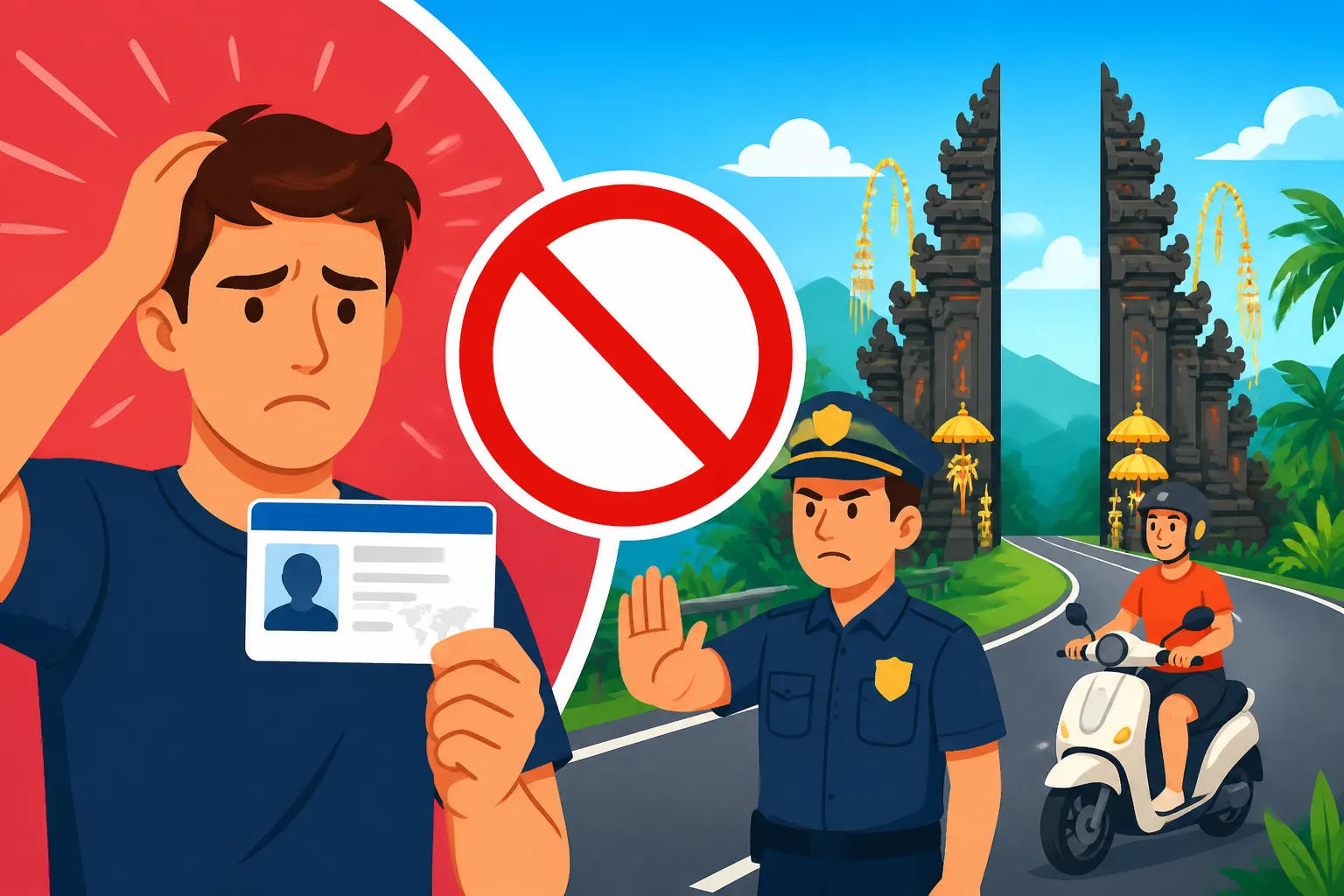
Many travelers are misled by the fact that rental agencies rarely ask for more than a passport and a stack of Rupiah. Do not let this lack of due diligence at the rental shop fool you. The rental agency’s goal is to move their inventory; the police officer’s goal at a "razia" (roadside check) is to ensure every driver is fully compliant with the law. Without an International Driving Permit (IDP), you are technically driving unlicensed.
This distinction is crucial because it changes your legal status from a "visitor" to an "illegal operator." Even if you have a digital copy of your license or a high-quality photocopy, the physical IDP is the only document the Indonesian police are trained to recognize as a valid translation and verification of your home license. If you are planning your trip through Agoda, ensure your accommodation has secure parking, as you'll want a safe place to leave your vehicle if you decide to stick to ride-sharing apps until your paperwork is in order.
Understanding the 1968 Convention vs the 1949 Convention
There is often confusion regarding which IDP version is accepted. Indonesia technically recognizes the 1968 Convention, which issues a permit valid for three years. However, many countries still issue the 1-year 1949 version. In practice, Bali traffic police generally accept any valid IDP as long as it is accompanied by your original home license.
If your home country does not issue IDPs or if you have already arrived in Bali without one, you are in a difficult spot. You cannot apply for an IDP from within Indonesia for a foreign license; it must be issued by the same country that issued your original license. I have seen expats try to "order one online" from unofficial websites, but these are often scams or "novelty" documents that will not pass muster during a police check.
The Myth of the ASEAN Agreement
I often hear travelers from neighboring countries like Malaysia, Singapore, or the Philippines claim they don't need an IDP because of the ASEAN Agreement on the Recognition of Domestic Driving Licenses. While this agreement does exist, its implementation on the ground in Bali is notoriously inconsistent. I have sat at roadside cafes and watched tourists from ASEAN nations get fined because the local officer was not briefed on the latest treaty nuances.
Even if you are legally in the right as an ASEAN citizen, the time and stress of arguing your case on the side of a busy road in the heat is rarely worth it. Carrying an IDP is the universal "get out of a headache" card that works regardless of the officer's specific knowledge of regional treaties.
The Consequences of Driving Without an IDP
If you are stopped at a checkpoint without an IDP, the immediate result is usually a fine. This is known as a "Tilang." In the past, this involved a physical ticket and a trip to a local court, but Indonesia has been transitioning to an E-Tilang system. However, for foreigners, the process can still feel opaque and intimidating.
Beyond the immediate fine, there is the risk of vehicle impoundment. If you cannot produce a valid license, the police have the right to take the scooter or car to the station. This leaves you stranded on the side of the road, often in areas where it is difficult to find a taxi. To stay connected and call for a ride-share in such a scenario, having a local data plan from Airalo is a lifesaver, as you won't want to be hunting for Wi-Fi while dealing with the police.
The Insurance Trap: Why an IDP is Your Best Protection
The most terrifying consequence of driving without an IDP isn't a police fine; it's the total nullification of your insurance. Almost every travel insurance policy and private health insurance plan has a clause stating that they will only cover accidents if the driver was "fully licensed in the jurisdiction where the accident occurred."
If you have a collision in Bali and you don't have an IDP, you are driving illegally. This means your insurance company can—and likely will—deny your claim. I have seen GoFundMe pages for expats facing hundreds of thousands of dollars in medical bills for Emergency Medical Care in Indonesia: Ambulances, ERs, and Evacuation Protocols because their insurance was voided due to the lack of a simple IDP.
Comparison of Licensing Requirements in Bali
| Document Type | Legally Valid Alone? | Insurance Status | Best For |
|---|---|---|---|
| Home Country License | No | Void / Risk of Denial | Nothing (Do not use alone) |
| Home License + IDP | Yes | Valid (Check policy) | Tourists & Short-termers |
| Indonesian SIM C (Scooter) | Yes | Valid | KITAS/KITAP Holders |
| Indonesian SIM A (Car) | Yes | Valid | Long-term Residents |
How to Get Legally Licensed as an Expat
For those of us who have moved here long-term, the IDP is a temporary band-aid. If you hold a KITAS or KITAP, you should apply for a local Indonesian license, known as a SIM (Surat Izin Mengemudi). For a scooter, you need a SIM C, and for a car, you need a SIM A.
The process involves visiting the local SATPAS (Satuan Penyelenggara Administrasi SIM) office, usually in Denpasar if you are in the south. You will need to undergo a basic medical check, a psychological test (which is often just a simple multiple-choice questionnaire), and a theory/practical exam. You can find more details on Getting SIM A and C: Age Requirements, Medical Checks, and SATPAS Police Visits to prepare yourself for the day.
The Role of Agents in the Licensing Process
Many expats choose to use a "Biro Jasa" or agent to help navigate the SATPAS office. While it is more expensive than doing it yourself, an agent can often streamline the queue and ensure you have all the correct photocopies and stamps. This is a classic "Bali tax" situation—you pay for the convenience and the reduction of bureaucratic friction.
Even with an agent, you must show up in person for the "foto" and fingerprinting. It is a rite of passage for any long-term resident. Once you have your local SIM, you no longer need to worry about the IDP or your home country license expiry while you are within Indonesia. This provides immense peace of mind when Renting a Scooter in Bali: Avoiding Fines, Helmet Laws, and Police Checks for your daily commute.
Converting Your License
If you are a KITAS holder, you might be eligible for Converting a Foreign Driving License to an Indonesian SIM A or SIM C. This process theoretically allows you to skip the practical test if your foreign license is still valid. However, policies at the Denpasar police station can change without notice, so it is always wise to be prepared for the full testing process just in case.
Safety and Practical Tips for Bali Roads
Once you have your legal paperwork sorted, the real challenge begins: the roads themselves. Bali’s traffic is a living, breathing entity that follows "unspoken" rules rather than strict lane discipline. For newcomers, it can be overwhelming. The best advice I can give is to be predictable. Do not make sudden turns, and use your horn—not as an expression of anger, but as a polite "I am here" when passing someone or entering a blind curve.
Safety gear is also non-negotiable. While the "island life" vibe makes you want to ride in a swimsuit and flip-flops, the asphalt is unforgiving. You can find high-quality, SNI-certified helmets on Shopee that offer much better protection than the "bucket" helmets provided by most rental shops. I personally never ride without a jacket and closed-toe shoes; "Bali kiss" (road rash) is a painful way to spend a vacation.
Understanding Local Checkpoints
Police checkpoints, or razia, are common in tourist hubs like Canggu, Seminyak, and Uluwatu. They are usually looking for three things: a helmet, a valid license (IDP), and a valid STNK (vehicle registration). When you rent a bike, always ensure the STNK is in the seat compartment. If you are stopped, be polite, stay calm, and present your documents. If you have followed the advice in this guide and have your IDP and home license ready, you will likely be waved through in less than a minute.
If you do find yourself in an accident despite your best efforts, knowing who to call is vital. Keep a list of Emergency Numbers in Indonesia: 118/119 for Ambulance and What to Expect saved in your phone. Having your legal papers in order means you can focus on recovery rather than worrying about a potential deportation or a massive, uninsured medical bill.
Alternatives to Driving Yourself
If the thought of navigating the legalities of an IDP and the chaos of Denpasar traffic sounds like too much, remember that Bali has excellent ride-sharing options. Grab and Gojek are the kings of the road here. You can hire a car ("GrabCar") or a scooter taxi ("GoRide") for very reasonable prices.
Using these services removes the legal liability from your shoulders. You don't need to worry about an IDP, parking, or the risk of a checkpoint. For many of my visiting friends, I recommend this route for the first few days while they get their bearings. If you eventually decide you want the freedom of your own wheels, make sure you have read up on Driving Legally: International Driving Permits (IDP) Validity in Bali before you sign that rental agreement.
Summary Checklist for Drivers
To ensure you are fully compliant and protected while driving in Bali, follow this checklist:
- Obtain an IDP: Get this from your home country's automobile association before you fly.
- Carry Both: You must have your original home country license AND the IDP on your person whenever you drive.
- Check Your Insurance: Read the fine print to ensure you are covered for the specific engine capacity (cc) of the bike you are renting.
- Verify the STNK: Ensure the rental vehicle has an up-to-date registration document in the seat.
- Wear a Helmet: Not just for the law, but for your life. Ensure it is fastened properly.
- Stay Connected: Use Airalo to ensure you always have access to maps and translation apps.
Driving in Bali can be a wonderful way to see the hidden corners of the island, from the rice terraces of Jatiluwih to the cliffs of Uluwatu. But the freedom of the road is only enjoyable when you have the peace of mind that comes with being legal. Don't risk your health, your bank account, or your holiday by skipping the IDP.
For those who are just starting their journey and perhaps looking for Bali Healthcare Guide: Hospitals, Clinics, and Emergency Contacts for Residents, remember that prevention is always better than cure. Staying legal is the best preventive measure you can take on the Balinese roads.
Disclaimer
This guide is for informational purposes only and does not constitute legal advice. Immigration and traffic laws in Indonesia are subject to frequent changes and local interpretations. Always verify current requirements with the Indonesian Embassy or local authorities before operating a motor vehicle. Driving without a valid license may void your insurance and lead to legal penalties.