How to Properly Dispose of Electronic Waste (E-Waste) in Major Cities
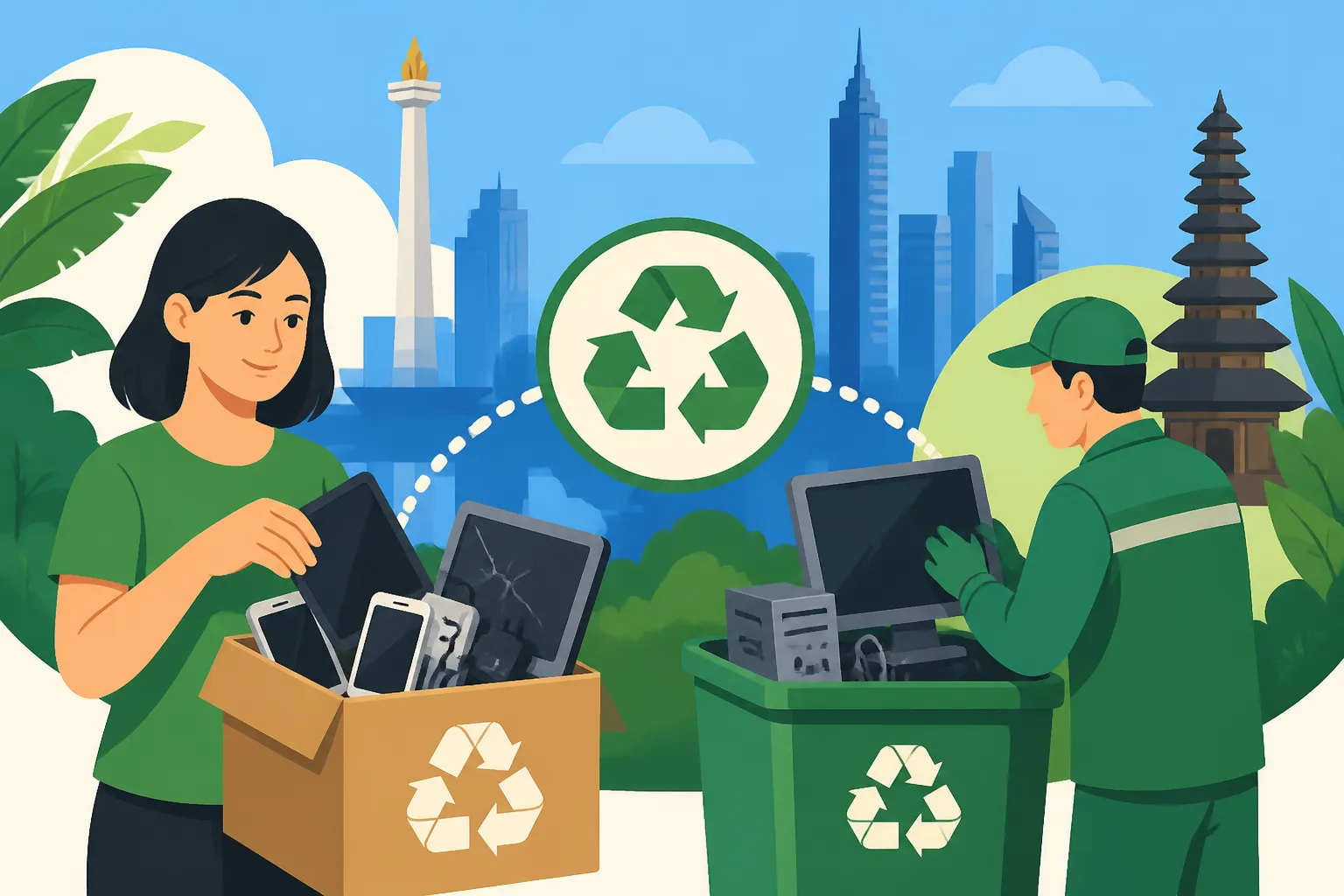
Most of us have a "drawer of doom" filled with dead power banks, frayed charging cables, and old smartphones that we simply don't know how to handle. I remember staring at a bloated laptop battery in my Kemang apartment, terrified it would leak or catch fire if I just tossed it in the regular bin. This guide solves the confusion by detailing exactly how to navigate Indonesia's evolving e-waste disposal systems.
The Reality of Garbage and Recycling in Indonesia
When you first move here, one of the biggest culture shocks is the lack of standardized, municipal recycling bins outside your home. In most neighborhoods, trash collection is a mix of informal scavengers and local trucks that dump everything into a single "landfill" stream. If you are following the Living in Indonesia as an Expat: The Complete Starter Guide (2027), you’ve likely noticed that the traditional "tukang rongsok" or scavenger will happily take your cardboard and scrap metal, but they often lack the tools to safely process complex electronics.
E-waste, or "sampah elektronik," contains hazardous materials like lead, mercury, and cadmium. In the tropical humidity of Jakarta or Surabaya, these materials can leach into the groundwater much faster than in cooler climates. This makes Garbage and Recycling in Indonesia: Local Pickups and Private Waste Services a critical topic for anyone staying long-term. You aren't just cleaning out your closet; you’re preventing heavy metals from entering the local food chain.
The challenge is that e-waste isn't just "trash"—it’s a mix of valuable components and toxic waste. While it might be tempting to just leave a broken microwave on the curb for the neighborhood collectors, doing so often results in the item being smashed open for its copper wiring, leaving the hazardous components behind to rot in the street. As we navigate Everyday Etiquette: Religion, Culture, Garbage, and Community Norms, being a "good neighbor" means taking the extra step to ensure these items reach a professional processing facility.
Official E-Waste Drop-Off Points in Jakarta
If you are currently figuring out Where to Live in Jakarta: Neighborhood Guide for Expat Families and Singles, you are in luck because the capital has the most developed e-waste infrastructure in the country. The Dinas Lingkungan Hidup (DLH) Jakarta has made significant strides in placing "E-Waste Dropboxes" in public areas. These are bright yellow or blue bins specifically designed for small electronics like phones, chargers, and batteries.
You can find these dropboxes in high-traffic areas where you might already be running errands. Many are located near major TransJakarta stations, city halls (Kantor Walikota), and even some shopping malls. If you are staying at a hotel booked through Agoda in the Kuningan or Thamrin area, you are likely only a few minutes away from a collection point.
For larger items like washing machines or old CRT televisions, the DLH offers a "Jemput Sampah Elektronik" (E-Waste Pickup) service. This is a game-changer for expats who don't have a large vehicle to haul a fridge to a recycling center. You can usually request this through the "JAKSTRAT" feature in the JAKI app, which is the all-in-one application for Jakarta residents. They will send a dedicated truck to your domicile, ensuring the item is recorded and disposed of at a licensed facility in Pulogebang.
Common Dropbox Locations in Jakarta
| Location Type | Specific Examples | Items Accepted |
|---|---|---|
| Public Transport | MRT Bundaran HI, Blok M Station | Phones, Cables, Small Batteries |
| Government Offices | Dinas Lingkungan Hidup (Cililitan) | All E-Waste sizes |
| Shopping Malls | Selected Malls in South Jakarta | Small Electronics, Power Banks |
| Private Partners | Certain Shell Gas Stations | Domestic E-Waste |
Managing E-Waste in Bali and Other Major Cities
Life in Bali is often perceived as more eco-conscious, yet the infrastructure can feel more fragmented than in Jakarta. If you are living in a villa and managing the Cost of Living in Bali 2026: Budgeting for Digital Nomads and Retirees, you quickly realize that the "Banjar" (local community council) handles most waste, and they often aren't equipped for lithium batteries.
In Bali, the heavy lifting is done by private social enterprises. Organizations like EcoBali offer dedicated recycling services where you can pay a small monthly fee to have sorted waste—including e-waste—picked up from your doorstep. This is highly recommended because the alternative is often your old electronics ending up in the Suwung landfill, which has historically struggled with fires and toxic runoff.
In cities like Surabaya and Bandung, the local "Bank Sampah" (Waste Bank) system is the primary route. These are community-run collection points where residents can actually "deposit" recyclable waste in exchange for small amounts of money or credit. While not every Bank Sampah accepts electronics, the larger municipal ones usually do. Always ask your "RT" (neighborhood head) where the nearest "Bank Sampah Induk" is located. This is part of the essential Health Checklist for Your First 30 Days in Jakarta or Bali, as keeping toxic waste out of your home environment is a form of preventative care.
Selling or Donating Your Old Electronics
Before you decide an item is "waste," consider if it still has value. The second-hand market in Indonesia is massive. Even a broken iPhone has value for its screen or motherboard components. If you are looking to recoup some of the Cost of Living in Jakarta 2026: Budgeting for Digital Nomads and Retirees, selling your old tech is a viable option.
Platforms like Shopee have sections for second-hand electronics, or you can use the "OLX" app, which is very popular for local person-to-person sales. If you have a laptop that just needs a new battery or a phone with a cracked screen, taking it to a "Service HP" shop in a mall like ITC Kuningan or Ambassador Mall is a great way to give the device a second life. These shops often buy broken devices for parts, which is the ultimate form of recycling.
Donation is another excellent path. Many local vocational schools (SMK) or non-profits look for old hardware that students can use to learn repair skills. However, please be realistic. If the laptop is 15 years old and doesn't turn on, it is likely a burden to a charity rather than a gift. In those cases, the DLH dropbox is the kinder choice.
Buying New with Sustainability in Mind
The best way to manage e-waste is to produce less of it. When you are Buying Electronics in Indonesia: Warranty Norms and Import Taxes, look for brands that have "Trade-In" programs. Major manufacturers like Samsung and Apple often run promotions in Jakarta malls where you can bring in your old device for a significant discount on a new one. This ensures the manufacturer takes responsibility for the old hardware.
Another tip for the modern expat is to reduce physical waste where possible. For example, instead of buying multiple plastic SIM cards when you travel or change numbers, using an eSIM provider like Airalo can eliminate the need for physical plastic and the tiny electronic chips that eventually end up in a bin. It’s a small change, but it aligns with a more minimalist, eco-friendly lifestyle.
When you do buy new, prioritize quality. The "cheap" chargers you find in local street markets often fail within months and lack proper shielding, which can actually damage your expensive devices. Investing in high-quality peripherals might cost more upfront but prevents the constant cycle of tossing dead cables into the trash. This is a core part of Safety 101: Petty Theft, ATM Skimming, and Home Security in Indonesia, as poor-quality electronics are a leading cause of house fires in expat housing.
Step-by-Step Guide to the JAKI E-Waste Pickup
If you have a large item (like a fridge, AC unit, or old printer) in Jakarta, follow these steps to use the official government service. I have used this myself, and while it requires a bit of patience with the app, it works:
- Download the JAKI App: This is essential for anyone living in the city.
- Navigate to 'Layanan Publik': Look for the "Lingkungan Hidup" or "E-Waste" section.
- Fill out the Form: You will need to provide your name, address, and a photo of the items you want to be picked up.
- Schedule the Pickup: The team usually operates on specific days for different districts (South Jakarta, North Jakarta, etc.).
- Prepare the Item: Move the item to your gate or lobby. The collectors usually won't enter your private home for liability reasons.
- Verification: They will scan a code or take a photo of the item to mark it as collected in the city's database.
This service is free for residential users. If you are running a business or a "PT PMA," you may be required to work with a licensed third-party waste contractor, as the government service is intended for household volumes.
Navigating the 'Tukang Rongsok' System
We have to be realistic about how things work on the ground. Every morning, you will hear the distinctive sound of a hammer hitting a metal plate or a shouted "Rongsok!" This is the local scavenger. For many expats, this is the easiest way to get rid of a broken toaster or an old fan.
If you choose this route, understand the pros and cons:
- Pros: It provides an income for a local worker, and the item is removed from your house immediately for free.
- Cons: They will only keep what they can sell (copper, aluminum, certain plastics). The "valueless" parts—which are often the most toxic, like the circuit boards or lead glass—might be dumped in an unofficial site.
If you have a relationship with your "Satpam" (security guard), you can ask them to handle it. Often, they know exactly which "Tukang Rongsok" is responsible and will ensure the item goes to someone who actually processes it rather than just stripping it. However, for items containing batteries, I strongly urge you to avoid the scavengers and use the official DLH or EcoBali routes.
A Note on Data Security
Before you drop any phone or laptop into a recycling bin in Jakarta, you must perform a factory reset and, if possible, remove the hard drive or storage chip. While the official DLH staff are professional, e-waste bins are in public places. As mentioned in our guide on Safety 101: Petty Theft, ATM Skimming, and Home Security in Indonesia, identity theft is a real concern.
Ensure you have:
- Logged out of all iCloud or Google accounts.
- Removed SIM cards and SD cards.
- Performed a "Secure Erase" on any hard drives.
- Physically destroyed the storage chip if the device is non-functional and contains sensitive data.
Disposing of electronics in a foreign country can feel like a daunting administrative hurdle, but it is one of the most impactful things you can do to respect your host country's environment. Whether you are using the JAKI app in a high-rise or coordinating with EcoBali from a beach villa, your effort ensures that the "Emerald of the Equator" stays green for the next generation of residents.
Disclaimer
This guide is for informational purposes only. Local regulations regarding waste management in Indonesia are subject to change by provincial governments (DKI Jakarta, Bali Province, etc.). Always verify current drop-off locations and service availability through the official JAKI app or your local Dinas Lingkungan Hidup office. The author and publisher are not responsible for the actions of third-party waste collectors or the security of data left on disposed devices.