Paying the Overstay Fine: Credit Cards, Cash, and ATM Procedures
Realizing you have overstayed your visa while standing in line for your flight is a uniquely paralyzing feeling. I remember the cold sweat prickling my neck at Bali’s Ngurah Rai airport when I realized my 30-day count was actually 32. This guide provides a step-by-step roadmap for paying overstay fines, navigating payment hurdles, and ensuring you leave the country without a permanent ban.
Understanding the Math and the Location
Before you even reach for your wallet, you need to understand exactly what you are paying for and where this transaction takes place. As of mid-2026, the Indonesian government has maintained a strict fine of 1,000,000 IDR per day for overstays. This is a non-negotiable administrative penalty. There is no bargaining, no "I didn't know," and no "my flight was delayed." If the date on your entry stamp has passed, the clock is ticking, and the price is fixed.
The first step in resolving this usually happens at the airport. You do not go to the standard immigration counter for your exit stamp. Instead, you must locate the Immigration Office (Kantor Imigrasi) located within the airport terminal. In Jakarta’s Soekarno-Hatta Terminal 3, this is a small, often busy office tucked away before the main immigration gates. In Bali, you will be escorted to a side room. You should always check your visa status before arriving at the airport using tools like iVisa or the official Molina portal to ensure you aren't walking into a five-figure fine blindly.
If you discover your overstay while still at your villa or hotel, do not wait until your flight day to handle it. While you can pay at the airport for short overstays (under 60 days), the stress of potentially missing a flight while waiting for a slow credit card terminal to process is immense. For anyone in this situation, having comprehensive insurance like Cigna Global can be a lifesaver if the stress of the situation leads to actual health issues, which, believe me, happens more often than you’d think in the tropical heat.
The 1 Million IDR Rule
The daily rate is calculated based on calendar days, not 24-hour periods. If your visa expired at midnight on Tuesday and you are leaving at 1:00 AM on Wednesday, that is one full day of overstay. If you are leaving on Thursday, it is two days. The math is simple but brutal. For many travelers, the total cost quickly balloons into several millions of rupiah.
It is vital to understand that Overstaying Your Visa in Indonesia: IDR 1,000,000 Daily Fines and Deportation Risk is a serious matter. While paying the fine for a few days is a routine administrative process, it is recorded. If you are a repeat offender, immigration officers will start asking much tougher questions about why you cannot seem to follow the calendar.
Where Exactly Do You Pay
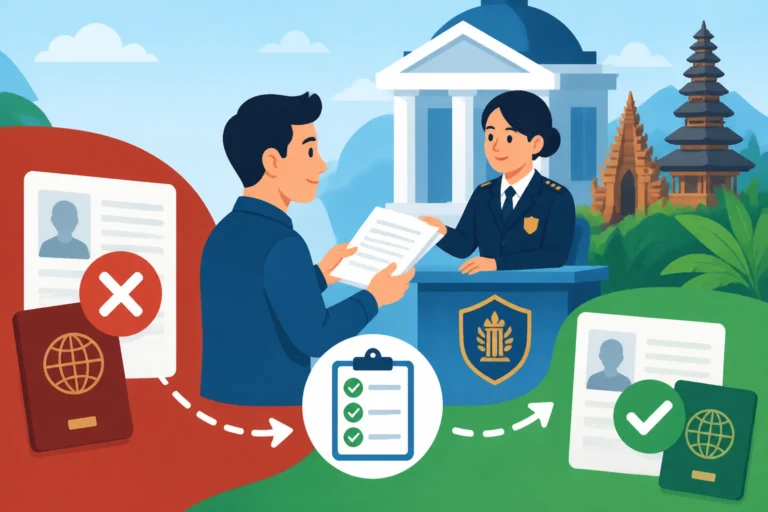
When you arrive at the airport, approach the immigration officer at the very first checkpoint before the baggage scan or at the entrance to the immigration hall. Inform them immediately that you have an overstay. They will direct you to the "Overstay Room."
Do not try to hide it. The digital systems at Airport Immigration: E-Gates, Fast Tracks, and Handling Customs Questioning Are incredibly efficient. As soon as your passport is scanned, a red flag will pop up on their screen. Being proactive and honest is the only way to keep the interaction professional and relatively quick.
The Mechanics of Payment: Cash, Cards, and ATMs
Once you are in the immigration office, the officer will calculate your total fine. This is where the logistics get complicated. While Indonesia is rapidly moving toward a cashless society with QRIS and digital wallets, the immigration "Overstay Room" can still be a bit behind the curve depending on which airport you are in and whether the machines are "troubleshooting" that day.
| Payment Method | Reliability | Notes |
|---|---|---|
| Cash (IDR) | High | The most "fail-proof" method. Must be in Rupiah. |
| Credit/Debit Card | Medium | Frequent issues with foreign card "Void" or "Connection Failed" errors. |
| ATM Withdrawal | Medium | Limited by your bank's daily withdrawal caps. |
| QRIS | Low/Emerging | Some offices accept it, but it requires a local bank account or e-wallet. |
Cash Procedures at the Airport
Cash remains the most reliable way to pay your overstay fine. However, it must be in Indonesian Rupiah (IDR). The immigration office is not a currency exchange. If you show up with USD, AUD, or EUR, they will tell you to go find a money changer. At most airports, the money changers are located before the security gates, meaning you might need an officer to escort you back out or hope there is a teller within the transit area.
Be aware that money changers at the airport offer notoriously poor rates. If you know you have a three-day overstay, it is significantly cheaper to exchange your money in town at a reputable Kuta or Seminyak changer before you head to the airport. Bring the exact amount or slightly more. Dealing with 3,000,000 IDR in 100k notes is common, so don't be surprised when you're handed a thick stack of bills.
Using Credit Cards and Troubleshooting Rejections
Most major airports like Jakarta, Bali, and Surabaya now have Electronic Data Capture (EDC) machines that accept Visa and Mastercard. However, this is where many expats hit a wall. Indonesian banking systems often have "hiccups" when communicating with foreign banks for high-value transactions.
If your card is rejected, it usually isn't because you lack funds. It’s often a security block from your home bank because they see a large transaction from "Imigrasi Indonesia." Before you head to the airport, it is wise to set a travel notice on your banking app. If the payment fails twice, don't keep trying the same card; you risk the machine locking out or your bank freezing the account entirely. This is also why checking Visa on Arrival (VoA) and B211A Tourist Visas: What You Can and Cannot Do beforehand is so important—knowing your visa type helps you explain the situation more clearly to your bank if you have to call them.
The ATM Run: A Real-World Scenario
If your card fails and you don't have enough cash, you will be sent to the ATM. This is the most stressful part of the process. An officer will usually hold your passport and boarding pass while you are escorted to the ATM line.
In Indonesia, ATMs typically have a withdrawal limit per transaction of either 1,250,000 IDR or 2,500,000 IDR. If you owe 10,000,000 IDR, you will have to perform four to eight separate transactions. Furthermore, your home bank likely has a daily withdrawal limit (often around $500 to $1,000 USD). If your fine exceeds your daily limit, you are in a very difficult position. You may need to call your bank to temporarily raise your limit while an increasingly impatient immigration officer waits nearby.
Legal Consequences and Documenting the Fix
Paying the fine is not just about the money; it’s about clearing your name in the Indonesian immigration database. Once the payment is processed, the officer will issue a formal receipt. This receipt is your proof that the administrative violation has been settled.
If you ever plan to return to Indonesia, keep a digital copy of this receipt. While the system should update automatically, I have heard stories of people being questioned on their next entry about a "pending" overstay from a year prior. Having that paper trail is your insurance. If things get legally complex, you might even need Certified Translators (Penerjemah Tersumpah) for Immigration Documents to provide translated copies of your exit clearances for future visa applications.
Dealing with Overstays Longer than 60 Days
If your overstay is longer than 60 days, you cannot simply pay at the airport and hop on a plane. This moves from a "fine" situation to a "deportation" situation. You will likely be detained or required to stay in the country while your case is processed at the local immigration office (not the airport).
In these cases, you are at risk of being put on The Blacklist (Cekal): Reasons for Being Banned from Entering Indonesia. A blacklist usually lasts for six months to a year, but it can be permanent depending on the severity of the violation. For long overstays, the process involves formal interviews, and you may be required to have a local sponsor or a legal representative present.
Collecting Your Proof of Payment
Never leave the immigration office without a "Surat Tanda Penerimaan" (Letter of Receipt). This document should clearly state your name, passport number, the number of days overstayed, and the total amount paid. In the hustle of trying to catch a flight that is already boarding, it is easy to forget this step.
Make sure the stamp on the receipt is clear. If you are flying out of Bali, you can read more about specific local office quirks in our Ngurah Rai Immigration Office Guide: Dress Codes and Queue Tips. Each office has its own flow, but the requirement for a stamped receipt is universal across the archipelago.
Tips for a Smoother Exit
The best way to handle an overstay fine is to avoid it, but if you're already in the thick of it, preparation is your only friend. First, arrive at the airport at least four hours before your flight. The overstay payment process can take anywhere from twenty minutes to two hours depending on the queue and the "system status."
Second, have a backup for your backup. If you are traveling with a partner, make sure you both have access to cash or cards with high limits. If you are alone, keep an emergency 2,000,000 IDR tucked away in your passport cover. It won't cover a long overstay, but it handles the "I miscounted by two days" scenario without a frantic run to the ATM.
Finally, stay calm and polite. The immigration officers are doing their jobs, and getting angry or defensive will only slow down the process. They have the power to make your exit easy or very, very difficult. A smile and a "Minta maaf, saya salah hitung" (I'm sorry, I miscalculated) goes a long way. If the stress gets to be too much, remember that you can always find support through Emergency Numbers in Indonesia: 118/119 for Ambulance and What to Expect if a panic attack or health issue arises during the process, and having a plan for Healthcare in Indonesia for Foreign Residents: Complete System Overview (2027) is just good practice for anyone living or staying long-term in the country.
Disclaimer
This guide is for informational purposes only and reflects immigration practices and fines as of 2026. Immigration laws in Indonesia can change without notice. Always verify current regulations with an official government source or a licensed immigration agent before traveling. Stay legal, stay informed.