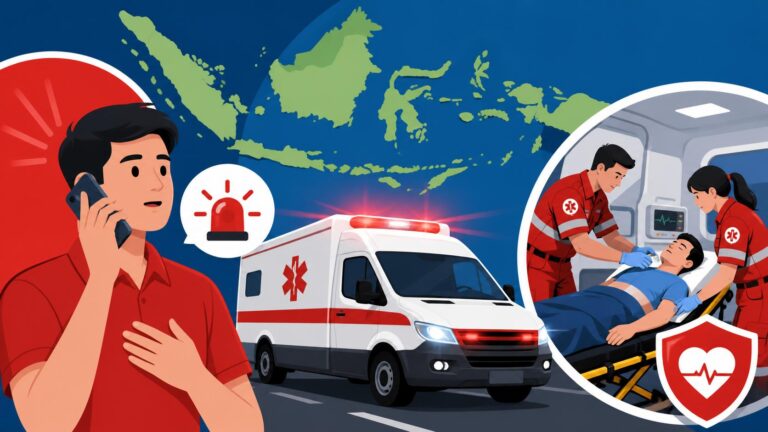
Are Ambulances Free Under BPJS? Myths vs. Reality for Expat Patients
Finding yourself in a medical crisis in Indonesia is a disorienting experience where the rules of your home country suddenly don't apply. I remember the sheer panic of my first late-night emergency in Jakarta, staring at my phone and wondering if an ambulance would even show up through the gridlock. This guide clarifies exactly when BPJS covers transport and when you’ll be reaching for your wallet.
The Regulatory Reality of BPJS Ambulance Coverage
When we talk about whether ambulances are "free" under the Indonesian national health scheme, the answer is a classic Indonesian "it depends." Legally and theoretically, yes, ambulance transport is a covered benefit for all active members, including expats on a KITAS. However, the system is designed around the concept of medical necessity rather than convenience. In the eyes of the BPJS administration, an ambulance is a clinical tool used for stabilization and essential movement, not a specialized taxi service.
To access "free" transport, the patient must be in a condition classified as Gawat Darurat (emergency). This usually means that if you are stable enough to sit in a Grab or a Bluebird taxi, BPJS will likely not reimburse the hospital for the ambulance cost, and that cost will be passed directly to you. I learned this the hard way when a friend with a broken arm—painful, but not life-threatening—was charged several hundred thousand Rupiah because he "could have taken a car." Understanding Emergency Medical Care in Indonesia: Ambulances, ERs, and Evacuation Protocols is the first step in managing these expectations before the siren starts wailing.
The coverage also strictly follows the tiered referral system. If you are being moved from a Type C hospital to a Type B or A facility because they lack the necessary equipment for your survival, BPJS covers that transfer 100%. If you are being moved simply because you prefer a different hospital closer to your favorite cafe, you will be paying the full commercial rate. Knowing how to navigate Public vs Private Healthcare in Indonesia: BPJS Kesehatan and Expat Insurance is vital here, as the rules for "free" transport often differ between government-run RSUDs and private facilities that happen to accept BPJS.
The Distinction Between Public and Private Dispatch
In Indonesia, the ambulance landscape is fragmented. You have the government-run 118/119 system, hospital-owned fleets, and private emergency services. Each operates under different financial incentives. The public 119 system is your best bet for a "free" service, but its availability and response times are notoriously inconsistent, especially in cities where the "macet" (traffic) is a permanent fixture. When you call 119, you are entering the state-managed system where BPJS Kesehatan for Expats: Registration, Costs, and the New KRIS System dictates the flow of funds.
Private hospitals, such as the Siloam or Mayapada networks, maintain their own high-spec ambulances. While many of these hospitals accept BPJS for inpatient care, they often treat their ambulance service as a separate commercial entity. If you call a private hospital directly, they will likely ask for your insurance details or a credit card number before the wheels even turn. For many expats, the peace of mind offered by these private services is worth the out-of-pocket expense, especially when you consider that Healthcare Budgeting: BPJS Caps, Out-of-Pocket Costs, and Private Copays can leave significant gaps in coverage for premium services.
If you are living in a tourist-heavy area, you might find that the Bali Healthcare Guide: Hospitals, Clinics, and Emergency Contacts for Residents points you toward specialized tourist clinics. Be extremely cautious here; these clinics rarely interface with BPJS for ambulance transport. They expect cash or a high-limit international policy like those provided by Cigna Global to cover the dispatch. Always ask if the ambulance is "BPJS-pro" (BPJS-compliant) before agreeing to the transfer if cost is a primary concern.
Navigating the Logistics of an Emergency Call
When the moment arrives to actually call for help, the language barrier becomes a massive hurdle. Even if the ambulance is technically free, communicating the severity of your situation to a 119 dispatcher requires specific terminology. If you cannot speak Bahasa Indonesia, you might face delays that are far more costly than the ambulance fee itself. I always recommend that expats have a script saved on their phone or pinned to their fridge. Reference our guide on Calling an Ambulance Without Bahasa Indonesia: Language Support Expectations to help you prepare for that high-stress conversation.
Once the ambulance arrives, the "free" aspect depends on the documentation you have ready. If you don't have your JKN (BPJS) card or your NIK (National ID number) on hand, the crew may classify you as a "General" (paying) patient. Ensure your documents are in order by checking What to Bring to an Indonesian ER: BPJS Card, Passport, and Payment Proof. Without these, even a covered medical emergency can result in a bill that you'll have to fight to reimburse later—a bureaucratic nightmare I wouldn't wish on anyone.
Furthermore, the standard of care in a BPJS-covered ambulance can vary wildly. While some are essentially mobile ICUs, many are simply transport vans with a stretcher and basic oxygen. For those with chronic heart conditions or high-risk pregnancies, relying on the "free" system can be a gamble. This is why many veteran expats maintain a secondary private policy with Cigna Global, which ensures access to higher-spec private ambulances and, crucially, coverage for Medical Evacuation (Medevac) Services in Indonesia: Costs and Insurance Coverage should you need to be flown to Singapore or Australia for treatment.
| Service Type | BPJS Covered? | Typical Response Time | Equipment Level |
|---|---|---|---|
| Public 118/119 | Yes (if emergency) | 30 – 90+ mins | Basic to Intermediate |
| Private Hospital Ambulance | Partial/No | 20 – 45 mins | Intermediate to Advanced |
| Specialized Medevac | No | Scheduled | ICU Grade |
| Puskesmas Transport | Yes | Variable | Very Basic (Stretcher only) |
Practical Preparation and the Expat Safety Net
To truly be prepared for an emergency in Indonesia, you cannot rely solely on the hope that a BPJS ambulance will be free and fast. You need a multi-layered approach. First, save the direct numbers of the nearest Emergency Numbers in Indonesia: 118/119 for Ambulance and What to Expect. Second, keep a small amount of cash (around 1-2 million IDR) in an "emergency envelope" at home. Even if the ambulance is free, you may need to tip the crew for their help navigating a difficult stairwell or pay a small administrative fee upfront at the hospital gate.
Another essential step is maintaining a well-stocked first aid kit to stabilize yourself while waiting for help. I’ve found that many specific medical supplies are hard to find in local pharmacies, so I often order high-quality wound care and diagnostic tools through iHerb. Having a reliable thermometer, blood pressure monitor, and antiseptic wash from iHerb can buy you critical time. For more on local options, check out the Apotek Guide: Prescription Workflow, Refills, and Communicating with Pharmacists.
Ultimately, BPJS is a fantastic safety net for long-term residents, but it has its limits. For the most serious cases, where every second counts and you need an English-speaking crew, a private insurance policy is your true lifeline. Brands like Cigna Global are designed to bridge the gap between the basic "free" transport provided by the state and the high-end medical care expats often expect. They can coordinate with facilities like BIMC Hospital Bali: Services, Costs, and Insurance Direct Billing Options to ensure your transport and subsequent care are seamless.
Don't wait for a crisis to find out how the system works. Take the time today to look up your Using Your BPJS Card (Kartu JKN): How to Register and Book at Local Faskes and identify which local facility is your primary "Faskes 1." Knowing where you are supposed to go in the BPJS system will determine whether that ambulance ride ends with a medical success or a financial headache.
Disclaimer
This article is for informational purposes only and does not constitute medical or legal advice. Regulations regarding BPJS Kesehatan and emergency services in Indonesia are subject to change by the Ministry of Health and the BPJS Administration. Always consult with a certified insurance professional or a legal advisor for specific coverage questions. In a life-threatening emergency, always call 112, 118, or 119 immediately regardless of insurance status.