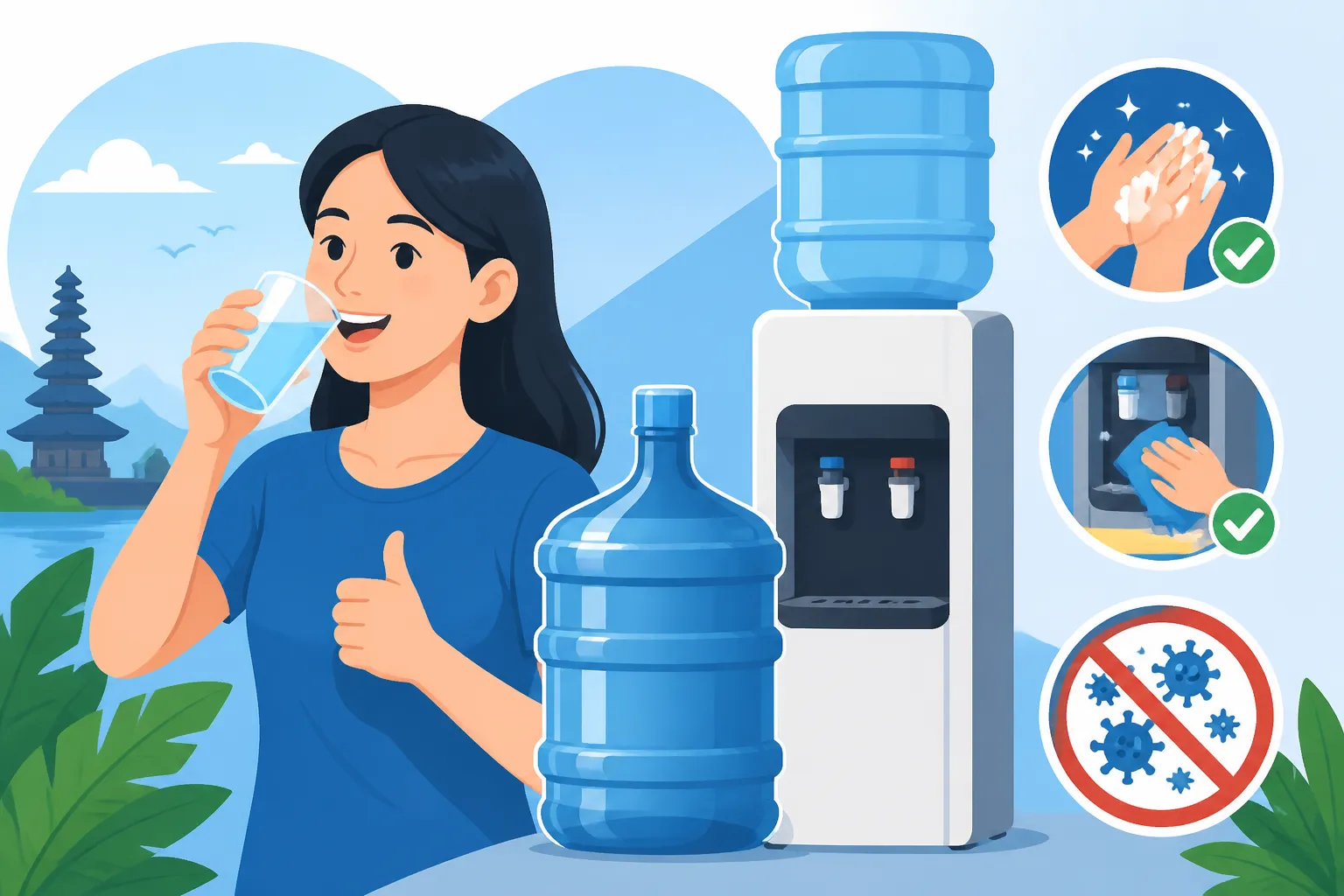
Drinking Water: Using Aqua Gallons and Dispensers Safely
Walking into an Indonesian kitchen for the first time and seeing a massive 19-liter jug of water can be intimidating, especially when you realize the tap is strictly off-limits for drinking. I still remember the sheer exhaustion of my first week in Jakarta, trying to lug one of those heavy gallons up three flights of stairs because I didn't know the delivery "Abang" existed yet. This guide solves the mystery of the "Galon" system, maintenance, and keeping your gut safe from local water pathogens.
The Reality of Tap Water in Indonesia
The very first thing any veteran expat will tell you is that the water coming out of your sink is not for consumption. While the municipal water works, known as [PDAM City Water], do treat the water at the source, the infrastructure of the piping system across the country is often aged, porous, and prone to contamination. By the time that water reaches your home in Bali or Jakarta, it may have picked up heavy metals, bacteria, or parasites. Even if you are staying in a high-end villa booked through Agoda, the general rule remains: do not drink the tap water.
Most of us use tap water for showering and washing dishes, but even brushing your teeth can be a gamble for those with sensitive systems. If you are new to the country, I highly recommend checking out a Health Checklist for Your First 30 Days in Jakarta or Bali to ensure you are prepared for the transition. The risk of contracting "Bali Belly"—a localized term for various types of food poisoning and waterborne illness—is real. You can find more details on managing this in our guide on Bali Belly and Food Safety: Avoiding and Treating Stomach Bugs. For absolute safety, many expats choose to install point-of-use filters, though the 19-liter gallon remains the king of Indonesian households.
It is also worth noting that boiling tap water, while common in many parts of the world, is often insufficient here. Boiling may kill the bacteria, but it does nothing to remove the sediments or heavy metals often found in the groundwater. This is why the commercial gallon system is the standard for everyone from local families to international residents.
Mastering the 19-Liter Gallon Lifestyle
In Indonesia, the 19-liter water jug is universally known as a "Galon." You will see these blue or clear jugs everywhere. The most famous brand is Aqua, to the point where "Aqua" has become a genericized trademark for any bottled water. However, there are several brands available, including VIT, Pristine, and Amidis. Pristine is popular among those looking for alkaline water, while Amidis is a distilled option often recommended for those with specific health requirements.
When you first move into a house or apartment, you will likely need to buy the physical jug itself, which involves a "deposit" or "bottle price" on top of the water cost. Once you have the jug, you simply swap the empty one for a full one and pay only for the water. The logistics of this are part of the charm and frustration of Living in Indonesia as an Expat: The Complete Starter Guide (2027). You can buy these at any local "Warung" (small street shop), minimarkets like Indomaret or Alfamart, or through a dedicated delivery service.
If you are just arriving and your phone is already set up with an eSIM from Airalo, you can use the Gojek or Grab apps to have water delivered directly to your door. This is a lifesaver when you realize at 9 PM that you’re on your last liter of drinking water. The price for a branded gallon refill usually fluctuates between IDR 20,000 and IDR 25,000, which is incredibly affordable when calculating your Everyday Budgeting in Indonesia: Cost of Living in Jakarta vs Bali vs Regional.
Branded Gallons vs. Isi Ulang Stations
You will inevitably see "Depot Air Minum Isi Ulang" stations on the side of the road. These are local refill stations that offer water at a fraction of the cost of branded gallons—usually around IDR 5,000 to IDR 7,000. While many locals use these without issue, most expats avoid them. These stations use various filtration methods, such as UV light or basic carbon filters, but the quality control is inconsistent. For someone whose gut flora isn't accustomed to local conditions, the branded gallons are a much safer bet. The branded companies have rigorous industrial-grade sterilization processes that these small neighborhood kiosks simply cannot match.
Choosing and Maintaining Your Water Dispenser
Once you have your gallon, you need a way to get the water out. There are three main ways to do this: a manual pump, an electric pump, or a standing dispenser. If you are on a budget or have a very small kitchen, you can find simple battery-operated pumps on Shopee that sit right on top of the gallon. However, most long-term residents opt for a proper dispenser.
There are two types of dispensers: top-loading and bottom-loading. Top-loading dispensers are the cheaper, classic option, but they require you to lift a 19kg jug, flip it over, and aim it into a small hole without splashing water everywhere. It is a physical feat that I personally retired from years ago. Bottom-loading dispensers allow you to simply slide the gallon into a cabinet at the base and insert a straw. These are significantly more expensive but well worth the investment for your back.
| Dispenser Type | Pros | Cons |
|---|---|---|
| Manual/Electric Pump | Cheap, portable, fits in small spaces | No temperature control, noisy (electric) |
| Top-Loading Dispenser | Affordable, works during power outages | Difficult to lift, potential for spills |
| Bottom-Loading Dispenser | Easy to load, looks sleek, Hot/Cold/Room Temp | Expensive, requires electricity for pump |
| Ceramic Pot | Sustainable, keeps water naturally cool | No hot water, heavy to clean |
When selecting a dispenser, check the temperature settings. Most Indonesian dispensers offer a "Hot" tap that is hot enough for tea or instant coffee and a "Cold" tap for those humid afternoons. You can find a wide variety of these appliances on Shopee, with brands like Sanken, Polytron, and Sharp being the most reliable in the local market. If you are staying in a short-term rental found on Agoda, ensure the host has provided a clean dispenser as part of the Utilities and Setup: PLN Electricity, PDAM Water, and Home Internet in Indonesia.
The Importance of Routine Cleaning
A major mistake many newcomers make is assuming the dispenser is self-cleaning. Over time, the internal reservoir and the plastic tubes can develop a biofilm or mold, especially in the tropical heat of Indonesia. I recommend cleaning your dispenser every three to six months. You can do this by running a mixture of water and white vinegar or citric acid through the system.
If you don't feel comfortable doing this yourself, many AC maintenance companies also offer "Dispenser Service." They will come to your house, dismantle the unit, and deep-clean the tanks. Keeping your water source clean is a vital part of your Health and Wellness in Bali: Yoga, Holistic Clinics, Diet, and Retreats. A dirty dispenser can negate all the benefits of buying high-quality branded water.
Alternatives and Long-Term Solutions
If you find the constant cycle of swapping gallons tedious, or if you are living in a more remote area where delivery is difficult, you might consider a high-end filtration system. Many expats who have committed to Cost of Living in Bali 2026: Budgeting for Digital Nomads and Retirees eventually invest in a Reverse Osmosis (RO) system.
These systems are installed under your sink and can make the tap water safe to drink. However, they require professional installation and regular filter changes. If you go this route, you must be diligent about maintenance. A neglected filter is worse than no filter at all, as it becomes a breeding ground for the very bacteria you are trying to avoid. You can read more about these options in our guide on Choosing the Right Water Filter System for Safe Brushing and Cooking.
Sustainability and Plastic Waste
One of the downsides of the gallon system is the environmental impact. While the 19-liter jugs are reused many times by the companies, the smaller "single-use" bottles are a massive source of pollution in Indonesia's waterways. As an expat, you can help by using a reusable bottle and filling it from your home gallon. Whenever I travel within the archipelago, I make sure my Airalo data is active so I can find "Refill My Bottle" stations or local cafes that allow gallon refills for a small fee.
For those living in Bali, there are community-led initiatives that focus on sustainable water consumption. Some areas even have "glass bottle" delivery services, though these are more expensive and less common than the standard plastic gallons. Being mindful of your plastic footprint is an essential part of being a responsible resident in this beautiful country.
Hydration Etiquette and Practical Tips
In Indonesian culture, offering a guest a drink is a basic sign of hospitality. Usually, this will be a small plastic cup of water (Aqua Gelas) or a glass filled from a gallon. If you are visiting a local home, it is perfectly safe to drink the water they provide if it comes from a gallon. If you are unsure, you can always politely ask if it is "Air Galon."
When you are out and about, especially in the heat of a Jakarta commute or a Bali trek, you will find yourself drinking more than you expect. Always check the seal on any bottled water you buy from a street vendor. While rare, there have been instances of bottles being refilled with tap water and resealed. A firm, clicking sound when you break the seal is your best indicator of safety.
For those of you managing staff, such as a Hiring a Domestic Helper (Pembantu): Salaries, THR, and Live-In Arrangements, it is standard practice to provide drinking water for them. Most employers allow their staff to use the household water dispenser or provide separate gallons for their use. It’s a small cost that ensures the health and productivity of the people helping you run your home.
Finally, remember that hydration in the tropics involves more than just water. Because you sweat so much, you also lose electrolytes. I often supplement my "Galon" intake with local coconut water or electrolyte powders found at any "Apotek" (pharmacy). Staying hydrated is the simplest way to avoid the fatigue and headaches that often plague newcomers during their first few months in the Indonesian climate.
Disclaimer
This guide is based on personal expat experiences and general observations of the water system in Indonesia. While the advice provided aims to help you navigate local living safely, water quality can vary significantly by region and building. Always consult with local health professionals or water quality experts if you have specific health concerns or are unsure about the safety of your water source. This information is for educational purposes and does not constitute medical or professional health advice.