What to Bring to an Indonesian ER: BPJS Card, Passport, and Payment Proof
The chaos of an Indonesian emergency room, or Unit Gawat Darurat (UGD), is a sensory overload of beeping monitors, hushed Javanese or Balinese whispers, and the unavoidable administrative paper trail. I remember rushing my partner to a South Jakarta hospital at 3 AM with a suspected case of dengue; the physical pain was matched only by my panic when I realized I’d left our insurance documents on the kitchen counter. This guide ensures you never face that administrative wall during a medical crisis.
The Documentation Trifecta: Identity, Residency, and Insurance
In the high-pressure environment of an Indonesian UGD, the clerks at the registration desk (Loket Pendaftaran) are your first hurdle. Unlike in some Western countries where treatment begins regardless of paperwork, Indonesian hospitals—especially private ones—require a clear administrative profile before a bed is officially assigned. Even in life-threatening situations, a companion will be asked for these documents almost immediately.
Why Your Passport is Non-Negotiable
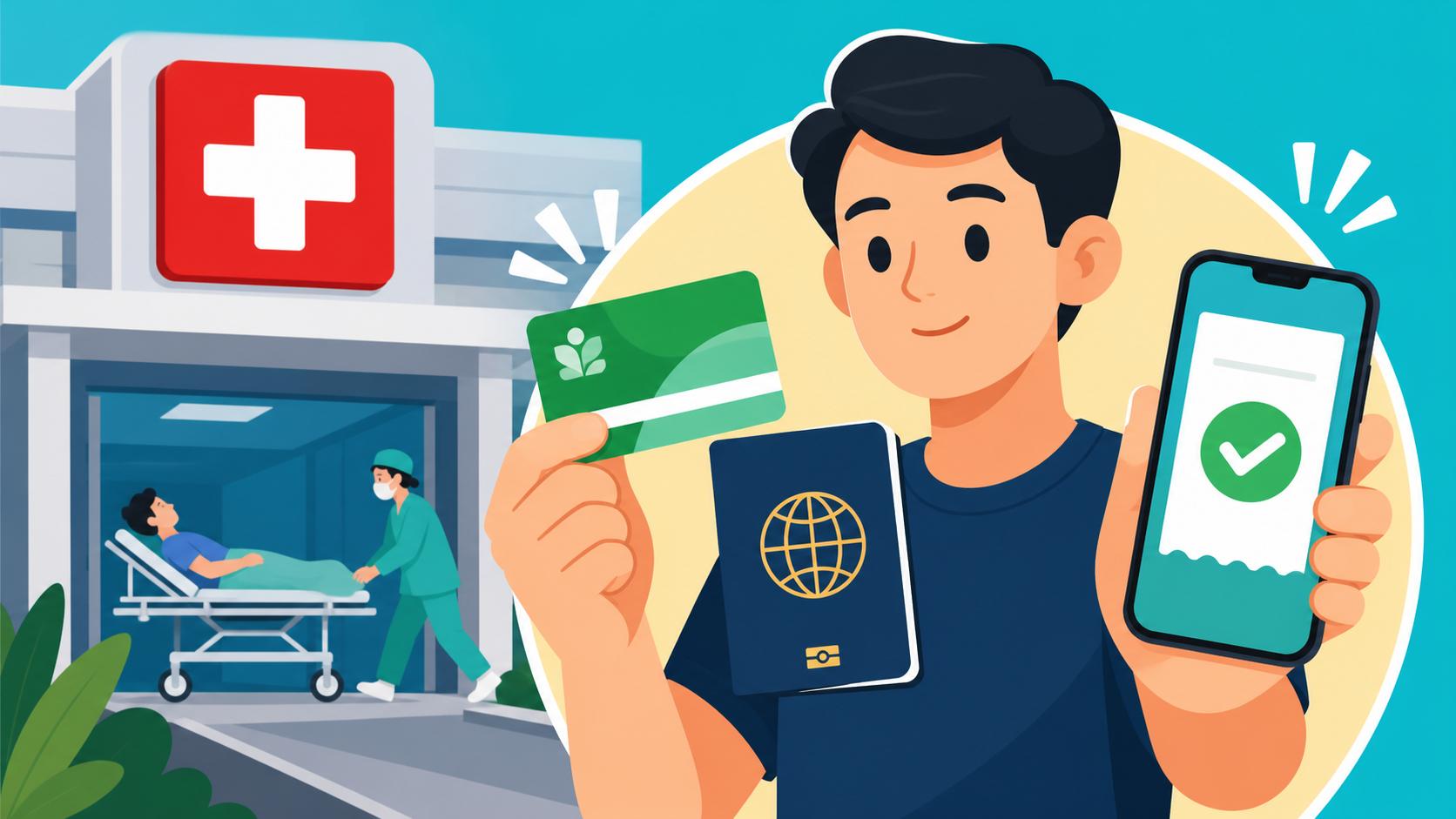
While you might carry a digital scan on your phone, a physical passport is the gold standard for identification in Indonesian hospitals. For foreigners, the hospital uses your passport number as your unique patient ID. If you are a resident, your KITAS or KITAP is equally vital because it determines your billing category. Hospitals often have different price lists for tourists versus residents. Without your physical KITAS, you might be billed the higher international tourist rate, which can be significantly more expensive for the same services.
If you have a local identity card for foreigners, commonly known as a KTP WNA, bring it. However, the passport remains the primary document that hospitals use to sync with insurance providers like Cigna Global to verify your eligibility for direct billing. Without it, the "direct" part of the billing often hits a brick wall, forcing you to pay out of pocket and claim later.
The BPJS Kesehatan Card and the JKN App
For those enrolled in the national scheme, having your BPJS Kesehatan card—or the Mobile JKN app on your phone—is mandatory. You should familiarize yourself with BPJS Kesehatan for Expats: Registration, Costs, and the New KRIS System before an emergency happens. In a UGD scenario, BPJS covers "emergency" conditions without a prior referral from a primary clinic (Faskes 1). However, the hospital’s definition of an "emergency" might differ from yours.
If the triage doctor deems your condition "non-emergency," and you want to use BPJS, they may redirect you to a clinic the next morning. Having your card ready allows the administrative staff to check your active status instantly. If your status is inactive due to a missed payment, you will be shifted to the "Pasien Umum" (General/Cash) category. To understand the nuances of these categories, refer to the Public vs Private Healthcare in Indonesia: BPJS Kesehatan and Expat Insurance guide.
Private Insurance and the Guarantee Letter
If you are using international coverage like Cigna Global, the most important "document" is often the Guarantee Letter (GL). When you arrive at the ER, you must present your insurance membership card immediately. The hospital staff will then contact the insurer to request a GL. This process can take anywhere from thirty minutes to several hours.
While waiting for the GL, the hospital will almost certainly ask for a credit card "swipe" or a cash deposit. Having your insurance policy number and the 24-hour emergency contact line for your provider saved in your phone is essential. This allows you to call the insurer yourself to speed up the authorization while the hospital staff handles the local paperwork.
Financial Readiness: Navigating Payment Proofs and Deposits
One of the most jarring aspects of Indonesian healthcare for newcomers is the requirement for an upfront deposit (uang muka or DP). Even if you have the best insurance in the world, many private hospitals will not move a patient from the ER to an inpatient ward until a deposit is paid or a Guarantee Letter is received.
The Down Payment Reality in Private Hospitals
In top-tier facilities like Siloam or Medistra, the deposit for an emergency admission can range from IDR 5,000,000 to over IDR 20,000,000, depending on the severity of the case. If surgery is required, this amount triples. You must bring a credit card with a high enough limit or have a mobile banking app ready for a QRIS or bank transfer.
It is a good idea to research the Siloam Hospitals Overview: What Expats Should Know About the Network to understand their specific administrative flows. If you cannot provide payment proof or a valid insurance card, you may find the staff reluctant to proceed with non-essential treatments, which is a stressful reality to navigate in the heat of the moment.
Public Hospitals and BPJS Procedures
If you opt for an RSUD (Regional Public Hospital), the atmosphere is different. If you are a BPJS member and it is a true emergency, the deposit is usually waived. However, you must still provide your identity documents within 24 hours of admission. If you fail to produce the BPJS card or the required NIK (National ID Number) within the hospital's deadline, the entire bill will revert to the "Umum" (General) rate, and you will be responsible for the full cost before discharge.
To avoid these headaches, many residents choose to supplement their public coverage. You can read more about Healthcare in Indonesia for Foreign Residents: Complete System Overview (2027) to see how public and private systems overlap during emergencies.
Keeping Track of "Bukti Bayar"
Every time you pay for a lab test, a radiology scan, or a pharmacy run within the hospital, you will receive a small thermal paper receipt (bukti bayar). Do not lose these. In the chaotic shuffle between the ER and the ward, these receipts are your only proof that a service has been paid for. I always carry a small plastic folder or even a Ziploc bag specifically for these slips. When it comes time for discharge, the billing department will reconcile these against their system. Any discrepancies can lead to long delays, as explained in our guide on Hospital Billing in Indonesia: Avoiding Overcharges and Understanding Inpatient Fees.
| Document Type | Priority Level | Why You Need It |
|---|---|---|
| Passport / KITAS | Critical | Primary ID for patient registration and billing rates. |
| Insurance Card | High | Triggers the Guarantee Letter (GL) process for direct billing. |
| BPJS (Mobile JKN) | High | Required for coverage in public hospitals or emergency ER use. |
| Credit Card / Cash | Critical | For the mandatory deposit (DP) before ward admission. |
| Medication List | Medium | Helps ER doctors avoid dangerous drug interactions. |
Medical Records and Personal Essentials for the UGD
Beyond the paperwork and the money, the ER doctors need information. In a country where medical records are rarely shared between different hospital groups, you are the primary keeper of your medical history.
Creating a Comprehensive Medication List
You should have a list—either printed or on your phone—of every medication you are currently taking. This includes dosage and frequency. Don't forget to include supplements you might be taking, such as vitamins or herbal products ordered from iHerb. If you are taking high doses of fish oil or blood thinners, the ER surgeons need to know this immediately to manage bleeding risks.
Similarly, if you have chronic conditions, having a brief summary of your last check-up can be lifesaving. If you find yourself frequently needing care, it may be worth Finding Medical Care in Indonesia: Clinics, Hospitals, and International Facilities that use a centralized digital record system, though these are still primarily confined to major cities like Jakarta and Surabaya.
The Role of the "Pendamping" (Companion)
In Indonesia, healthcare is a family affair. The hospital expects the patient to have a companion (pendamping) who handles the administrative legwork. While the patient is being treated in the triage area, the companion is the one running between the "Loket" (registration), the "Kasir" (cashier), and the "Apotek" (pharmacy).
If you are alone, the process becomes significantly harder. If you have an emergency, call a friend or a colleague to meet you at the hospital. They can hold your bag, manage the Cigna Global phone calls, and ensure that the nurse has the physical copies of your documents while you focus on recovery. For more on how the ER workflow functions, see Emergency Rooms (UGD) in Indonesia: Triage, Payment Upfront, and Documentation.
Personal Supplies for Long Waits
The "Emergency" in Emergency Room does not always mean speed. You might spend six to twelve hours in the UGD waiting for a room to open up in the main ward. Bring a power bank for your phone—you will be using it constantly to translate medical terms, call family, and check bank balances. A light jacket or sarong is also essential; Indonesian ERs are notoriously cold due to the industrial-strength air conditioning.
If you have specific dietary needs or health supplements you rely on, such as specialized electrolytes or probiotics from iHerb, it’s wise to have them in your "go-bag." While the hospital pharmacy provides the critical meds, your personal comfort items can make a huge difference during a long night in the triage bay.
Navigating the Triage and Administrative Workflow
Understanding the "why" behind the paperwork helps reduce the frustration. When you enter an Indonesian ER, you will go through Triage (Triase). This is where the medical staff determines if you are Red (immediate threat), Yellow (urgent), or Green (non-urgent).
The Loket Pendaftaran vs. The Triage Desk
Usually, there are two desks. The Triage desk is staffed by nurses who check your vitals. The Loket Pendaftaran is staffed by administrative clerks. You (or your companion) will likely have to visit both simultaneously. The clerk will ask for your passport and insurance details while the nurse is still wrapping the blood pressure cuff around your arm.
If you are a member of a private plan like Cigna Global, tell the registration clerk immediately: "Saya pakai asuransi cashless" (I am using cashless insurance). This triggers a different set of forms than if you were paying cash. If you don't mention it, they may default you to a cash patient, and trying to change the billing status later in the middle of the night is an administrative nightmare.
The Problem of "Surat Rujukan" (Referral Letters)
For non-emergency cases that end up in the ER, the staff might ask for a "Surat Rujukan" if you are using BPJS. This is why it is critical to know Choosing a Primary Clinic (Faskes Tingkat 1) vs Going Direct to a Hospital. In a true emergency (e.g., a heart attack, severe trauma, or high fever with a low platelet count), the referral is waived. But if you walk in with a moderate skin rash at midnight, be prepared to justify why it couldn't wait for a clinic visit.
Preparing for Potential Evacuation
In some cases, a local ER might not have the specialized equipment you need. This is particularly true in remote areas of Bali or outside the main islands. If the doctors suggest a transfer, you will need all the documentation mentioned above, plus a "Medical Report" (Resume Medis) from the ER doctor. This report is vital for Medical Evacuation (Medevac) Services in Indonesia: Costs and Insurance Coverage. Your insurance provider will not authorize an expensive flight to Singapore or Jakarta without a detailed medical justification from the attending ER physician.
Always ensure you have a "Surat Keterangan Dokter" (Doctor's Note) before you leave the ER, even if you are not admitted. You will need this for your employer or for any subsequent insurance claims. If you are regularly ordering health supplies or specific medications via iHerb, keep those records too, as they form part of your broader health narrative that doctors in Indonesia—and abroad—will need to see.
Disclaimer
The information provided in this guide is for educational and informational purposes only and does not constitute professional medical or legal advice. Healthcare regulations and hospital policies in Indonesia are subject to frequent changes. Always verify current requirements with your insurance provider and the specific medical facility you intend to visit. In the event of a life-threatening emergency, dial 118 or 119 immediately or proceed to the nearest medical facility.