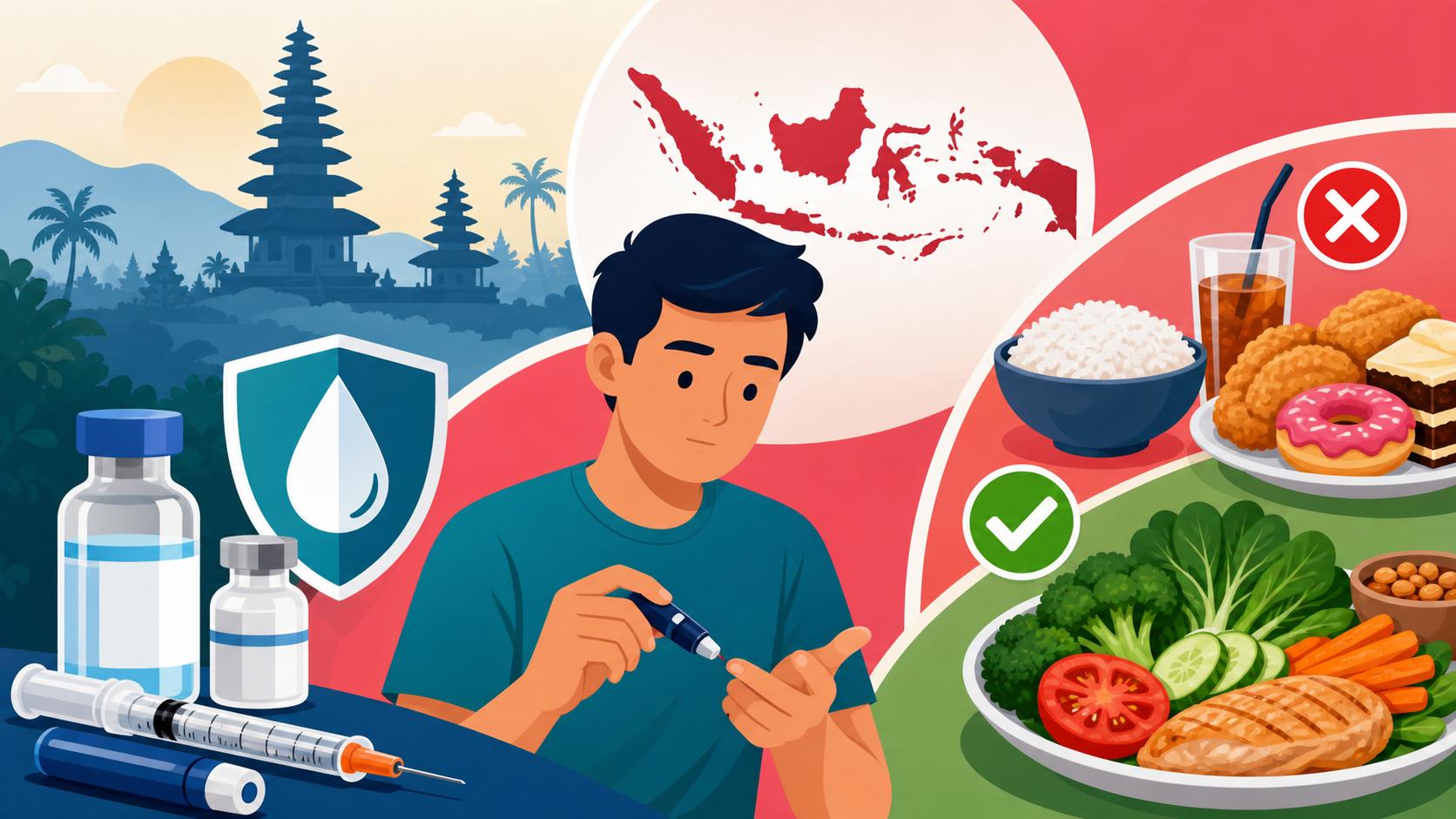
Diabetes Care in Indonesia: Insulin Supply and Dietary Challenges
Finding a consistent supply of rapid-acting insulin in a remote corner of Bali or explaining "no sugar" to a confused warung owner in Jakarta can feel like a full-time job. I remember the panic of my first power outage in South Jakarta, staring at my fridge and wondering if my expensive stash of Lantus would survive the tropical heat. This guide solves the logistical nightmare of managing diabetes in Indonesia, from securing your prescription to navigating a food culture that hides sugar in almost everything.
Navigating the Indonesian Healthcare System for Diabetes
When you first arrive, the sheer fragmentation of the medical system can be overwhelming. You aren't just dealing with a doctor; you're dealing with a complex web of "Apoteks," "Puskesmas," and private hospital networks. For a diabetic, consistency is the only thing that matters, and finding that consistency requires a proactive strategy. You need to understand how the system views chronic illness to get what you need without the stress.
Public vs Private Care Pathways
The public system, known as BPJS, is the backbone of healthcare here, but for many expats, the private route is preferred for chronic management. If you are using the BPJS Kesehatan for Expats: Registration, Costs, and the New KRIS System, you should be prepared for a referral-based process. This means you cannot simply walk into a specialist's office. You start at a primary clinic (Faskes 1), and they refer you upward. While this is cost-effective, the brands of insulin available under BPJS are often limited to those on the national formulary.
On the other hand, visiting a private facility like those mentioned in the Siloam Hospitals Overview: What Expats Should Know About the Network allows you to skip the red tape. Private endocrinologists are more likely to be familiar with international brands and the latest Continuous Glucose Monitor (CGM) technology. However, this comes with higher out-of-pocket costs, which is why having comprehensive coverage from Cigna Global is often a lifesaver for residents who want to maintain their pre-patriot care standards.
The Role of the Endocrinologist (Dokter Penyakit Dalam)
In Indonesia, you won't always find a "Diabetes Specialist" listed as such. You are looking for a Dokter Spesialis Penyakit Dalam (Internist), specifically one with a sub-specialty in Endokrin-Metabolik-Diabetes (KEMD). Finding one who speaks fluent English and understands the nuances of an expat lifestyle is crucial. I recommend checking Finding Medical Care in Indonesia: Clinics, Hospitals, and International Facilities to locate reputable specialists in Jakarta, Bali, or Surabaya.
Once you find a doctor you trust, stick with them. They will be the ones writing the prescriptions that keep you legal and supplied. Always ask for a long-term "Surat Keterangan Dokter" (Doctor's Reference Letter) that explains your condition and your specific medication requirements. This letter is your golden ticket if you ever have issues at customs or need to prove why you are carrying syringes and cooling pouches.
Managing Your Insulin and Medication Supply
The biggest hurdle many of us face is the "stok kosong" (out of stock) phenomenon. You might find your specific insulin pen at a Kimia Farma today, only to find the entire city is out of it next month. This is the reality of Managing Chronic Conditions: Diabetes, Hypertension, and Long-Term Medication in a country with complex import logistics.
Availability of Insulin Brands and Delivery Systems
Common long-acting insulins like Lantus (Glargine) and Levemir (Detemir), as well as rapid-acting options like Novorapid (Aspart) and Humalog (Lispro), are generally available in major cities. However, if you use more niche brands or high-concentration formulas (like U-500), you may struggle. It is vital to consult with your doctor about local equivalents early on.
The procurement process usually involves a trip to a large pharmacy chain like Kimia Farma, K-24, or Guardian. For the most reliable service, I suggest using the Apotek Guide: Prescription Workflow, Refills, and Communicating with Pharmacists to understand how to navigate the "copy resep" system. If you run out unexpectedly, apps like Halodoc or Alodokter can sometimes facilitate a quick tele-consult and delivery, but they often lack the cold-chain guarantees needed for insulin.
Cold Chain Logistics and Storage Challenges
Indonesia is hot. Very hot. Keeping insulin between 2°C and 8°C while traveling or during a frequent PLN power outage is a significant challenge. I always tell newcomers to invest in high-quality cooling pouches (like Frio bags) and a small, dedicated backup power source for their refrigerator.
When you buy insulin from an apotek, watch the pharmacist. Do they take it out of a functioning fridge, or was it sitting on the counter? Always check the expiry date and the clarity of the liquid. If you are moving houses or traveling between islands, refer to Bringing Medication Into Indonesia: Customs Rules, Limits, and Required Letters to ensure you are transporting your supplies safely and legally. Many expats use Cigna Global to ensure they have the financial means to fly to Singapore or back home if a massive supply chain disruption occurs, which, while rare, is a stress-reliever to have in your back pocket.
Dietary Challenges and the Hidden Sugar Trap
This is where the real struggle begins. Indonesian cuisine is delicious, but it is a minefield for diabetics. From the rice-heavy portions to the ubiquitous "Kecap Manis" (sweet soy sauce), your blood sugar will be under constant assault. Navigating this requires a deep understanding of local ingredients and a lot of firm communication.
Decoding the Indonesian Menu
The standard Indonesian meal is built around a mountain of white jasmine rice, which has a very high glycemic index. Even the savory dishes often contain palm sugar or are glazed in Kecap Manis.
| Common Dish | Hidden Danger | Diabetes-Friendly Alternative |
|---|---|---|
| Nasi Goreng | High carb, sweet soy sauce, palm oil | Sate Ayam (no peanut sauce) with extra veggies |
| Gado-Gado | Peanut sauce is often 30% sugar | Salad with vinegar/oil (ask for sauce on side) |
| Es Teh Manis | Massive amounts of dissolved sugar | Teh Tawar (Plain tea) |
| Jus Alpukat | Chocolate syrup and sweetened condensed milk | Plain Avocado juice (Jus Alpukat Tanpa Gula/Susu) |
| Bakso | High starch content in the meatball fillers | Cap Cay (Stir-fried vegetables) with chicken |
When dining out, the phrase "Tanpa Gula" (Without Sugar) is your best friend, but be warned: many staff members assume "no sugar" only refers to white table sugar. They might still add sweetened condensed milk or honey. You must be specific: "Tanpa gula, tanpa susu kental manis, tanpa madu."
Sourcing Low-Glycemic Ingredients
If you are cooking at home, you have much more control. Most "Expat" supermarkets like Grand Lucky, Ranch Market, or Papaya stock quinoa, brown rice, and almond flour. However, these are expensive. For your specialty needs, like Stevia drops, Erythritol, or high-fiber supplements, I frequently turn to iHerb. They ship reliably to Indonesia, and as long as you keep your order under the de minimis value for customs, it is a much cheaper way to maintain a low-carb pantry. iHerb is also great for finding sugar-free snacks that simply don't exist in the local Indomaret.
Monitoring and Long-Term Management
The heat and humidity don't just affect your insulin; they can affect your testing equipment too. Glucose strips can give false readings if they are exposed to moisture, and your own hydration levels will drastically swing your numbers.
Lab Testing and CGM Availability
Routine monitoring is accessible. You don't always need a doctor's referral to get an HbA1c test. You can walk into a Prodia or Pramita lab and request a "Paket Diabetes." For more help interpreting these, see Reading Indonesian Lab Results: Common Terms (Kolesterol, Asam Urat) Explained.
As for Continuous Glucose Monitors (CGMs) like the FreeStyle Libre, they are becoming more common in Jakarta and Bali, but they are significantly more expensive than in Europe or the US. Some local distributors sell them via Tokopedia, but you must vet the sellers carefully to ensure they are medical-grade and not gray-market imports with no warranty. If you rely on a CGM, consider it part of your Healthcare in Indonesia for Foreign Residents: Complete System Overview (2027) strategy to bring a six-month supply with you, provided you have the proper documentation.
Emergency Protocols and Support
Hypoglycemia is a real risk when you are active in the heat. I never leave my villa without a packet of "Tolak Angin" (it has sugar, though it's herbal) or glucose tabs from my iHerb stash. If you find yourself in a severe situation, you need to know which hospitals have a functioning ER. Check Emergency Medical Care in Indonesia: Ambulances, ERs, and Evacuation Protocols for a list of facilities that can handle diabetic ketoacidosis (DKA) or severe hypoglycemia.
Living with diabetes here is entirely possible—I've done it for years—but it requires a level of vigilance that you might not be used to. Between the "hidden sugars" in the sambal and the logistical dance of the apoteks, you have to be your own strongest advocate. Whether you are leaning on the Private Health Insurance in Indonesia: Bridging the Gap When BPJS Isn't Enough or managing things independently, the key is preparation.
Disclaimer
This article is for informational purposes only and does not constitute professional medical advice, diagnosis, or treatment. Always seek the advice of your physician or other qualified health provider with any questions you may have regarding a medical condition. The Indonesian healthcare landscape and pharmaceutical regulations are subject to frequent change. Refer to official Ministry of Health (Kemenkes) guidelines for the most current information.