Getting Tattoos in Bali: Hygiene Standards and Studio Recommendations
Walking into a Bali tattoo shop can feel like a high-stakes gamble when you see the sheer volume of questionable "beachfront" setups. I remember the paralyzing anxiety before my first large-scale piece in Canggu, wondering if I’d walk away with a masterpiece or a systemic infection. This guide solves those fears by breaking down strict hygiene benchmarks and vetting the island’s most reputable studios.
The Evolution of the Bali Tattoo Scene
Years ago, getting a tattoo in Bali was often associated with "magic mushrooms," cheap Bintang, and a high risk of "Bali Belly" or worse. The industry has undergone a massive professionalization over the last decade. Today, Bali is a global destination for high-end ink, attracting artists from Europe, Australia, and the Americas who have traded their cold home studios for the tropical lifestyle of the Island of the Gods.
The geography of the tattoo scene has shifted as well. While Kuta was once the epicenter, the focus has moved toward Bali Neighborhoods: Seminyak, Canggu, Sanur, Ubud, and the Bukit. Each of these areas offers a different vibe and specialization. Canggu has become the hub for fine-line and contemporary blackwork, while Seminyak tends to host high-concept luxury studios. If you are looking for traditional Balinese motifs or spiritual "Sakit" (hand-tapped) tattoos, Ubud remains the cultural heart of that movement.
Despite this professionalization, the "street shops" still exist. These are the places where you see a guy with a machine and a stool in a room open to the dusty street. As a veteran resident, my advice is simple: avoid these at all costs. The humidity, dust, and lack of climate control are recipes for disaster. Professional studios in Bali now look like high-end medical clinics, often featuring air-conditioned, sterile environments that rival anything you would find in London or Los Angeles.
Vetting Hygiene and Medical Standards in Indonesia
When you are in a foreign country, you cannot take hygiene standards for granted. In Indonesia, there is no centralized "Health Department" rating posted on the door like you might see in some Western countries. You have to be your own inspector. Before you even think about putting down a deposit, walk into the shop and ask to see their sterilization process.
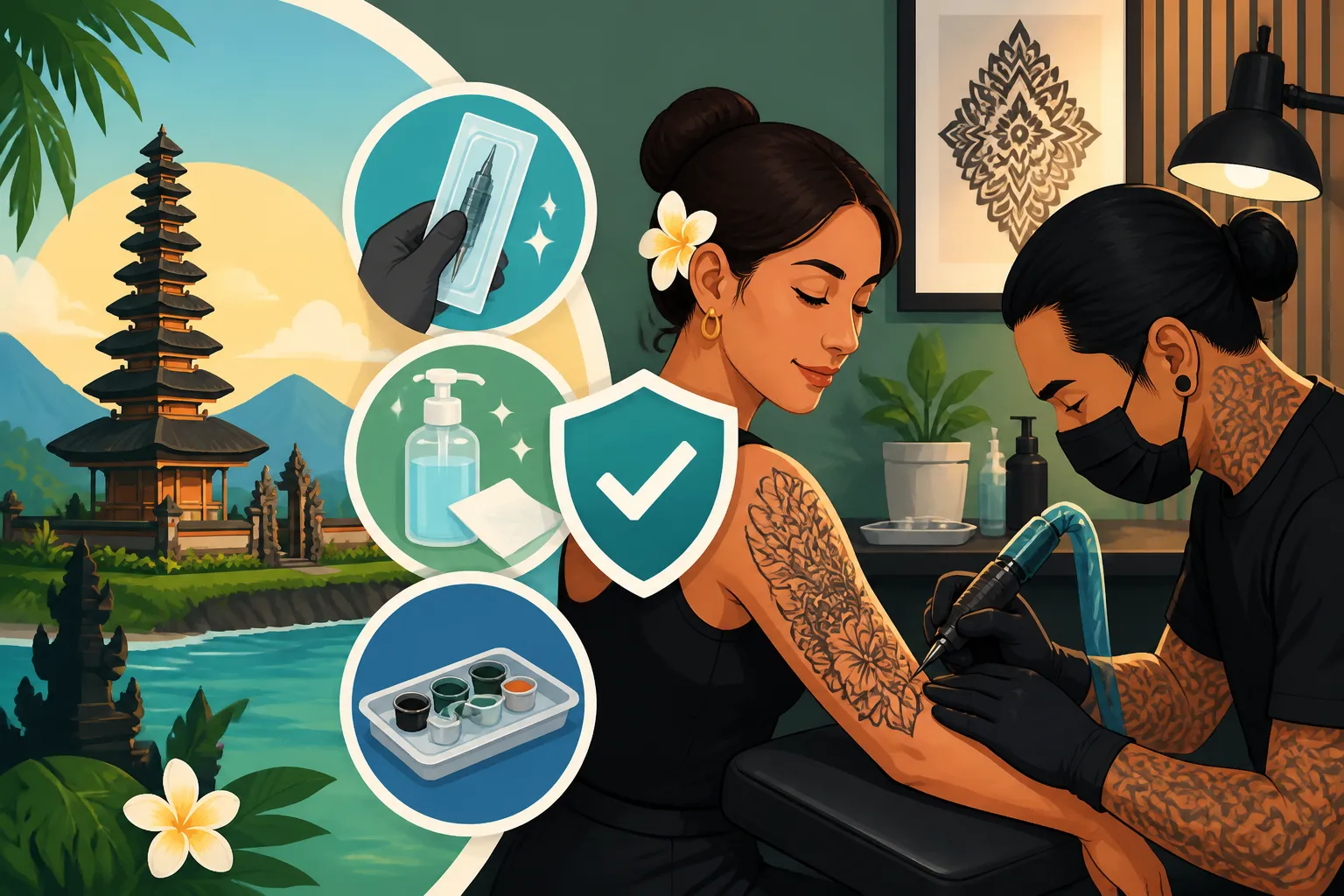
A professional studio must use a medical-grade autoclave for any non-disposable equipment. Most modern shops have moved entirely to single-use, pre-sterilized cartridges. If you see a "reusable" needle or an open ink cap being used for multiple clients, walk out immediately. Cross-contamination is the biggest risk here. Artists should be wearing fresh black nitrile gloves and changing them every time they touch something outside the sterile field (like their phone or a water bottle).
Furthermore, the quality of the ink matters immensely. Some lower-tier shops use locally mixed inks or cheap imports that can lead to Tropical Allergies: Managing Reactions and Finding Antihistamines Locally. High-end studios will proudly show you their bottles of Dynamic, Fusion, or Eternal ink, which are international gold standards. If the artist is cagey about where their ink comes from, it’s a major red flag. If you do happen to experience an adverse reaction or suspect an infection, do not wait. You should immediately look into Finding Medical Care in Indonesia: Clinics, Hospitals, and International Facilities to get professional help before it escalates.
| Hygiene Checkpoint | What to Look For | Why It Matters |
|---|---|---|
| Needles | Single-use, blister-packed cartridges | Prevents blood-borne pathogen transmission. |
| Environment | Fully enclosed, AC-controlled room | Dust and humidity increase the risk of infection. |
| Ink | US or EU certified brands (Dynamic, Intenze) | Minimizes allergic reactions and heavy metal toxicity. |
| Waste | Dedicated biohazard sharps containers | Ensures safe disposal of used needles. |
| Surface Prep | Plastic wrapping on chairs and machines | Prevents cross-contamination between clients. |
Top Studio Recommendations by Artistic Style
Choosing the right studio is about matching your vision to the artist's specific skill set. In Bali, specialization is the name of the game. You wouldn't go to a realism specialist for a traditional Balinese piece, and vice versa. Before you book, I highly recommend using Airalo to ensure you have a stable data connection to browse the Instagram portfolios of these artists while you’re out exploring. It is much easier to vet their healed work when you can load high-resolution images on the fly.
For those interested in "Fine-Line" or "Micro-Realism," Canggu is your best bet. Studios like Koloni or Mason's have built reputations for incredible precision. These studios are popular, so you’ll want to book weeks in advance. If you are staying nearby, check Agoda for boutique villas in the Pererenan area; staying close to your studio is a smart move since traveling long distances on a scooter with a fresh, stinging tattoo is anything but pleasant.
If you are looking for "Traditional Americana" or "Bold Blackwork," Babayaga in Canggu or Seminyak offers a very specific, high-contrast aesthetic. For those who want to incorporate Balinese culture, many local artists specialize in "Barong" or "Rangda" imagery, often blending it with modern illustrative techniques. No matter where you go, ensure the shop has a clear "aftercare" protocol. If they don't give you a printed sheet or a clear verbal explanation, they aren't professional enough. In the rare event of a severe medical issue, knowing the location of BIMC Hospital Bali: Services, Costs, and Insurance Direct Billing Options is vital for peace of mind.
Aftercare Challenges in the Tropics
Healing a tattoo in Bali is significantly harder than healing one in a dry, temperate climate. The 90% humidity and 30-degree heat mean your skin is constantly sweating, which can push ink out or trap bacteria. The "Saniderm" or "second-skin" bandages are popular here because they create a waterproof barrier, but you must be careful—if you sweat under the plastic, you can develop a heat rash or a localized infection.
The biggest enemies of a new Bali tattoo are the sun, the sea, and the pool. The UV index in Indonesia is frequently "Extreme," and even ten minutes of direct sun on a fresh tattoo can cause it to fade or blister. Saltwater and chlorine are even worse; they are essentially chemical irritants and bacterial playgrounds. You must commit to staying out of the water for at least two weeks. If you can’t resist the beach, you shouldn't get tattooed until the very last day of your trip.
For aftercare supplies, you don't need to bring everything from home. You can find high-quality unscented soaps and specialized ointments like Bepanthen on Shopee, which delivers quickly to most villas in Bali. I also suggest using Shopee to order loose, breathable cotton clothing to wear over your new ink; tight synthetic fabrics will chafe and irritate the area. If you start to see redness spreading or feel a fever coming on, consult the Bali Healthcare Guide: Hospitals, Clinics, and Emergency Contacts for Residents immediately. It’s always better to be overly cautious than to end up needing Emergency Medical Care in Indonesia: Ambulances, ERs, and Evacuation Protocols.
Understanding the Pricing and Deposit Culture
Tattooing in Bali is generally more affordable than in Australia or the US, but it is not "cheap" if you are going to a top-tier studio. Expect to pay between IDR 1,500,000 to IDR 2,500,000 per hour at the island's best shops. Some artists charge a "day rate," which can range from IDR 8,000,000 to IDR 15,000,000. While you might find shops offering "half price" tattoos, remember that you are paying for the artist's experience and the shop's hygiene standards. Never haggle over a tattoo price; it is considered disrespectful to the artist's craft.
Most reputable studios will require a deposit to secure your booking. This is usually around IDR 500,000 to IDR 1,000,000 and is typically non-refundable if you cancel at the last minute. This protects the artist's time in a market where "no-shows" are common. Always get a digital or physical receipt for your deposit. If you are managing your finances through local apps, you'll find that many shops now accept QRIS payments or bank transfers, though cash is still king for smaller shops.
Managing your health during the process is also about what you put in your body. Avoid heavy drinking the night before, as alcohol thins the blood and makes you bleed more, which can wash out the ink. Also, make sure you've had a solid meal and plenty of water. Many expats look into Health and Wellness in Bali: Yoga, Holistic Clinics, Diet, and Retreats to keep their immune system strong, which is a key part of the healing process. If you follow these steps and use common sense, your Bali tattoo will be a lifelong souvenir rather than a painful lesson.
Before you head to the studio, make sure you have your Apotek Guide: Prescription Workflow, Refills, and Communicating with Pharmacists handy, as you might need to pick up specific antiseptic washes or creams that are common in Indonesia but have different brand names than what you are used to back home.
Disclaimer
The information provided in this guide is for informational purposes only and does not constitute medical or legal advice. Tattooing involves inherent risks, including infection and allergic reactions. Always consult with a medical professional if you have underlying health conditions or experience complications. The author and this website are not responsible for any outcomes resulting from services provided by the studios mentioned.