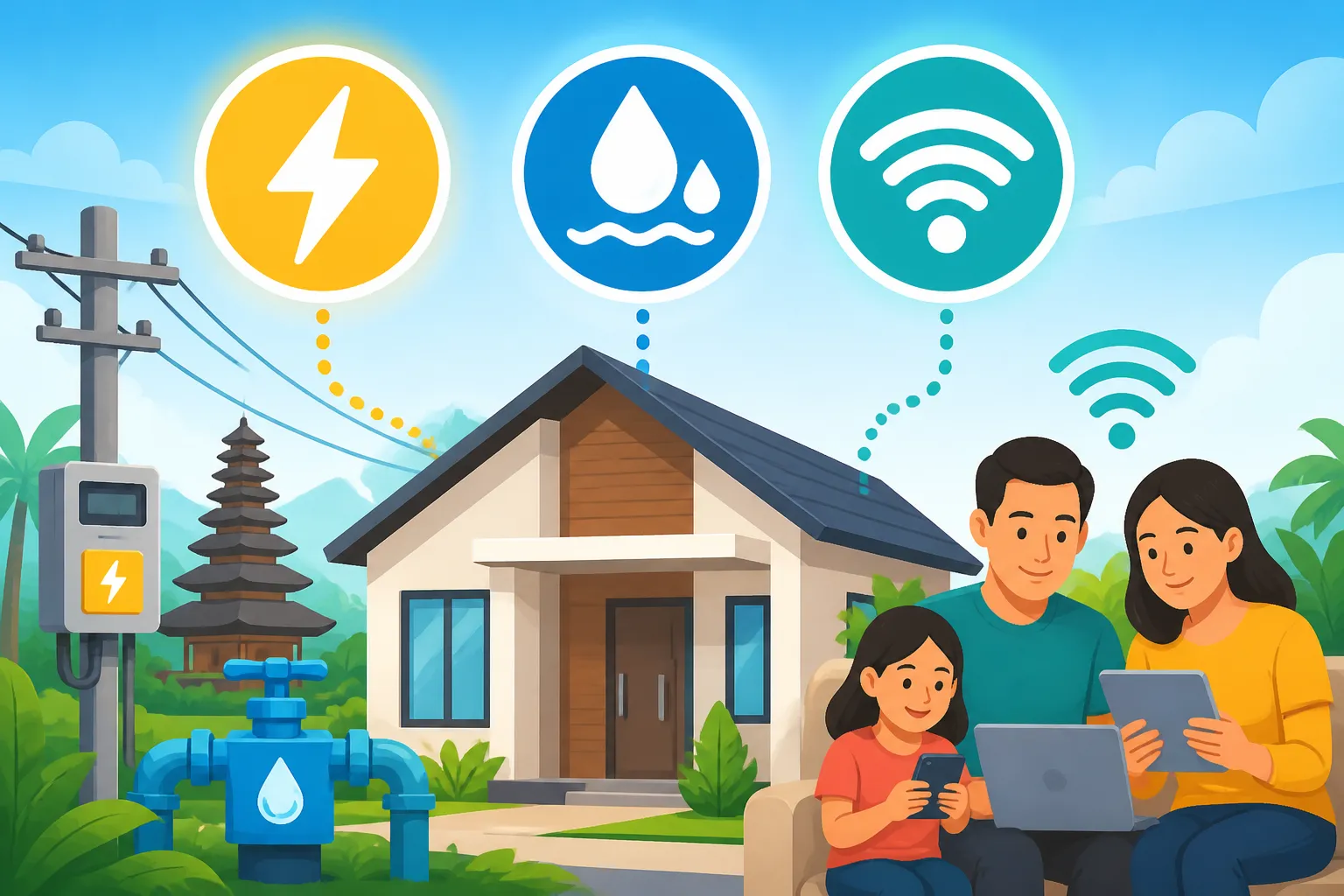
Utilities and Setup: PLN Electricity, PDAM Water, and Home Internet in Indonesia
Setting up a new home in Indonesia often feels like trying to solve a puzzle where the pieces keep changing shapes. I vividly remember sitting in the dark during my first week in Jakarta, staring at a beeping meter, not realizing I had to "top up" my own electricity. This guide demystifies the technical and bureaucratic hurdles of managing utilities so you can focus on enjoying your new life.
Understanding the PLN Electricity System
The Perusahaan Listrik Negara (PLN) is the sole provider of electricity in Indonesia. While the state-owned monopoly simplifies the "who" of your service, the "how" is where most expats get tripped up. Indonesia uses a 220V system with C and F type plugs (the two-pin European style). However, the most critical thing to understand isn't the plug—it's the power capacity and the payment method.
Prepaid vs. Postpaid Meters
Most modern villas in Bali and apartments in Jakarta now use the prepaid (Prabayar) system. This involves a digital meter where you enter a 20-digit token (token listrik) that you purchase beforehand. The meter will start beeping incessantly when your "credit" is low, usually around 20 kWh. It is a sound that has haunted many of us at 3 AM. If you ignore the beep, the power simply cuts off. You can buy these tokens easily through local banking apps or even on Shopee, which often offers small discounts or cashback.
The postpaid (Pascabayar) system is more traditional; you receive a bill at the end of the month based on your usage. This is more common in older houses and high-end luxury apartments. If you are Renting in Indonesia: The 1-Year Upfront Rule, Contracts, and Avoiding Scams, always ask the landlord which system is installed. With postpaid, if you miss a payment, PLN is surprisingly quick to come and disconnect the wires, and getting reconnected involves a tedious trip to a local PLN office and potentially heavy fines.
Regardless of the system, keep a close eye on your usage. Indonesian electricity isn't necessarily cheap compared to regional neighbors, and if you run multiple AC units 24/7, your monthly costs can skyrocket. I learned the hard way that a poorly maintained AC unit draws significantly more power, leading to a much higher "token burn rate."
Power Capacities and Why They Matter
In Indonesia, electricity is sold in specific capacities measured in Volt-Amperes (VA). Common household tiers include 1300VA, 2200VA, 3500VA, 4400VA, and upwards of 11,000VA for large villas. This is the "ceiling" of how much electricity you can draw at once. If you try to run two air conditioners, a water heater, and a microwave on a 2200VA circuit, the breaker will likely trip.
Expats often find that their "new" home doesn't have enough juice for their Western lifestyle. If you find your power tripping constantly, you may need to request a "tambah daya" (increase power) from PLN. This requires the homeowner's permission and a fee. It is a common point of negotiation during the lease-signing phase. For a deep dive into starting your journey, see our Living in Indonesia as an Expat: The Complete Starter Guide (2027).
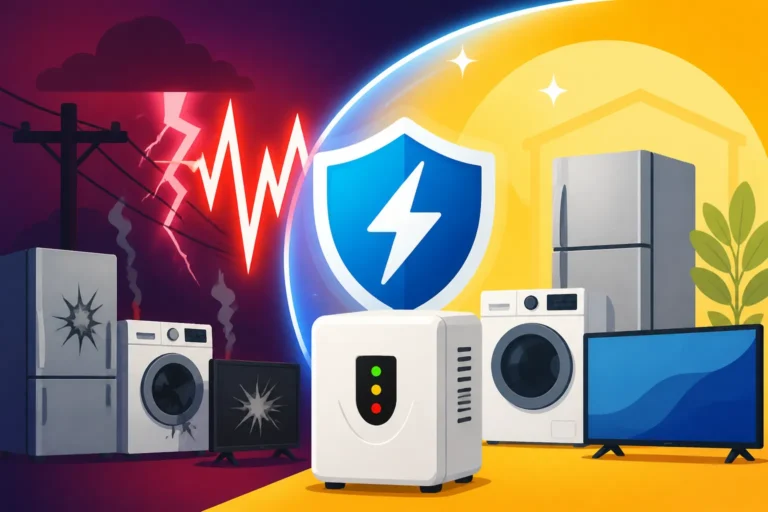
Understanding the conversion from VA to Watts is also tricky because of the "Power Factor." Generally, 2200VA doesn't mean 2200 Watts of usable power; it's usually closer to 1800-2000 Watts. This is why Buying Appliances: Voltage Spikes and Why You Need a Stabilizer is essential advice. A stabilizer protects your expensive fridge or TV from the frequent fluctuations that characterize the Indonesian grid.
Troubleshooting Power Cuts and Technical Issues
Mati lampu (power outage) is a phrase you will learn quickly. While the grid in major cities like Jakarta and Surabaya has improved significantly, Bali and more remote areas still face "rolling blackouts" or maintenance cuts. Most high-rise apartments have massive diesel generators that kick in within seconds, but if you are in a standalone house or villa, you are on your own.
If your power goes out, the first step is to check the street. If your neighbors have lights, your breaker has likely tripped or your prepaid credit has run out. If the whole street is dark, you can check the PLN Mobile app. It is surprisingly functional and allows you to report outages and track the repair progress in real-time.
For those who work from home, a dedicated Uninterruptible Power Supply (UPS) for your router is a lifesaver. Nothing kills a Zoom call faster than a 10-second power flicker that takes your fiber-optic ONT five minutes to reboot. If you are just arriving and haven't set up your home yet, using an eSIM from Airalo can provide a temporary backup hotspot during these outages.
Securing a Reliable Water Supply
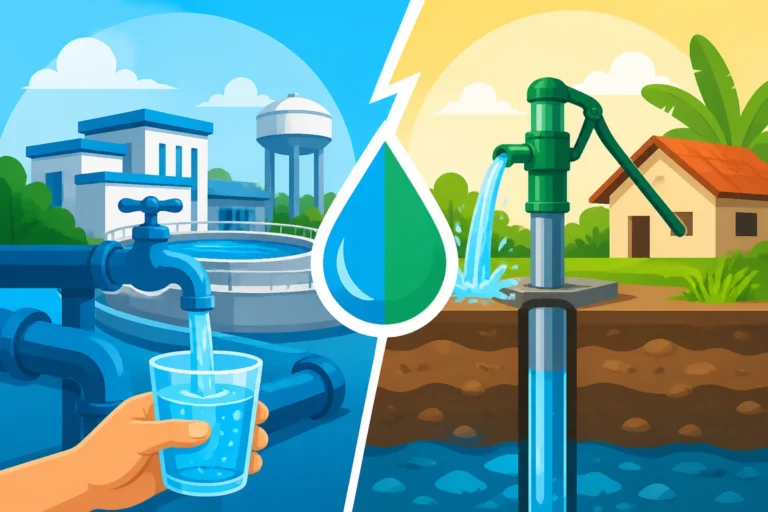
Water in Indonesia generally comes from two sources: the municipal supply (PDAM) or a private borewell (Sumur Bor). Unlike many Western countries, tap water in Indonesia is never considered potable. Even for brushing your teeth, many expats prefer using bottled water, though most of us eventually get comfortable using tap water for everything except drinking and cooking.
PDAM City Water and Registration
PDAM (Perusahaan Daerah Air Minum) is the government-run utility. In many parts of Jakarta, PDAM is the standard. The reliability and pressure can vary wildly depending on your neighborhood. During the dry season, pressure can drop significantly, which is why most Indonesian homes are equipped with a "ground tank" (a reservoir under the house) and a "roof tank" (toren) on the top floor.
The water travels from the street into the ground tank, and a pump then pushes it up to the roof tank, where gravity provides the pressure for your showers. If your water stops, the first thing to check is usually your pump. I’ve spent many frustrated mornings covered in soap only to realize the pump's "automatic" sensor had jammed. You can learn more about these quirks in our guide on Troubleshooting Noisy Water Pumps and Septic Tank Issues in Villas.
Paying your PDAM bill is usually done monthly. Like electricity, you can handle this through Digital Banking and E-Wallets: How to Register for GoPay, OVO, and Dana. If you are moving into a new build, ensuring the PDAM connection is already active is vital, as getting a new "pipe-in" can take weeks of bureaucratic back-and-forth.
Borewells (Sumur Bor) and Maintenance
In Bali and the outskirts of major cities, the borewell is king. You essentially have a deep hole in your yard with a submersible pump pulling water from the aquifer. The "plus" side is that there is no monthly water bill. The "minus" side is that you are responsible for the quality and the mechanical upkeep.
Borewell water quality in Indonesia is highly localized. In some areas, the water is crystal clear; in others, it might have a high iron content (smelling like pennies and staining your white laundry orange) or a "swampy" odor. If you are living in a villa, you need to be aware of the "Dry Season" risk. In particularly hot years, shallower wells can run dry, requiring you to call a service to "deepen" the well, which is a messy and expensive process.
Maintenance is key for well systems. You should have your pump serviced annually and check your tanks for sediment buildup. If you have household staff, they usually know the local "tukang" (handyman) who can fix a pump in an hour. Managing these relationships is part of the local experience, which we cover in Managing a Full-Time Driver: Providing Meals, Overtime, and Responsibilities.
Water Safety and Filtration for Daily Use
Since you can't drink the tap water, the "Gallon" system is the standard. These are 19-liter reusable jugs (usually the brand Aqua) that are delivered to your door or bought at the local warung. Most expats invest in a bottom-loading water dispenser that provides both ice-cold and boiling water at the touch of a button.
For the water coming out of your taps, many expats install a central filtration system. These large blue or stainless steel canisters sit near your water tank and use sand, carbon, and manganese to strip out impurities. This is highly recommended if you have sensitive skin or if you notice your hair feeling "tacky" after a shower. For more specific recommendations, see Choosing the Right Water Filter System for Safe Brushing and Cooking.
Don't forget the sewage. Most Indonesian homes use a "Septic Tank" system rather than a centralized sewer. This means you need to be very careful about what you flush. The "flushable" wipes sold in supermarkets are absolutely not flushable in an Indonesian septic system. Every few years, the tank will need to be pumped out by a "Sedot WC" truck—a colorful vehicle you will see roaming the streets with a megaphone.
Home Internet and Connectivity Options
If you are a digital nomad or a remote worker, internet isn't just a utility; it's oxygen. Indonesia’s internet landscape has shifted from "notoriously slow" to "surprisingly decent" in the last five years, but "The Last Mile" (the connection from the street to your house) is still a common point of failure.
Fiber Optic Providers
For a stable home setup, fiber optic (Fiber ke Rumah) is the only way to go. The main players are Biznet, IndiHome, MyRepublic, and First Media.
- Biznet: Generally the favorite for expats due to high upload speeds and relatively reliable international routing.
- IndiHome: Owned by the state-run Telkom. It has the widest coverage—if you are in a remote village, IndiHome might be your only choice. However, they are known for "throttling" certain services and having a more difficult customer service interface.
- MyRepublic: Excellent for gamers and high-bandwidth users, though their coverage is limited to specific "clusters" in major cities.
When you move in, check which providers are "ready" in your street. Some neighborhoods or apartment buildings have "exclusive" contracts with one provider, meaning you can't choose Biznet even if you want to. For a comparison of speeds and costs, check Home Internet Providers: IndiHome, Biznet, and Starlink Options in 2027.
Mobile Data and eSIM Solutions
Never rely solely on your home fiber. I always keep a "backup" mobile router (MiFi) or a dual-SIM phone. Telkomsel is the "premium" mobile provider with the best coverage across the archipelago, while XL Axiata and Indosat are cheaper alternatives that work well in urban centers.
For newcomers, the IMEI registration of your foreign phone is a massive hurdle. If you don't register your phone with customs, your SIM card will stop working after 90 days. While you navigate this, an Airalo eSIM can be a great way to stay connected via data roaming without the immediate need for a local SIM. Once you are settled, you can buy "pulsa" (credit) or data packages for your local SIM on Shopee, which is often much cheaper than buying directly from the provider's app.
Satellite Internet (Starlink)
In 2024 and 2025, Starlink officially entered the Indonesian market, and it has been a game-changer for those living in the jungles of Ubud or the remote beaches of Sumba. The hardware is relatively expensive (around 7-8 million IDR), but the monthly subscription is competitive with high-end fiber packages. If you are in a location where the local fiber providers keep telling you "no coverage" or "the poles are full," Starlink is your best friend. It requires a clear view of the sky, which can be a challenge in densely forested areas or narrow urban alleys.
Cooking Gas and Waste Management
Life in an Indonesian house involves a few "analog" utilities that you might not be used to. There is no piped natural gas in 99% of residential areas. Instead, everything runs on LPG cylinders.
LPG Cylinder Basics
You will mostly see two types of tanks: the small 3kg "melon" tanks (bright green) and the 12kg "Bright Gas" tanks (pink or blue). The 3kg tanks are technically subsidized for low-income households, but they are available everywhere. Most expats prefer the 12kg tanks as they last much longer—typically 2-3 months for a standard family that cooks daily.
When your gas runs out, it always happens right in the middle of cooking dinner. You don't "refill" your tank; you "swap" it. You take your empty tank to the local warung or call a delivery service, pay the price of the gas, and they give you a full tank. Always check the rubber seal (seal karet) when you connect a new tank. If you hear a hissing sound or smell gas, the seal is likely faulty. Keeping a spare pack of these tiny rubber rings in your kitchen drawer is a pro-move.
Managing Garbage and Recycling
Garbage collection in Indonesia is highly localized. In an apartment, it’s included in your service charge. In a house, it's usually managed by the local community. You will pay a monthly fee (Iuran) to a collector who comes by on a motorbike with a cart or a small truck.
Recycling is still in its infancy here. While there are no official "blue bins" in most neighborhoods, there is an informal economy of "Pemulung" (scavengers). These individuals collect cardboard, plastic bottles, and metal from your trash to sell to recycling centers. Many expats choose to separate their recyclables and leave them in a clean bag next to the bin as a courtesy to these collectors. In Bali, there are private companies like EcoBali that offer much more robust recycling services for a monthly fee.
Local Community Coordination (RT/RW)
Your utility experience is often governed by your relationship with the local neighborhood heads: the RT (Rukun Tetangga) and RW (Rukun Warga). They are the ones who coordinate security, trash collection, and local "street fees." When you move in, it is customary (and often required) to introduce yourself and provide a copy of your documents. They are your first line of defense if there is a dispute with a utility provider or a neighbor. Read more about this in Rukun Tetangga (RT) / Rukun Warga (RW): Registering with the Local Village Chief.
Household Staff and Utility Coordination
Managing all these moving parts—the beeping meter, the empty gas tank, the orange well water—can be a full-time job. This is why most expats hire a "Pembantu" (domestic helper) or a "Suster" (nanny).
Hiring Help for Maintenance
A good helper doesn't just clean; they manage the household ecosystem. They will be the one to notice the water pump is making a weird noise before it actually breaks. They will be the one to flag down the gas delivery man. When hiring, it’s important to understand the legalities and cultural norms, such as Giving the 13th Month Bonus (THR) to Your Maid and Driver Legally.
Managing Bills Through Digital Platforms
Almost every utility in Indonesia can now be paid digitally. I highly recommend setting up a local bank account (BCA and Mandiri are the most expat-friendly) and linking it to an e-wallet. You can pay your PLN, PDAM, Internet, and even your BPJS health insurance through a single app.
Using Shopee is particularly useful because you can set up "reminders" for your monthly bills. For a veteran's perspective on managing your finances, don't miss our guide on Digital Banking and E-Wallets: How to Register for GoPay, OVO, and Dana.
Communication with Local Service Providers
Language can be a barrier when a technician from Biznet or PLN shows up at your door. Most technicians speak very limited English. Having a few key phrases in Bahasa Indonesia—or better yet, having your helper or a local friend translate—is crucial. If you're out and about, Agoda is great for booking a "staycation" if your home utilities are undergoing major repairs and you need a functional space for a few days.
Cost Comparison and Budgeting Table
To help you plan your monthly expenses, here is a rough estimate of utility costs for a standard 3-bedroom home in a major city or expat hub (Bali/Jakarta) in 2026.
| Utility | System | Estimated Monthly Cost (IDR) | Estimated Monthly Cost (USD) |
|---|---|---|---|
| Electricity | Prepaid (2200VA-3500VA) | 1,500,000 – 3,000,000 | $95 – $190 |
| Water (PDAM) | Postpaid | 150,000 – 400,000 | $10 – $25 |
| Internet (Fiber) | Biznet/IndiHome (100Mbps) | 400,000 – 700,000 | $25 – $45 |
| Cooking Gas | 12kg Cylinder (1 swap) | 220,000 | $14 |
| Trash/Security | Community Fee (Iuran) | 100,000 – 300,000 | $6 – $20 |
| Drinking Water | 19L Gallons (10 jugs) | 200,000 | $13 |
Note: Prices fluctuate based on usage, especially for electricity. If you run the pool pump and multiple ACs, the electricity bill can easily double. When budgeting, always factor in the local food scene, which you can explore in Finding Halal, Vegan, and Gluten-Free Options in Indonesian Restaurants.
Summary and Final Advice
Setting up utilities in Indonesia is a rite of passage. It requires patience, a sense of humor, and a reliable smartphone. My final piece of advice? Don't wait for something to break or run out. Buy that spare gas tank, top up your electricity meter before it beeps, and keep the number of a good "tukang" in your contacts.
Once you have your "house engine" running smoothly, you'll find that the quality of life here is incredible. You just have to get past the first few weeks of "Why is the water orange?" and "Where do I buy the electricity tokens?"
Disclaimer
This guide is intended for informational purposes only. Utility regulations, pricing, and provider availability in Indonesia change frequently. Always verify current rates and procedures with official service providers or professional relocation consultants. The author is a veteran expat, not a legal or government representative.