Calling an Ambulance Without Bahasa Indonesia: Language Support Expectations
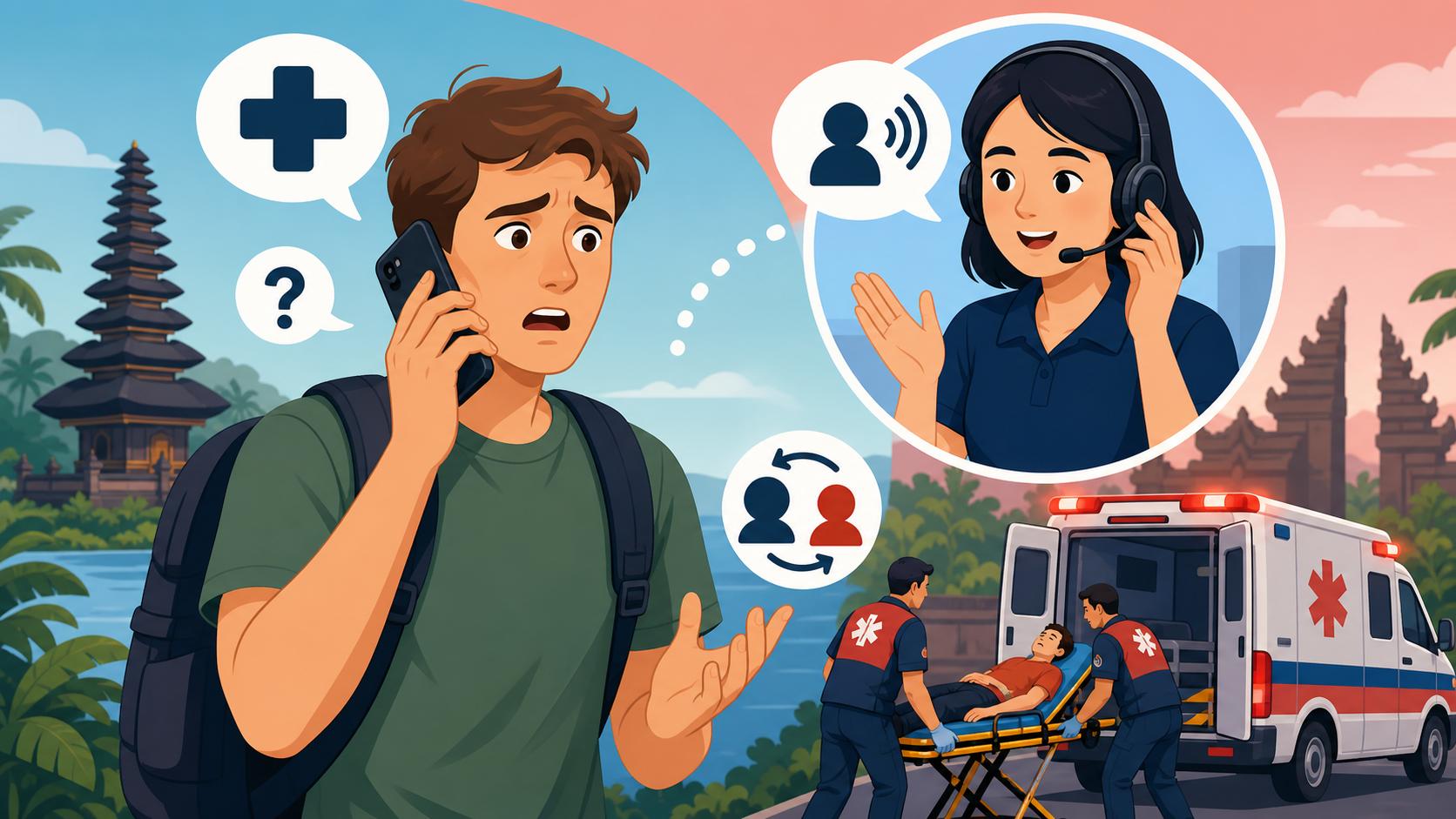
A medical emergency in a foreign country is a nightmare scenario, especially when you realize you cannot describe a heart attack or a severe fracture in the local language. I once spent five panicked minutes trying to explain a high-fever seizure using only hand gestures and broken sentences before a neighbor stepped in. This guide clarifies exactly how to call an ambulance in Indonesia without speaking Bahasa Indonesia and what language support you can realistically expect.
The Reality of Emergency Dispatch in Indonesia
When you are in the middle of a crisis, the last thing you want is a communication breakdown. In Indonesia, the national emergency number is 112, which acts as a centralized portal similar to 911 or 999. While there have been significant efforts to train 112 operators in English, especially in tourist-heavy hubs like South Jakarta or Bali, the reality is hit-or-miss. You might reach an operator who is fluent, or you might reach someone who struggles with anything beyond "Hello" and "Where are you?"
Beyond the general 112 number, there are specific medical lines like 118 and 119. Understanding the difference is crucial for your safety. The 119 system is generally more modern and integrated with local hospitals, but it is heavily focused on the Indonesian-speaking population. If you call these numbers, you should expect the conversation to happen primarily in Bahasa Indonesia. This is why many veteran expats avoid the national lines entirely and keep direct numbers for private facilities saved in their phones. For a broader look at how these systems interact, you should review Emergency Medical Care in Indonesia: Ambulances, ERs, and Evacuation Protocols.
The linguistic barrier is a valid frustration. It feels like a massive oversight when you are paying high taxes or insurance premiums, but the public infrastructure is designed for the 270 million locals first. If you are relying on the public system, you are essentially gambling on the specific dispatcher’s language skills at that exact moment. This is why most of us who have lived here for years prioritize private alternatives. Knowing the Emergency Numbers in Indonesia: 118/119 for Ambulance and What to Expect can help you decide which path to take when seconds count.
Language Support Expectations: Public vs. Private
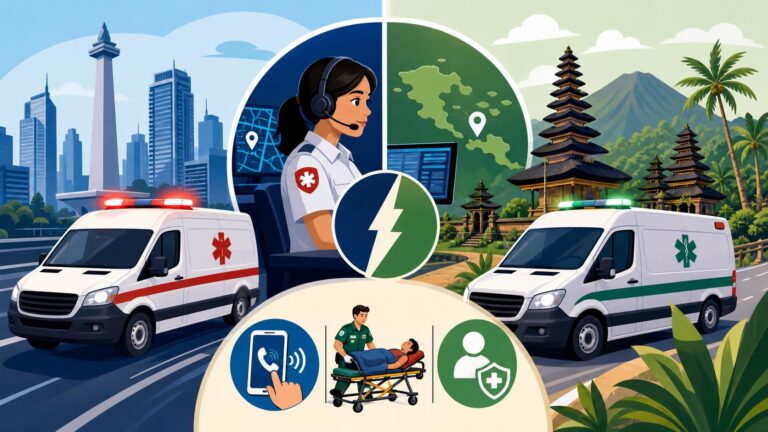
The level of English support you receive depends almost entirely on who owns the ambulance. Public ambulances (Ambulans Gawat Darurat) are often staffed by paramedics who are incredibly skilled but may have limited English proficiency. They will understand "Hospital," "Help," and "Emergency," but they may struggle to understand a complex medical history or the nuances of an allergic reaction.
In contrast, private hospital networks like Siloam or BIMC prioritize international standards. If you call the emergency line for Siloam Hospitals Overview: What Expats Should Know About the Network, the dispatcher is almost certainly going to speak functional, if not fluent, English. They are trained to handle the expat community and understand that clear communication is part of the medical service. This is particularly true in areas like Canggu or Uluwatu, where the Bali Healthcare Guide: Hospitals, Clinics, and Emergency Contacts for Residents becomes your primary resource.
| Feature | Public Ambulance (112/118/119) | Private Hospital Ambulance |
|---|---|---|
| Language | Primarily Bahasa Indonesia | English-speaking dispatchers |
| Response Time | Highly variable due to traffic | Usually faster, but area-dependent |
| Equipment | Basic to Advanced Life Support | Often High-spec/International standards |
| Payment | Often requires BPJS or cash | Insurance (like Cigna Global) or Credit Card |
| Direct Booking | Via central dispatch | Via direct hospital hotline |
If you are covered by an international provider like Cigna Global, you generally have the luxury of requesting these private services without worrying about the immediate out-of-pocket cost, which can be substantial for a private dispatch. For those living in the capital, knowing the specific SOS Medika Clinics in Cipete and Kuningan: Services for Jakarta Expats can save your life, as they operate their own fleet with high-level English support.
Actionable Steps When You Cannot Speak Bahasa Indonesia
If you find yourself forced to use a public ambulance or if you are in a remote area like Labuan Bajo or rural Sumatra where private options are thin, you need a strategy to bypass the language gap. The first rule is to stay calm and use the "Three-Word Method." Identify your location, the problem, and your need. For example: "Canggu, Heart Attack, Ambulance."
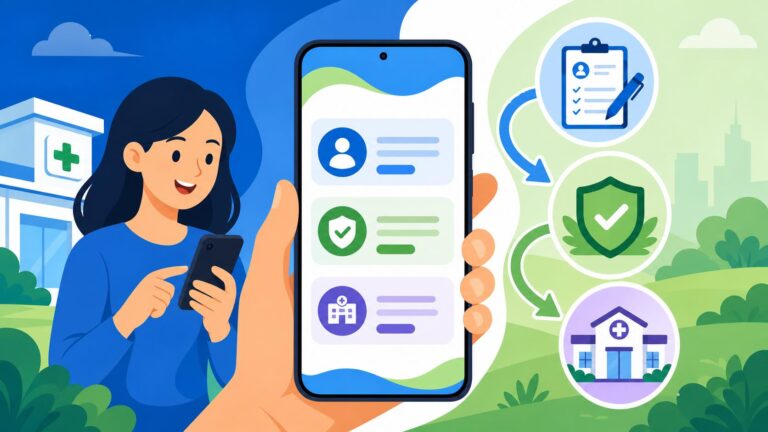
A highly effective "pro-tip" is to use the How to Book a Doctor Appointment via Halodoc or Alodokter Apps strategy even in emergencies. While these apps are for consultations, they have emergency buttons that can sometimes bridge the communication gap by providing your GPS location to a dispatcher who can see your profile in English. However, for a direct phone call, you should memorize a few key phrases found in our guide on Medical Emergency in Indonesia: What to Say When Calling 118 or 119.
Another strategy is to involve a local immediately. If you are at a villa, call the staff or even a Gojek driver nearby. Hand them the phone. Indonesians are incredibly helpful and will often take over the call to ensure the dispatcher understands exactly where the "gang" (alleyway) is located—something a GPS often fails to do in Bali. Once the ambulance arrives, the paramedics will likely use translation apps. It is a good idea to have your medical history translated and saved as a photo on your phone’s lock screen. After the emergency has passed and you are in recovery, you can order basic health supplies and recovery vitamins through iHerb to be delivered to your home, but the initial response requires that human-to-human local connection.
Preparing Your Medical Safety Net Before the Crisis
You should never wait for an emergency to figure out the language situation. Your medical safety net starts with documentation. Every expat should have a "Medical Emergency Card" in their wallet and taped to their fridge. This card should list your name, blood type, allergies, and the phrase "Saya tidak bisa bahasa Indonesia" (I cannot speak Indonesian) followed by "Tolong panggil ambulans dari Rumah Sakit [Hospital Name]."
Choosing the right hospital beforehand is vital. If you are in Bali, BIMC Hospital Bali: Services, Costs, and Insurance Direct Billing Options is often the top choice for foreigners because of their seamless English communication. In Jakarta, the Medistra or Siloam networks are the gold standard. When you have a policy with Cigna Global, you can often call their 24/7 hotline, and they can sometimes facilitate the communication with local providers for you, acting as a bridge.
Furthermore, you need to understand that the ambulance is just the transport. The real communication struggle begins at the Emergency Rooms (UGD) in Indonesia: Triage, Payment Upfront, and Documentation. Without a translator or an English-speaking doctor, you might face delays in treatment while they try to figure out your insurance or payment status. Always keep a digital copy of your KITAS and your insurance card handy. If you are worried about the financial side of these high-end English-speaking services, researching Private Health Insurance in Indonesia: Bridging the Gap When BPJS Isn't Enough is the best way to ensure you aren't stuck in a public ward where no one understands your needs.
Finally, familiarize yourself with the Hospital Billing in Indonesia: Avoiding Overcharges and Understanding Inpatient Fees before you get the bill. Emergency services can sometimes include "hidden" costs for medications or specialized equipment that aren't clearly explained in English at the time of service. Being proactive by reading a Healthcare in Indonesia for Foreign Residents: Complete System Overview (2027) will give you the confidence to navigate these stressful situations with your eyes wide open.
Disclaimer
This guide is for informational purposes only and does not constitute professional medical or legal advice. Emergency response times and language support in Indonesia can vary significantly by region and service provider. Always verify emergency numbers and hospital protocols in your specific location. In a life-threatening situation, prioritize immediate medical attention by any available means.